
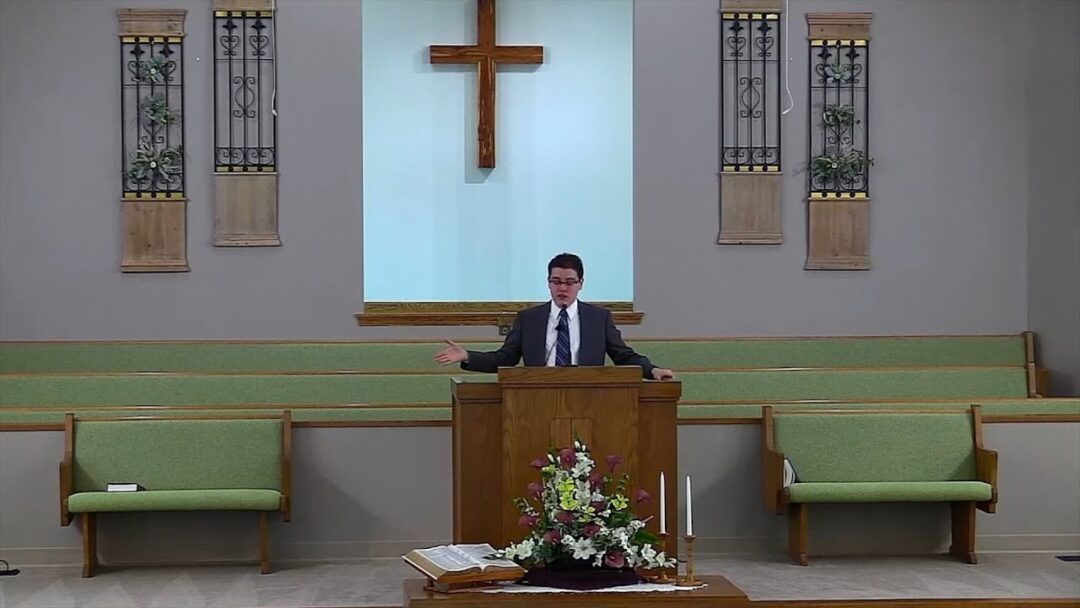
From our Sunday service on January 30, 2022, Colossians 3:1–17. Watch the full message: Have You Checked Your Image Lately? on YouTube.
The main thing God wants you to know today is that He wants you to be like Christ. We will learn that through the spiritual lesson that we need to be conformed to the image of Christ. That phrase may sound like a familiar verse. We will look at that verse, but it is not the main passage today, though it carries the same idea and means the same thing. We will end up in Colossians 3, but we won’t get there right away.
Three questions will guide us. First, what is the image of God? If we are going to talk about being conformed to the image of God, we first have to know what it is. Second, where can we find the image of God? It is good to know where it is, but how can we know what it looks like and apply it to our lives? Third, once we know what the image is, how do we copy it and become more like Christ?
Spiky Hair Boy
I came up with a character in middle school called Spiky Hair Boy. I was very young, and I don’t know if you can see the resemblance, but I think it is there. When I started to come out of my shell a little more, I drew this character as a picture of myself. Spiky Hair Boy shows different attitudes. On the far right is the shining Spiky Hair Boy, who is confident, proud, and ready to go. In the middle is the confused one, who wonders what is going on. Further left is the curious one looking at a ladybug, and then the inquisitive one, who is investigating something because he is interested. I drew these in my notebooks through middle school, high school, and college. If you went through my notebooks, you would find Spiky Hair Boy everywhere, and every time you saw him, you would know a little about the mental state I was in when I drew him. On the day I drew the excited one, I was feeling confident. On the day I drew the confused one, I was confused. The drawing provides insight into me.
In college I took a Spanish class, and this picture comes from the first day of my Spanish notebook. Spiky Hair Boy, as a reflection of me, is super excited about Spanish. He has the sombrero and the maracas, and he is standing on a box, ready to go. A couple of weeks into the class, the picture at the top of my notebook says something different. He is no longer holding maracas, and he no longer has the little Mexican hat. In school you sometimes make paper airplanes and throw them when you are bored, and here Spiky Hair Boy is a little distracted from his purpose in Spanish class. By the last week of the class, he is not doing well at all. Spanish was not my strong suit, and the class moved far too fast for me to keep up. The smiley face on his shirt, which he always wears, is missing the effort that went into drawing it. His eyes are looking two different directions because he has no idea what he is doing. You can see the downward spiral of my Spanish class experience through the images I drew in my notebook.
As we talk about the image of Christ today, remember that the images you have reflect you. The image you present to the world reflects you and your relationship with Christ. But first we need to see exactly what that image is.
What Is the Image of God?
To figure out what an image is, it helps to see where it comes from. Genesis literally means “beginning.” It is the book of beginnings, so if we want to find where the image comes from, we go there and see how the image relates to man.
And God said, Let us make man in our image, after our likeness: and let them have dominion over the fish of the sea, and over the fowl of the air, and over the cattle, and over all the earth, and over every creeping thing that creepeth upon the earth. So God created man in his own image, in the image of God created he him; male and female created he them. And God blessed them, and God said unto them, Be fruitful, and multiply, and replenish the earth, and subdue it: and have dominion over the fish of the sea, and over the fowl of the air, and over every living thing that moveth upon the earth.
Genesis 1:26–28
This is the first reference to an image, and it says God’s image was put in man. What does that mean? The Bible tells us that God is invisible and that God is a spirit, so the image of God is not physical. It is not like the picture of Spiky Hair Boy on the screen, and it is not a representation of what God looks like. It is something more important than that.
Maybe the image of God has to do with personality or intelligence, with what separates us from the animals. Animals are not made in the image of God, so maybe it is intelligence or our ability to make decisions for ourselves. But we know that is not the answer either, because angels are not made in the image of God, yet angels have intelligence and free will to choose whether to follow God or turn from Him. So that cannot be the image of God.
Look again at what the passage immediately associates with the image. God said, “Let us make man in our image, after our likeness, and let them have dominion over the fish of the sea,” and so on. So what does the image represent? The image is a representative role that God gave to us. God is the creator of the world, and He said, in effect, let us make man after our image and let him rule over what we have made. That is a very important responsibility.
In the Bible, an idol is sometimes called an image. False gods in the olden days were carved from stone or wood, and people put that image in place and worshiped it, which is why the Bible says not to make any graven images. So when we think of the word “image,” we should think of a statue. In the ancient world, a ruler could not physically be in every area he ruled, because transportation was not readily available, so he set up a statue, an image, to represent his rule. When God created the world, He was saying, “I want man to be created in My image. I want him to be my representative, ruling this world in my name. I want him to do the things I do and be like Me, with the love and the care that I have for this world, and I will give it to him to rule on my behalf.” That is why God associates the image with this representative role in verse 26 and again in verse 28, where He speaks of dominion.
So the image of God is the first thing God assigns to man. The purpose of man is to be in the image of God, to do like God and be like God. If we are not conformed to the image of God, we will never be fulfilled in our lives, let alone be used by God in miraculous ways.
Where Can We Find the Image of God?
How do we know what it looks like to rule as God’s representative and fulfill the purpose given in Genesis? A few verses will show us, starting with Romans 8.
And we know that all things work together for good to them that love God, to them who are the called according to his purpose. For whom he did foreknow, he also did predestinate to be conformed to the image of his Son, that he might be the firstborn among many brethren.
Romans 8:28–29
We have all talked about the first part of this verse, that all things work together for good to them that love God. That is a powerful verse. It gives us comfort and confidence that even when things aren’t going our way, God can still work them out for His purpose. But the passage continues, and it speaks of those God foreknew and predestinated. Everyone who will eventually be saved has this one purpose from God, and if you are saved today, this purpose has been assigned to you: to be conformed to the image of His Son. Our duty and our journey as Christians should be to have the image of Christ.
But if our gospel be hid, it is hid to them that are lost: In whom the god of this world hath blinded the minds of them which believe not, lest the light of the glorious gospel of Christ, who is the image of God, should shine unto them.
2 Corinthians 4:3–4
This passage says the gospel is hidden to those who are lost, but for those who are saved, a truth shines on us: Christ, who is the image of God, shines in us. Now we hear something pretty clear. We are supposed to be conformed to the image of the Son, and Christ is the image of God. We were originally created with God’s image. When we sinned, we distorted and corrupted it. It is still in us, but Christ is the exact image of God, so if we want to get the image of God again, we have to look to Christ.
Who being the brightness of his glory, and the express image of his person, and upholding all things by the word of his power, when he had by himself purged our sins, sat down on the right hand of the Majesty on high;
Hebrews 1:3
This is even clearer. Christ is not just the image; He is the express image, an exact copy of the image of God, because He is God. So if we want to find this image and learn how to restore the image of God in our lives, we need to look at Christ.
Who hath delivered us from the power of darkness, and hath translated us into the kingdom of his dear Son: In whom we have redemption through his blood, even the forgiveness of sins: Who is the image of the invisible God, the firstborn of every creature:
Colossians 1:13–15
Our book of Colossians is talking about the image of God too. Christ is the image of the invisible God, and the attributes of God that we have are the same ones that Christ has. He is the firstborn of every creature, the example that all of us will follow. We were supposed to have the image of God when we were created in the beginning. As sin came into our lives, we lost sight of it, and if we ever want to get it back, there is only one place to turn: Christ, the express, exact image of God. As we walk through our lives and become more like Christ, we return to that original state of unity with God and His purpose. Christians are Christ’s representatives on the earth, and from the beginning we were meant to be God’s representatives on the earth, but this passage teaches that Christ is the prime example. It is not up for debate that Christ is the image of God, so if we are to represent God and fulfill our original purpose, we must be like Christ.
How Do We Copy the Image?
If we are supposed to have the image of God and Christ is the image of God, what do we do to copy that image and get it into our lives? This is where we turn to Colossians 3.
If ye then be risen with Christ, seek those things which are above, where Christ sitteth on the right hand of God. Set your affection on things above, not on things on the earth. For ye are dead, and your life is hid with Christ in God.
Colossians 3:1–3
Paul makes clear at the beginning of Colossians 3 that he is telling the Colossians, “You are saved, but there is an image of Christ that you need to copy, and I want this image to be clear.” He starts by saying that something miraculous happened when we were saved. “If ye then be risen with Christ” is talking about salvation, and “seek those things which are above” means that if you have been reborn, you look toward heavenly things. Why? Because you are dead, and your life is hid with Christ in God. I think this happens when you get saved. God puts to death the old man, and we will say more about that as we go on. At that moment, the old, corrupt image is pushed aside, the image that was tainted by jealousy, envy, strife, regret, lust, and all kinds of other sins. It is shattered, broken, and twisted, and it is not what God designed. But God says you are dead. When Christ died, He died for you, so that you don’t have to live in that messed-up image anymore.
When Christ, who is our life, shall appear, then shall ye also appear with him in glory.
Colossians 3:4
When we get the resurrection, we are going to be changed to be like Christ. The corrupt image will no longer exist, and we will be completely transformed and glorified. But that doesn’t happen today. We have to wait for the Lord to return or for our time on this earth to end, and then we will be made pure. Paul doesn’t say that we should just sit back idle and wait for that time, though.
Mortify therefore your members which are upon the earth; fornication, uncleanness, inordinate affection, evil concupiscence, and covetousness, which is idolatry:
Colossians 3:5
Paul is saying that because this is coming, we should get a little of it right now and be like Christ. To mortify means to put to death. You will see Paul talk in sets of five here, and this is his first set: fornication, which is sexual immorality; uncleanness, which is impurity; inordinate affection, which is wrongful passion (passion on its own isn’t wrong, but passion in the wrong place can become sinful); evil concupiscence, which simply means evil desires, when you let your life be driven by evil desires that eat you up and drive everything you do (I don’t think I’ve ever heard anyone use that word in a regular sentence at a lunch table); and covetousness, which is desiring things that aren’t yours, being greedy and jealous of what other people have.
Then Paul ends with an interesting wording: “which is idolatry.” Remember that the words “idol” and “image” are the same word in the original biblical languages. If you have the image of Christ, that is one thing, but these five things form an image of another type. It is idolatry. It is worshiping and forming an image that is not God’s. Sexual immorality, impurity, wrongful passion, evil desires, and greed define a non-Christlike image. They shape your outlook and your outward appearance on ungodly things.
For which things’ sake the wrath of God cometh on the children of disobedience: In the which ye also walked some time, when ye lived in them.
Colossians 3:6–7
Paul has some nice words to say here, and then he is going to smack you immediately and tell you that you are not done yet. He is telling the Colossians, “You don’t struggle with these five things. You don’t have this sexual immorality or this greed. You’ve got it down, congratulations. The image of Christ is in you to some extent, and God has changed your lives. You used to walk this way, but you don’t now, and I want to congratulate you.” But you always have to read the next verse when you study the Bible, because if you stopped your devotions here, you would miss the whole point of the passage.
But now ye also put off all these; anger, wrath, malice, blasphemy, filthy communication out of your mouth. Lie not one to another, seeing that ye have put off the old man with his deeds;
Colossians 3:8–9
Here are five more things to put off: anger, wrath, malice, blasphemy, and filthy communication. Paul is saying, “You’ve got it down pretty well, but there is still more work to do.” The first five are very obvious sins. If you are walking down the street committing them, people on the outside see it. But Paul is speaking about sins that are not as obvious, sins inside you, in your heart.
Anger is just being bitter about things. You can be an angry person inside and never let other people notice. Notice the wording, “put off,” which we will see again in this passage. Some people, and I’m not saying it’s you, put off a lot of these things temporarily before they go to church, and once they are out of the church building and in the car, they put the anger and the wrath back on. Wrath is one step further than anger. If you are angry, you are personally upset. If you have wrath, you wish evil on that person. You want revenge, you think you were treated unjustly, and deep down you wish something bad would happen to that person. Malice is a desire to do evil. At the top we had evil concupiscence, which is doing evil things regularly, but malice is an inward desire to do evil things, and there is a big difference between doing evil things and wanting to do them. Paul is saying that some of you need to reprogram your heart, because you still have a strong desire to do evil, and that is dangerous. You need to get it out of your heart before it trips you up.
Blasphemy here is literally slander. We often think of blasphemy as only against God, but the word is also about slandering other people, gossiping, and talking bad about someone behind his back. Paul is saying, “You may not have a desire for lust, but you talk bad about people and start rumors about them, and you don’t love people the way you are supposed to.” He continues the idea with filthy communication, because there are some things we say that we ought not to say. Then he says, “Lie not one to another, seeing that ye have put off the old man with his deeds.” You have been transformed by Christ, so don’t lie to yourself by doing these things. They should not define you. The truth is that God has changed you, so don’t lie to people by living in ways that say He hasn’t.
Putting On the New Man
Paul has now listed ten things we shouldn’t do, and he starts to talk about what we should do.
And have put on the new man, which is renewed in knowledge after the image of him that created him: Where there is neither Greek nor Jew, circumcision nor uncircumcision, Barbarian, Scythian, bond nor free: but Christ is all, and in all. Put on therefore, as the elect of God, holy and beloved, bowels of mercies, kindness, humbleness of mind, meekness, longsuffering; Forbearing one another, and forgiving one another, if any man have a quarrel against any: even as Christ forgave you, so also do ye. And above all these things put on charity, which is the bond of perfectness.
Colossians 3:10–14
Notice the word “renewed.” It is not a brand new image that has never existed in man; it is a renewed image, bringing back what was already there. Every man has the image of God in him, and every man needs that image renewed by Jesus Christ.
Verse 11 shows us what the image of God is not. There is neither Jew nor Greek, so no ethnicity is tied to the image of Christ. It doesn’t matter what your DNA is, because all people have the image of God in them and all of them can renew it. There is neither circumcision nor uncircumcision, so it doesn’t matter whether you were under Jewish law. Physical traits don’t matter, because the image of God is not about physical things. Paul says there is neither Barbarian nor Scythian, two groups that were different levels of uncultured. It doesn’t matter how redneck you are or how formal you are. The image of Christ is not about how you talk or how much class you have, and it has nothing to do with those mannerisms. It is more than that. And neither bond nor free, so it has nothing to do with financial class. It doesn’t matter whether you are in debt or the richest person in the world, because you both have the image of Christ and a responsibility to be more like Christ.
Paul lists four things there, and then he gives the fifth, the one we need. What is the image of God in man? “Christ is all, and in all.” All of us who believe in Christ have His Holy Spirit dwelling inside us, who wants to direct us every day to be more like God.
Next Paul says to “put on.” Notice that wording. These are not things we make ourselves. They already exist, and God is saying we need to choose to put them on. Just as Paul told us to put off those sins, he tells us to put on these attributes, and they are not ours. They are parts of the image of God, parts of Christ. That gives me great peace, because I don’t need to worry about doing this on my own power or energy. Christ has already provided these attributes to us if we choose to put them on. Notice also that we have had ten things not to do but only five things to do. It is a lot easier to follow God when you focus on what you should be doing than on what you can’t.
“Bowels of mercies” needs explaining. In Greek culture, the bowels were considered the organ of compassion, so whenever the Bible speaks of bowels in connection with emotion, it is speaking of being compassionate. So Paul is saying, “Have compassion and be merciful.” Kindness is being gentle with people, loving on them, and doing what is good for them. Humbleness of mind is humility: don’t let things go to your head, and realize that Christ is your strength. If you do things through the power of Christ, there is nothing to gloat about, because it is all God working through us, and it is by His grace that He can do it every day.
Meekness is gentleness, meeting people where they are. The word comes from the idea of a strong person, someone buff who can do heavy lifting and hard work, who goes to people and is seen as soft, caring, and loving rather than as the tough guy. Someone with strength and power chooses to be gentle. It is not meekness when we condemn other people and judge them for what they do. Gentleness is when we see someone struggling and, rather than being judgmental, go and see what we can do to help. We ask whether the person is okay and whether he wants to talk about it. That is what meekness looks like. Longsuffering is patience and endurance. Sometimes it is longsuffering in the trials we face in life, and sometimes it is patience with other people, but it is enduring when things aren’t exactly comfortable.
Verse 13 shows what that looks like: “forbearing one another, and forgiving one another.” Forbearing is a powerful word. In the Greek, it is close to “put up with.” The closest modern word, which did not exist when the KJV was written, is “tolerate.” It doesn’t mean you have to like it. Even if that person gets on your nerves, even if it is just that one person in your life you can’t get along with, you tolerate him. You might remember the verse that says “as much as lieth in you, live peaceably with all men,” because some people just drive you nuts. That is what forbearance means: tolerate it, and don’t let it get to you.
Paul also says to forgive one another. As Christians, we are not all going to be perfect in this church. Eventually something will be said that gets misunderstood or wasn’t well meant, and there will be hurt feelings. As we have the image of Christ in us, it is important that we choose not to hold on to those things, that we understand that other people, like ourselves, are flawed and not perfect, and that we forgive them and give the hurt to God. Paul gives a good reason: “even as Christ forgave you, so also do ye.” Christ forgave us for a lot more than we will ever have to forgive other people. Christ went and died on the cross so that we could be forgiven. It is not fair to us or to God for Him to come down and die on the cross and then for us to use that liberty and freedom to not forgive other people. No matter how bad the offense seems, God still calls us to forgive and give the matter over to Him.
Then Paul ends with one more thing: “above all these things put on charity, which is the bond of perfectness.” There are five attributes, but one thing is more important than all of them, because without charity none of the others work. The word in the Greek is agape, which means love in action. It is a love that loves so much that it can’t help itself but get involved and help. That is why the word is “charity.” Think of a charity, a non-profit. Not all of them are perfect, but the idea is that a charity is a place that actively does something for somebody else. Agape love means that because Christ loves us, we have no choice but to love other people, and when we see a need, to move to action and help.
That is why, when Jesus talks to Peter and asks, “Lovest thou me?”, He uses agape twice. Do you love Me enough to do something? Peter had betrayed Christ after saying he never would, and Jesus was asking, “Do you love Me enough to do something about it? When the rubber meets the road, you bailed on Me.” The last time Jesus asks, He uses phileo, another word for love, which just means, “Do you like Me?” That is why it was so hard for Peter. He understood the word agape and knew he had messed up, and then Jesus asked whether he even liked Him. That is the significance of that passage, but agape is the important term here. It is a love that acts. If we have the image of Christ, we will act out our love and not just say things about love. If we don’t have charity, we will never have a full image of Christ, because charity is what binds and holds it together. It would be pretty awkward for us to walk around as Christians putting on all these attributes and having them fall off because we don’t have the agape love that drives us to act on Christ’s behalf.
And let the peace of God rule in your hearts, to the which also ye are called in one body; and be ye thankful. Let the word of Christ dwell in you richly in all wisdom; teaching and admonishing one another in psalms and hymns and spiritual songs, singing with grace in your hearts to the Lord. And whatsoever ye do in word or deed, do all in the name of the Lord Jesus, giving thanks to God and the Father by him.
Colossians 3:15–17
If we put on these attributes, we will have the peace of God ruling our lives, and we won’t have to worry because we can trust God. We are called in one body, which means we will have unity. We put these attributes on every day, not just when we come into church and not just temporarily to get by and make people think we have it all together, but genuinely, every day, dying to self and clothing ourselves with the image of Christ. Then we can be thankful.
Verse 16 says to let the word of Christ dwell in us richly. How do we get that image? We have to be in the Word. We have to study the Bible and know what it says if we are going to be like Christ, because the Bible is what talks about Christ and what the church looks like. It says the word will dwell with wisdom, teaching and admonishing, which is correcting and encouraging, and singing together with grace in our hearts. I think that sounds like a beautiful thing for a church to have. It concludes with “whatsoever ye do in word or deed, do all in the name of the Lord Jesus.” We have to do everything for Jesus. If we want to have the image of God, we have to have Christ.
How Is Your Image?
My question today, going back to that original illustration, is: how is your image? Remember that in Spanish class, the image from the end of the class was pretty rough. If you looked at my notebook and saw that picture, you would know that guy was not doing well in his walk in Spanish class. So when you walk around in your day-to-day life and people see you, do you look like that image? If your image is supposed to look like Christ but it is rough, you don’t look a lot like Him, and people will know your image isn’t right. On the other hand, you can have a clear image of Christ, so that when people see you walking around, it is as if you are glowing with the glory of Christ.
So how is your image? Is it rough? Do people see you as controlled by selfish desires and self-motivations? Do they think you are uninterested in what Christ has to say? Do they think you are just somebody who shows up to church one day and walks out and doesn’t change the next? Are you passive, just floating by, thinking, “Christ has forgiven me, and that is enough. Paul says one day we will be transformed, and that is good enough for me”? That is not good enough for me. Paul says to mortify it now, put it to death now, and be more like Christ now, because it is worth it.
Or is your image clear? When people see you, do they see the image of Christ? Do you do things for other people that make them think, “Wow, that’s amazing. I’ve never met someone who would do that. That person loved me so much that even though he doesn’t know me, he couldn’t help but do something for me”? That is what the image of Christ looks like. Do they see that the love of Christ drives you to be a better person? Do they see your hunger to grow every day? Do they see that there has been a change since you got saved? Do they just see you as another person, or as a person who has been transformed, whose image has been renewed?
The good news is that a rough image is not written in pen. It can be reshaped. You can erase some edges, draw some new lines, and restructure it. Take a look at that perfect image of Christ and let it be your reference piece. Every day, get in the Word and see what it says about Christ. Take one attribute, say, “I need to work on that,” erase that line, and redraw it. Every day you will get a little closer, and then the world can see the image of Christ in you. You will be fit to fulfill the original purpose God gave us in Genesis: to be His representative to the earth, to rule in love, and to look like Him.

Recent Comments