
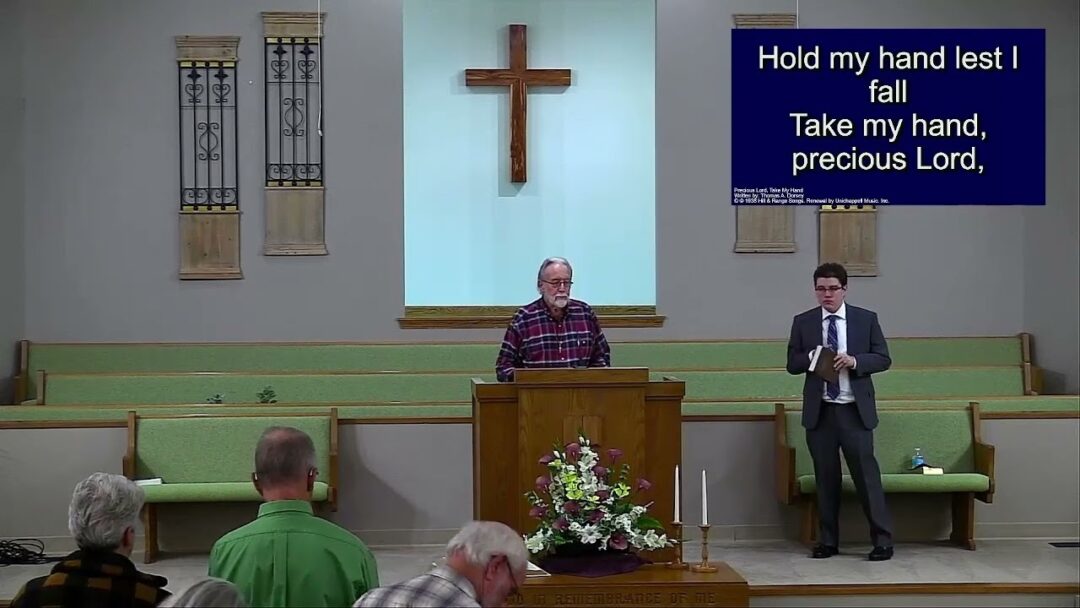
From our Sunday service on January 22, 2023, Philippians 3. Watch the full message: Savior, Lord, and Treasure on YouTube.
What Is Your Treasure Worth?
How many of you have bought eggs recently? Have you looked at the price of eggs? How much are you willing to pay for a dozen? Five dollars? Four? Three? Where do you draw the line? Everything in our lives, we ascribe some value to. We might love eggs, but we’re only going to pay so much for a dozen.
Now think about your favorite food, something you really like, cherish, and value. That’s our word for the day: treasure. Would you be willing to pay more for that than you would for eggs? I think you would. There are things in our lives that we value or treasure.
In the Christian walk we often talk about Christ being our treasure, and that’s what we’re talking about today. You can walk through your entire Christian walk without ever seeing Jesus Christ as your treasure, and that can lead to a lack of the truest joy you can find in Jesus, the truest gift that salvation has to offer. It can happen even while you’re attending church, leading others to Christ, and experiencing the blessings of salvation. You can still miss out on the ultimate joy of Christ as your treasure, and go through your whole life without realizing what you’ve missed. We can accept Christ as our Savior, the one who saved us from our sins. We can accept Him as the Lord of our life, the rule giver. And we can still never realize that we haven’t accepted Him as our treasure.
Treasures are things we hold dear and cannot imagine living without. They are things you value and cherish, and if you lost one, your entire life would be changed significantly. That’s a hard concept to wrap our minds around, but Jesus said it this way:
For where your treasure is, there will your heart be also.
Matthew 6:21
These aren’t bad things to value, so let’s look at some examples.
The first one I can think of is having a child. How many of you as parents love your children? You cherish them. You treasure them. When the baby was born, did you come out of the hospital with the baby in your arms and say, “All right, now it’s time to prepare the room, buy diapers, have a baby shower”? No! You treasured that coming child, and you prepared for it. It changes how you live your life. There are things you do for that child and things you don’t do because of that child. That child becomes part of your identity. When they join a sports team, you cheer them on, and their victory is your victory. If you lost them, God forbid, you would find an emptiness unlike anything else, because the treasure you held so dear would be gone.
What about choosing a career? You don’t just show up at the hospital as a doctor without any training, and say, “I’m a doctor now. Let me see your next patient. I will do surgery.” You study. You go to college. You prepare and build up. When you value that career, you work hard, you put in for openings, you train, and over time it becomes part of who you are. Now imagine the job you spent all those years investing in letting you go. You would have an emptiness and struggle to cope, because it had become part of your identity.
What about getting married? You go on dates, you get to know each other, you invest in each other and love each other before the wedding. You don’t just show up one day and get married. Then you make your two lives one, unifying your identities. You treasure that relationship, and losing that spouse would change your entire life, and it would hurt.
Maybe you haven’t gotten that far in life, and you have a pet. You don’t usually get a pet randomly. You prepare. You get things in your house for it, you buy it toys and treats, you care for it, you love it, you invest in it. Now imagine your pet dies. There’s an emptiness, because it was something you treasured and valued.
We have a relationship with Jesus Christ to that extent too. He should become our treasure. A relationship with Christ should be one where we work to be close to Him, train ourselves to be like Him, and make Him part of our identity. And unlike everything else in this life, Christ is a treasure that cannot be lost. When you invest in Christ as your treasure, that fullness will never fail. We find satisfaction and fulfillment in Him that is unfailing, and that can change our entire perspective and the actions we take. Even in difficult times, that connection and love for Christ can permeate every aspect of our lives.
If that isn’t something you’ve experienced, I want to talk about how you can, because when you truly get a taste of Christ, it changes your whole relationship with Him. Even in your struggles, your draw to Christ will overcome other thoughts. You don’t just love Christ because He saved you. You don’t just love Him as a guide for your life, a rule book. You have Christ as your treasure. He has intrinsic value just because of who He is to you, and you find satisfaction in Him.
So my proposition, my theme for the day, is this: Christ wants to be your treasure.
Eventually we’re going to be in Philippians chapter 3, so you can start turning there. I always build up to our main passage, and I plan to do that again today. I don’t want to assume I know where everybody is on their walk with Christ, so I’m going to walk us all the way from being unsaved to having Christ as our treasure. There are three steps: Christ as your Savior, Christ as your Lord, and Christ as your treasure. Let’s look at Scripture and see what it’s like to go on this journey from unsaved, to growing, to the point that Christ becomes a personal, fulfilling treasure in our lives.
Step One: Christ as Your Savior
When we first come to faith in Jesus, we understand Him as our Savior. We realize that we are sinful and in need of forgiveness, and that Jesus, through His death and resurrection, has made a way for us to be reconciled to God. We accept Him as our Savior and are grateful for the gift of eternal life He offers.
A Savior is a person who rescues or delivers someone from danger, difficulty, or oppression. In our case, Jesus saved humanity from sin and its consequences and reconciled us to the Father. When I talk about salvation, I always go back to a system we made at Bible school at Fellowship Baptist Church about the gospel’s five words. There are five words you really need to understand to get to the step of Christ as your Savior, and they sum up the gospel.
Sin
The first word is sin.
For all have sinned, and come short of the glory of God;
Romans 3:23
We are all sinners, and we can’t fix ourselves. That’s the first step to understanding Christ as your Savior. You cannot be saved if you think you don’t need to be fixed, or if you think you’ve never sinned, because to be saved we must call on Jesus to be our Savior. No matter how much good we do in this life, we can never undo the wrong we’ve done. If you offend or insult someone, you can’t just go to them and say, “I didn’t mean it,” and make everything go away. If there was trust there, you’ve betrayed it. That damage is done, and they may carry that betrayal for the rest of their lives. Even the smallest sins have eternal consequences, and because of those consequences, only a sinless man could die on the cross for our sins. We must understand that first before Christ can be our Savior.
Judgment
The second word is judgment: our sins have consequences and will be judged one day.
For the wages of sin is death; but the gift of God is eternal life through Jesus Christ our Lord.
Romans 6:23
Because we have sin, we are fallen. Because God is just, He must judge sin, and we must realize that. One day we will stand before God and give an account for our actions, and if we’re unsaved, those actions will be found guilty. There will be no argument about whether or not we sinned. We can’t go through life without ever telling one lie, without ever lusting once, without ever stealing or doing something on those lists of sins. The Bible tells us that the law was our schoolmaster to bring us to Christ. All those rules in the Bible weren’t there for us to follow perfectly. They were there to show us that we need a Savior.
Guilt
The third word is guilt. We must realize that the guilt we feel is moving us toward salvation.
For when the Gentiles, which have not the law, do by nature the things contained in the law, these, having not the law, are a law unto themselves: Which shew the work of the law written in their hearts, their conscience also bearing witness, and their thoughts the mean while accusing or else excusing one another;)
Romans 2:14–15
God gave us a conscience that convicts us when we do wrong. It makes us feel guilty, and it shows us our need of a Savior.
Salvation
After we understand that we are sinners, that our sin will be judged, and that we have a guilty conscience telling us to go to the Savior, the fourth word is salvation, and we must accept it.
That if thou shalt confess with thy mouth the Lord Jesus, and shalt believe in thine heart that God hath raised him from the dead, thou shalt be saved. For with the heart man believeth unto righteousness; and with the mouth confession is made unto salvation.
Romans 10:9–10
We must accept this gift that God has given us: that Christ, a sinless man, God in the flesh, came to earth, ministered to us, and died on a tree, innocent.
Something amazing I was reading the other day about the cross is that Jesus suffered every wrong on that cross at the same time, anything we can experience in our lives. He dealt with a corrupt government, the Romans. He was convicted as an innocent man. Everybody knew he did nothing wrong, but all of society betrayed him. They yelled, “Crucify him, crucify him,” knowing he was innocent of their accusations. He had friends who betrayed him, Pharisees who mocked him, and religious leaders who let him down. If you think you’ve gone through anything in life that Jesus doesn’t understand, you’re wrong.
When Jesus was on that cross, it showed two things: everything right about God and everything wrong about humanity. We saw every failure of humanity and every victory of God, that in humanity’s failure, God could save us all from our sins. But we have to accept it. We have to believe that Christ died for our sin on that cross and that God raised Him from the dead. “With the heart man believeth unto righteousness.” Remember that passage? Abraham believed God, and it was counted to him for righteousness. “And with the mouth confession is made unto salvation.” We declare that Christ died for our sins. We realize we have sinned, we realize we will be judged, we realize that guilt is leading us to Him, and we accept the gift of salvation.
Duty
That’s not where the Christian journey ends. The fifth word is duty. Our salvation calls us to action, but that’s only the beginning.
For we are his workmanship, created in Christ Jesus unto good works, which God hath before ordained that we should walk in them.
Ephesians 2:10
Just because we’re saved doesn’t mean we’ve reached the end of our journey. In fact, it has just begun. These are only the basic concepts we need to understand to be saved and start a relationship with God, and the Bible often reminds us that our walk with God does not end at salvation.
A Word on Lordship Salvation
Before we move on, I want to address something called lordship salvation. It’s the teaching that to be saved, you must declare Christ as the Lord of your life. Let me tell you something: that is a works-based salvation. If my salvation depends on me calling Christ my Lord and saying I will follow every rule, then that gift is not free, is it? It comes with attachments.
What it’s supposed to be is this: Christ has saved me, and because of my gratefulness for that salvation, I want to follow Christ’s teachings. We should seek to obey and live according to His teachings because He loved us. The Bible says we love Him because He first loved us. The reason we should want to be followers of Christ is that He died for our sins while we were yet sinners.
But after that the kindness and love of God our Saviour toward man appeared, Not by works of righteousness which we have done, but according to his mercy he saved us, by the washing of regeneration, and renewing of the Holy Ghost; Which he shed on us abundantly through Jesus Christ our Saviour;
Titus 3:4–6
It’s not works of righteousness that save us. It’s by grace we are saved through faith. After that, Christ gets hold of our heart, and it’s the mercy of God that draws us to make Christ our Lord. That’s where we’re going next. If our salvation depended on making Christ our Lord, salvation would be based on works. Instead, it’s granted by faith, and Christ becoming the Lord of our life comes from our reaction to our salvation.
So the first step in your Christian walk is to be saved. If you haven’t been saved, I would encourage you at the end of the service to come forward. Get saved today. Get right with God and make Christ your Savior.
Step Two: Christ as Your Lord
But if you’ve made Christ your Savior and stopped there, there’s more to do. There are still more choices to be made after salvation. You may see Christ as your Savior, but have you yet made Christ your Lord?
As we grow in our faith, we begin to understand that Jesus is not just a Savior but also our Lord. We come to realize that He is the one in charge of our lives, and that we are called to follow and obey Him and His teachings. This can be a difficult transition, because it requires us to give up control of our lives and submit to God. When we get saved, we don’t immediately become good Christians. There are trip-ups and stumbles, and things we don’t understand yet. We haven’t spent time in the Bible studying the teachings of God, and it takes time to foster that relationship with Christ.
But there are people who are stuck on this step, where Christ as Lord is where they stopped. They thought that making Christ the Lord of their life was the be-all and end-all of Christianity, and they decided that following the rules of Christ is what Christianity is all about. Following the Lord’s teachings is important and beneficial, but that’s not all God has for us. There’s more. The Bible teaches us many times that our relationship with Christ is more than just being saved.
Wherefore laying aside all malice, and all guile, and hypocrisies, and envies, and all evil speakings, As newborn babes, desire the sincere milk of the word, that ye may grow thereby: If so be ye have tasted that the Lord is gracious.
1 Peter 2:1–3
Peter is encouraging new believers to continue their spiritual growth. When you get saved, you don’t understand everything. You’re like a baby, and babies don’t know how to do much. You have to help them. If you choose to make Christ your Lord, you’re going to start to learn over time. If you’ve tasted that the Lord is gracious, if you’ve been saved, you can continue to grow to have Christ as your Lord.
Paul talks about this as well in 1 Corinthians 3.
And I, brethren, could not speak unto you as unto spiritual, but as unto carnal, even as unto babes in Christ. I have fed you with milk, and not with meat: for hitherto ye were not able to bear it, neither yet now are ye able. For ye are yet carnal: for whereas there is among you envying, and strife, and divisions, are ye not carnal, and walk as men?
1 Corinthians 3:1–3
There were Christians even in the early church who got saved and still struggled with making Christ the Lord of their life. If you’re wondering why Christ doesn’t feel real to you, why you don’t have Him as a treasure, it’s probably because you’re still struggling with these fundamentals. I’m not saying this walk is a one-way, continuous journey where you never trip up and take a few steps back. That’s normal. We’re human. We make mistakes and we stumble. What’s important is that we continue that journey forward.
Stuck at Savior, Stuck at Lord
Some of us have become content with just having Christ as our Savior. “Yeah, I’m saved. I’m not going to hell. That’s good enough. I’ll try to be a generally good person, but I don’t want to follow all the commands of the Bible. I don’t want to live like that.”
Or maybe you’re the other way. You’ve gotten stuck on Christ being the Lord of your life: “Christ has saved my soul, and all I want to do is follow His rules and make sure other people follow His rules.” That also is going to get you stuck in your spiritual walk. It’s what we call legalism. These people have decided that the end of the Christian walk is to follow rules and make sure other people follow them as well. If all you focus on is the rules of the religion and not the relationship with the Father, you’re missing out on the best blessing of Christ being your treasure.
The people of Corinth were saved. Paul never says, “You need to get saved.” He says they’re carnal, envious, and speaking evil. That would be the legalists too, the ones telling everybody to follow the rules while breaking them themselves. Paul doesn’t say they’re unsaved. He says they’re Christians who don’t have Christ as the Lord of their life. The people of Corinth lacked a transformed life, and people today are having that same issue.
What about another author, in the book of Hebrews?
For when for the time ye ought to be teachers, ye have need that one teach you again which be the first principles of the oracles of God; and are become such as have need of milk, and not of strong meat. For every one that useth milk is unskilful in the word of righteousness: for he is a babe. But strong meat belongeth to them that are of full age, even those who by reason of use have their senses exercised to discern both good and evil.
Hebrews 5:12–14
These Hebrews were scattered abroad throughout the known world at the time. The author says, “You should be teachers by now. You shouldn’t be sitting in church. You’ve known the Lord for years.” The natural progression of the Christian walk isn’t that you get saved and sit in church. It’s that you get saved and you do something for Jesus. You make Him the Lord of your life and you tell other people about Him. Instead you’re sitting there being taught the basics of the Christian walk every Sunday. You have to be told not to lie, not to cheat, not to steal. You should have this together by now.
You can see a progression between these stories. Peter says to set it aside. Corinth is told, “You really need to get this under control.” But the author of Hebrews is saying, “What is up with this? I have told you once, I have told you twice, I have told you a thousand times that the Christian walk is more than following rules and sitting in church.”
So where are we on our walk today? Did you stop at Savior? “I’m not going to hell, and that’s good enough for me. I believe in Jesus Christ, my faith is in Him. I know I’m a sinner, I know I’ve done wrong, I need Jesus, and I believe I’ll go to heaven.” Or did you stop at Lord? “There are rules I’m going to follow. I’m going to be a morally righteous person, and that’s enough. If I follow the commands in the Bible and tell other people every so often about Jesus, then I’ve arrived at a perfect Christian.” The Bible says there’s another step beyond that.
My Own Walk
Let me walk you through my life. I was saved at the age of five at my home church, and actually not in Sunday school but after it. It’s a really weird story, but the short version is that the person leading me to the Lord didn’t want to explain it to me and kind of sped through it, so I didn’t understand it until I was in the car later that week. I was five. I didn’t understand all the complexities. I was wondering how I could contact Jesus if He needed to save me, and then I realized He had already done it before I asked Him to. At that moment I understood salvation and accepted the Lord as my Savior. For a few years, Jesus was my Savior. I didn’t understand what making Him my Lord was all about.
By about tenth grade, I was very much a rule follower at my Christian school. I would call out other people: “Hey, you shouldn’t do that. That’s not good. Tsk, tsk, tsk, I don’t do that.” That’s not a step beyond salvation. That’s just judging other people, and I was guilty of it. Christ was my Savior, but He was not my Lord. I didn’t fear Him until about my junior or senior year, when Christ’s rules weren’t just rules to follow to be a moral person but more than that for me. I wanted to actually do something for the Lord.
But it took me two years from wanting to do something for the Lord to Him becoming my treasure. Jesus Christ was not my treasure until my senior year. My treasure before that was programming. I love programming things. I still program things today. I code computer games for fun. That’s what I wanted to do with my life. I was going to go to PCC, Pensacola Christian College, get a degree in programming, and just do ministry on the side. Christ is my Lord. Ministry is important. Doing right and being moral is important. But what I wanted to be was a programmer. Christ was my Lord and my Savior, but He was not my treasure. I hadn’t quite realized yet how valuable He was.
Right before my senior year, there was a lot of controversy about asking a Christian about certain teachings. I decided to sit down, and since I had only about four classes that year, no electives, and enough credits to graduate, I took as few classes as possible and decided to go through the entire Bible and study everything it says. In every study hall I sat there reading my Bible. The teachers hated it; they had to throw in an extra study hall just for me, because I wanted a Bible study time when I wasn’t distracted. I began to understand some things I hadn’t understood. Although I thought I was right to try to help other people be better Christians, I was wrong, because I was doing it for the wrong reason. It wasn’t because I loved Christ. It was because I loved following the rules, and other people didn’t. If I follow the rules, it’s really easy for me to point out other people who don’t. That was a pride issue reaching into my heart.
I realized I am saved. I don’t doubt that I’ve been saved my whole life. I don’t doubt that Christ was my Lord. But I thought there was something about God I hadn’t realized yet, that there’s more to this than just the rules. I carried my Bible and I read my Bible, but I didn’t really go any further than that. I wanted a relationship with Christ stronger than that, a real relationship, so I started to dig in and study.
Senior year was a turning point for me. Only a month before I went to college, I dropped that programming degree and went into ministry. Why? Because I realized that the happiness I found in studying the Bible, in trying to know Christ better instead of trying to know the rules, was a value I didn’t want to set down. While before I had put off ministry because I wanted to do computer programming, I realized that I wasn’t doing what I actually treasured. The treasure of programming wasn’t what I actually wanted. What I wanted was a relationship with Jesus Christ. Once I felt a taste of that, I never wanted to go back, and my life has never been the same.
Step Three: Christ as Your Treasure
As we continue to follow Jesus, we begin to see that He’s not just a Savior and a Lord, but also a treasure. We come to understand that knowing Jesus and following Him is more valuable than anything else in this world. We’re willing to give up everything for Him and make Him the most important thing in our lives. We no longer view the commands of Scripture as rules, but as personal guidance from our Lord.
Today our passage is Philippians 3. We’re going to look at Paul’s journey to reaching this point in his life, what we would describe as Christ being a treasure. Let’s look at Philippians 3, starting in verse 1, to get a little context for what’s going on.
Finally, my brethren, rejoice in the Lord. To write the same things to you, to me indeed is not grievous, but for you it is safe. Beware of dogs, beware of evil workers, beware of the concision. For we are the circumcision, which worship God in the spirit, and rejoice in Christ Jesus, and have no confidence in the flesh.
Philippians 3:1–3
Paul is writing a warning to the people of Philippi, one he’s given before. Unlike the author of Hebrews, he says this isn’t grievous to him, and for them it’s safe. He’s saying, “I’m telling you this again because it’s very important. If you’re struggling with your Christian walk, this is what will keep you safe.” He says to beware of dogs, evil workers, and the concision. He’s talking about legalists here. In the previous passages he’s talking about eating unclean meat, all these people pushing rules and rules and rules, like I did on the people at my Christian school, entirely missing the value of Christ. “We are the circumcision, which worship God in the Spirit.” It’s a spiritual thing: rejoice in Christ Jesus and have no confidence in the flesh. Christians were teaching Jewish legalism to the Gentiles. Salvation was not meant to be a burden to us. The rules of God are not a burden. They’re a help.
All things are lawful unto me, but all things are not expedient: all things are lawful for me, but I will not be brought under the power of any.
1 Corinthians 6:12
“Expedient” means beneficial. All things are lawful for me, but I will not be brought under the power of any. That’s the same idea we’re talking about, having a treasure in your life that is not God. For me, it was programming. Is it something I still enjoy? Yes. But it’s not the most important thing. I set it aside to write this message, and I set it aside to do what God calls me to do. I can do whatever I want, but that’s not great. I am saved by grace, and no matter what I do I can still have heaven as my home, but that’s not beneficial to us. I can love anything, but I’ve got to make sure I’m not brought under the power of anything but Christ.
To the people encouraging this behavior, Paul gives a name: legalistic dogs. We like dogs today. We love them. They’re cute pets. But in ancient Israel, dogs were unclean animals. You weren’t allowed to have one in your house. You would be ceremonially unclean and have to leave the city if you touched one. So all the dogs there were wild, feral dogs. You’re not thinking about a cute little Pomeranian puppy. You’re thinking of… Argh! These dogs, these legalists, are ruining the Christian walk. They’re making you think your salvation is about something it’s not.
Paul’s Résumé
So what does Paul say to do? He begins in verse 4.
Though I might also have confidence in the flesh. If any other man thinketh that he hath whereof he might trust in the flesh, I more: Circumcised the eighth day, of the stock of Israel, of the tribe of Benjamin, an Hebrew of the Hebrews; as touching the law, a Pharisee; Concerning zeal, persecuting the church; touching the righteousness which is in the law, blameless.
Philippians 3:4–6
Paul is saying, “If you think you can have confidence in the flesh through your legalism, through your actions and following of rules, I’m going to outclass you. Let me show you why.” Paul was famous before he became a Christian. He was trained under Gamaliel, one of the most famous Pharisees of the day, a political leader. He lists seven things:
Circumcised the eighth day. That makes him an heir of the promise of Abraham, part of Israel.
Of the stock of Israel. He’s one of God’s chosen people.
The tribe of Benjamin. One of the respected tribes.
A Hebrew of the Hebrews. An example of Hebrew culture and class. He was the fancy guy walking around in the fancy Pharisee robes with the Scriptures as little tassels on the bottom, intricately designed and maintained. He was a person of high class.
A Pharisee. A powerful religious leader, part of the local government. He was able to make rules in Israel, tell people what to do, and convict them of crimes. He was a man of power.
Zealous. He was active in his role. He didn’t just have a job. He did it with zeal. He was on fire as a Pharisee, more active than the other Pharisees. When the Christians came around, he was putting them to death. He didn’t slack off.
Blameless in the law. He followed the Jewish law perfectly. All those 600-plus rules, he kept every single one.
If this doesn’t remind me of myself in high school, I don’t know what does. I was following all of those little rules and pointing them out to everybody else while I still had plenty of problems.
But what things were gain to me, those I counted loss for Christ. Yea doubtless, and I count all things but loss for the excellency of the knowledge of Christ Jesus my Lord: for whom I have suffered the loss of all things, and do count them but dung, that I may win Christ, And be found in him, not having mine own righteousness, which is of the law, but that which is through the faith of Christ, the righteousness which is of God by faith: That I may know him, and the power of his resurrection, and the fellowship of his sufferings, being made conformable unto his death; If by any means I might attain unto the resurrection of the dead.
Philippians 3:7–11
What does Paul say in verse 7 about all these things? Those things that were gain to him, an heir of God’s promise, one of the chosen people, respected, classy, a religious leader in politics, zealous, and perfect in following the law: he counts them loss for Christ. At the end of the year when you file your taxes, you write things off as a loss. That’s what he’s saying. Those things I gained, I’m writing them off as a loss. I didn’t get anything out of them. “Paul? You didn’t get anything out of following God’s rules? That was a loss?” Well, yeah, because he was following them for the wrong reasons. He wasn’t following God’s rules because he had a relationship with Him. He was following God’s rules because he was a Pharisee, a person in power being watched.
Despite all these things in Paul’s life that he could treasure, value, and cherish, he decides to set them aside. He won’t let himself be put under the power of any of them. He counts it as a net loss. He also counts it as a pile of dung. That’s a pretty strong statement. You don’t like piles of dung. How many times have the Amish parked somewhere and left a pile of dung? You look at it and go, “That’s how Paul viewed his past, his time as a Pharisee.” He counted it as something disgusting to him that he was even like that. He was a legalist who claimed to know God and His power, and yet he never felt it. It never transformed him in a way that was meaningful to him.
That I May Know Him
In verse 10 he says, “That I may know him.” This is where we get to the idea of the treasure. When you treasure God, you know Him and the power of His resurrection. We often call this a mountaintop experience. You go to a guest preacher, and he preaches, and you just feel like you’re on top of the mountain and you see God. That’s having God as your treasure. But oftentimes we fall off that mountain real quick, and we wonder, “How do I get back there? How do I climb back up to that mountaintop experience?” Here Paul tells us how.
He says, “the fellowship of his sufferings, being made conformable unto his death.” He’s saying, “I have a fellowship with Christ through His sufferings. I understand what He did. I have an emotional connection with Him.” Being conformable to His death means dying to himself. Paul says, “I die daily.”
Verse 11 is a verse we might get tripped up on, so I want to hit it too. “If by any means I might attain unto the resurrection of the dead.” What is he talking about? A lot of people read that and think he’s talking about losing your salvation. But that’s not what it’s about. We have to read verse 12.
Not as though I had already attained, either were already perfect: but I follow after, if that I may apprehend that for which also I am apprehended of Christ Jesus. Brethren, I count not myself to have apprehended: but this one thing I do, forgetting those things which are behind, and reaching forth unto those things which are before, I press toward the mark for the prize of the high calling of God in Christ Jesus. Let us therefore, as many as be perfect, be thus minded: and if in any thing ye be otherwise minded, God shall reveal even this unto you. Nevertheless, whereto we have already attained, let us walk by the same rule, let us mind the same thing.
Philippians 3:12–16
That wording is a little confusing, so let’s break it down. He starts with “if by any means.” That just says, “If it’s possible, I want to live like I’m resurrected.” What happens in the resurrection? We get glorified bodies, and we become sinless. Paul is saying that if it’s even possible, his desire is to live his life on earth as if he has already received his resurrected body, as if his relationship with Christ were already perfect and complete. That’s what treasuring God does. It leads you to want to live like you’re already resurrected, not waiting for that day. You don’t say, “Well, this world’s cruel. This world is hard. It’s wicked. I’ll never be perfect.” No. God is my treasure, and I want to attain that as close as I can in this life.
In verse 13 he says, “I count not myself to have apprehended.” So he isn’t living like a resurrected person yet, but “this one thing I do”: forgetting what is behind and reaching forward to what is before, pressing toward the mark for the prize.
The Race
Paul now uses an example of a race, an Olympic race. We’ve seen the runners in every Olympic Games. He’s pressing toward the mark, which is the finish line. If you were going to run an Olympic race and you were going for the treasure of that prize, you would prepare for it. These are the best in the world. You don’t practice just the week before. You prepare all year round for multiple years, and you don’t prepare only by running.
It would change how you eat and drink every day. You would choose how and when you sleep, because you wouldn’t want your body to go without rest. You wouldn’t exercise only your feet. You’d build up all areas of your body. And you wouldn’t do it on your own. You’d have a coach who would train not just your body but your mind to make sure you’re prepared.
That’s why Paul uses this illustration. Like I said with the other ones: if you’re getting married, you prepare for it, but the day you’re married, do you stop preparing? No. Every day you have to work on that relationship more. When you have a baby, do you stop taking care of it the moment it’s born? You prepare the room, and you’re done? No. We can have that mountaintop experience where Christ becomes our treasure, but it needs to be maintained. We got there by going to a service, but that’s not how we stay there.
If you have Christ as your treasure, it’s going to change how you eat and drink. The Bible has some things to say about what we should and shouldn’t put in our bodies. It’s going to change how you exercise yourself spiritually. You’re not going to exercise only on Sunday by going in and listening to a sermon. You’re going to want to study the Bible, to pray, to build up every single day. And you’re not going to go without a coach. God is your coach in the spiritual race. You need that relationship with Jesus Christ and the Holy Spirit to train your heart and mind to continue to have Christ as your treasure.
Paul says there are some things he has to do in this race. He has to forget what is behind. When you run in a race, they tell you never to look at the people behind you. It’ll slow you down. The application is that Christ saved your soul. Don’t look at the sins in your past. Christ has forgiven those. They were nailed to the cross. You are not the person you were yesterday. Christ is your Savior, He can be your treasure, and He can lead you forward every day.
He says to press toward the mark. Look at the finish line. Paul says he’s going to attain the resurrection of the dead and receive a perfected body, but he wants to live as if he’s already at the finish line. In that whole race, you’re pressing toward the finish line like you’ve already won.
In verse 15 it says, “as many as be perfect.” Who’s perfect? The word in Greek is both the word for perfect and for complete, as in a product that’s completed. So what he’s saying is that when your walk with Christ is completed, this is what it looks like. When you complete your transition from having Christ as your Savior, to having Him as your Lord, to finally having Him as your treasure, this is what it’s going to look like. That treasure is the prize at the end of the finish line. Paul is saying, “I’m running for the treasure of that prize, and I’m running like I already have it.” When you live with that mentality, your life with Christ can permeate everything you do.
Our Citizenship Is in Heaven
For our conversation is in heaven; from whence also we look for the Saviour, the Lord Jesus Christ: Who shall change our vile body, that it may be fashioned like unto his glorious body, according to the working whereby he is able even to subdue all things unto himself.
Philippians 3:20–21
“Conversation” there is talking about citizenship, specifically like the citizenship they had in Rome. Our life does not belong here on this earth. When we’re saved, we can look forward to that resurrection, that time with God in heaven, and eventually the new earth where we’ll be with Him forever. We should focus on that. We should treasure our relationship with God that allows us to see a little bit of that on earth, and our treasure should make us look forward. Watch out for the people who make you look backward, who make you focus on the things of now. Focus on Christ. Have that relationship with Christ. Have Him coach you and train you. Don’t be content with just following the rules. Let God transform your life.
Where Are You on Your Walk?
In conclusion, where are you on your Christian walk? Have you accepted Christ as your Savior? Have you made that choice? And if you did, did you stop there? Did you make Christ your Lord? Do you desire to follow His instructions for your life, or do you do your own thing? Did you stop at Christ as your Lord and consider that enough? Do you follow His instructions out of obligation, or have you realized that those rules are not really rules but a guide for your benefit? Do you only use Christ as a how-to-live guidebook, or do you have a relationship with Him?
Have you made Christ your treasure, your most valuable thing? If you make Christ your treasure, you’ll never lose that treasure. Do you desire Christ in your day-to-day life? Does His Spirit direct your moment-to-moment decisions? Have you discovered that knowing Jesus is more valuable than anything else, and that when Christ is your treasure, it can never be lost?
The Christian walk isn’t always forward. Sometimes we take a few steps back from where we were. So I have to ask you: has Christ been your treasure? Have you experienced that fulfillment in Christ, but then fallen back to focus on other things?
Christ wants to be your treasure. Will you make Him your treasure today?

Recent Comments