
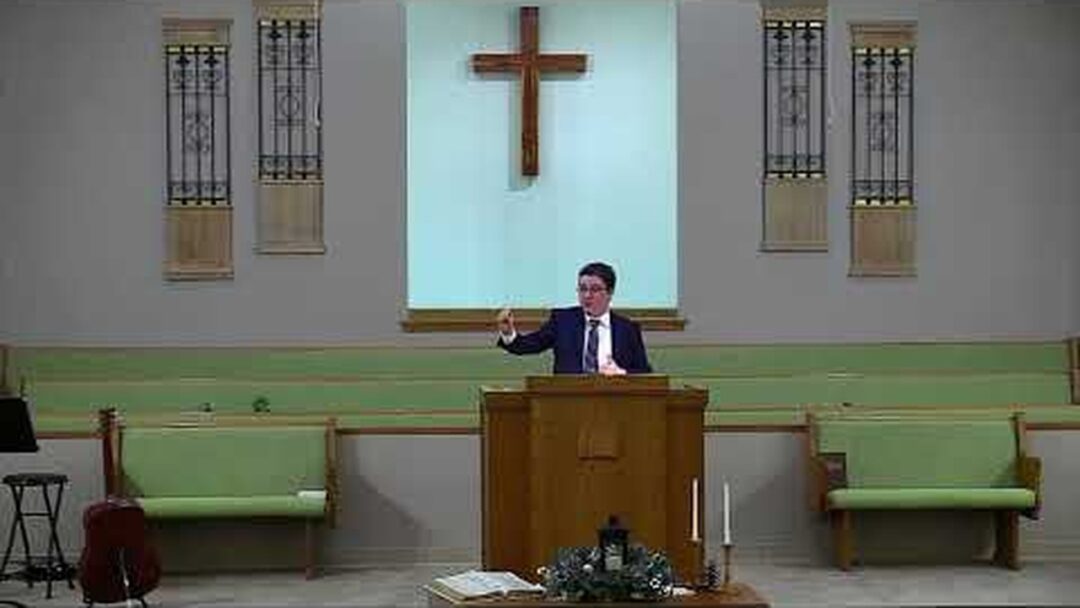
From our Journey Through James series, our Sunday service on March 19, 2023, James 2:1–26. Watch the full message: A Journey Through James 2 on YouTube.
Twelve Lessons on Pure Religion
We started our series in James, which we’ve entitled A Journey Through James, and we’re going to go through it week by week, one chapter at a time. As we mentioned last week, the first chapter of James is an introductory chapter, designed to introduce us to the things coming ahead. We talked about who James was: the half-brother of Jesus Christ. He grew up with Jesus, and he was one of the brothers who did not believe in Christ until after the resurrection. He thought, “My brother can’t be the Son of God. I live with him. He’s just my older bro.” After the resurrection he said, “Truly my brother was the Son of God,” and he became very influential in the early church. He ended up taking over the church in Jerusalem.
Shortly after he took over, persecution came. The Jews did not like this new sect of Judaism, as they saw Christianity, and they started to persecute Christians. James’s church was scattered throughout all of Israel and the Roman Empire. So James, a pastor with a scattered church, wants to encourage his people and remind them of the things he taught them while he was their pastor. He wrote this letter to all the churches. After the introductory section, he gives a series of twelve practical lessons (twelve was a very significant number to the Israelites) for how we can ensure that we are practicing what James calls pure religion.
Christianity is worthless if it doesn’t mean anything to us, if we just sit in church every Sunday and hear words but never act on them. James calls that being a hearer of the word and not a doer. Throughout the series he is going to teach us how to make sure our religion isn’t empty, pointless, or meaningless, but a religion that changes our lives.
Today we’re going deeper into the first two lessons James has laid out for us to become greater Christians. Since we have two lessons, we have two propositions:
First, God wants you to show love, not favoritism. Sometimes those can be confused.
Second, God wants you to show genuine faith through your works.
Lesson One: Love, Not Favoritism
My brethren, have not the faith of our Lord Jesus Christ, the Lord of glory, with respect of persons. For if there come unto your assembly a man with a gold ring, in goodly apparel, and there come in also a poor man in vile raiment; And ye have respect to him that weareth the gay clothing, and say unto him, Sit thou here in a good place; and say to the poor, Stand thou there, or sit here under my footstool: Are ye not then partial in yourselves, and are become judges of evil thoughts?
James 2:1–4
It’s easy for us to get confused about this. A lot of times the Bible says something along the lines of, “How easy is it to love those who love you?” This is the same issue. It’s easy to love people who are easy to love, and in this case that was people with lots of money. These were the wealthy and the people in power. In that day, that would have been religious leaders or people who worked for Rome.
In the early church they had this problem with rich people coming into the congregation and being greeted with happiness, joy, and enthusiasm: “Oh, here, take the good seat.” We’re blessed in our modern day to have pretty big churches. Our church is small by some standards, but by first-century standards we’re about four times bigger than any of their churches. They met in synagogues without a lot of seating, so their seating space was limited. So the wealthy person comes in and they make him a seat, and then they go to the poor person, or the person who is less favored, and say, “Hey, get out of your seat. You can go stand in the corner.”
That was not showing love. It was showing favoritism, a bias toward other people. James says, “Have not the faith of our Lord Jesus Christ, the Lord of glory, with respect of persons,” meaning respecting one person over another.
James mentions a gold ring and goodly apparel. I often go wearing a suit, and some churches say you have to wear a suit all the time, that’s how you’re righteous and spiritual. I don’t see the Bible say that. Look at this passage: it implies that not everybody wore fine clothes. Suits cost a lot of money, and it’s not God’s will for everyone to buy a suit. If a poor person comes into our church, we ought not say, “Why aren’t you wearing nice clothes? You can’t come to church in bad clothes.” Jesus wants you to come to church where you are, as you are, so He can start working on your life.
We as Christians, like Samuel when he was anointing David, are tempted to look on the outward appearance. You remember the story of King David: he was the youngest of all the brothers, the sheep herder, but he was the one willing to let God use him the most. Just like those in the first century, sometimes we assume that if somebody looks a little off from what we consider good and stable, they’re not usable for the ministry, or they don’t deserve a specific spot in our ministry.
The Man Who Knocked at My Door
This just came to my mind. I think I’ve told this story before. When I was at Pensacola Christian College, working there and on my master’s, my website, Nerd in the Word, crashed. I lost years of work on that website and was going to have to rebuild it from scratch. It was one of the down moments of my life, because I had exams coming up, and I had about forty people a day reading the site. I thought no one could read my stuff anymore, and it could take months to fix. I was down.
And God sent someone to my work who knocked on my door, and it was not someone I expected. It wasn’t a man in a suit. It was a former drug addict who was homeless, wandering America wherever God wanted him to go to encourage someone. I was ignoring the knock. Someone said, “Hey, do you hear someone knocking?” “Yeah, but we’re not supposed to open.” “Well, they’re asking for you. I think they’re talking about your car.” I thought, “What? Please don’t break my car, my day’s so bad. My website’s down already. I don’t have money to fix this. I’m a poor college student.”
I got to the door, and he said, “Is this your car?” I said, “Yeah, why?” He said, “I was passing by your car. God told me to talk to you.” I thought, “Okay, this guy’s a little weird.” Like this passage is talking about, he had raggedy clothes, an old leather jacket that was probably thirty years old that he’d picked up at Goodwill, and gloves with holes in them. He said, “I just want to tell you my story. For twenty years I was addicted to drugs and alcohol. One day I went to church and God got a hold of my heart and changed my life. I knew that if I stayed in one place and allowed myself to accumulate wealth, I would fall into the same sins God freed me from, so I dedicated my life to wandering America and talking to people.” I thought, “Okay, this is really weird.” And then he said something I won’t forget: “God told me that something this week has really discouraged you, that you feel like this mountain you have to climb is too much for you right now. He wanted me to tell you that Satan will not have the victory. He may have bruised your head, but Christ is going to overcome Satan in the end. This is only a minor setback.” I was just blown away.
If I had looked at that man, laughed at him, and walked away, I would have missed the encouragement of God. That is the problem in the early church: people walking into their church who didn’t look like the spiritual type, who didn’t look like they had their lives together. But God can use anyone He wants to use.
Are You Not Partial in Yourselves?
James says, “Are ye not then partial in yourselves, and are become judges of evil thoughts?” He’s reminding them of the Romans, the Pharisees, and the Sadducees, who put Jesus to death for no reason and made false accusations. They were evil judges, and these people looked at them and thought, “What wicked leaders.” James says, “Are you not wicked yourselves? You condemn those unjust judges, but you are unjust judges because you show favoritism to the rich.”
Hearken, my beloved brethren, Hath not God chosen the poor of this world rich in faith, and heirs of the kingdom which he hath promised to them that love him? But ye have despised the poor. Do not rich men oppress you, and draw you before the judgment seats? Do not they blaspheme that worthy name by the which ye are called?
James 2:5–7
James calls them out more. Has not God chosen the poor of the world? Have you read your Bible? Think about the disciples. Peter, Andrew, James, and John were all fishermen. A fisherman could have a good year and live comfortably, but it wasn’t guaranteed at all. One year the fish population might be down and they’d barely make it through. Sometimes it provided decent income, and sometimes they lived very humbly and experienced economic uncertainty. Did not Jesus call these nobodies to His ministry, to become the disciples who would turn the world upside down for Jesus Christ? Why do you despise the poor? God uses them.
Have you forgotten the story of Gideon? He was the weakest man from the weakest clan in Israel, from the tribe of Manasseh. He considered himself the weakest one in his family, who was outcast from his own family for being weak. He was hiding from the people God wanted him to overthrow, just to keep grain in his mouth. And yet God took Gideon, the poorest of the poor, and turned him into a leader with only 300 men to free Israel from their captors.
What about Esther? She became queen of Persia after winning the beauty contest, but she was an orphan raised by her cousin Mordecai. She didn’t have much going for her. She didn’t have a family or a support group. She was taken captive by a king and didn’t have any choice in anything that happened in her life. And yet God allowed her to be in a position to save the entire Jewish people from elimination.
What about the widow of Zarephath? She was a poor woman living in a time of severe famine, and despite her poverty she gave the last morsel of her food to the prophet Elijah in faith and at God’s command. In return, God allowed her cruse of oil to last throughout the rest of that famine. She had nothing. She had at least one meal and then maybe death, that was it. And God chose that poor woman to be the one who delivered Elijah.
If God keeps using all these poor, humbled, desperate people to do things bigger than themselves, why do you despise the poor? Why do you see someone poor on the side of the road and say, “Disgusting, lazy, he should be better. I’m better than you”? You may not say it in those words, but what you’re saying means those things.
Celebrating the Wrong People
Here the Christians were despising the poor and preferring the wealthy, the people in power who used their money to silence them. “Do not rich men oppress you,” which literally means to use their power against you, “and draw you before the judgment seats?” Is it all that different these days? We live in a capitalist society. We have people in power with lots of wealth. How often do they try to keep us silent?
James asks why you are celebrating all these rich people and their status. We say, “I love Elon Musk, best person in the world. Mark Zuckerberg, we all like Mark Zuckerberg.” Donald Trump, anybody. We put them on a pedestal just because they have money, just because they’re great businessmen. James says, “Why do you put these people on a pedestal? There’s more to life than money. Why don’t you celebrate righteousness instead of wealth? Why don’t you celebrate humility instead of pride?” Church, you’re focusing on the wrong things. You want to be like these wealthy people, to be prideful like these people of power. But notice that they’re dragging you to the judgment seat, suing you and taking your money.
“Do not they blaspheme that worthy name by the which ye are called?” These wealthy people slander Jesus. They make a mockery of Christianity, sometimes taking it and twisting it for their own agenda. Maybe some of them claim to be Christians but live in a way that doesn’t reflect Christianity. Maybe they don’t hold all the fundamentals of the Bible. They’ll say, “Yeah, I believe in the good works, I believe in Jesus,” but on issues like abortion, for example, they don’t believe in the value of human life. They take the holy name of Jesus and His teachings and twist them to keep only what they like.
The Royal Law
If ye fulfil the royal law according to the scripture, Thou shalt love thy neighbour as thyself, ye do well: But if ye have respect to persons, ye commit sin, and are convinced of the law as transgressors. For whosoever shall keep the whole law, and yet offend in one point, he is guilty of all. For he that said, Do not commit adultery, said also, Do not kill. Now if thou commit no adultery, yet if thou kill, thou art become a transgressor of the law.
James 2:8–11
Some of you in here may not struggle with this. You can be a Christian who loves your neighbor as yourself, and some of you have it. But there are people in here today who don’t. James says that if you have respect for persons, if you have bias, you are committing sin, because you’re not loving your neighbor as yourself. You’re only loving those who are easy to love. “Convinced” is a judicial word: you are convicted by the law as a sinner. Today, if you have biases toward people, if you favor the rich over the poor, and you allow this to corrupt your religion, you are convicted of sin.
“Whosoever shall keep the whole law, and yet offend in one point, he is guilty of all.” That’s the way the law worked. It wasn’t that you were still righteous if you could break one or two rules and get the majority of them right. You are either a sinner or you’re not. So James says it’s very serious. If you’re missing this one thing, don’t overlook it.
He makes an analogy with an easy-to-understand example. The Bible says don’t cheat on your wife. If you don’t cheat on your wife, good, you’ve got it. But it also says do not kill. If you are a murderer, your defense cannot be, “Well, I didn’t cheat on my wife.” That makes sense to us. It’s the same here. If you follow all the rules, not stealing, not lying, not bearing false witness, and yet you have respect of persons and don’t love your neighbor as yourself, you’re guilty of all the law. So don’t push this issue aside. We’re talking about pure religion, and James says there’s more to get out of this than you have right now.
The Law of Liberty
He talks about the law of liberty. What’s that? We have to go back to the first chapter, to James 1:22–25.
But be ye doers of the word, and not hearers only, deceiving your own selves. For if any be a hearer of the word, and not a doer, he is like unto a man beholding his natural face in a glass: For he beholdeth himself, and goeth his way, and straightway forgetteth what manner of man he was. But whoso looketh into the perfect law of liberty, and continueth therein, he being not a forgetful hearer, but a doer of the work, this man shall be blessed in his deed.
James 1:22–25
The perfect law of liberty is to look at the Bible, at Scripture, as a mirror. You look at the rules and instructions it has and ask, “Does this look like me? These things it says I should do, do I do them? These things it says I should stay away from for my own safety, do I avoid them?” We talked about this last week, how you should be doing that every morning to see how you look. It’s like looking in the mirror, seeing a problem, and doing nothing about it. It doesn’t benefit you to look in the mirror if you don’t do anything with what you see. You can look at the Word of God every day, but if you’re not using it as a mirror to analyze yourself and ask, “Am I struggling in this area?” it has no benefit.
So speak ye, and so do, as they that shall be judged by the law of liberty. For he shall have judgment without mercy, that hath shewed no mercy; and mercy rejoiceth against judgment.
James 2:12–13
Don’t just talk about the Bible. Don’t just say you’re a Christian. Speak it and do it. The Bible says God is not going to be gracious to you if you’re not gracious to other people. If you’re sitting here judging the people who walk in the doors of your church, putting them in a tier list (“that’s a good person, that person’s not like them so much, this one’s okay, I love that one, that one’s my favorite”), you’re not showing mercy. Don’t expect God to have mercy on your life when you mess up if you’ve got this tier list of people you favor and don’t like. You need to love people like you love yourself, without these biases. You should be merciful.
This reminds me of what Jesus said in Matthew 25:40.
And the King shall answer and say unto them, Verily I say unto you, Inasmuch as ye have done it unto one of the least of these my brethren, ye have done it unto me.
Matthew 25:40
That is from the parable of the king, and Jesus is talking about Himself as the king. However you treat someone on this earth, consider it done to Him. When you stand before God, He is going to say, “Why did you despise me? Why did you look down on my poverty?” And I’ll say, “When, Lord, did we do that?” “When that person came into your church and you judged them, gave them a side-eye, and distanced yourself from them. You got mad that they sat in your pew. Why did you do that?” And I’ll say, “Oh, Lord, I didn’t think about it like that.” But the Bible gave us a warning. I don’t want to stand before God ashamed of the things I did.
The opposite is true too. We go to heaven and say, “Jesus, thank you for feeding me, for clothing me, for caring for me, for loving me.” And I’ll say, “Oh, Lord, when did I do that?” “When that person came into your church and needed it, and you said, ‘Hey, I see this need. Can I help you? Do you need someone to talk to? Let me listen to you.'” When we stand before God, He will say, “Thank you for serving me.”
When we refuse mercy to those who are worse off than us, God is going to withhold blessing from us in our lives. I don’t think any of us want to miss out on the blessings of God. So we need to evaluate our own attitudes and actions and make sure we’re not showing favoritism in our lives. It’s not something we notice right away. We don’t usually sit down and ask, “Have I been showing favoritism recently?” It’s something we’re used to doing without noticing. We must be intentional in ensuring favoritism doesn’t take over our lives, and intentional in reaching out to those who may be less fortunate than us or may not have their lives together like us, remembering that in God’s eyes we’re all equal and all loved. That was our first lesson.
Lesson Two: Genuine Faith Through Works
What doth it profit, my brethren, though a man say he hath faith, and have not works? can faith save him? If a brother or sister be naked, and destitute of daily food, And one of you say unto them, Depart in peace, be ye warmed and filled; notwithstanding ye give them not those things which are needful to the body; what doth it profit? Even so faith, if it hath not works, is dead, being alone.
James 2:14–17
There’s a lot of confusion about this passage. “Can faith save him?” Yes, salvation is through faith. But what James is saying is that people who have true faith are going to show some fruit from it. Jesus says, “You’ll know them by their fruit.” Think of a tree: a tree that is healthy, active, and alive will produce fruit every season, and a tree that is unhealthy will produce none. You can look at people who claim to be Christians and ask, “Is there anything in their life that tells me they actually believe this? Is there some fruit that grows on their tree every so often?” If they’re true believers, the Bible says they will have fruit to show.
When James asks, “Can that faith save him?” he is not talking about faith in God in the sense of someone who truly believes. He’s talking about faith as in what they say. Can someone just saying “I believe in Jesus” be saved? No. They actually have to have genuine faith in Jesus. The Bible says not everyone who says “Lord, Lord” will enter into the kingdom of heaven. There are people who walk around saying they’re Christians just because they like the culture of Christianity or the community of Christianity. Can faith like that be saved? No. It has to be genuine faith in Jesus Christ.
James gives an easy-to-understand illustration. Saying you’re a Christian but not doing anything the Bible says is like saying you’re doing charity work for the hungry yet giving them nothing but kind words. “Naked” means they don’t have any clothes to keep them warm, and they lack daily food. This is a Christian who goes around and says, “Oh, I see this person. I’m going to go talk to them.” You say, “Depart in peace, be warmed and filled.” You say good words. You talk the talk but don’t walk the walk. That’s what James is all about: you’re hearers but not doers. You say, “God bless you, I see you have a need, I’ll pray for you,” and you have the ability and power to solve the problem. I think almost everyone in here, if someone were starving for the day, has the ability to give them food and some piece of clothing to help them out. Your faith without works is like a Christian saying, “All I can do for you today is say I hope God keeps you warm tonight.” That’s pretty pitiful.
All of us should be able to do something, and James is saying it’s as obvious in this situation as it is in the other. If you can clearly see that something is wrong when someone says “be warmed and filled” but doesn’t give them clothes or food, it should be just as obvious to a Christian who has no good works that something is wrong. If you aren’t doing anything the Bible says, if you’re not loving your neighbor, if you’re showing favoritism, if you’re cheating, lying, or committing adultery, if your fruit is not showing up, then your faith is pointless. “What doth it profit?” What is the benefit? “Even so faith, if it hath not works, is dead, being alone.” There’s nothing to show for it. Your faith has no benefit.
Yea, a man may say, Thou hast faith, and I have works: shew me thy faith without thy works, and I will shew thee my faith by my works. Thou believest that there is one God; thou doest well: the devils also believe, and tremble. But wilt thou know, O vain man, that faith without works is dead?
James 2:18–20
Faith that doesn’t act becomes stagnant, and the tree withers and dies. You can have this argument all day long. “You have faith, I have works. Show me, and I’ll prove you wrong.” But there’s no debating it. The Bible says it, and Jesus said it Himself. My older half-brother Jesus told me, and I know this is true. So don’t piddle around with this issue. Solve it.
Then James says something very strong: “The devils also believe, and tremble.” The demons believe there’s one God. Does that save the demons? They believe God is the ultimate power. They believe Jesus is the Son of God, and the demons called it out when Jesus was doing His ministry. They believe Christ can save souls. They believe that one day they will be thrown into hell, and they said, “Don’t throw us in before the time.” If the demons believe all that, there must be more to it. What good does their faith in these facts do for them? There’s no benefit, because they believe but don’t care about God. They believe these as facts but act against God.
You as a so-called Christian can believe that these facts are true and still not be safe. You can believe that God is the only God, that Jesus can save you, and that one day there’s judgment in hell. But unless you respond to that, it does you no good. What a shame for someone in that position, who has all the knowledge they need to respond and yet doesn’t. I pray there’s nobody in here in that position, and that if there is, you work that out.
I love James. He makes preaching real easy. He gives his own illustrations in his book, examples that prove God calls true believers to act in addition to having faith.
Abraham
Was not Abraham our father justified by works, when he had offered Isaac his son upon the altar? Seest thou how faith wrought with his works, and by works was faith made perfect? And the scripture was fulfilled which saith, Abraham believed God, and it was imputed unto him for righteousness: and he was called the Friend of God.
James 2:21–23
Everybody knows Abraham. Abraham’s faith in God is what granted him the righteousness of God. Everybody throughout the Bible was saved by faith: those in the Old Testament, faith looking forward to Jesus Christ; us in the New Testament, faith looking back at Jesus Christ; and for those lucky few who were there, faith in Jesus Christ as He walked in His ministry. It was all by faith. We see it in Genesis 22:10–12.
And Abraham stretched forth his hand, and took the knife to slay his son. And the angel of the LORD called unto him out of heaven, and said, Abraham, Abraham: and he said, Here am I. And he said, Lay not thine hand upon the lad, neither do thou any thing unto him: for now I know that thou fearest God, seeing thou hast not withheld thy son, thine only son from me.
Genesis 22:10–12
God says, “Now I know,” because it wasn’t just words. Now I know you believe in me, Abraham, because you’re not just saying “I believe in God, I believe in God.” You’re responding to God’s instructions no matter how hard it is. And here James isn’t talking about our righteousness being declared through Jesus Christ for salvation. That is declared to us through our faith in Christ. James is talking about justification here as being declared righteous to the world. Abraham’s righteousness was declared to those around him. We see this in Hebrews 11:17–19.
By faith Abraham, when he was tried, offered up Isaac: and he that had received the promises offered up his only begotten son, Of whom it was said, That in Isaac shall thy seed be called: Accounting that God was able to raise him up, even from the dead; from whence also he received him in a figure.
Hebrews 11:17–19
Abraham declared his faith when he acted on it. That wasn’t the moment he got saved. It was the moment he was declared righteous to everyone around him. How many times does the Bible talk about Abraham’s faith? Plenty. Everybody knows Abraham had faith, because his faith declared it. There is a difference between faith that saves and faith that is declared to other people. We have to think about that.
Consider the criminal on the cross next to Jesus Christ. Was he able to act on his faith in any real, meaningful way? No. He died within an hour or two or three of being saved. He was nailed to a piece of wood. He couldn’t go feed the poor or clothe them. He couldn’t teach Sunday school. He was nailed to a cross. There was nothing he could do to demonstrate his faith other than his words. Now, is James saying, “Well, he only did it in words. He said, ‘Lord, remember me when thou comest into thy kingdom'”? Words don’t save him? No, that’s not what James is saying. James is saying you are saved by faith, but you are not declared righteous to other people unless your words are backed up by action. So we need to understand that this is not a works-based salvation. It is works-proved salvation to the people around us.
Ye see then how that by works a man is justified, and not by faith only.
James 2:24
“Justified” means declared righteous. His works declare him righteous, not by faith only. He is declared righteous by faith in Jesus Christ for salvation, but to everybody else, he’s declared righteous through his works. While Abraham’s faith declared him righteous to God, his actions declared his faith to the world around him, and because of that we still talk about him thousands of years later.
Rahab
Likewise also was not Rahab the harlot justified by works, when she had received the messengers, and had sent them out another way?
James 2:25
Do we remember that story? It’s the story of Jericho. Joshua fought the battle of Jericho, and by “fought” we mean he walked around the walls and God tore them down. Before they went to that battle, they sent in some spies to check out the city. They found that everybody there was shaking about the power of God, and one woman, Rahab, said, “I’ve heard the things your God can do, and I believe your God is going to give you the victory. I’m going to help your spies escape.”
She was a prostitute. She was not a good Christian. She’s the one person you wouldn’t give your seat to in church, the kind of person we were talking about a few minutes ago, someone of lowly status that people don’t usually look to as the good believer. But in this story she is the one who demonstrates faith, and eventually she’s one of the people in the line of Christ. God can use anyone at any time. But this woman had to demonstrate her faith. The spies said, “Okay, Rahab, you’ve let us down.” And they didn’t stop there. They said, “You need to do something else. I need you to put down a scarlet thread and leave it out when we come to this battle, when the walls come down. If you leave that thread out, your house won’t be destroyed.”
The thing to know about Rahab is that she lived in the wall of Jericho. What’s going to fall down? The walls. That’s a bad place to live when the walls fall down. So God says, “Okay, I’m going to make an exception here. The walls of Jericho are going to fall down except for your house. But you have to do something. You have to show your faith with the scarlet thread.” Had she not done the works, would her faith have saved her, in the sense that it delivered her from death? No. She had to put the scarlet thread out. Otherwise the building would have come down with everybody else.
For as the body without the spirit is dead, so faith without works is dead also.
James 2:26
Rahab the harlot was declared righteous by her works, and she sent the messengers out another way. She would not have been delivered had she not demonstrated her faith with the scarlet thread. She would have been destroyed alongside everybody else. She had to do something intentional to set herself apart. In the same way, if you as a Christian don’t have works, you’re spiritually dead. The walls of Jericho have fallen on you. You didn’t put anything out there to keep your relationship with Christ alive, and now you’re falling into disrepair.
In the same way, with these two illustrations of Abraham and Rahab, if we don’t have actions to back up our faith, our faith is of little value. Abraham’s faith would have been of little value had he not been willing to sacrifice Isaac. We wouldn’t be talking about him today. Rahab’s faith would have been of little value had she died in the walls of Jericho. But her faith was backed up by her actions. So we too must examine our lives to ensure that our faith is accompanied by good works. We must ensure that our tree doesn’t become dormant in a spiritual winter, but that we grow in our relationship with Christ and our actions increasingly align with what He taught us to do.
Two Lessons for Our Christian Walk
First, we learned that God wants us to show love to people and not favoritism. As Christians we must remember that all are equally valuable in the eyes of God, and we have to avoid favoring individuals just because they’re easier to love. Our attitudes and actions should reflect Christ’s love for all, not just those we get along with.
Second, we learned that God wants us to display genuine faith through our works so that we can show our faith to others. Faith alone is not enough. It must be accompanied by actions that demonstrate our commitment to God. The examples of Abraham and Rahab show us that true faith is not just about believing but about acting on our belief. As Christians we must continually examine ourselves in that spiritual mirror, the Bible, and ensure that our faith is alive and accompanied by good works.
That leaves us with a final question today: will you choose to be a Christian who loves the unfavored, and a doer of the word who is declared righteous to the world through the actions he performs?

Recent Comments