
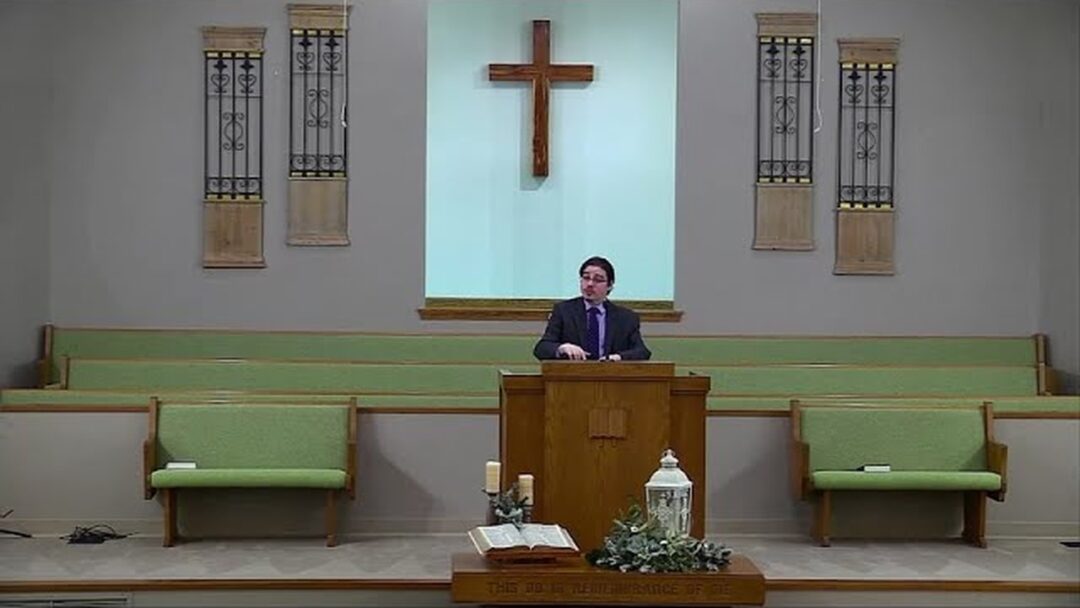
From our Sunday service on January 12, 2025, Psalm 33, Hebrews 12, Psalm 112, Isaiah 66, and Ecclesiastes 12. Watch the full message: What is the Fear of the Lord? on YouTube.
Today we’re going to talk about a very important topic that can sometimes be misunderstood: the fear of the Lord. The Bible tells us repeatedly that it is a crucial element of our Christian walk. We can’t truly live well as Christians without it, so it’s important to understand what it is.
The fear of the LORD is the beginning of knowledge: but fools despise wisdom and instruction.
Proverbs 1:7
Proverbs is wisdom literature, and its introduction says one of the main purposes of all this wisdom is to create the fear of the Lord, so that we can start to understand the world around us and how we should live in it. A proper perspective on life cannot be formed without a proper understanding of the fear of the Lord. We will never have a fully developed Christian walk if we don’t know what it is. Ambrose of Milan said, “The one who fears the Lord departs from error and directs his paths to the path of virtue. Unless a man fears the Lord he is unable to renounce sin.” It’s also the first step toward understanding salvation. If you don’t have the fear of the Lord, you don’t know that you need to be saved. It is foundational to every part of our Christian walk.
Why We Misunderstand It
Part of the problem is the over-spiritualizing of words. This isn’t really bad, just a side effect of living in a world that became Christian. As Christianity spread, the words used in the Bible took on Bible-flavored meanings. Take “offense.” Before the Bible, an offense was just something you tripped on, a stumbling block. Over time words change meaning, and we lose focus on what they originally meant in the context where they were used.
One of the main commentaries a Bible college student would use is the Jamieson, Fausset, and Brown commentary. Look up the fear of the Lord there and it says, “The principle of true piety is the fear of the Lord.” We have spiritualized words like “principle” and “piety” so much that, to my generation at least, that definition doesn’t help. It makes me more confused. Another example is God’s will. When the King James was written, “will” was just another way to say “desire”: it’s God’s desire that I do this or that. But we’ve used the phrase “the Lord’s will” so much that it now leans toward “God’s plan for my life” rather than “what God wants for me.”
So it’s not bad to step back and ask whether I’m fully understanding a phrase. Today I want to look at “fear the Lord” so that we understand what it means and live wisely.
What Is the Fear of the Lord?
We’ll look at one passage in the Old Testament and one in the New. Ultimately we’re going to discover that the fear of the Lord is a respect or reverence for the Lord.
Let all the earth fear the LORD: let all the inhabitants of the world stand in awe of him. For he spake, and it was done; he commanded, and it stood fast.
Psalm 33:8–9
If you know anything about Hebrew poetry, it doesn’t rhyme in sound but in thought. You’ll either have a phrase stated in two different ways, or opposite phrases set against one another. That’s really nice, because if we don’t understand a word in the Bible, we can go to the Psalms, look at a passage where it’s used, and nine times out of ten the first part equals the second part. If I understand the second part, I know the first. If A equals B and B equals C, then A equals C. It’s the transitive property of Hebrew poetry.
Here the first part says, “Let all the earth fear the LORD,” and the second says, “let all the inhabitants of the world stand in awe of him.” Both say the same thing: everybody in the world, whether you say “earth” or “world,” will fear or stand in awe of the Lord. “Awe” is the word we get “awesome” from, but we’ve lost some of its power. A better phrase might be “awe-inspiring.” Let all the inhabitants have an awe-inspiring response to seeing God in their lives. That’s the fear of the Lord.
Verse 9 tells us why: “He spake, and it was done; he commanded, and it stood fast.” That’s creation. We should fear the Lord because he is powerful, and creation yields to his word alone. He is the creator of the universe and all of it answers to him, so we should have reverence and awe. If God can speak and change the universe, what could he do to me if he wanted to?
But God is very merciful. We shouldn’t fear him as in shaking in our boots that he’s going to be evil. We fear him realizing how merciful he is to us. God might not strike me dead right now, but I have sinned enough in the past that it would be 100% justifiable as an act of God. Yet he doesn’t. He is patient and tolerant with me. He allows me to make mistakes, repent, and grow. The fear of the Lord is not being afraid of being struck down but being amazed at God’s mercy toward us, while still understanding that he is a just God who wants to make all things right in the end. What God says is firm. What God desires can happen if he wants it to. Nothing can stand in his way.
Wherefore we receiving a kingdom which cannot be moved, let us have grace, whereby we may serve God acceptably with reverence and godly fear: For our God is a consuming fire.
Hebrews 12:28–29
Once again there is a threat. God is not a stuffed animal or a nice soft pillow. He is a consuming fire. If you know anything about what’s going on in California, you know what a consuming fire can do. It can burn down cities in minutes. Our God is a consuming fire, yet he restrains that destruction. God has appointed a day of wrath, but he is merciful. We should have grace because God has had grace. He has every right to judge and correct these wrongs, and we may serve him “acceptably with reverence and godly fear.”
Hebrews 12 is a passage telling us to fight the fight of faith against temptation. Even though we’ve been saved and are new creatures, there will still be temptation to sin, and we need to endure it as good soldiers. We are called to be holy in light of the reality that God’s kingdom is unstoppable. Just as in Psalms, this awe comes from the truth that if God’s word alone can change the universe, there is nothing we can do to change his path by our own human will. We can pray, and we see Moses change God’s response to Israel, but if God wants something to happen, it will.
So in light of this, the fear of the Lord here isn’t being afraid of God because he’s unstoppable toward us. It’s fearing God because we’re unstoppable through him. Read it again with that in mind. “We receiving a kingdom which cannot be moved”: the kingdom is the New Testament covenant, the church. We’ve accepted Jesus as our Savior, and death, hell, and nothing else can separate us from the love of Christ. This kingdom is unmovable because it’s God’s. So we’re not afraid because God is condemning. We have godly fear because he is protecting.
The fear of the Lord is recognizing how powerful God is. My God is more powerful than any force on earth, any difficulty I may face, any temptation, any trial. I know he can speak one word and change the world and start a kingdom that can’t be stopped. With that reverence and awe, I can have confidence to do what he wants me to do. If God wants me to go across the world and minister to people, I know I can. If he wants me to start a ministry to help those less fortunate and give them the gospel, I can. If he wants me to start a business so I can make money to give to the poor, I can. Whatever God has called me to, because I know how powerful my God is, I can have confidence that nothing can stop me in his will.
This is not a fear of condemnation. There is no condemnation in Christ Jesus. We are part of the kingdom and safely held inside it. But we should still have reverence for the God who is just and will hold accountable those who do not repent. Having a fear of the Lord means we do not take advantage of our faith. We know that God, if we hadn’t turned to Jesus, would have condemned us, and instead of using that as an escape, we use it as motivation to act as Christians.
So here is the definition we learned from these two passages: the fear of the Lord is a reverence and awe for God, recognizing his holiness, power, and authority. It’s not a paralyzing terror but a deep respect that shapes how we live.
When Fear Is Terror
There was a time in my life when I was running away from the ministry. In my senior year of high school I was already planning to go to Pensacola Christian College, but I did not want to go as a pastoral major. I wanted computer science. I was a geek. I’m still a geek, and I program every week as a hobby. I told God, “I don’t know if I want to do this pastor thing. It’s really hard. I like singing. I’ll sing, I’ll be your missionary, I’ll take the Bible classes and be an encouragement to people, but I don’t want to be a pastor. That’s too much responsibility.” I started running the other direction.
At that time I developed a wrongful fear of the Lord. I had a terror of the Lord, because like Jonah I knew I was running from the responsibility God called me to. I feared that God was done with me and would end my life for running from his purpose. That’s not the fear of the Lord. That’s fear of condemnation, a fear of being outside of God’s will. The fear of the Lord is from within God’s will. You can’t have a proper fear of the Lord unless you’re in the will of the Lord. That terror is not a normal feeling for a Christian. If you’re afraid of God’s judgment, you’re headed in the wrong direction. I don’t know where my life would be if I had continued down that path, but it would not have been as blessed as it is now.
If you feel that terror today and think it’s the fear of the Lord, it isn’t. It’s the fear of running away from God, the fear that you’re going to go down in the boat and a whale is going to swallow you like Jonah. It’s time to say, “God, I’m tired of running. I’m tired of being afraid of the consequences and being out of your will.” If you’re out of God’s will, you’re going to miss his protection. The Bible says God put a hedge of protection around Job, because he was doing God’s will. If you run outside of God’s will, the hedge is gone. If you don’t want to feel that terror, step back into the box of protection God has put around you.
Getting to know God better will help us understand why he’s worthy of our reverence. If we haven’t taken time to know him, we’ll misunderstand the fear of the Lord. It’s the terror of the Lord that brings us to salvation. We find out there is a just God, that there is life after death, and that there is a way to be saved from it, and that terror can lead us to repentance. But it should not remain in us after salvation.
What Does the Fear of the Lord Look Like?
It Looks Like Obedience
Praise ye the LORD. Blessed is the man that feareth the LORD, that delighteth greatly in his commandments.
Psalm 112:1
Why should we praise the Lord? Because the man who fears him is blessed. As I said, God puts protection around his people when they’re in his will. If we obey the Lord, we will be blessed because we’re keeping his commandments. Fearing the Lord naturally leads to joyful obedience to his will, and notice it says he “delighteth greatly in his commandments.”
“Commandments” can be a false friend, as they call it. In the context of Israel they viewed the word differently. The Hebrews’ word for the first five books of the Bible, the Torah, we refer to as “the law,” but in a Jewish understanding it would be closer to the instructions God gave. So “command” is usually not “go do this right now” but more the parental “Hey, kid, let me give you some advice.” We think these are God’s rules to beat us down, but they’re actually God’s guidance for our lives. We’re not afraid of the Lord because he has rules. We fear him because we respect his advice, because it’s there to help us. These aren’t rules for the sake of rules but guidance for godly living.
With a proper reverence, we trust him even if things aren’t going the way we think they should. A lot of times we do something we’re confident is the right decision and the results don’t feel like what we expected. If we have a proper fear of the Lord, we won’t lose hope. We’ll say, “God has been faithful to me. I’ve been fearing the Lord for many years, I’ve walked this path before and been uncomfortable before, and every time God got me out on the other side. I know my God can speak and change the world, so why should I be worried right now? I’m in his will and following to the best of my ability. I can feel safe in his instruction.”
It Looks Like Humility
Thus saith the LORD, The heaven is my throne, and the earth is my footstool: where is the house that ye build unto me? and where is the place of my rest? For all those things hath mine hand made, and all those things have been, saith the LORD: but to this man will I look, even to him that is poor and of a contrite spirit, and trembleth at my word.
Isaiah 66:1–2
Here God is talking about his temple. The Israelites had forgotten the whole point of the law. Once they got the temple, they started thinking, “We built this building for God, we follow all these rules for God, we really deserve a pat on the back.” And God says, essentially, “Why are you so impressed with yourself? I made the dirt you used to make the stones. You think I’m impressed that you took dirt I made with my voice and made some bricks out of it? Where is the house you build for me? Why are you so proud of doing the bare minimum? I’m not impressed by whatever building you build or whatever checklist you mark off.”
The man God will look to is “poor and of a contrite spirit,” and “trembleth at my word.” That isn’t poor in money. It’s somebody who has humbled themselves in spirit, not somebody who says, “Look at these nice things I’ve built with my life, look at everything I’ve marked off my list for God.” It’s the person who, when they hear God speak, doesn’t get proud about the calling but humbles themselves and says, “I revere that Lord. I am in awe of him, and because I love him so much, I’m going to do what he says. I’m not going to make it about me.”
We see this in the life of Daniel. Daniel was an Israelite. The Babylonians came in and conquered Judah, slaughtered people, burned down cities, and took captive some of the smartest men in the nation. Daniel was one of those men, taken as a prisoner, and boy did he have the fear of the Lord. They wanted him to eat meat offered to idols, and he found that to be a problem. He said no, he stood up for what he believed was right, and he didn’t fear the king.
A couple of years later Nebuchadnezzar built an idol, and everyone was told to bow down to it or be thrown into a fiery furnace burning at thousands of degrees and killed in an instant. Daniel’s friends Shadrach, Meshach, and Abednego didn’t bow down, and I guarantee Daniel didn’t bow down either. These people had a reverence and fear of the Lord that was more powerful than any earthly power. Daniel could stand in front of a king who had every right to kill him and say, “Sorry, I don’t have more reverence and respect for you than for my God.” Time and time again Daniel showed respect for that king, who was his employer, but he said, “I respect my God over your opinion.” We have to prioritize God, but we have to do it humbly. Daniel was never proud in the way he resisted. He didn’t say, “I have rights.” He said, “I respect my God, and my God is able to protect me from whatever punishment you have for me.”
It Looks Like Respect for Others
Do you allow your reverence for God to affect how you interact with others? God said that all of mankind is his offspring, created in his own image. If we have the fear of the Lord and man is created in God’s image, we’re supposed to respect people as image bearers of God. Do you treat others as God’s children, people God wants to save and adopt as his sons and daughters? Do you treat others the way you would treat Jesus if he were in the room with you?
And the King shall answer and say unto them, Verily I say unto you, Inasmuch as ye have done it unto one of the least of these my brethren, ye have done it unto me.
Matthew 25:40
The fear of the Lord looks like obedience and humility, but also respect for others, because that humility extends not only before God but also before our fellow man.
I’ve heard time and time again of people who changed their entire lives by treating every interaction as if it were with Jesus. They were getting frustrated and angry at business meetings or dinners with wealthy people who just didn’t get it, butting heads with people. They said, “I have so much conflict in my life. I’m bitter and judgmental. I’ve got to fix it.” I’ve read this topic on the internet from people who said that was what changed things the most. Not “What would Jesus do?” but “What if the person I’m interacting with was Jesus? Would I say this to Jesus? Would I take this act of revenge if it was Jesus I was doing it to?” When you start asking yourself that question, your actions and attitudes quickly begin to change. Jesus says that if you mistreat somebody else, it feels like you mistreated him. When we harm other people through our actions, we harm Christ, and Christ’s heart breaks over us. So when you interact with others, do you have that reverence for God that calls you to treat everybody like Jesus Christ?
How Can We Have the Fear of the Lord?
We’ve looked at what the fear of the Lord is and what it looks like. Lastly, what actions can we take to start building it up?
Seek the Lord Through His Word
Come, ye children, hearken unto me: I will teach you the fear of the LORD.
Psalm 34:11
The good news is that the fear of the Lord is not something you just have or don’t have. It’s something you can learn. The children are invited: “I’ll teach you how to respect the Lord and be in awe of him.” By reading Scripture we can learn how to fear the Lord better. The Bible gives us examples of what it looks like to fear the Lord and what happens when we do not. In any story or account you can see what the fear of the Lord does in someone’s life. You can look at David and see what God did through him, and look at Saul, who didn’t do things the way God taught, and see the consequences. The New Testament tells us the Old Testament was given for our examples. Scripture reveals who God is and helps us develop a holy awe of him and his works.
Cultivate a Prayerful Heart
Teach me thy way, O LORD; I will walk in thy truth: unite my heart to fear thy name.
Psalm 86:11
Here the psalmist reaches out to God directly: “I need help getting this fear of the Lord in my life. I’ve read your word, but I’m not quite getting it. I don’t have the reverence I’m supposed to. I’m trying, but I can’t get it. God, I need help.” It’s all right to admit to God that you haven’t achieved what he wants. In fact, it’s what he wants you to do. If we haven’t developed a proper awe of God, pray for him to show you the steps to take to love him and follow him the way you should.
Surround Yourself with Godly Influences
He that walketh with wise men shall be wise: but a companion of fools shall be destroyed.
Proverbs 13:20
The people we spend time with influence us for better or for worse. If we have people in our lives who don’t fear the Lord and are antagonistic toward his ways, maybe they’re not people we should spend that much time with. Maybe we should spend more time with those who do fear the Lord. I’m sure you can think of at least one person in your life who has the fear of the Lord. Maybe you should spend more time with them. They’ve clearly figured it out. “Iron sharpeneth iron; so a man sharpeneth the countenance of his friend.” If you spend time with people who fear the Lord, you’ll learn how to fear the Lord through how they act. So minimize the influence of the sinful lives around you. That doesn’t mean avoiding everybody who doesn’t fear the Lord. I’m not saying to separate into your own community like the Amish. I’m saying to make sure you surround yourself with people who can bring you up. It’s an easy way to grow in your walk with God.
Prepare for a Challenge
“Oh, Pastor, it was so uplifting to read my Bible, pray, and spend time with good Christians. Now you’re saying I need to prepare for a challenge?” Yes. If you really want to experience the fear of the Lord fully, you’re going to be placed into tough situations that teach you to trust God in the long run. If you pray, “Teach me the fear of the Lord,” be ready for God to send some trials your way. You can’t grow patience without a long waiting time. You can’t learn endurance without suffering. You can’t learn humility by being lifted up. You can’t learn the fear of the Lord by living comfortably. It’s through hardship that we learn to trust the one who is bigger than our hardship. So I’ve got good news: it’s easy to learn the fear of the Lord, but it’s also hard. God wants us to grow closer to him and understand him better, but that’s impossible without going through some difficulty alongside him.
The Conclusion of the Whole Matter
Today we learned that the fear of the Lord is a reverence and awe of God that changes the way we act. It looks like obedience, humility, and respect for others. And we can build it by seeking God through his word, cultivating a prayerful heart, surrounding ourselves with godly influences, and preparing for the challenge ahead. Ecclesiastes, one of my favorite books, talks about the futility of the human experience, how everything seems pointless without God and how hard we work doesn’t determine how much we succeed. It concludes with this.
Let us hear the conclusion of the whole matter: Fear God, and keep his commandments: for this is the whole duty of man. For God shall bring every work into judgment, with every secret thing, whether it be good, or whether it be evil.
Ecclesiastes 12:13–14
If we want to live well and experience the best God has for us, we need to fear God and keep his commandments. God created us to live under him, with awe and reverence for him, guided by him, in relationship with him. If we’re missing that, we’ve missed out on all the blessings life has for us. If we fear God, good choices and good results will naturally follow.
Oswald Chambers said, “The remarkable thing about God is that when you fear God, you fear nothing else, whereas if you do not fear God, you fear everything else.” If you want to get rid of anxiety and conflict in your life, have the fear of the Lord. In God’s will, doing what God desires, you are protected, and the best life you can have is doing what God has called you to do. For each one of us that will look different, and I can’t tell you what each of you is called to do, but I believe there’s a spirit inside each of us that can reveal to us what God wants, and I believe deep in my heart that everybody knows what God wants from them. A lot of times we say we don’t know, when we do. If we fear God, we have nothing else to fear. The fear of the Lord is foundational to wisdom, and a life of obedience and intimacy with God is the key to our success in this world.
So my challenge today is to examine your heart. Are you growing in reverence for God, or have you become passively comfortable where you are as a Christian? Have you said, “God, I’m going to follow you anywhere. I know it may not be easy, and there will be challenges, but I trust you, I respect you, I revere you. Take me where you want me to go”? God wants you to have the fear of the Lord and to live a wise and fulfilled life. So the question is: are you going to choose to do so today?

Recent Comments