
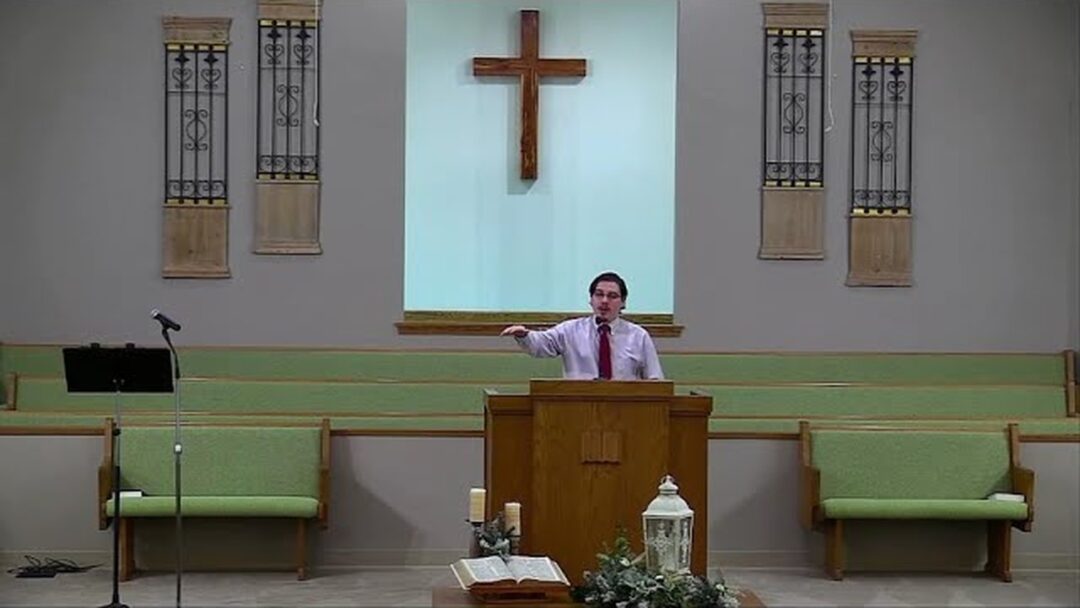
From our Sunday service on February 9, 2025, Ruth 2. This is the second message in our Book of Ruth series. Watch the full message: A Harvest of Kindness – Ruth Series #2 on YouTube.
Last week people told me it was helpful to hear the whole story first. I realize there are people in our church who have never read the story of Ruth, so before I go through it verse by verse, I’ll read my translation from my study so everybody knows the story. It’s hard to follow when I’m stopping and starting every other verse. Don’t expect me to do this with every message, but Ruth is short, so we have extra time in the service.
Story Time: Ruth 2
Now Naomi had a relative of her husband, a man of great wealth from Elimelech’s family, and his name was Boaz. And Ruth the Moabite said to Naomi, “Let me walk to the field now and pick up grain stalks after the one in whose sight I will find grace.” And she said to her, “Go, my daughter.” So she walked there, arrived, and began picking grain in the field after the harvesters, and she just happened to encounter the part of the field that belonged to Boaz, who is from Elimelech’s family. And consider this: Boaz arrived from Bethlehem and said to the harvesters, “May Yahweh be with you,” and they responded to him, “May Yahweh bless you.” Then Boaz said to his servant who was appointed over the harvesters, “Whose girl is this?” And the servant who was appointed over the harvesters said, “It’s the Moabite girl who returned from the country of Moab with Naomi, and she said, ‘Please let me pick up and collect after the harvesters between the sheaves.’ So she came and has continued since morning until now, except to sit a little in the house.” Then Boaz said to Ruth, “Listen, my daughter, if you will, do not go to pick grain in another field and do not go from here, but stay here with my female servants. Watch the field that they are reaping and go after them. I have instructed the young men not to harm you. And when you are thirsty, go to the water vessels and drink from what the young men have drawn.”
Ruth 2:1–9 (my translation)
And she fell on her face, bowed to the ground, and said to him, “Why have I found favor in your eyes for you to acknowledge me, when I’m a foreigner?” And Boaz answered and said to her, “It has been fully revealed to me everything that you have done for your mother-in-law since the death of your husband, and about how you left your father and your mother and your native land and have come to a people who you did not know before now. Yahweh has rewarded your work, and a full payment will be given to you from Yahweh, God of Israel, under whose wings you have come to seek refuge.” Then she said, “Let me find favor in your eyes, my lord, because you have comforted me and you have spoken to the heart of your female servant, even though I’m not like one of your female servants.” Then during mealtime Boaz said to her, “Come here and eat some of the bread and dip your piece in the vinegar.” So she sat beside the harvesters, and he handed her roasted grain. So she ate, was satisfied, and left. Now when she stood to pick grain, Boaz instructed his young men, saying, “Let her also pick grain between the sheaves, and do not shame her for it, and drop some of the handfuls for her on purpose and leave them, that she may glean them, and rebuke her not.” So she picked grain in the field until evening and threshed what she had picked up, and it was about an ephah, roughly 30 pounds, of barley.
Ruth 2:10–17 (my translation)
Then she carried it and went into town, and her mother-in-law saw what she had picked. And Ruth brought it out and gave her what she had left after she was satisfied. And her mother-in-law said to her, “Where did you pick from today, and where did you work? May the one who noticed you be blessed.” And she explained to her mother-in-law with whom she had worked and said, “The man who I worked with today is named Boaz.” And Naomi said to her daughter-in-law, “May he be blessed by Yahweh, who has not abandoned his kindness for the living and for the dead.” And Naomi said to her, “The man is a close relative to us. He is one of our family redeemers.” And Ruth the Moabite said, “He also said to me, ‘Stick close by my young men until they have finished all my harvesting.'” And Naomi said to Ruth her daughter-in-law, “It is good, my daughter, that you go out with his female servants, so that others do not harm you in another field.” So she stuck close by Boaz’s female servants to pick up grain until the end of both the barley harvest and the wheat harvest, while she lived with her mother-in-law.
Ruth 2:18–23 (my translation)
Where We Left Off
Last week we talked about the first chapter of Ruth. We were introduced to Naomi, and we saw how she suffered horribly because she got out of God’s will and ran away from where God wanted her to be. Though she had heartache and difficulty, we saw that God was going to provide for her, and one of the ways he did that was through a character we met at the end of last week, Ruth. She’s the one who bears the title of the book, so she’s our main character, and now we’re going to move our focus from Naomi to Ruth.
Ruth was Naomi’s daughter-in-law, she was widowed, and she was a Moabite. That’s very important, because Ruth decided last week to travel from Moab to the nation of Israel, and not being an Israelite meant she would become an outcast. According to Jewish law, the Jews were not allowed to intermarry with pagans. But we also saw last week that she had a conversion moment, when she said to Naomi, “Where you go I will go, where you stay I will stay, and your God will be my God.” At that moment Ruth was no longer outside the nation of Israel. She became a part of it, because the nation of Israel was for all those who believed in the true God, and by identifying herself with the true God she identified herself with the nation.
But to everyone on the outside, she looks like a Moabite. She looks like a pagan. The danger of traveling all the way to Israel is that although she may be a follower of God, on the outside she looks like she isn’t, and that brings biases and prejudices. She’s risking that no one will ever want to marry her, because of the risk of marrying a pagan. So she enters Bethlehem, the city of David, the city where Jesus was born, in a dangerous situation with a lot of unknowns. Today we’re going to see how God provides for her because of her faith, and I want you to walk away with this idea: God wants you to live a life full of compassion.
Ruth 2:1-3: Gleaning in a Stranger’s Field
And Naomi had a kinsman of her husband’s, a mighty man of wealth, of the family of Elimelech; and his name was Boaz.
Ruth 2:1
Before Boaz shows up in the narrative, we see that he’s a kinsman of her husband, a family member. He was a mighty man of wealth, which means he had a lot of land, a lot of resources, and a lot of power.
And Ruth the Moabitess said unto Naomi, Let me now go to the field, and glean ears of corn after him in whose sight I shall find grace. And she said unto her, Go, my daughter.
Ruth 2:2
When you see the word “corn” here, remember that the King James was translated in 1611. Back in that day, “corn” referred to any grain, not corn on the cob like we have now. In this case the grain is barley, which you see later in the narrative. You might think they’re farming corn on the cob, but corn on the cob wasn’t farmed anywhere other than America until Christopher Columbus took some back to Europe. So Ruth is gleaning ears of grain, and she says she wants to go out into the fields.
I’m not sure exactly how they did it in Israel, but the way this is worded shows us that the fields crossed property lines. In America you’ve got a gap between fields at the property line, but here it seems the fields were continuous, and if a section landed on your property, it was your responsibility to harvest it. So Naomi tells Ruth to go out into the fields, start harvesting grain, and try to find a field where someone will show her grace.
Why is Ruth, who just came into Bethlehem with no home and no resources, going into some stranger’s field and taking their food? To us as Americans this seems like a crime. Wasn’t that theft? That’s their property. But Israel works a little differently. Jewish law prevented people from fully harvesting their land.
And when ye reap the harvest of your land, thou shalt not wholly reap the corners of thy field, neither shalt thou gather the gleanings of thy harvest. And thou shalt not glean thy vineyard, neither shalt thou gather every grape of thy vineyard; thou shalt leave them for the poor and stranger: I am the LORD your God. … Thou shalt not avenge, nor bear any grudge against the children of thy people, but thou shalt love thy neighbour as thyself: I am the LORD.
Leviticus 19:9–10, 18
Part of this was making sure those who are less fortunate were taken care of. God said the corners of your field must be left unharvested, so a farmer would round out the corners, and that section of the field was left for anybody less fortunate than you: widows, foreigners who lived in the land and had no property to grow anything themselves, and travelers. If it was fruit instead of grain, you also couldn’t harvest all of your fruit trees. You had to leave a certain amount unharvested.
Remember in the New Testament, Jesus and his disciples were walking through the fields one day and the Pharisees got mad at the disciples for plucking and eating grain on the Sabbath. Some people like to say that Jesus was stealing, but no, that was Jewish law. You had the right to take food from the fields. In addition to the corners, there was a rule that you could take whatever you could fit in your hands, so travelers could survive on their way through different territories. You couldn’t put it in a bag or satchel, so you couldn’t walk through a field, grab a bunch of apples, put them in your bag, and leave. It was whatever you could carry in your hands, usually two or three apples, and then you could go and eat them. That’s how they made sure their people were taken care of. It was sort of a welfare system, as we would call it here in the United States.
There was also a rule that if you accidentally dropped something you had harvested, you couldn’t pick it back up. This comes into play later. If you’re cutting the wheat, cutting the wheat, cutting the wheat, and your hand cramps and you drop some on the ground, God says if you pick it up, that’s a sin. Leave it on the ground, and one of the poor people harvesting after you can pick it up and bring it home. This applied to fruit trees too. If your grapes or oranges fell off the vine and landed on the ground, you couldn’t harvest them, but somebody else could come by and pick them up.
The owners of the fields did have a little control over the situation. They weren’t allowed to cut the corners, but they were allowed to permit those they felt needed it most to go into the fields first. Obviously until you’ve cut the field you don’t know where the corners are, so once they’d cut it they could say, “You, old lady, I don’t think you’re going to be fast enough to get enough, so I’d like you to go first, and then the young people can come in after.” These owners didn’t have complete control, but they had some, and we’re going to see how Boaz uses it to help Ruth.
And she went, and came, and gleaned in the field after the reapers: and her hap was to light on a part of the field belonging unto Boaz, who was of the kindred of Elimelech.
Ruth 2:3
That word “hap” means it just so happened. She wasn’t planning for it and she wasn’t trying for it. As she went from field to field after the harvesters, she ended up in the field of Boaz, who was family to her, though she didn’t know it.
Ruth 2:4-7: A Faithful Man Notices
And behold, Boaz came from Bethlehem, and said unto the reapers, The LORD be with you. And they answered him, The LORD bless thee.
Ruth 2:4
Here we’re introduced to Boaz, and the first thing out of his mouth is “God bless you.” He’s using the divine name, Yahweh, the LORD in all capitals, and his workers say it back. So we know not only that he’s a faithful follower of God but that his workers are too. Boaz was adamant that the idolatry going around in Israel at this time would not be in his household, his workers, or his family. “We’re going to be devoted to God. When we greet each other each morning, we’re going to say, ‘God bless you,’ ‘God bless you too.'”
Boaz is the person we want to emulate today, and he’s off to a great start. God should be the focal point of our life. He should be the first thing we think about and the first thing we’re ready to talk about in the morning, and Boaz starts his day right by greeting his workers with “God bless you.”
Then said Boaz unto his servant that was set over the reapers, Whose damsel is this? And the servant that was set over the reapers answered and said, It is the Moabitish damsel that came back with Naomi out of the country of Moab: And she said, I pray you, let me glean and gather after the reapers among the sheaves: so she came, and hath continued even from the morning until now, that she tarried a little in the house.
Ruth 2:5–7
That word “damsel” means young woman or girl. Boaz is really confused. He sees a new face. I’m sure he wasn’t unfamiliar with the less fortunate going into his fields, because Boaz is a caring man, very particular in how he cares for people. But he’s never seen this girl before, and she’s really young, and he’s concerned. Why is this young woman by herself in this field? This situation is actually not very safe for her, because we’re told the young men are not to touch her, and that word means to harm or cause damage. She’s a young woman alone in a stranger’s field, harvesting crops with who knows who around her.
So Boaz thinks, “She looks like a foreigner, she’s by herself. Who does she belong to? Where’s her family? Where’s her husband? If she’s poor, shouldn’t her husband be in the field getting the grain? This is dangerous.” We see immediately Boaz’s concern for those around him. We too should emulate this. When we see someone in a precarious situation, we should immediately think, “Why is this, and what can I do to help?”
The workers tell him she asked, “Please, let me gather in this field.” She’s appealing to that choice of who can go first: “Please, please, please let me go first into your field and harvest after the reapers.” Why is Ruth so concerned about going first? Naomi is very old, beyond child-bearing age, and it doesn’t seem she has the ability to harvest the grain for herself. So Ruth isn’t just getting food for herself but also for Naomi. She doesn’t have to get food for one person but for two, so she’s saying, “I really need a head start. I’ve got more mouths to feed at home.”
She continued there from morning until now. She spent the entire day out in the sun picking up whatever scraps they dropped on the ground, collecting, collecting, collecting, faithfully working hard in the heat of the day, with only a few breaks inside the house. She came to this family with humility and asked to collect the grain, and she remained persistent, only taking short breaks to cool off. The workers were impressed. It’s the first thing they notice about her: Ruth is a hard worker. And remember, she doesn’t have any water except what she can carry with her, and it’s not much, because the pitchers are made of clay and the water is heavy. She’s working without water in the heat of the day, and these people think, “This lady is really, really focused.” Ruth left an impression on those who saw her, and I hope we too are people who leave an impression on those around us, people who work hard and are committed, not lazy or slothful.
Ruth 2:8-10: Boaz Goes Beyond the Law
Then said Boaz unto Ruth, Hearest thou not, my daughter? Go not to glean in another field, neither go from hence, but abide here fast by my maidens: Let thine eyes be on the field that they do reap, and go thou after them: have I not charged the young men that they shall not touch thee? and when thou art athirst, go unto the vessels, and drink of that which the young men have drawn.
Ruth 2:8–9
“Hearest thou not” is like, “Won’t you listen to me for a second? Let me pull you aside. You’ve been working really hard today. Don’t go into another field. Stay here in mine.” Boaz is rich and has a lot of fields that need harvesting, and it’s clear from the passage it couldn’t all be done in one day. So he says that instead of tomorrow going to a different field like you usually would, stay here and continue to work. “Abide here fast by my maidens.” That word “fast” means to adhere, to stick, to stay close to my female servants. “Make it look like you work for me.” Why? Because it was dangerous out there alone. People could see that she was on her own and take advantage of her.
Here we see Boaz not doing the bare minimum right by the law. He was required to let her go into the field. He wasn’t required to make her go first, to tell her to stay close to his workers, or to let her drink water from his vessels. But Boaz cares deeply about Ruth and is concerned that her needs aren’t met, and because he has the ability to meet them, he trades off his goods for her good. “Go to my pitcher. Have my workers draw water for you if you’re thirsty. I don’t want you to get dehydrated. You’ve been working hard all day.” And “let thine eyes be on the field” means that anytime somebody drops something, you mark down where it fell and go pick it up. “Get everything you can from me, you need it.” He also told his workers not to harm her, not to touch her, not to discourage her, and not to shame her.
Then she fell on her face, and bowed herself to the ground, and said unto him, Why have I found grace in thine eyes, that thou shouldest take knowledge of me, seeing I am a stranger?
Ruth 2:10
She’s dumbfounded. She’s never met this man before in her life. She doesn’t know he’s her family, and he doesn’t know she’s his family. They’re two total strangers, and she’s a foreigner. You would think Boaz, being a Jew, would prefer a Jew to come into the field first and let the foreigners get the scraps. That was typical Jewish philosophy, the Jew first and then the Greek, the Jew first and then the other nations. But here Boaz sees a young Moabite woman and says, “You come into the field first, take my water, and pretend to work with my maidens so you’re safe.” And she says, “Why am I getting this? Why would you have compassion on me? I’m not one of you, I don’t look like you, I don’t talk like you.” I guarantee she had a weird accent. They didn’t speak the same language, and so she’s just confused: “Why me?”
Ruth 2:11-14: Encouragement and Provision
And Boaz answered and said unto her, It hath fully been shewed me, all that thou hast done unto thy mother in law since the death of thine husband: and how thou hast left thy father and thy mother, and the land of thy nativity, and art come unto a people which thou knewest not heretofore. The LORD recompense thy work, and a full reward be given thee of the LORD God of Israel, under whose wings thou art come to trust.
Ruth 2:11–12
Boaz says, “Ruth, I’ve actually heard a little bit about you. I talked to my servants and the people in town, and I heard about a Moabite who came into town the other day, and I heard what you did. You sacrificed everything for your mother-in-law, despite your mother-in-law coming to your country against God’s will, despite her having you marry her son against God’s will, despite her leaving you with nothing and widowed. You said, ‘I love my mother-in-law so much, I’m going to abandon my native land and follow her to her country and take care of her till the day I die.'”
“I see your character, Ruth. You’re a person who loves and cares for other people. I heard about how you’re widowed and alone, and you risked it all to come to a people you didn’t know, for somebody else.” He says God will reward her work and a full reward will be given. “You wouldn’t be here if you didn’t have faith in our God. You would have stayed in Moab, but you put faith in God, and God’s going to reward you.” Basically he’s saying that his helping is God’s first step in this reward, and it isn’t everything. He knows for sure God is going to do more.
That word “trust” is also translated “refuge.” She literally came from Moab as a refugee to seek refuge under the wings of the LORD God of Israel, to trust God in his security. She didn’t come because she trusted her mother-in-law, and she didn’t come because her gods just weren’t working out for her. She saw the faith Naomi had in God and said, “I want that faith. Naomi is going to go all the way back to Israel and reside under God. Then I too will do the same.” Boaz says, “You have sought refuge under a God who takes care of all your needs, and today you’re going to see that.”
Here again we see something from Boaz that we should emulate. We should be sure to encourage those who are faithful to God in hardship. Boaz says, “You’ve been going through a lot, but I want you to know God is good, and I’m going to do a little something to help you out.” It’s easy for us to emulate: send a card, make a phone call, take someone out to eat, give a small gift. Just something to encourage someone and say, “I know God’s with you, and I want you to be encouraged. Here is a down payment of the goodness that’s going to come.”
Ruth was shocked. Boaz showed a preference for her over all the others, despite her being a foreigner from Moab. He chose her over his own people, and she could not understand why. It’s easy for us to have biases for people who look like us, talk like us, and walk like us. It’s easy to ignore those who are different without even thinking about it. But Boaz wasn’t like the other Israelites who were rude to foreigners. Instead he saw her as the child of God she so desired to be.
Then she said, Let me find favour in thy sight, my lord; for that thou hast comforted me, and for that thou hast spoken friendly unto thine handmaid, though I be not like unto one of thine handmaidens. And Boaz said unto her, At mealtime come thou hither, and eat of the bread, and dip thy morsel in the vinegar. And she sat beside the reapers: and he reached her parched corn, and she did eat, and was sufficed, and left.
Ruth 2:13–14
Ruth is very thankful. She’s definitely got a grateful attitude. “You’ve brought me comfort. You’re going to make my life a lot easier. I’m able to harvest in the same field every day, I’m going to know I’m safe, and I’m going to know I can get enough.” But it wasn’t just the things he gave her that encouraged her. She also says, “You’ve spoken friendly to me.” Those kind words were also an encouragement. As Christians we’ll often do one or the other, either just give kind words or do kind actions. But there’s a really powerful thing when we put both together. When we do kind things and say kind things, we get the full effect of the goodness of God in other people’s lives.
She also says, “You’ve treated me like your workers even though I’m not like them.” She’s not an Israelite. She doesn’t live in his house, he doesn’t pay her, she’s not his employee, and she isn’t giving him anything. Yet he’s giving her all the privileges his employees have. And while she’s still trying to process just how kind he is, Boaz surprises her again by inviting her to lunch. “We have a lunch break here at our little place of employment. Our company provides meals. We’ve got some bread prepared and some vinegar to dip it in. Why don’t you come and spend it with us?” So not only is he giving her free grain, protection, and water, he’s also giving her meals.
He hands her parched corn, which would be toasted grain. This was apparently super popular with people who harvested grain. It was the go-to meal for farmers at harvest time, because freshly pulled grain tastes really good toasted. They would take the fresh grain from the day, heat it up, and eat that for lunch. It was said to be really delicious. So she’s not just getting the bread but also the parched grain, a desirable meal for a worker. She’s getting more than one course, which was extremely rare in Israel, where most meals were just bread, like a pita bread you bring with you. And he extends it to her himself. She doesn’t have to wonder if she’s allowed to eat it, and she doesn’t have to take it for herself. He goes out of his way to make her feel welcome.
“Sufficed” means she was satisfied. She left full. She didn’t have a light snack to hold her over till dinner. She had a buffet, and there was nothing more she needed.
Ruth 2:15-18: More Than Enough
And when she was risen up to glean, Boaz commanded his young men, saying, Let her glean even among the sheaves, and reproach her not: And let fall also some of the handfuls of purpose for her, and leave them, that she may glean them, and rebuke her not.
Ruth 2:15–16
Boaz has already gone above and beyond, and there’s no expectation of anything more for Ruth. He has already surpassed it four times over, and the average Israelite is not going to offer that. Yet now he goes to his workers and says, “Let her glean among the sheaves,” in other words, let her collect grain you’ve already cut. “Don’t shame her for it. Don’t reproach her. Don’t say, ‘Why are you getting so close to us while we’re farming? Shouldn’t you wait till the end?'” She was allowed to take a little extra from the stuff they’d already harvested. She didn’t even have to work for it. She was getting free food from somebody else’s work.
Then he does it again. According to our laws, if the grain falls on the ground you can’t pick it up again, so he says, “As you’re working, make mistakes. Drop more grain on purpose, so she doesn’t have to bend down and pluck all of it. She can just pick it up off the ground and keep moving.” Now he’s really cutting into his costs. That grain would have provided for his household and been sold at the market for a profit, and it’s seed he could save for next year’s planting. But Boaz says, “Ruth has a need and I have a solution. Workers, I want you to make her get what she needs at my expense.”
So she gleaned in the field until even, and beat out that she had gleaned: and it was about an ephah of barley.
Ruth 2:17
An ephah is about 30 pounds of barley. One commentary said that’s about ten days’ worth of food for one person. That’s a pretty good return for one day’s work. If she’s coming every day to glean from this field, she’ll have more than enough food for the next few months until the next harvest. Boaz didn’t just let her have enough to survive. He gave her enough to be comfortable. In three days she’d have enough for a month, and in a week she’d have enough for two. Ruth was going to have everything she needed, and Boaz was going to be the one who gave it to her.
And she took it up, and went into the city: and her mother in law saw what she had gleaned: and she brought forth, and gave to her that she had reserved after she was sufficed.
Ruth 2:18
Ruth’s whole goal was to take care of her mother-in-law. That’s why she came back to Israel, so the elderly woman wouldn’t have to go to the fields herself and break her back bending over all day picking up wheat or barley. So she took everything she could possibly use, and then fed her mother-in-law with what was left. When she was full and couldn’t take any more, then she gave to Naomi. Boaz had really provided for this family, and he didn’t even know they were related. Ruth was able to feed not only herself but her mother-in-law, just as Boaz wanted, and they had way more than enough.
Ruth 2:19-23: A Family Connection
And her mother in law said unto her, Where hast thou gleaned to day? and where wroughtest thou? blessed be he that did take knowledge of thee. And she shewed her mother in law with whom she had wrought, and said, The man’s name with whom I wrought to day is Boaz.
Ruth 2:19
I think it’s funny that she says she “wrought” with him today. It sounds like she was his employee, but he didn’t get anything out of it. She worked the whole day with Boaz.
And Naomi said unto her daughter in law, Blessed be he of the LORD, who hath not left off his kindness to the living and to the dead. And Naomi said unto her, The man is near of kin unto us, one of our next kinsmen.
Ruth 2:20
Naomi recognizes the name Boaz. “Oh my goodness, Boaz! There’s only one Boaz here in Bethlehem. He’s actually related to us.” He’s not our next of kin, but he’s down the line. We’re going to talk about the kinsman redeemer next week, but the main gist is that when a husband died in Israel, the next brother, starting with the oldest in line, would take the widow and marry her if she was widowed without any children. Boaz isn’t the kinsman redeemer, but he’s a “next kinsman,” which means he’s on the list of people who could marry Ruth or Naomi if their husband had died. So Naomi is shocked. “You ran into somebody in our family, somebody who could redeem you, who could buy you back into our family through marriage.”
It was important that the land allotment in Israel not fall out of the family, so the law said if a woman was widowed without children, the next kinsman would marry her and provide children for the deceased, so their land would stay in the family. It starts with his brother and works its way down until there are no siblings, and then it moves on to cousins. So Boaz now has the potential to become somebody who can save her from her widowhood.
And Ruth the Moabitess said, He said unto me also, Thou shalt keep fast by my young men, until they have ended all my harvest.
Ruth 2:21
He didn’t just say, “Come back one day.” He didn’t say, “Just stay for the barley season.” He said, “Stay for all the harvesting seasons.” Boaz didn’t just temporarily provide for her. He’s saying, “Stay after this harvest and come to the next. Keep collecting from me that ten days’ worth of food every day.” Not only are they going to have food now, they’re also going to have money, because that excess food they could sell. They’re now going to have a very comfortable life.
And Naomi said unto Ruth her daughter in law, It is good, my daughter, that thou go out with his maidens, that they meet thee not in any other field. So she kept fast by the maidens of Boaz to glean unto the end of barley harvest and of wheat harvest; and dwelt with her mother in law.
Ruth 2:22–23
Naomi is extremely happy for Ruth. She knows now that no man is going to be able to take advantage of a young widowed woman working in a field by herself. Boaz and his men are not just going to protect her but also provide for her. The safety Boaz offers is something the other fields do not provide. And in verse 23 we see that Ruth continues harvesting in Boaz’s field for another four months or so, March to June, through both the wheat harvest and the barley harvest, while she lives with her mother-in-law.
A Life Full of Compassion
To wrap this all up, last week we saw from Ruth what sacrificial love looks like. We’re in the month of February, the month of Valentine’s Day, and we’re talking about love. Ruth showed us what sacrificial love meant when she left her country to take care of her mother-in-law. Now we see another picture of sacrificial love, a life of compassion, in Boaz. Just like Ruth, Boaz cares about God, grace, and compassion. He sacrificed the profit of his harvests and the resources of his household for a poor widow who could give nothing in return.
There was nothing Ruth could do to pay Boaz back. For all he knew, she wasn’t even a follower of God. For all he knew, she might go back to the idolatry she came from. “Maybe this Ruth is just here for a season. Maybe this is a temporary thing. Maybe when things get hard she’ll go back.” But Boaz didn’t care about that. He said, “I see a woman in need, I see a woman in danger, and I’m going to do what I can to care for her and protect her.” And here we have an example of Boaz being a type of Christ, a foreshadowing of Jesus and what he’ll do for us. Jesus loves us even more than Boaz loved Ruth.
But we should also look at Boaz and not just say, “Wow, what a man,” but “Wow, what an example of what a Christian should be.” I should be somebody who sees someone in need and does what I can to help. If I have excess, instead of keeping it for myself, I should use it to help those in need. If I see someone hurting, I should come to them with comforting words of encouragement. If somebody is suffering for Christ or going through a hard time, I should come with words of encouragement. God wants us to live a life full of love and compassion, and we do that by caring for those in need, extending grace to strangers, and acting with generosity in everything we do.
Boaz’s kindness and protection made a difference in Ruth’s life. There’s no doubt it transformed her situation. He was a prime example of God’s love and of how we can change a person for the better, and we too are called to reflect God’s love in our daily interactions. When you act with others with humility, love, and care, and love your neighbor as yourself, you not only obey his commands but also open yourself up to his blessing. So embrace every opportunity you have to serve, knowing that when you care for others, you’re fulfilling God’s desire for mercy and justice. God wants us to live a life full of compassion. So the question is: are we going to live a life full of compassion today?

Recent Comments