
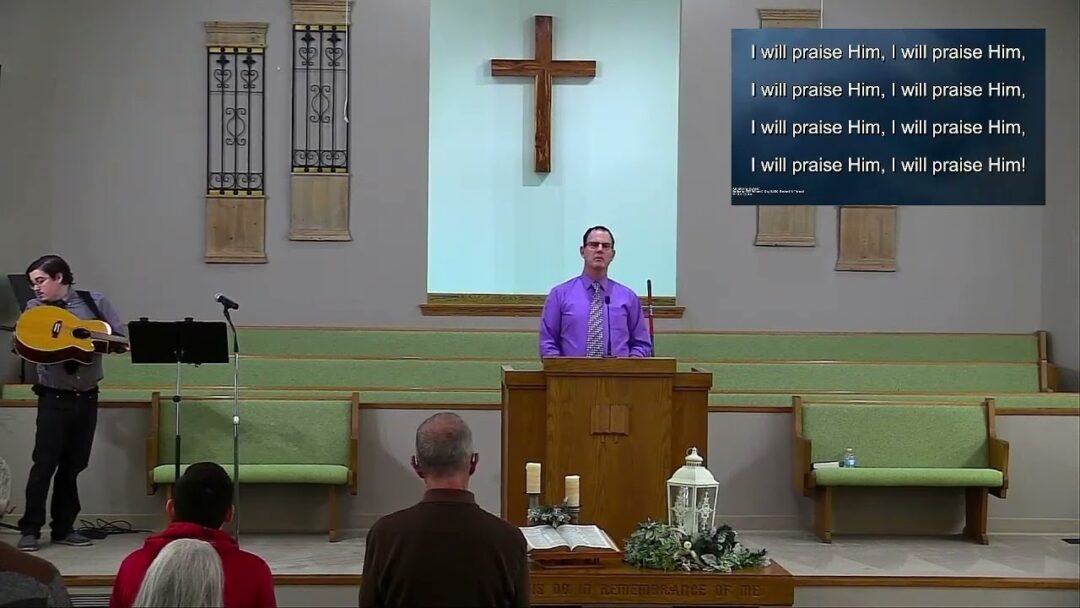
From our Sunday service on March 9, 2025, Ephesians 2. This is part 2 of our Ephesians series. Watch the full message: By Grace Through Faith – Ephesians Series #2 on YouTube.
If you were here last week, we introduced our new series on the book of Ephesians and talked about the blessings of salvation: because we are saved, we can inherit all these blessings from God. We talked about how easy it is for us as Christians to lose sight of everything God has done for us. We also talked about how Ephesians is written to the people of Ephesus, a church that was faithful to God. They were getting the foundations of Christianity down. They had good morals, they loved Jesus, and they were willing to serve. But Paul wanted to encourage them further, because having the foundation pretty solid doesn’t mean there’s no room to improve. So he wrote to encourage them to continue to grow in the faith and in the ministry of following Jesus.
This week Paul explains the process of salvation to them again. When we get saved, we often don’t know much more than that Christ died on the cross, I’m a sinner, I need to ask him for forgiveness because I can’t save myself, and through faith I can trust God to save me. Paul says, “You’re Christians and you’ve heard it before, but it never hurts to hear it again.” So today in Ephesians 2 we’ll be reminded of some truths of salvation that we should always hold on to. The main thing I want you to take away is that God wants you to remember who you were without Christ and cherish who you’ve become in him.
Paul walks us through three phases. First, he shows us where we were before we were saved. Then he shows us how God intervened in our life to change that. And ultimately he shows us how God transformed us through salvation.
Ephesians 2:1-3: Where We Were Before Salvation
And you hath he quickened, who were dead in trespasses and sins;
Ephesians 2:1
I’ve mentioned before that some of us got saved at a young age and have lived most of our life in the church and in the Holy Spirit, so we lose track of how much God has saved us from. But it doesn’t matter when we got saved. There was a time in our life when we were dead in trespasses and sins.
There are two different types of death: physical death and spiritual death. We could go all the way back to Genesis and talk about original sin, but we won’t go deep into that today. When Adam and Eve chose to disobey God, two types of death happened. First, God had said, “In the day that thou eatest thereof thou shalt surely die.” They would be destined to have a physical death someday, when this human body would give out. The solution to that was the tree of life. Eat from the tree of life and you’ll live forever. But they chose to follow their own path, and so they gave up that immortality. Death would come for them. But that wasn’t the only death. The moment Adam and Eve ate the fruit, they spiritually died. A unity with God was broken, and a state of comfort with the divine was shattered. Paul is going to tell us how salvation reunites that shattered spirit.
It says it was Christ who “quickened” us. The word quicken means to resurrect, to bring alive. It’s the same thing that happened with Jesus, and we’ll see how that ties in later. The spiritual death is really what gives us most of our problems in life. Many of us may be afraid of physical death, but when you’re young it’s usually not that that scares you. It’s the spiritual death that invites confusion, anxiety and insecurity into a person’s life. We worry about what other people think and about whether our choices are right or wrong. All this anxiety comes from spiritual death. Before we sinned in the garden, we had confidence that what God said was true and we had a perfect understanding of God’s will. When we ate of that tree, suddenly confusion, chaos and anxiety entered the world. Adam and Eve realized, “I can make my own choices. I can decide for myself what is right.” That brings all this chaos, anxiety and disorder, and when the spirit dies, we end up living with a broken identity. The unity with the Father is broken, and it cannot be healed without reuniting with God’s Holy Spirit, which can only be done through salvation.
So no matter who we were or what time we got saved, there was a time when we were dead in our sins, with chaos, disorder and no direction. We were living life our own way, by our own rules. If you’ve read the book of Judges, you’ll know that doesn’t go well for you. But that’s not where God left us.
Wherein in time past ye walked according to the course of this world, according to the prince of the power of the air, the spirit that now worketh in the children of disobedience:
Ephesians 2:2
“The course of this world” in the original language is literally “this age,” in other words this time on earth where sin reigns. We were living after the ideals and teachings of the secular world, and let me tell you, the secular world’s ideals change all the time. Throughout history, what’s right and what’s wrong has swapped multiple times. We weren’t walking after solid, principled morals given by God. We were living by whatever society says is okay.
Then we find the real power behind it: “the prince of the power of the air.” The metaphor of the air is like the one Jesus uses of the Holy Spirit: you can’t see it, but you can feel the effects of it. Can we see the demons? No. Do we see the fallen angels? No. But their influence is felt in this world. It’s not just the standards of society we follow. It’s the spiritual influences undermining that society, the unseen evil that sways the world behind the scenes, convincing people that what’s wrong is what’s best for them. “The spirit that now worketh in the children of disobedience” reminds us that though we’re saved and not following the spirit of this world, those who are unsaved are still being swayed by it every day.
I don’t know if you know this, but when Jesus died on the cross, Satan could no longer go to heaven to accuse us. Our sins have been paid, and the accuser of our brethren has been cast down. But now Satan has a lot more free time. If he’s not going to go up there and accuse the believer, then sure, he has more time to come down here and mess with the children of disobedience, those who haven’t put their faith in Christ. He’s wandering around thinking, “How can I mess this up more? How can I create more chaos, confusion, anxiety, worry and depression for everybody to deal with, so that I can get them away from God and eventually lead them to my prison down in hell?”
Among whom also we all had our conversation in times past in the lusts of our flesh, fulfilling the desires of the flesh and of the mind; and were by nature the children of wrath, even as others.
Ephesians 2:3
Paul reminds us that all of us were in this fallen state. The longer we are Christians, the easier it is to start looking at non-Christians as people who are less than us. Paul wants to remind us, and he does this multiple times, that there is no difference between the believer and the unbeliever except that the believer has accepted God’s grace. Both are sinners, and both are just as corrupt at birth as the other. The only thing that changed is what God did for us, not something we did for ourselves.
“Conversation” is the old English word for citizenship. We had our citizenship in this world, and we worked for the prince of the power of the air. We had an allegiance to him. Don’t act like you didn’t, Christian. You’ve been saved, so your citizenship has been exchanged, but your conversation, your lifestyle, who you belonged to, was this evil force in the world. We were by our very nature the children of wrath. The day we were born, we were so predisposed to sin that there was no choice but to give in to it and align ourselves on the path to hell. Christian, don’t forget what you were and where you started. Maybe you’ve been saved for twenty, thirty, forty, fifty, sixty or seventy years, but don’t forget that you still need grace just as much as those people out in the world who are still suffering from Satan’s influence and still deceived by the lies of this world. Our conversation was that state we lived in, our way of life, the habitual way we carried ourselves each day. You don’t have to teach a toddler to steal a toy, and you don’t have to teach a child to have conflict with another child. They’ll figure that out by nature. We are children of disobedience and also children of wrath, naturally born to inherit eternal wrath and punishment.
If you remember, we talked about adoption and how God adopts us. That draws from the idea of Roman adoption of sons: a Roman citizen is born into a state of slavery to his father until he’s legally adopted, and he has no right to the inheritance. Paul uses that illustration again. By nature you were children of wrath. When you’re born into this world, you’re born a slave to sin, destined to slavery, and your whole life will be controlled by it. So Christian, when you look at the unsaved, don’t think you weren’t like them, that you weren’t enslaved by sin in the same way, because God tells us we are all born that way, and we need that adoption from Christ to take us out of the slave state and make us part of the family of God.
We need to stop looking at the world as Christians versus non-Christians, us versus them. We’re all on the same team. We wrestle not against flesh and blood, but against principalities and powers. We’re not here to fight with the unsaved about stuff. We’re here to tell them the truth and invite them to change. “I get it. I was in the same state. I’m not saying I’m better than you or that I know better than you. I’m saying I know God is better than all of us, and I want you to have what he offered me, because he’s offering you the same thing, and if you’re willing to accept it, it will transform your life.”
That tells us where we were before we were saved: enslaved to the world, naturally disobedient, and in a habit of sinful living. Now what is God going to do about it?
Ephesians 2:4-7: But God
But God, who is rich in mercy, for his great love wherewith he loved us, Even when we were dead in sins, hath quickened us together with Christ, (by grace ye are saved;) And hath raised us up together, and made us sit together in heavenly places in Christ Jesus: That in the ages to come he might shew the exceeding riches of his grace in his kindness toward us through Christ Jesus.
Ephesians 2:4–7
I like that phrase, “But God.” We had this hopeless estate, with nothing going for us, but God did something. Here we are in our helpless estate, destined for hell, children of wrath, but God has mercy. The whole narrative changes when God comes on the scene. While we were dead and hopeless, God steps in as the exception to this situation. “But God” draws out that we are completely dependent on him to transform our situation. Paul emphasizes throughout this entire chapter how hopeless we were to save ourselves and how hopeless we are to try to do enough good to change our situation.
It says God is “rich in mercy” and moved by “his great love.” It wasn’t because God was impressed by us. He didn’t see somebody destined for hell and say, “Man, what a waste. I would let that one slide because he had more potential.” He had great mercy and love for everyone. It’s not because he’s impressed by us but because he loves us like a parent loves their child, no matter how difficult things get, and stays there to help them find their best life. God has this great, relentless love that he gives toward us to transform the situation.
Verse 5 reminds us that even when we were dead in sins, God gave his Son for us long before I was born. God didn’t care how many sins I was going to commit. He didn’t say, “I’m going to draw a line after 23,700 sins and I’m just not going to cover it anymore.” While we were in our sins, before we even thought about being sorry for it, God gave his Son to die on a cross for us, and with that he has quickened us. He has resurrected us together with Christ. When Christ rose from the tomb, we were resurrected with him, because all that needed to be fulfilled was done. When Jesus died, he said, “It is finished,” and when Christ resurrected, we knew it truly was complete. The word quicken means to make alive. It’s a resurrection of ourselves alongside the risen Christ. Just as Christ received a glorified body, we too as Christians will be raised with him.
Verse 6 says God “hath raised us up together, and made us sit together in heavenly places in Christ Jesus.” Our destiny is in heavenly places, not literally heaven. Heaven is just a temporary place; we’re coming back, guys. He raises us for heavenly places so that “in the ages to come he might shew the exceeding riches of his grace.” “In the ages to come” refers to the age after the second coming, after we’re resurrected, after heaven and earth combine and we start a new heaven and a new earth. The phrase “riches of his grace” showed up last message, and Paul uses it only in Ephesians. Every time, he’s talking about the riches of his grace as the fulfillment of the resurrection, where we are restored to a sinless state. The riches of his grace is that we never have to deal with sin again. The chaos, disorder and inability to decide right from wrong are gone. God says, “I’ll take you back to where you were in the garden before you sinned, before you had all this anxiety and worry. I will show you what is right, you will follow me, and you won’t have to worry about this inner conflict anymore.” That is the final transformation the Christian inherits in the age to come.
Ephesians 2:8-10: Saved by Grace, Created for Good Works
For by grace are ye saved through faith; and that not of yourselves: it is the gift of God: Not of works, lest any man should boast.
Ephesians 2:8–9
This should be a familiar passage to everyone here. “By grace through faith” is pretty much the battle cry of Christianity. Salvation is a gift, and a gift can never be earned. It says “are ye saved,” not “you will be saved.” It’s a completed process, sealed, the deal has been done, and the promises will come. It also isn’t a corporate salvation. It’s a personal one. You’re not saved by your parents’ faith or your grandparents’ faith or your best friend’s faith. You’re saved by your own faith in Jesus Christ. You can’t rely on somebody else. You can only rely on Jesus Christ and your own faith.
“By grace” is the source of salvation. It’s not something we deserved. Grace is unmerited favor, a love and compassion given to you not because of your actions but because of the character of somebody else, in this case God. We’re not saved because of our actions but because the character of God is so good that he loved us enough to save us while we were yet sinners. Then “through faith” is the delivery method. It is through faith in Christ that we are saved. In the Bible, faith, belief and trust are all the same word in the original languages. They’re just translated different ways so that we have some variety in our translation. You can put any of them in there: put your faith in Christ, believe in Christ, believe he is who he said he is, or trust in Christ and have confidence that by seeking refuge in him you will have a home in heaven. Don’t get caught up on the words being different. They all mean that we have a confidence, a hope and a belief that what Christ said was true: that when he said he would save us from our sins if we believe on him, we trust him and take him at his word.
Verse 9 gives us another warning: “not of works, lest any man should boast.” Salvation is nothing for us to brag about. We don’t have any work in our salvation, so how can we brag about being saved or being better than other people when we didn’t do anything at all? All we did was believe that what Jesus said was true. It’s like saying you were the reason your team won because you believed they would win. You didn’t have any investment in it. You didn’t even show up to the game to cheer. You just said, “I knew you could do it. You should thank me.” People would think you’re crazy. But as Christians we’re tempted to think, “I’m a good person. I’m better than them. I’m a Christian.” Paul warns us not to have that attitude. You didn’t do anything, guys. All you did was believe that what Jesus said was true, that you were a sinner. The whole part of salvation was that you had to believe you were flawed. Now you think just because you’re a believer you’re not flawed anymore? Don’t brag about your salvation. We are completely dependent on God for it.
Paul is emphasizing that it was purposeful that salvation didn’t require works, because God knows that if it did, people would constantly brag about it: “I’m a good person, I earned my faith, I’m going to heaven and you’re not because you’re such a terrible person.” God in his wisdom said, “I’m going to do it by grace and faith so you can be humbled and restored in me without any reason to brag.”
For we are his workmanship, created in Christ Jesus unto good works, which God hath before ordained that we should walk in them.
Ephesians 2:10
I like the wording “workmanship created in Christ Jesus,” considering that Jesus was a carpenter, a craftsman. I like the idea of Jesus as the craftsman who works on us. You don’t praise the chair for being a beautiful chair. You don’t go to the Eiffel Tower and say, “Eiffel Tower, you’re so beautiful, you did a good job.” You praise the craftsman, the architect behind it. We need to look at our craftsman, our artisan, who formed us and changed us and transformed us: Jesus Christ, that carpenter from Nazareth, God in the flesh, who came down to transform everything. If you’re bragging in your salvation, what you’re bragging on is what Jesus did, not what you did.
We were created “unto good works.” We’re designed with a purpose. “Before ordained” just means that God decided beforehand that those who believe in him would do good works. He has prepared his people to do good, not for their salvation but as a result of it. God designed salvation in a way that encourages us to do good in this world and be his hands and feet. We left off last chapter talking about how Christ is the head of the church and we are his body, his hands and feet who do the ministry of God in this world. Here Paul tells us that if somebody has come to have faith in Christ, then Christ has purposefully set a path for them to do good. A Christian without good works is a Christian who has missed the whole purpose of his salvation. What a shame it would be for a Christian to be saved and never have any good works, to just live an average life. Christ said he came to give us life that’s abundant, and part of that abundant life is to go out into the world, do good works, make it better, and represent Christ well. Would it be a shame for a Christian to go up to heaven and have Christ say, “What did you do for me? Don’t you know I saved you to do good works? You did nothing for decades. You sat there in the church saying, ‘Mm-hmm, amen, that’s right,’ but the people around you had no idea you were a Christian because you never did anything to show it.”
I also like that it says God has ordained that we should “walk in them.” Walking signifies unity of direction and continuance. The Bible also says, “Can two walk together, except they be agreed?” Two people can’t walk together unless they have the same destination in mind and keep the same pace. Walking in good works means there is a path laid, a right place to go, a right direction to get there, and a right pace to walk it. A person who is walking with Christ can’t be going a different direction than Christ is going. The second you choose a different place you want to be in life, you’re no longer walking with Christ. The second you decide Christ’s time frame isn’t good enough and you pick up the pace to get there faster, you’re no longer walking with Christ. If we’re going to be faithful Christians, as Ephesians talks about, we have to be okay not only with Christ’s destination for us but also with his timing in getting there. You can’t walk with him if you’re going faster, you can’t walk with him if you’re going slower, and you can’t walk with him if you’re going to a different place. The challenge is to find the good works that God is laying before you and follow them each step of the way.
Ephesians 2:11-22: How God Transforms Us
We saw who we were before we were saved and what God did for us. Now we’ll see how God transforms us.
Wherefore remember, that ye being in time past Gentiles in the flesh, who are called Uncircumcision by that which is called the Circumcision in the flesh made by hands; That at that time ye were without Christ, being aliens from the commonwealth of Israel, and strangers from the covenants of promise, having no hope, and without God in the world: But now in Christ Jesus ye who sometimes were far off are made nigh by the blood of Christ.
Ephesians 2:11–13
Here Paul is talking to the non-Jewish Christians. He says, “Remember that God has extended his grace to those who are not part of his covenant with Abraham and grafted them in through Jesus to share the same blessings.” As Gentiles, we weren’t promised to inherit all the blessings of Abraham. That was an act of grace that God gave us. Remember the prophecy that all nations would be blessed through Abraham. It’s through God’s grace that the Gentiles are now grafted in. Before, you had to do a lot of things to become part of God’s people: have faith in God, follow all these rules, and have this cultural identity that made you distinct. All of this was God demonstrating through illustration the need for transformation in our lives. But Paul says, “Remember, Gentiles, this is grace.” Not only are you saved, but you’re not even forced to do all the things the Jews were to do before Christ came. Now all of us together, Jew and Gentile, are unified in Christ and freed from all those extra things from the Old Testament.
For he is our peace, who hath made both one, and hath broken down the middle wall of partition between us; Having abolished in his flesh the enmity, even the law of commandments contained in ordinances; for to make in himself of twain one new man, so making peace; And that he might reconcile both unto God in one body by the cross, having slain the enmity thereby: And came and preached peace to you which were afar off, and to them that were nigh. For through him we both have access by one Spirit unto the Father.
Ephesians 2:14–18
Paul says, “He is our peace.” I like this. He doesn’t say Jesus is our peacemaker. He’s not saying we won’t have any conflict or difficulty, or that God is going to make all of our situations peaceful. He’s saying that despite the conflict and difficulties in our life, Jesus will be there as our peace. And here he extends this to the conflict between the Jew and the Gentile. We’ve all watched the news and seen that this is still a battle going on, but the solution is that Jesus died to bring unity between the two groups.
When I was younger, I thought “the middle wall of partition” was talking about the veil in the Holy of Holies. It’s actually talking about the wall that separated the Gentiles and the Jews in worship at the temple. Gentiles could believe in God and go to the temple and worship, but they weren’t allowed to go as far in as the Jews. So there was a wall of partition between them. Through Jesus, that wall that separated our two cultures is gone. Whether you’re a Jew who has placed faith in Christ or a non-Jew who has placed faith in Christ, you are saved the same way, and you’ve become one in the same body of Christ. There’s no Jewish church and Gentile church. There is just the church. There aren’t those who believe God in Israel and those who believe God outside of Israel. You are now one, unified in the church under Christ.
He has “abolished in his flesh the enmity, even the law of commandments contained in ordinances; for to make in himself of twain one new man, so making peace.” The law was completed and fulfilled by Jesus, so that Jews no longer have to follow it, and so the Gentiles and the Jews can be stitched together as one under Christ in a unified purpose. With Jesus there’s no longer a dividing line between Jewish believers and non-Jewish believers. The law has been fulfilled and no longer needs to be applied. That means we as Gentiles don’t need to follow the ritualistic laws of the Old Testament. It means we don’t need to rely on our own ability to be perfect people. It means we don’t have to worry that we’re excluded because of ethnicity or social class, like some other religions teach. It doesn’t matter where we are from or what we’ve done. All that matters is that we have faith in Christ and surrender to him.
There is neither Jew nor Greek, there is neither bond nor free, there is neither male nor female: for ye are all one in Christ Jesus.
Galatians 3:28
In the end we’re all chosen, we’re all loved by God, we’ve all accepted salvation, and we all have the same purpose. Paul is telling the Ephesian church that we need to be unified and shouldn’t let things divide us that God says don’t matter in his Scriptures. God says time and time again that there shouldn’t be any pride, only humility. Whether you’re a slave or a free man was a big deal in Rome. In Philemon, Paul talks about how Onesimus shouldn’t be considered a lesser person, as Roman culture taught, but received as a brother. Paul says, “Don’t treat me as somebody better than you just because I’m a missionary who has gone on three huge mission trips around the world and taught the gospel to thousands and thousands of people. Don’t treat me better than your slave, because we’re all of the same class and the same family, saved by the same blood.” So we should treat everybody the same, as we would want to be treated, and extend to them the grace that is extended to us.
Now therefore ye are no more strangers and foreigners, but fellowcitizens with the saints, and of the household of God;
Ephesians 2:19
Remember at the beginning we talked about chaos, disorder and anxiety. Here Paul is taking that chaos and bringing order to it. We’re no longer strangers or foreigners, wandering around not knowing where we belong. We don’t have to spend our lives in this world saying, “I just don’t know where I fit in. I just don’t know where I’m accepted.” You’ve got a citizenship with the saints, all those who were saved before you and have died and gone to heaven. You are their fellow citizens, and more than that, you’re “of the household of God.” You’re not just people who live in the same spiritual kingdom but people who live in the same spiritual family. There’s a big difference between being in the same country as someone and being in the same family as someone. I’m naturally more inclined to help people in my family than those in my nation. So while we are part of the kingdom of God, we are family, and we ought to care for each other like family. That closeness goes beyond being part of a kingdom. We have a unity in Christ that binds us with our heavenly Father as children of God. There’s no need to wander looking for a home. We have a home in Christ, and a new citizenship and family in God.
And are built upon the foundation of the apostles and prophets, Jesus Christ himself being the chief corner stone; In whom all the building fitly framed together groweth unto an holy temple in the Lord: In whom ye also are builded together for an habitation of God through the Spirit.
Ephesians 2:20–22
In verses 20 to 22 Paul introduces a new illustration: we are a spiritual building. He uses this illustration a couple of times, that we are the temple of God. We’re “built upon the foundation of the apostles and prophets, Jesus Christ himself being the chief corner stone.” The chief cornerstone is the first brick you lay in the building, the foundation of the foundation, the most important brick on which everything else is set. Christ is the cornerstone, but it also says we’re built upon another foundation: the apostles and the prophets. He’s talking about the Scriptures, not only the New Testament apostles but also the Old Testament prophets. All of this legacy is the foundation of the church. What does that mean for us? This stuff is still relevant and still important. Though we’re in a new era and called to serve the Lord in a slightly different way, and we aren’t called to the Old Testament law, all of it is important because it’s the foundation on which the church is built, but most of all it’s built on Jesus Christ. Whether it’s the Old Testament prophets shouting from the mountaintops or the New Testament apostles who went throughout the Roman Empire, both are valuable and all of them point to Christ.
“Fitly framed together” is the key phrase. The church needs to fit together well, which means there’s no room for conflict. Every single brick is important and has a place. You can’t build a building with gaps missing in your walls. Each and every one of us builds up the temple of God brick by brick, which means none are unimportant and none are more valuable than the others. Each has a part to play in the temple of the Lord.
A lot of times we talk about how our body is the temple of the Holy Spirit. Yes, we individually are the temple. What’s taught less frequently is that we as the church are the temple together, and together we are the body of Christ. Together we build a place for God to live on this earth. The temple is important because it represented where heaven and earth met. It was a place you would go if you wanted to meet God. Now the temple in Jerusalem has been torn down, and all we have is the weeping wall. You don’t go to the temple to meet God anymore. When Christ died, the veil was torn in two, and we have a new temple, the church. No one needs to go to a physical location to find heaven on earth. Instead they should be able to go to each and every one of us, the bricks that make up the temple of God, and when they meet with us, heaven and earth should meet. We should extend the Spirit to the people around us and point them to Christ. People should see you and say, “Something’s different. It’s like a totally different experience when I’m with them.”
Ye also, as lively stones, are built up a spiritual house, an holy priesthood, to offer up spiritual sacrifices, acceptable to God by Jesus Christ. Wherefore also it is contained in the scripture, Behold, I lay in Sion a chief corner stone, elect, precious: and he that believeth on him shall not be confounded.
1 Peter 2:5–6
We are there to build up a temple and offer spiritual sacrifices. No longer does God want you to give a bowl in the temple as an offering or put incense on the altar. What he wants you to do, as it said earlier in the passage, is walk the good works God has placed ahead of you, step by step by step. Each good work we do on that path is a spiritual offering to God. As his temple, we as a church bring worship to God and step into the works he has set before us.
Remember Who You Were, Cherish Who You Are
How do we wrap this up? God wants you to remember who you were without Christ and cherish who you’ve become in him. We have the very important responsibility to walk in the good works God has set before us. We have the responsibility to be temples to the world, places where people can come and meet with the Holy Spirit, so that God can speak through each and every one of us to those around us. We can warn society of the dangers of the habitual sins ingrained in its culture, and when people are hurting and have nowhere to go, we can say, “I was like you. I had no home in this world. I wondered where I belonged. I felt like I had no place. But I met Jesus, and he gave me a new citizenship and a new purpose, and he allowed me to be part of this church, this body that serves and represents him in every step of my life.”
We who once were dead are given a new opportunity through God’s mercy and grace. We’ve been raised to new life, transformed and unified together. So as a church we corporately become God’s temple, and each of us inherits an opportunity each and every day to extend God’s presence to those around us. God wants you to remember who you were without Christ, and to let that inspire you to be who you can be in him: a temple dedicated to his purpose, reaching the world around him with heaven’s light.

Recent Comments