
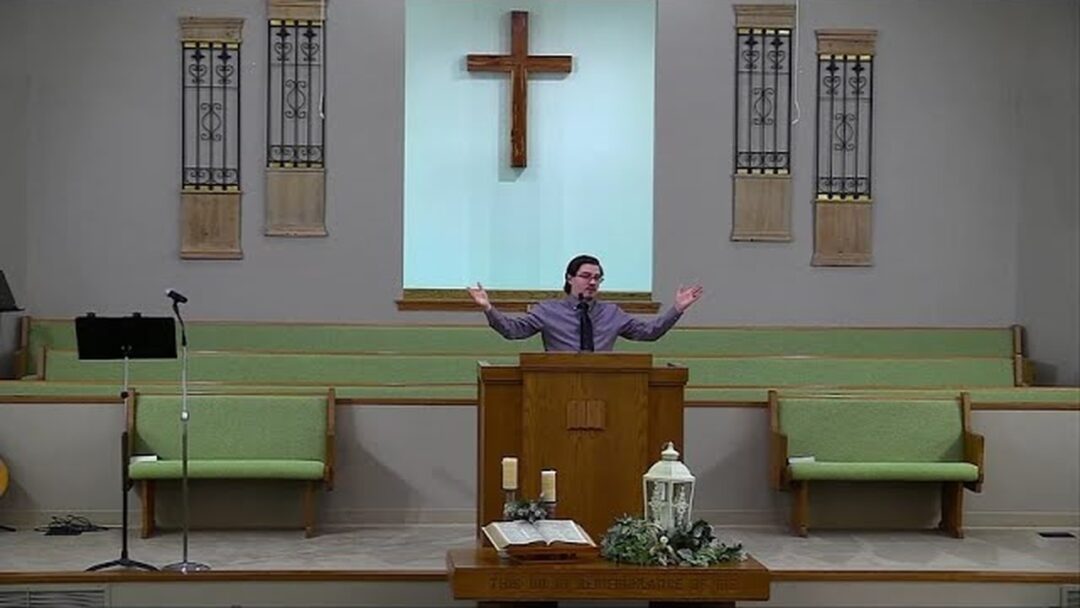
From our Sunday service on March 23, 2025, Ephesians 3. This is part 3 of our Ephesians series. Watch the full message: The Mystery of the Gospel – Ephesians Series #3 on YouTube.
Last week we talked about the journey we take as believers through salvation. We started in a place of spiritual death, separated from God and enslaved to our sin. God stepped into the world through Jesus, intervened, gave us the opportunity for salvation, and transformed us through the blood of Christ. Through that same blood, he brought all believers together as one in the church. Today we continue that thought as Paul talks about the mystery of the gospel.
What I want you to get out of this message is that God’s love and power are incomprehensible, so we should embrace that power to bring glory to him.
Ephesians 3:1: Paul’s Circumstances
Paul starts with his circumstances, and he gets sidetracked right off the bat. Many commentaries point out that he brings up his imprisonment and then doesn’t get back to it for at least twelve more verses. He says in verse 1:
For this cause I Paul, the prisoner of Jesus Christ for you Gentiles,
Ephesians 3:1
And then he stops. What is he saying there? He is reminding us of a truth that will be relevant later, and he wants us to keep it in mind while he talks about another subject. I don’t think Paul was completely sidetracked, as some commentaries suggest. It’s an important detail, because it influences how we interpret the verses that come after it.
There was a purpose for Paul being a prisoner of Jesus Christ for the Gentiles. You could be a prisoner for many reasons, and being a prisoner is often a bad thing. Here Paul is saying it’s a good thing, and he’ll explain why. He recognizes that his suffering as a prisoner of Rome means the gospel will continue to spread. If you don’t know this, Paul is writing the book of Ephesians from prison in Rome. About 30% of Paul’s writings in the Bible were written while he was in prison. He is saying, “I am in prison for preaching the gospel, and I am suffering because I preach the gospel, but it’s not pointless. God has a purpose for it.”
He was right, because if Paul had been free to go to these cities, he would have just gone and talked to the people, and we wouldn’t be reading his letters today. Because he couldn’t go to them, he wrote inspired Scripture that encourages us as believers today.
So we see that God sometimes allows suffering in our lives, things that seem inconvenient or difficult, to do important works for him. We’re one verse in, and we already have an application. Paul can be really efficient sometimes. Christian, there will be times in your life when you face difficulties and find yourself in situations that aren’t comfortable, but God is going to use them. Paul was in prison for the Gentiles. Sometimes God allows suffering in the life of a Christian to benefit someone other than that individual. A lot of times I talk about how suffering grows us as Christians, but that’s not all it does. Sometimes our suffering benefits others. We’ll come back to that later in this message.
Ephesians 3:2-6: Paul’s Mission and the Mystery Revealed
Paul continues in verse 2. “To you-ward” just means “toward you,” so don’t be confused by that.
If ye have heard of the dispensation of the grace of God which is given me to youward: How that by revelation he made known unto me the mystery; (as I wrote afore in few words,
Ephesians 3:2–3
Notice that “if ye have heard” is not a real question. Paul knows they have heard of the dispensation, because he himself preached it to them. It’s like he’s playfully saying, “I assume you’ve already heard it, because everyone there has.” The Ephesians were one of the very first churches. Before the church even existed, disciples of John were following and teaching in Ephesus. Of course they know this. They’ve been hearing about it longer than anybody else.
The word dispensation carries the idea of a household manager distributing goods to various parties. So Paul is saying the dispensation of the grace of God is like acting as a distributor of the gospel: the good news of Jesus delivered to you. Then he narrows it from the gospel in general to “which is given me to you-ward,” me delivering it to you. He’s not asking whether they’ve ever heard the gospel. He’s saying, “I’m pretty sure you have. I’ve been to Ephesus, I’ve preached in Ephesus, I’ve trained people in Ephesus. Timothy ministered there. But if by any chance there’s somebody who hasn’t, let me remind you what happened.”
In verse 3, “as I wrote afore in few words” doesn’t mean a different book. He is talking about where he wrote about this in Ephesians 1:9-10, a few words ago. He is saying, “I reminded you of this literally a few verses back.” When we talked about that passage, I mentioned that the Greek word for mystery is different from our English use of it. We get our word from the Greek, but in Greek a mystery wasn’t something unknown. It was something that had been unknown and had just been revealed. So Paul is saying that by revelation God made known this thing that was a secret in past generations, and now it’s been revealed.
Whereby, when ye read, ye may understand my knowledge in the mystery of Christ)
Ephesians 3:4
How did Paul come to have this knowledge of Christ? Acts 9 tells us. The Lord is speaking about Paul to a disciple who was afraid to go to him:
But the Lord said unto him, Go thy way: for he is a chosen vessel unto me, to bear my name before the Gentiles, and kings, and the children of Israel: For I will shew him how great things he must suffer for my name’s sake.
Acts 9:15–16
God revealed the mystery to Paul so that the Ephesians could understand it through him, and one of the things he told Paul was that he would suffer for Jesus’ name. That’s why Paul brings up the fact that he’s in prison. It’s relevant here. He is saying, “I’ve understood the mystery, and I want you to understand the mystery of Christ. I want you to know that my being in prison is not a surprise to me. The day I was saved, a disciple came to me and said, ‘I’ve got bad news, but I’ve also got good news. The good news is you’re going to serve the Lord and do great things. You’re going to go around the world and preach the gospel to cities that have never heard any good news in their life. The bad news is you’re going to suffer for it.'”
There has always been a cost to preaching the word of God. Throughout the Old Testament the prophets suffered for it, and there has always been affliction and conflict. Paul says it’s no different now. He has seen the truth of the Messiah and been called to a mission, but it comes at a cost.
So what is the mystery of Christ? Literally, it’s Christ himself. The Messiah is the secret that was revealed. He was foreshadowed for generations throughout the Old Testament. The prophets knew there was a Messiah, and they knew God was going to save and bless the entire world, but they didn’t know how. It was a great mystery, sealed until God would bring in the Messiah. Now Paul is saying that this Messiah has been revealed. Jesus came, and we saw him and talked with him. Paul talks about the same topic in Colossians 1:27:
To whom God would make known what is the riches of the glory of this mystery among the Gentiles; which is Christ in you, the hope of glory:
Colossians 1:27
The mystery is not just Christ but “Christ in you.” The Messiah came not only to save us but to put the Spirit of God within us. That was what was secret and untold. Sure, there were some prophecies, and it was hinted at, but the religious leaders of the time had a completely wrong perspective on who the Messiah was. They thought he was coming to free them from Rome, bring economic prosperity, and make sure they never went hungry another day in their life. The mystery was that when the Messiah came, he would transform our relationship with God in a way that was unimaginable to people of the Old Testament. Maybe the Spirit of God came over a prophet or a judge for a moment to do a miraculous work. Little did they know that when the Messiah died on the cross, he would give his Spirit to all believers, and God would indwell us.
We talked about how we are the temple, built up as a church to be the abode of God, the place where heaven meets earth. We’re supposed to have his Spirit inside us and an outflowing of the Spirit to everyone around us through good works. Here Paul talks about it again. This is the great mystery that the prophets and teachers of old looked forward to and could not fully grasp.
Which in other ages was not made known unto the sons of men, as it is now revealed unto his holy apostles and prophets by the Spirit; That the Gentiles should be fellowheirs, and of the same body, and partakers of his promise in Christ by the gospel:
Ephesians 3:5–6
The word “ages” there is literally the Greek word for “generations.” All the generations before us had no idea this was coming, and they could never imagine how great the goodness of God is. That is the theme of this passage: they had an idea, but the full depth was beyond their understanding. Now it’s revealed. The previous spiritual leaders did not realize that the salvation of the Gentiles and the gift of the Holy Spirit were coming. Now it’s a moment of history, and not just an outpouring at Pentecost but a pouring out of the Spirit in the lives of believers every day.
In verse 6, the Jews and non-Jews inherit the same promises of God. They are part of the same body, the church, and partakers of the same promises. Both have the same claim to the same inheritance through Jesus Christ and his death on the cross.
Ephesians 3:7-9: The Gift of Grace
Whereof I was made a minister, according to the gift of the grace of God given unto me by the effectual working of his power.
Ephesians 3:7
Paul says, “I am a minister of the gospel. My job is to serve the good news and spread it everywhere I go.” The “gift of the grace of God” means that one’s life does not rest solely on past actions. We talked about the gift of grace being ultimately fulfilled when we are resurrected with sinless bodies in the end times. That is the richness of his grace. Paul says the only reason he can be a minister of this good news is the gift of grace. He persecuted the church, he made so many mistakes, and, as he says, he was basically a murderer. He had no reason to be used by God, but because of the gift of grace, something can change.
“By the effectual working of his power” refers to the work of the Holy Spirit. The Greek word for “working” is energeia, which is where we get our word energy. Be careful using the English word, because you might slide into mystical feelings. The idea here is work done through the power of someone else. God’s grace has given Paul work to do not through his own power, his own testimony or his own reputation, but by the power of God given to him in the Holy Spirit.
Unto me, who am less than the least of all saints, is this grace given, that I should preach among the Gentiles the unsearchable riches of Christ;
Ephesians 3:8
Paul is referring to all the other apostles. He is saying, “I have no claim to this. I’m a nobody compared to the apostles. While they were going around risking their lives spreading the gospel, I was the one hunting them down. Why would God choose me, of all people?” In 1 Corinthians 15:9 he says:
For I am the least of the apostles, that am not meet to be called an apostle, because I persecuted the church of God.
1 Corinthians 15:9
That word “meet” means suitable: “I’m not suitable to be called an apostle because I persecuted the church of God.” He says, “I don’t get it. I don’t deserve it. The goodness of God is beyond my understanding.”
Here is the idea of God’s blessings being incomprehensible again. Maybe God chose to use Paul because of how unbelievable it was that God could use Paul. When the disciples found out Paul had converted, they said, “I don’t believe it. No way. Saul was hunting down my friend on Tuesday, and now he wants to preach the gospel?” What better way to demonstrate the unsearchable riches of God’s goodness and forgiveness than to take somebody you would never forgive and use him for the ministry? God takes somebody who is unusable and shows his power by making him one of the most usable Christians in history.
A fun fact: do you know why Saul changed his name to Paul? Paulos means small or humble. By taking this name he made a symbol of how he was transformed from a prideful, condemning man of the law to a humble servant of Jesus Christ. He’s saying, “I’m small. I’m humble. I don’t deserve this. But it doesn’t matter what you deserve. God’s riches and grace are so much further beyond your understanding. If God can take somebody like me and do something great, just imagine what he can do with you.”
And to make all men see what is the fellowship of the mystery, which from the beginning of the world hath been hid in God, who created all things by Jesus Christ:
Ephesians 3:9
In other words, God will enlighten all men with the gospel, and they will all have fellowship, partaking and sharing this saving knowledge of Jesus Christ that Paul has dispensed to them. This idea of unity and partaking together applies no matter who you are.
The last phrase, “God, who created all things by Jesus Christ,” hints back to Genesis, when God says, “Let us make man in our image.” For generations, I’m sure Jewish theologians wondered why it says “us” when they were monotheistic. It was a hidden secret that Jesus took part in creation. Now it is revealed. Jesus indicated that he and God were one when he said, “Before Abraham was, I am.” Then the Spirit was poured out, and it was fully understood that the Godhead is three in one: Father, Son and Holy Spirit, who together can transform our lives.
The “unsearchable riches” means that no matter how much Paul teaches about the blessings we inherit through Christ, he will never be able to fully explain them, and we will never fully grasp them. We may get closer and closer to understanding in our lives, but we’ll never completely understand what God is doing. His ways are beyond our understanding. Paul says, “I don’t know why God chose to use me. I can’t give you that answer. But I know his riches are beyond my understanding.”
Ephesians 3:10-12: God’s Wisdom Displayed Through the Church
Why did God give all this salvation? Why are his unsearchable riches given to us? Paul answers:
To the intent that now unto the principalities and powers in heavenly places might be known by the church the manifold wisdom of God, According to the eternal purpose which he purposed in Christ Jesus our Lord: In whom we have boldness and access with confidence by the faith of him.
Ephesians 3:10–12
Someone requested a message on angelology, so here is a little angelology, the study of angels. I was surprised at how many times this subject comes up in the Bible. I’d never put these passages together into one study before. Notice that “principalities and powers in heavenly places” are not earthly rulers or governors. They are spiritual powers in heaven. A principality is a ruler, and a power is an authority. Paul is saying the church is used as a means of teaching heavenly beings about the wisdom of God. “Manifold” means in many different ways, so these are the different ways the wisdom of God can be made visible to angels. Let’s look at some verses.
Paul says in 1 Corinthians 4:9:
For I think that God hath set forth us the apostles last, as it were appointed to death: for we are made a spectacle unto the world, and to angels, and to men.
1 Corinthians 4:9
God had a purpose in letting the apostles preach even to their death, because they became a spectacle to be noticed not just by the world and by people, but also by angels. Why would the angels be interested? Jesus says in Luke 15:10:
Likewise, I say unto you, there is joy in the presence of the angels of God over one sinner that repenteth.
Luke 15:10
So the angels are watching over people and reacting to the things we do. Jesus said so himself. Peter says in 1 Peter 1:12:
Unto whom it was revealed, that not unto themselves, but unto us they did minister the things, which are now reported unto you by them that have preached the gospel unto you with the Holy Ghost sent down from heaven; which things the angels desire to look into.
1 Peter 1:12
Peter probably got this from Jesus. The Holy Spirit being sent to mankind is something the angels are very curious about. The angels didn’t get to have the Spirit of God indwell them. They either followed God or they didn’t, and they didn’t have an opportunity to repent or change their minds. When Pentecost happened and God poured out his Spirit on believers, the angels were intrigued, because they hadn’t seen it before, and they watch it eagerly.
So the angels are very curious about the work God does through his church. “Manifold wisdom” describes how God uses the individuals of the church in many varied and distinct ways. We’re all called to the same purpose, so there is a diversity of action but a unity of purpose. The angels are basically all the same, without different personalities and characters. We were created in God’s image and likeness, so we have more of an emotional spectrum than the angels. When the Spirit of God dwells in man, the angels go, “Wow, that’s really interesting. You use so many different people with so many different character traits, gifts and talents, and despite their differences, you bring them together as one by putting your Spirit in them.” The angels watch and learn about God through us as we live out the gospel by his Spirit in this world. I think that’s a pretty powerful thing to realize.
With that in mind, look at that passage again. God gave us salvation and repentance. He gave us the ability to leave our past behind, become a new creature and preach the gospel, so that the powers in heavenly places could look on us and learn about the goodness of God in a way they’ve never seen before, and so that we have an eternal purpose in Jesus our Lord. Because of that, we have boldness and access with confidence. We can go boldly before the Lord with our requests and pray directly to him. We don’t need a priest as a mediator. We have direct access to God our King.
The phrase “boldness and access with confidence” is a kingly phrase. As we talked about previously, we’re not just part of his household and not just slaves. We are adopted into the family of God, and as his family we are also royalty, with the ability to go to the throne. Does that mean we come saying, “I’m royalty, God, give me a new car”? No, that’s not what God wants. There is something to be said for coming to God on a bended knee. Even the sons of the king show reverence to the king. We have confidence and access, but we go with reverence, all the more because we were not always God’s sons. We were alienated and lived in sin, and now God has brought us into his family. That should bring us to a position of bended knee before the Father.
Ephesians 3:13-16: The Unity of God’s Family
Paul now gets back to his circumstances and talks about the unity of God’s family.
Wherefore I desire that ye faint not at my tribulations for you, which is your glory.
Ephesians 3:13
Paul has been telling them how this works: God has allowed his Spirit to work in us, allowed our past to be left behind, and allowed Paul personally to be thrown in prison for the sake of the gospel. And God is using these unique experiences to teach angels. Now that they understand why it’s so important that suffering is allowed for the Christian, he says, “I don’t want you to be discouraged by my tribulations. It is for your glory, because it is through my suffering that the gospel spreads.” Paul was okay with being in prison if it meant he could spread the gospel more effectively. If people knew he was willing to die for the gospel, that would add a lot of credibility to it. And Paul says, “Let it be so then.” Even though they threw Paul in prison, he was a Roman citizen who still had a right to speak. While he was in prison, he was spreading the gospel to the people in the cells next to him. Paul never stopped.
For this cause I bow my knees unto the Father of our Lord Jesus Christ, Of whom the whole family in heaven and earth is named, That he would grant you, according to the riches of his glory, to be strengthened with might by his Spirit in the inner man;
Ephesians 3:14–16
“Of whom the whole family in heaven and earth is named.” Once again he’s talking about the angels and mankind, and both are named in God. Do you understand how big he is? He’s not just the God of earth. He’s also the God of heaven, of legions and myriads of angels, spiritual creatures we can’t even comprehend. We’re all named in that family.
Verse 16 speaks of being renewed, restored and brought back to purity, “strengthened with might by his Spirit in the inner man.” Don’t be discouraged when oppression comes. It’s oppression that brings salvation to others. We have a Father in heaven with a ginormous spiritual family. He has given us the riches of his glory, the ability to be regenerated by the Holy Spirit, who lives inside each and every one of us and gives us power to withstand the difficulties that come in our lives.
One thing I hadn’t made a connection to is that this verse speaks of a family in heaven. I heard that and didn’t think of it as a serious doctrinal statement, just a phrase used now and then. Then I thought about it alongside Revelation 19:10, where the apostle John is having a vision of future events and there is an angel:
And I fell at his feet to worship him. And he said unto me, See thou do it not: I am thy fellowservant, and of thy brethren that have the testimony of Jesus: worship God: for the testimony of Jesus is the spirit of prophecy.
Revelation 19:10
Ephesians talks about the whole family in heaven and earth being named, and the angel in Revelation says, “I’m your brother.” I never really thought of our relationship with angels as brother and sister, but apparently that’s what the Bible teaches. So when we get to heaven and spend time with the angels, I guess we’ll be saying “brother Michael” or something. How are we brother and sister? I don’t know. But it comes back to that idea of unsearchable. There are so many questions that come up when I hear about the angels. Why is Paul bringing up that the angels are interested in our actions? Because he is emphasizing the main point of today’s lesson: the goodness and riches of God are unsearchable. We won’t figure it all out, but it helps us to try to understand a little more of it and let it change our lives.
Ephesians 3:17-19: The Depth of God’s Love
Lastly, the depth of God’s love.
That Christ may dwell in your hearts by faith; that ye, being rooted and grounded in love, May be able to comprehend with all saints what is the breadth, and length, and depth, and height; And to know the love of Christ, which passeth knowledge, that ye might be filled with all the fulness of God.
Ephesians 3:17–19
Wait. We’ve been talking about not understanding anything, and suddenly there’s a shift. There is one thing we can comprehend. Verse 17 talks about the Holy Spirit empowering us so that Christ can live inside us, acting as our grounding point for love. The word “dwell” means literally to be housed inside, being rooted and grounded in love. We may be able to understand, with all the saints, the breadth, length, depth and height of God’s love.
We may not understand the complexities of the relationship between angels and humans, or why God kept it a secret from the prophets that Jesus was there at the creation of the world. We may not know the answers to all these theological questions, but there is one thing we can understand and know through the Holy Spirit: the depth, length, width and height of God’s love for us.
What’s ironic is that commentators throughout history have argued about how literally to take these measurements. I don’t think you need to take them literally. I don’t think love is measured in inches. It’s a metaphor for how far God’s love extends in every direction. If I send God’s love left and right around the world, it comes back and meets me here. If I send it up toward heaven, God’s love is there. If I send it down toward hell, God’s love is there. If I send it forward through history, God’s love is there, and if I send it backward through history, God’s love is there. Though it is unsearchable and unbounded, we know exactly what it is, because we’ve experienced it through salvation and through the Holy Spirit. We may not have answers to all the complexities of life, but we know that God’s love for us is unchanging and fixed.
The love of Christ “passeth knowledge,” meaning it surpasses knowledge. If you can’t figure out anything else in life, it doesn’t matter as long as you’ve figured out the love of Christ. You could spend your entire life trying to learn everything there is to learn and be out of date by the time you wake up the next morning. But Paul says there’s something more important than knowledge, something we can understand: Jesus Christ loved us, died for us and saved us so that we could be filled with all the fullness of God. Though we don’t have the answers to every question, we have everything we need.
Ephesians 3:20-21: Paul’s Praise
Paul concludes with a statement of praise.
Now unto him that is able to do exceeding abundantly above all that we ask or think, according to the power that worketh in us, Unto him be glory in the church by Christ Jesus throughout all ages, world without end. Amen.
Ephesians 3:20–21
We’re not even at the end of the book yet, and Paul is already ready for an altar call. He has just told them the greatest truth of all. Understanding God is like looking at an ocean. You may see to the horizon, but you can’t grasp how far the ocean goes, and you can see the surface but can’t grasp how deep it goes. We may not be able to comprehend God in his depth, but we have experienced his love personally. So let’s just praise the Lord. “Exceedingly abundantly above” is literally “above and beyond” in the Greek. Whatever we think God can do, he can go above and beyond it. If you think you’re beyond forgiveness, God can bring you back, save you and transform you. If you think you’re not talented enough to be used by God, God can take you and use you no matter what. Because Christ can do so much more than we can understand, we should bring glory to him as the church. Paul concludes with “Amen,” saying, “Let it be so.”
Closing
Paul shared his heart not just as a teacher, apostle or preacher, but as a prisoner of Christ who is completely captivated by God’s grace. We discussed the mystery once hidden and now revealed: through Jesus Christ, Jews and non-Jews are one family who share the blessings of the same promise, are empowered by the same Spirit, and are loved with a love that is immeasurable. What does Paul want us to know? That God’s love and power are far beyond our ability to grasp. Even so, we are called to explore it, to be rooted in it, and to let it transform how we live and love others.
How do we do that? We should not limit our God by our limited lives and perspectives. We should stop believing that God works only inside our comfort zones, within the limitations we think we have. If God can use a prisoner to proclaim the unsearchable riches of Christ to the world from his jail cell, he can use you to display his glory in your daily life. So let’s be people who embrace this mystery, people who glorify God not just with words but with lives empowered by his Spirit and the outpouring of his love. May we echo Paul’s praise: “Now unto him that is able to do exceedingly abundantly above all that we ask or think, according to the power that worketh in us, unto him be glory in the church by Christ Jesus throughout all ages, world without end. Amen.”
God wants you to know that his love and power are incomprehensible. Will you embrace that love and power and use it to bring glory to him?

Recent Comments