
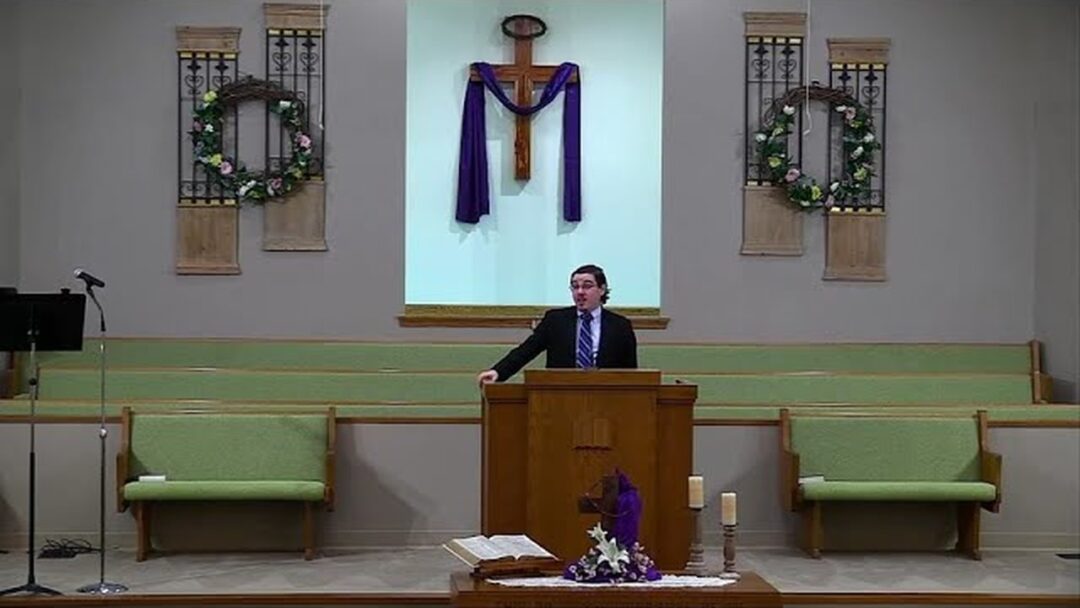
From our Sunday service on March 30, 2025, Ephesians 4. This is part 4 of our Ephesians series. Watch the full message: Walking Worthy – Ephesians Series #4 on YouTube.
If you remember our last message on Ephesians 3, Paul left off with a statement of praise: “Now unto him that is able to do exceeding abundantly above all that we ask or think, according to the power that worketh in us, unto him be glory in the church by Christ Jesus throughout all ages, world without end. Amen.” He proclaimed that there should be glory in the church. Today Paul continues that thought by telling us how we can bring glory to God as his church. If you get nothing else out of this message, I want you to get this idea: God wants you to walk worthy of your calling.
Ephesians 4:1-3: A Worthy Walk Starts with Humility and Patience
Paul reminds us again that he’s a prisoner, and he gets pretty fancy with his words. He shows his skill in the Greek language, and his education as a professional scribe.
I therefore, the prisoner of the Lord, beseech you that ye walk worthy of the vocation wherewith ye are called, With all lowliness and meekness, with longsuffering, forbearing one another in love; Endeavouring to keep the unity of the Spirit in the bond of peace.
Ephesians 4:1–3
Look first at “the vocation wherewith ye are called.” We might hear “vocation” and think of a job or responsibility. Some of us might think, “I’m not a pastor, a Bible teacher or a Bible scholar. Ministry isn’t my vocation, so this doesn’t apply to me.” But the Greek word for “vocation” is the same word as the “called” in the second half of the phrase. It means “the calling wherewith ye are called.” This isn’t specifically about a job as a pastor or teacher. You might say that 1 and 2 Timothy are written to a preacher, so you don’t need to follow them, but this isn’t written just to preachers. It’s written to every single believer. It was sent first to the Ephesians and then from the Ephesians to the church at large.
Why does Paul call himself “the prisoner of the Lord”? We’ve talked about this over the last few weeks, and you can go back and watch the videos. Paul suffered for the growth of the gospel and the work of the ministry. He’s saying, “I’m suffering so that the gospel can have legs and walk and go throughout all the world, and that’s okay.” So he’s someone devoted to this cause who has put a lot on the line, someone who is all the way in. He says, “I beseech you,” meaning “I urge you,” to walk worthy of the invitation you’ve received. That invitation is to be saved and transformed by the Holy Spirit. Christian, you’ve received an invitation from God through the Holy Spirit to do something.
Paul then names the attributes we’re going to need. “Lowliness and meekness” mean humility and gentleness. Meekness is having the ability to do something and refraining from it. Picture a strong man who could push you around, whose mere presence would be intimidating. Instead of walking around with his chest out, he is quiet and peaceful. He has the authority to push people around, but he restrains it, humbles himself, and doesn’t think that because he’s strong he should be treated differently. You have the ability to be proud, and instead of being proud, you humble yourself.
“Longsuffering” is a pretty decent translation, because it explains itself: someone who suffers long. Rather than getting frustrated the first time a difficulty comes and immediately complaining, you have patience and perseverance. You don’t switch from being humble to being showy and pushy.
Then he says “forbearing one another in love.” Forbear is not a word we really like. Literally it means “to carry,” and the most modern word we have would be “to tolerate.” We don’t like to use that word, because if you’re tolerating someone, it means you don’t like what they’re doing. If you liked it, you wouldn’t have to tolerate it. To forbear is to carry on your shoulders the weight of something you don’t like. In the church, we’re not going to like everything everybody else does. Things will bother us. They may not be immoral, just conflicts of personality. But we are to tolerate each other in love, even when it rubs us the wrong way. Rather than letting differences grind at us and make us angry and bitter and at conflict with each other, we carry the weight. You don’t have to like everything, but you need to have love toward people even when they rub you the wrong way.
Why? Because of verse 3: “endeavouring to keep the unity of the Spirit in the bond of peace.” In the church we’re supposed to have unity through the Holy Spirit, loving each other as Christ loved us, and the only way to do that is through the bond of peace. That peace is what holds us together. If we’re not tolerating each other in love, and we’re getting mad and bucking heads, the unity of the Spirit will be broken, and then we cannot do the ministry we’re called to do. We’re all human, we’re all flawed, and we all need Jesus. So we need patience. Be slow to judge. Have our grace last longer than someone else’s mistakes. Be tolerant of other people’s mistakes because we love them and would rather lift them up than be bitter and tear them down.
Ephesians 4:4-6: One Body, Many Things in Common
There is one body, and one Spirit, even as ye are called in one hope of your calling; One Lord, one faith, one baptism, One God and Father of all, who is above all, and through all, and in you all.
Ephesians 4:4–6
These verses emphasize how much we have in common. Christian, you have more in common with other Christians than you have not in common. Don’t let small things that rub you the wrong way ruin the unity that we have. We serve the same God, we have the same Holy Spirit inside us, and we’ve all gone through the same baptism.
This is also a trinitarian statement about the triune God. “One Spirit,” “one Lord,” and “one God and Father” point to the Holy Spirit, God the Son and God the Father. The one Spirit is the obvious one, since we’ve been talking about how the Spirit is inside the church and enables us through gifts. It also says we have “one faith” and “one baptism.” Faith and baptism are not the same thing. Some denominations teach that baptism is what saves you. But here there is a faith by which we put our trust in God for salvation. We are regenerated by the baptism of the Holy Spirit, and then we receive a baptism through water as a symbol of that inward change. Baptism does not save you, but it represents that you have been changed by God.
Then “one God and Father of all” is the same person, “who is above all, and through all, and in you all.” This is more of the doctrine that Jesus and the Holy Spirit are both God. “Above all” refers to God the Father’s sovereignty and authority over what he has created. He is above all powers, the angels, earthly kings and us. “Through all” refers to Christ having fulfilled the law and brought unity in the church through that fulfillment. Christ is our all in all, our everything. He fulfilled all the law and the prophets and brought us all into unity. And through that he brought in the Holy Spirit, who is “in you all.” The Holy Spirit fills us with the divine presence, gives us communion with God, convicts our hearts of right and wrong, and leads us to follow in good works.
So we have the same body, which is the church, and we’re all parts of each other. We have one Spirit who saved us, one Lord who died on the cross for us, one belief in him that saved us, one baptism that shows our faith, and one God the Father, who is not just above everything but through whom everything is done and who is in each and every one of us. If we stopped right there, we could already have an altar call and talk about how good and powerful God is and how much reverence we should have for him. Paul lays all this out as a motivator: “You see how good God is? This is who has called you. So walk worthy of this call, because he is worthy of following.”
Ephesians 4:7-10: Unified, Yet Each Given a Gift
But unto every one of us is given grace according to the measure of the gift of Christ.
Ephesians 4:7
Notice how Paul plays with words. He says “one, one, one, one, one,” unified, unified, unified, and then on the last one he spins it off. We are one, but each and every one of us is given a unique gift. We are unified, but we are diverse. Remember the angelology we talked about last message, how the angels are amazed that God uses his Spirit in each and every one of us in so many different ways. Paul brings that up again: we’re all unified, but each of us is used in completely different ways for God.
Wherefore he saith, When he ascended up on high, he led captivity captive, and gave gifts unto men. (Now that he ascended, what is it but that he also descended first into the lower parts of the earth? He that descended is the same also that ascended up far above all heavens, that he might fill all things.)
Ephesians 4:8–10
We’re all given grace, and along with it spiritual gifts. But God does not give us the same measure of gifts. Each of us has different abilities. In the parable of the talents, Jesus talks about how each person was given a different number of talents and was expected to do the best they could with the number they were given. Not all of us will receive the same spiritual gift or be called to do the same amount of ministry. In most churches, 20% of the people do 80% of the work. But everybody is called to do a little bit. So our responsibility is to find out which spiritual gifts God has given us, how we can use them to serve God, and how we can use them to bring glory to God, which is our main topic today.
“Wherefore he saith” in verse 8 refers to Psalm 68:18, which talks about God giving spiritual gifts to people for us to serve.
In verses 9 and 10, “he that ascended” and “he that descended” refer to John 3:13, where Jesus says:
And no man hath ascended up to heaven, but he that came down from heaven, even the Son of man which is in heaven.
John 3:13
So who was the psalmist talking about? Not anybody on earth. He was talking about the future, about our Lord and Savior Jesus Christ, who identified himself with this psalm while he was on earth. He descended to us so that he could ascend and give gifts to mankind.
“The lower parts of the earth” refers to the doctrine in 1 Peter 3:18-19:
For Christ also hath once suffered for sins, the just for the unjust, that he might bring us to God, being put to death in the flesh, but quickened by the Spirit: By which also he went and preached unto the spirits in prison;
1 Peter 3:18–19
So Jesus didn’t only descend to the earth. When he died on the cross, he descended further and preached to the spirits in prison. This is generally agreed to mean that he went to those in hell and preached the gospel to those who never had the opportunity to hear. I don’t know how many would believe it. If I were in hell and someone came to me and said, “I’m the Messiah,” I’d say, “Then why are you here?” But that’s what happened. Jesus preached to the spirits in prison about what he had done on the cross, and they had an opportunity to respond in faith.
Paul is reminding us just how powerful this giftgiver is. He’s not just God. He also descended into hell to preach the gospel. He fulfilled thousands and thousands of promises from the Old Testament. This isn’t just some random guy. It’s Jesus Christ our Lord. So what does this great Messiah and Savior do?
Ephesians 4:11-13: Different Roles, One Purpose
And he gave some, apostles; and some, prophets; and some, evangelists; and some, pastors and teachers; For the perfecting of the saints, for the work of the ministry, for the edifying of the body of Christ: Till we all come in the unity of the faith, and of the knowledge of the Son of God, unto a perfect man, unto the measure of the stature of the fulness of Christ:
Ephesians 4:11–13
This same Jesus who died on our cross, descended into hell, paid for our sins and rose again is now sitting on high at the right hand of God, and this same God gave us these gifts. “Apostles” would be the first generation of the church, taught by Jesus. Some were prophets, with the gift of prophecy. Evangelists, like Paul, traveled around preaching city to city, declaring the gospel on street corners, in public squares or in the auditoriums of the Roman Empire. Pastors stay at a local church and continue to teach there. That’s my role. Teachers had no formal position in the ministry but taught the word of God to people, whether in their local area or in their household, anywhere.
These were very diverse callings, and none of these people were expected to do the same thing. An apostle has more responsibility than a prophet or a pastor. The apostles were eyewitnesses of Christ who wrote down their testimony for the Bible, and they had a unique position that nobody else could fill. Prophets had a unique position as well; if you don’t have the gift of prophecy, you shouldn’t be saying what God wants you to do. Not everybody can travel around the world as an evangelist, and not everybody has the gift to be a pastor or to teach. We all have gifts, but not all of us can be pastors, evangelists, teachers or prophets. There is a diversity of use but a unity of faith.
Verse 12 tells us what it’s all for: “the perfecting of the saints, for the work of the ministry, for the edifying of the body of Christ.” Despite all these different roles with different requirements and different amounts of work, they are there for the same three purposes. “Edifying” means to build up. First, to make the saints complete. Second, to do the work of the ministry: there are things that need to be done, encouragement that needs to be given, correction that needs to be handed out, and grace and mercy that need to be delivered. Third, to build up the body of Christ, which means not just to correct but to teach and help others grow in the Lord.
The ultimate goal is in verse 13: we all come “in the unity of the faith and of the knowledge of the Son of God.” We don’t want some Christians to know who God is and others not to. When we know something about God, we share it with our brothers and sisters in Christ so that we all know God well and have unity in faith and understanding.
“A perfect man” doesn’t mean we never make mistakes. The Greek word for “perfect” is the same word used for “complete,” the idea of not lacking any quality, of understanding all these attributes and putting them on one by one. You want to be not just partially but fully a follower of God. How is that measured? “Unto the measure of the stature of the fulness of Christ.” The goal is to be an image of Christ, a perfect reflection of who Jesus was as he walked on this earth. We may not be there every day, but we should try every day to get closer to reflecting Christ to the people around us as a perfect mirror image. It’s through these spiritual gifts that we encourage, push and help each other become more like Christ. “Perfect” and “complete” means fully matured, and Paul continues that idea in the next few verses.
Ephesians 4:14-16: Growing Up and Speaking the Truth in Love
That we henceforth be no more children, tossed to and fro, and carried about with every wind of doctrine, by the sleight of men, and cunning craftiness, whereby they lie in wait to deceive; But speaking the truth in love, may grow up into him in all things, which is the head, even Christ: From whom the whole body fitly joined together and compacted by that which every joint supplieth, according to the effectual working in the measure of every part, maketh increase of the body unto the edifying of itself in love.
Ephesians 4:14–16
When you become a Christian, there are a lot of things you don’t know. You get really excited, and sometimes you take in teachings that aren’t genuine just because you’ve never heard them before. You don’t know how to discern right from wrong when it comes to teaching. Paul says we need to mature, look at the Bible and the teachings of Christ, and know what is right and wrong. “Tossed to and fro” is the picture of being in the water driven by the wind. With your sails up in a storm, you go wherever the wind blows. Christians without understanding and a solid foundation hear a new teaching, say, “Oh, that’s so cool,” and adopt it into their belief system without stopping to ask whether it aligns with Scripture or was made up to get them to do something. They get tossed left and right, up and down, and don’t know which way to go. Paul says, “You’ve got to grow up. You’ve got to grow some roots and know what is from God and what is not.”
In the second half of verse 14, “the sleight of men and cunning craftiness, whereby they lie in wait to deceive,” describes people who are here to manipulate us. They pretend to support our beliefs and causes while actively calling us to act against what God has taught. The Greek word for “sleight” refers to people cheating at gambling games when no one is looking. A good example is the cup game with the ball: “If you point it out, you’ll win $100. I’ve got two balls here, so you have a 66% chance of getting it right.” When you’re not looking, they slip the ball out, and there’s no way to win. In the same way, they say, “I’m teaching you the doctrines of Christ. All you have to do is look under here.” They pretend to teach the gospel, but the gospel was never there, and the teaching was never in the Bible. Instead they’re trying to cheat you out of your money or make you sin and trip up. “Lie in wait to deceive” carries the idea of manipulation and leading astray. They want you to slowly drift away from the doctrine of Christ without noticing. If I make a one-degree turn and keep you going down that path, eventually you’ll be really far from where you’re supposed to be.
You have to take the time to discern between what God says and what the world is trying to trick you with. Remember what Satan did when he tempted Jesus: he used the Bible, just twisted a little. If you don’t think Satan will try it with you like he did with Jesus, I’ve got some bad news. If he was bold enough to go to Jesus with twisted Scripture, you’d better believe he’ll go to you with it. People will teach you to do things that are against the Bible while telling you that you’re doing the right thing.
How do we correct this? Verse 15: “speaking the truth in love.” When the church sees someone accepting this trick, this lie, this deceit, it is the church’s responsibility to correct them in love by speaking the truth. If you know your Bible well and you see someone falling for a false teaching, you can say, “Why don’t we take a look at this in the Bible? This verse says this. Does that really line up with what this person is telling you?” We don’t say, “You’re so dumb, why would you do that?” We go with grace and in love: “Brother, I don’t know about this. When I read these passages, this isn’t the vibe I get. This isn’t what I think the application is. I think they may be trying to trick you for some other reason.” We do it so that they can continue in their spiritual growth to become more like the image of Christ, not just in some things but in all things.
In verse 16, Paul again uses the illustration of the church as different parts of one body. Your hand needs blood flow to work. If everything from your elbow to your shoulder is missing, your hand won’t work, because the blood flow won’t get there. You may not be the hand, but if the hand is making a mistake, you, as the shoulder and the elbow, have the responsibility to give that spiritual food to the hand so it can continue to grow. If the church stops supporting the church, the hand will start dying. Christian, if you don’t step up to the plate and correct your brother or sister who is going down a wrongful path, they will start to falter and fail. As a church we have to watch each other in love. We need to be “fitly joined together.” We’re dependent on each other for our spiritual growth, “compacted by that which every joint supplieth.” Each and every one of us has something to add to our growth. We don’t go through these spiritual journeys alone. We’re not here to just study the Bible on our own, but to help each other every step of the way. If we keep our devotions and what God is doing in our lives to ourselves, we are only hurting those around us. If we’ve made mistakes and God has grown us through them, and we hide those mistakes, we’re hurting people by not teaching them what we’ve already learned. A functioning church should build itself up in love, enabling each other in ministry, correcting ungodly practices, and encouraging one another.
Ephesians 4:17-24: Put Off the Old Man, Put On the New
Paul now continues his charge to walk worthy.
This I say therefore, and testify in the Lord, that ye henceforth walk not as other Gentiles walk, in the vanity of their mind, Having the understanding darkened, being alienated from the life of God through the ignorance that is in them, because of the blindness of their heart: Who being past feeling have given themselves over unto lasciviousness, to work all uncleanness with greediness.
Ephesians 4:17–19
Here is a big warning. Christian, it’s possible for you to live like an unsaved person, and I don’t want you to make that mistake. Unbelievers walk through this life with empty minds, without any real purpose, calling or passion. They can’t tell right from wrong and are so calloused from doing evil repeatedly that they live in perpetual self-destructive sin. The Greek word for “darkened” is the idea of not being able to see well, foggy, blurry, dim and obscured. They might see a tiny little bit, but a few feet away, they can’t tell right from wrong unless it’s right in front of their faces. The “blindness” of the heart is literally a hardness, so calloused it cannot feel a single thing.
When I play guitar, my fingers get calloused. If you start out playing for hours and hours, your fingers will bleed, because the strings are sharp metal, but as you continue to play, you build up a callus and it doesn’t hurt anymore. Our lives are like that. We play with sin a little bit, and at first we get cut and bleed and feel guilty: “That kind of hurt. I don’t know if I should do that.” But if you continue to play with sin, you build up calluses and stop caring about the consequences. You become feelingless and empty in mind, and suddenly you surrender to “lasciviousness,” the idea of passionate desires for what is wrong. They “work all uncleanness with greediness.” They give themselves over to sensual passions because it’s the only thing they still feel. They follow greed, desiring only to please themselves no matter how dirty they get in the process. Greed isn’t limited to money. It can be involved in all self-driven actions. They’re greedy for their own sensual satisfaction: “I’m just going to give in to it. It makes me feel something, because nothing else in this life gives me any feeling.” Somebody at that point has been calloused over through a life of sin.
But ye have not so learned Christ; If so be that ye have heard him, and have been taught by him, as the truth is in Jesus: That ye put off concerning the former conversation the old man, which is corrupt according to the deceitful lusts; And be renewed in the spirit of your mind; And that ye put on the new man, which after God is created in righteousness and true holiness.
Ephesians 4:20–24
Paul ends this section with “But ye have not so learned Christ.” In other words, this is the opposite of everything Jesus came and taught you. If you’re in this position, fix it.
Being renewed in Christ is a purposeful activity. We must choose the path we will walk, like we pick our clothing at the beginning of each day. Every day when we get out of bed, we have to pick something to wear. Today was a suit day, but not every day is a suit day. Some days I want to be more casual, in a t-shirt and jeans, but at the end of the day I have to pick something to put on. That’s the image Paul uses. We need to go to our closet spiritually every morning, take off the old man, put him on a hanger, put him in the closet and say, “I’m not going to dress up like the sinful me who was there before I got saved. I’m not going to fall for the sinful passions. I’m going to put on the example of Christ and walk in Christ today.”
Why does he use this illustration? Because you can’t wear both. I can’t say, “I want to be semi-casual today, so I’ll put my suit coat on one side, my t-shirt on the other, half of one pair of pants and half of another.” It’s just not something you do. You have to take off one and put on the other. You can’t live in the middle. You might think you can, but living in the middle is worse than just picking one or the other. These are completely different natures, incompatible with each other.
Verse 22 says the old man is corrupt “according to the deceitful lusts.” Deceitful desires. The passions we feel drawn to are lying to us and trying to trick us. We think we want sinful things, but in truth we do not. Once we have them, we realize they were never good for us at all, but by then it’s too late. So the only solution is to renew our minds: “Be renewed in the spirit of your mind.” Your mind won’t tell you in the morning to put on Christ. It will say, “I want to pick up the old man. That’s where my sensual desires are met. That’s where my greed is satisfied.” But your greed will never be satisfied, and your sensual desires will never be satiated. So you need to renew your mind and say, “I know that makes me feel good for a moment, but at the end of the day I always regret it. Instead of following my fleshly desires now, I’m going to renew my mind. I know Christ is going to bless me down the road. I may not feel the blessing right now, but I know it will come.” Then we put on the new man, “which after God is created in righteousness and true holiness.” It’s not a fake holiness or a fraud, and it’s not something you’ll find out later was a trick so that you wish you’d put on the old man. When you decide to put on the new man and walk in the new man, you will always find righteousness and holiness.
Ephesians 4:25-32: What Righteousness and Holiness Look Like
So what does righteousness and holiness look like? Paul tells us starting in verse 25.
Wherefore putting away lying, speak every man truth with his neighbour: for we are members one of another. Be ye angry, and sin not: let not the sun go down upon your wrath: Neither give place to the devil. Let him that stole steal no more: but rather let him labour, working with his hands the thing which is good, that he may have to give to him that needeth. Let no corrupt communication proceed out of your mouth, but that which is good to the use of edifying, that it may minister grace unto the hearers.
Ephesians 4:25–29
It looks like telling the truth instead of lying. Why? “For we are members one of another.” Church, you and I are part of the same body. We’re on the same team. “How was your day? How was your week?” “It was great.” Why are we lying? It was a horrible week. I was praying for a miracle and I was so discouraged. Why are we lying to our brother or sister in Christ, who could say, “Let me pray for you this week. Let me pray about that situation”? Why are we hiding the hardship in our lives from our brothers and sisters? Put away lying. Don’t try to pretend you have your perfect life together. There’s no reason to lie when we are part of each other and unified.
It looks like being angry and not sinning from it. It’s okay to be angry. Some things in this world will make us furious. There is injustice every day, and that ought to make us mad. But the Bible says don’t let that anger take control of you. “Let not the sun go down upon your wrath.” Be upset about the injustice in the world, but when you go to bed, let it go and process it. Don’t let it grow into bitterness and resentment and keep you from doing what you need to do in Christ. If you have a problem with someone at church because they did something wrong, don’t carry that anger and bring it up days and days afterward. If you need to talk to them, talk to them and get it over with. Don’t let that anger grow into sin. Deal with it in the right way.
It looks like not giving place to the devil. Christian, what does Satan trip you up on? What is your besetting sin, the one you trip up on time and time again? Whatever it is, stop setting up your life so that you have an opportunity to fall into it. If pornography is one of those temptations, you need to remove yourself from situations where you fall into it over and over, and find a way that you can’t be put in that position. If you’re tempted to cheat on your spouse, don’t ever be alone with somebody else. Make it as hard as possible for yourself to fall into your temptation. If we’re going to have righteousness and holiness, we can’t set ourselves up to fail.
It looks like honest work. “Let him that stole steal no more.” The Greek word for “labour” literally means to work to a sweat, to the point of exhaustion. Don’t steal. Instead, work hard in a respectable trade for what you need. If you’re tempted to steal, get a job and work hard, and you’ll be too tired to steal. And not just for yourself: “that he may have to give to him that needeth.” Work hard so you can help other people not get to the point where they’re tempted to steal. Paul is encouraging us not just to deal with our own problems but to help other people with theirs.
It looks like speech that builds up. “Let no corrupt communication proceed out of your mouth.” The word “corrupt” literally means rotten, decaying, disgusting. This isn’t talking only about swear words. You can say, “I don’t cuss, so that doesn’t apply to me,” but you can still say rotten things without swearing, or have a rotten attitude that corrupts the attitude of everyone around you. Don’t say words that make people feel sick or disgusted. Use your voice to encourage and build up other people. And “that it may minister grace unto the hearers” means this isn’t just about us not looking bad, or people saying, “That person doesn’t say mean things.” It’s about building up somebody else. There are many people in your life who need to hear a word of encouragement, and you never know how much it will mean to someone until you say it. If we never say anything good, people will never be encouraged. We have to choose to be encouraging people and to minister grace to those who hear.
Now Paul gives a warning, listing things that are the opposite, things that grieve the Holy Spirit.
And grieve not the holy Spirit of God, whereby ye are sealed unto the day of redemption. Let all bitterness, and wrath, and anger, and clamour, and evil speaking, be put away from you, with all malice: And be ye kind one to another, tenderhearted, forgiving one another, even as God for Christ’s sake hath forgiven you.
Ephesians 4:30–32
Bitterness, wrath, anger, clamor and evil speaking are the five items, which you could also call bitterness, fury, anger, shouting and slander. Shouting may be one you have problems with. Slander is talking badly about somebody else. It grieves the Spirit of God when you’re bitter against other people, when you have fury and anger toward them and wish ill on them, when you start shouting at people, and when you talk badly about them. All five are to be put away “with all malice,” in other words with any ill will you have toward someone. If you wish bad on someone, that grieves the Holy Spirit just as much as any of the five. You ought to wish good for your neighbor, not bad.
Then Paul gives the solution in verse 32: “Be ye kind one to another, tenderhearted, forgiving one another, even as God for Christ’s sake hath forgiven you.” I like Paul. He gives us this gentle slap to the face in case any of these things is something we struggle with: “Remember how gracious God has been to you.” God has forgiven you. If you’re harboring ill will, anger and bitterness toward people and shouting at them, remember how gracious God has been to you. God could do all those things to you, yet he doesn’t. He chose to forgive you. He gave his Son to die on a cross for you. So the least you can do is extend the same grace you’ve received to others. Replace that bitterness, wrath and anger with compassion and forgiveness.
Closing
Paul began this chapter by challenging us to walk worthy of the calling we have received. That calling is not just a title or a job. It’s a lifestyle that we’re meant to walk. Paul reminds us that God has uniquely gifted each of us to build up his church, and that spiritual maturity comes through unity, truth, love and service. To get there, we each make a daily choice to take off the old self, hang it up and put on the new. We can’t wear both. The old self is deceitful, selfish and destructive, but the new self is righteous, holy and marked by grace.
How do we walk worthy of our calling? We walk in humility, patience and love, with truth and integrity. We build each other up rather than tear each other down. And we forgive others as we ourselves have been forgiven. Let’s be the kind of church that shows the world what Jesus really looks like, not just in our words but in our daily actions.
God wants you to walk worthy of your calling. So will you choose to walk worthy of your calling today?

Recent Comments