
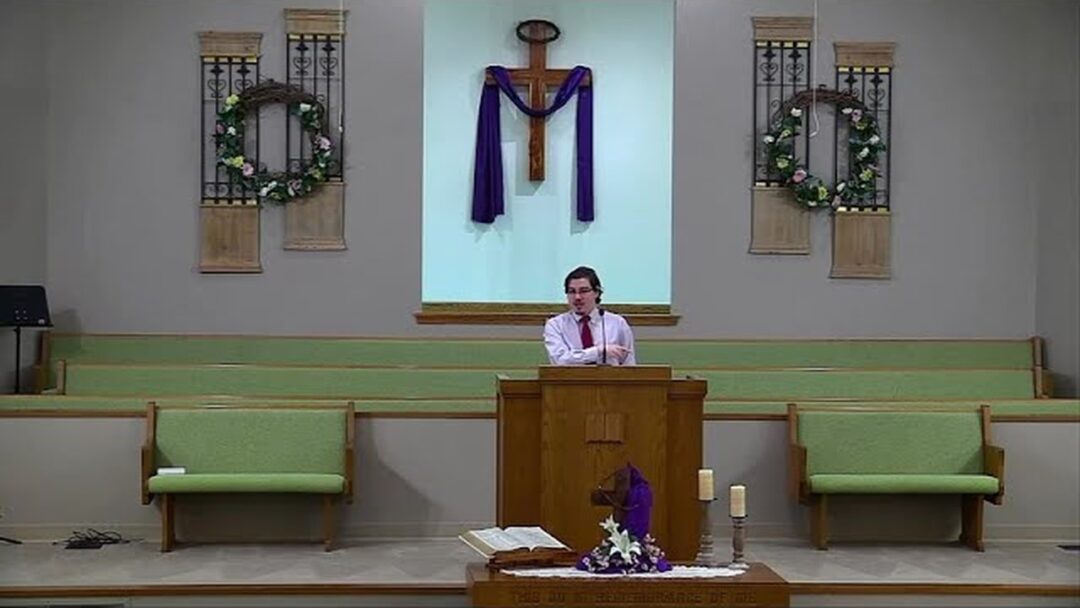
From our Sunday service on April 6, 2025, Ephesians 5:1-21. This is part 5 of our Ephesians series. Watch the full message: Walking in Love and Light – Ephesians Series #5 on YouTube.
Last week we talked about walking worthy: how we are to mature spiritually, become more like Christ, and share a unified purpose in the body of Christ. This week and next, Paul gives specific examples of how we can build unity and maturity in our various relationships. Today we look at attributes we should have in order to foster that growth, and we’ll save the back half of Ephesians 5, on submission, for next week. Our topic today is walking in love and light, and the main idea I want you to take away is this: God wants you to imitate Christ’s example of godliness.
Ephesians 5:1-2: Imitate Your Good Father in Love
Be ye therefore followers of God, as dear children;
Ephesians 5:1
This first verse works as an introductory thesis for this chapter and the next. Everything Paul says ties back to being a follower of God as dear children. The word “followers” literally means imitators. Think of a child who is loved by a parent and naturally imitates what Mom and Dad do. I know when I was a little kid, I would put on my dad’s shoes, even though they were way too big, and walk around like him. I thought, “My dad’s cool. He’s a carpenter. He makes all these cool things. I want to be like him.” Or a child whose mom is an accountant might carry around an envelope and pretend to do paperwork, because they want to be like her.
That’s the picture Paul uses. God is our good parent, and he’s been so good to us that we naturally should want to be like him. “Be ye therefore followers” is a command. And “children” here isn’t the age group that gets prideful and thinks it’s always right. It’s the age where a child trusts a parent and asks a thousand questions about a thousand things because they think their parent has all the answers. Our Father in heaven really does have all the answers. So as that child trusts, imitates and goes to the parent, we as Christians should go to Christ, imitate Christ, and ask him for direction in our lives.
Paul first uses this illustration for the topic of walking in love.
And walk in love, as Christ also hath loved us, and hath given himself for us an offering and a sacrifice to God for a sweetsmelling savour.
Ephesians 5:2
As children who are loved by their parents imitate them, we, who are loved by Christ, should naturally seek to imitate him. How do we know he loved us? He “hath given himself for us an offering and a sacrifice to God.” Jesus was offered as the payment for our sins. God the Father didn’t force him into it. Jesus, as God the Son, willfully sacrificed himself on the cross to die for our sins so that we could ask for forgiveness and live in eternity with him. Jesus did a lot for us and went through a lot for us. So we should ask ourselves, why shouldn’t we do something for him?
He’s also “a sweetsmelling savour.” That may not be as familiar to us, but back in the days of the temple they burned incense 24/7 so the temple area had a pleasant aroma. I won’t get into the details of all the spices they used, but it wouldn’t be too far off from incense sticks you’d buy in a market today. This sweet-smelling savor was burned as an offering to God, a gift like the sacrifice of animals. Though God doesn’t literally smell it, he enjoys the offering. So Jesus was not only a sacrifice like a bull or a sheep or a ram, but also a sweet-smelling savor.
There are two aspects here. Christ gave himself on the cross as a sacrifice to God, and as Christ gave himself, we too are to give ourselves as an offering and a sweet-smelling savor. When we walk in love, that walk is itself an offering to God. When God sees us walking in love, it is as pleasant to him as that burning perfume in the temple. God desires nothing more than to see his people walk in truth. I like to say it this way: you can never impress God, but you can please him. We’ll never blow God’s mind with something he didn’t expect. Our goal is not to impress him but to please him, and the Bible tells us that we please God by walking in love.
Ephesians 5:3-7: What Not to Do
Paul doesn’t tell us exactly what to do to walk in love. He first tells us what not to do. Here is a big list of things to avoid, so let’s take them one by one.
But fornication, and all uncleanness, or covetousness, let it not be once named among you, as becometh saints;
Ephesians 5:3
Fornication carries the idea of any kind of sexual immorality, no matter the category. It could be homosexuality, adultery, or wrongful relationships before marriage. Uncleanness is dirty behavior, sinful things outside of sexual immorality, just having an immoral lifestyle. Pride would be in this category, thinking of yourself more highly than you should. Covetousness is a greedy desire to have more. This one is probably the most tempting in American society. We praise ourselves on our ability to make money here, and often we don’t even think of it as wrong to focus too much on money. It’s easy to think our success is always good, but the Bible warns that success can be bad if it comes at the expense of somebody else. That’s the idea of greed here. It’s not that you have a lot of money, but that you exploit others to obtain it for yourself.
These three are things that “let it not be once named among you.” If you commit them, not only will Christians try to correct you, but the unsaved will too. If you cheat on your wife, unsaved people will say, “That is so wrong. Why would you do that?” If you have a dirty lifestyle and take advantage of people left and right, they’ll say, “That person’s terrible.” If you run an auto shop and keep finding problems that don’t exist so that you can take a little extra money on the side, people will find out and call you out. They’ll say right off the bat, “That person is evil. Don’t trust them.” So Paul says not to let these sins be named among you, because not only are they bad against God, they will destroy your testimony in a moment. The second you’re caught in one of them, your viability as a witness for Christ goes out the window. You can’t live in fornication, a dirty lifestyle or greed and then witness to someone who knows who you are. These are serious sins, not to be taken lightly.
Then he adds “as becometh saints.” It is proper for saints never to be involved in these sins. No one, Christian or otherwise, is going to argue that it’s wrong for Christians to be sexually pure, morally clean and not greedy. The unsaved won’t try to oppress you for those things. They’ll be happy you’re not trying to get in bed with their spouse, wreck their lives or exploit them. It’s natural and suitable for us to live this way, and everybody knows it. So we should be monogamous, have pure thoughts, pure motives and pure actions, and avoid taking advantage of other people to gain something for ourselves.
Neither filthiness, nor foolish talking, nor jesting, which are not convenient: but rather giving of thanks.
Ephesians 5:4
Those were the big three, the big dangers, but there are more. Verse 4 gives us three more: filthiness, foolish talking and jesting. You could translate them as obscenity, moronic speech and improper jokes. The word “moronic” is where our English word comes from, which is why I’m using it to describe the Greek.
Filthiness, obscenity, is a case where the act of speaking is a sin in and of itself. Your words can be sinful, wicked and destructive. The Bible tells us that the tongue is a fire, a world of iniquity, like a forest fire, a blaze you can’t put out once you let it loose. We have to be careful to control our tongues, and these three are all that way.
Foolish or moronic speech is speech that makes light of sin. The words themselves may not be sinful, but you’re not taking sin as seriously as you should. Maybe you’re joking about doing something inappropriate, or about somebody else doing something inappropriate. Maybe somebody in the news was caught in some kind of exploitation, and you make a joke about it. That’s the kind of moronic speech Paul is talking about. There’s a weight to sin that should be upheld. When a society jokes about sin and talks about it like it’s not a big deal, “Hey, did you hear what so-and-so did in school? I heard they got pregnant at 16,” you’re not taking it seriously. These are people’s lives. Sin is a force of destruction, not something to be amused by. If we talk about sin casually, then we’re morons. Take sin seriously.
Jesting goes a step further. You can make jokes, be funny and have wit, but there’s a kind of joke that’s improper. These are jokes at the expense of somebody else, or jokes that make light of sin. We’ve covered making light of sin, so let’s focus on jokes at the expense of others. They say every joke has a glimmer of truth. You can’t make up a funny insult about someone without genuinely thinking that insult in your heart for at least half a second. If you say, “Looks like you messed up again, you’re always tripping around,” then for a second you genuinely thought this person isn’t good at walking carefully. If you make a joke about it, you sort of believe it. Kids in school sometimes make jokes like “Maybe I should just shoot up my school.” If someone is joking about that, take it seriously, because in their heart, for a second, they thought about it. “Out of the abundance of the heart the mouth speaketh.” So if you’re making jokes at other people’s expense, in your heart you truly believe it. That’s why, when someone jokes to me, “The cost of everything is going up so much, maybe I should just kill myself,” I always take it very seriously as a pastor, because someone in the right state of mind usually won’t joke about that.
Jokes can still be good in their proper place. The Bible has jokes in it from time to time. If you know Hebrew, you’ll see puns left and right that were put in just to make it amusing to read. But there are jokes that cause destruction. These three are lesser sins of the tongue. If you’re making obscene remarks or improper jokes, most people will just shrug their shoulders and move on. They won’t let it destroy your whole testimony. But Paul says not to ignore these things just because you can get away with it. Be careful with your tongue, careful what you joke about, careful how you talk about sin. We’re supposed to walk in love and be light, which means representing Christ in how we speak. You may not get called out, but these things are not profitable in any way for the believer.
For this ye know, that no whoremonger, nor unclean person, nor covetous man, who is an idolater, hath any inheritance in the kingdom of Christ and of God.
Ephesians 5:5
Paul is renaming the first three in slightly different words, and we know these people will not have an inheritance in the kingdom of God. He also tells us that greed itself is idolatry. If we’re greedy and exploiting people for gain, and all we care about at the end of the day is how much money is in our bank account, Paul says not to be deceived into thinking you’re just financially secure. Greed is idolatry. If money is the most important thing in your life here on earth, you’ve replaced God with your bank account and your investments. You might think it’s all right to take a little more for yourself, but you’re deceiving yourself, and you’re no longer worshiping God. You’re worshiping yourself.
Let no man deceive you with vain words: for because of these things cometh the wrath of God upon the children of disobedience. Be not ye therefore partakers with them.
Ephesians 5:6–7
Don’t let people trick you into thinking these things are okay. When they tell you that, they’re speaking empty words. People of ancient times were destroyed for these sins. Sodom and Gomorrah was destroyed for its sexual immorality, its inhospitality toward strangers and its dirty lifestyle. These are the things that bring about God’s wrath unlike anything else, so don’t think you can allow them in your life as a Christian.
“Be not partakers with them” means not to participate in their sinful behaviors, not to be associated with it at all, not to hold a stake in their investment. Be as far away from it as possible. Taking advantage of people through these sins is the literal opposite of love. Taking advantage of someone for your own gain is selfish, but love is self-sacrifice for the sake of another. Paul wants to emphasize that this is idolatry. So if we want to imitate Christ, we need to be self-sacrificing like Christ instead of selfish. The sins of sexual immorality, uncleanness and greed will immediately ruin your testimony, so stay far away from them.
Ephesians 5:8-14: Walking in Light
We’ve seen walking in love. Now let’s talk about walking in light.
For ye were sometimes darkness, but now are ye light in the Lord: walk as children of light: (For the fruit of the Spirit is in all goodness and righteousness and truth;) Proving what is acceptable unto the Lord.
Ephesians 5:8–10
“Sometimes darkness” means “at one time you were the darkness in the world.” Before we were saved, we lived in sin, and as we sinned, we brought terrible things to the people around us. When you steal, the person you steal from suffers. When you lie, the person you lie to suffers. When you commit fornication, the person you fornicate with suffers. We were what caused suffering in the world. Maybe we brought people depression, anxiety, shame or regret through what we did with them. If you steal, they might have financial difficulty. Though we are now separated from our sinful past, we shouldn’t forget where we came from. We were the people who blinded others from seeing who God truly was. But the good news is that though we were the darkness, now we have the opportunity to be the light and start undoing the damage that was done.
Notice that it’s “the fruit of the Spirit,” singular, not fruits. All these attributes make up one fruit, “in all goodness and righteousness and truth.” It’s not goodness sometimes, righteousness sometimes and truth sometimes. It’s goodness and righteousness and truth all the time. You can’t be partially in the Spirit. You can’t say, “I always tell the truth,” while stealing as you say it: “I stole it, but I didn’t lie, so I’ve done a good deed.” It doesn’t work that way. You’re either darkness or light, so “walk as children of light.”
“Proving what is acceptable unto the Lord” means discerning what God approves or disapproves of. The Greek word for “proving” is literally “testing,” and at first this confused me in my study. Don’t we already know what God wants? Why do we need to test it? It’s the same idea as “taste and see that the Lord is good.” If you want to be a child of light, the first thing to do is try it. Paul says you’re not going to get it right the first time, so just go test it. Start discerning right from wrong, and start choosing what is right all the time, not just some of the things but all of them at once. By practicing this over time, we become more and more like Christ more and more consistently.
And have no fellowship with the unfruitful works of darkness, but rather reprove them. For it is a shame even to speak of those things which are done of them in secret. But all things that are reproved are made manifest by the light: for whatsoever doth make manifest is light. Wherefore he saith, Awake thou that sleepest, and arise from the dead, and Christ shall give thee light.
Ephesians 5:11–14
“Fellowship” again means participation. Don’t participate in the unfruitful works of darkness. There’s a lot you can do in life that brings darkness to the world and invites sin into your life. Instead of joining the world in bringing darkness, we are to correct, or “reprove,” those who live in it. We need to point out to the world what is right and what is wrong, and if we ourselves aren’t demonstrating it by example, we’re not doing anything at all.
Verse 12 says it’s “a shame even to speak of those things which are done of them in secret.” That’s the foolish talking again. “In secret” can also be translated “in private.” Sometimes we like to gossip about people’s sins, but God calls that shameful. When we gossip about sin and make light of someone else’s mistakes to make ourselves look good and them look bad, we’re living in darkness and bringing more darkness to the world. Do you think that person wants their mistakes spread to everyone? Talking about someone’s sin behind their back won’t bring them to the light. It will shove them further into the darkness. It should be an embarrassment to us when we do it. God called us to be separate. We are the church, an assembly of people called out to be his witnesses to the world, not to bring darkness but to shine his light.
Verse 13, “whatsoever doth make manifest is light,” is a strange sentence, but it basically says that where there is light there can be no darkness. Where we shine the light, darkness cannot remain, because of the nature of light. God’s light shines on us and we reflect it, so when we’re living in Christ’s will and following his teachings, we are illuminated, we become light, and we reveal right from wrong. When we do the opposite, we can’t teach people what’s right or wrong, because we aren’t illuminated ourselves and can’t be seen by others.
Verse 14, “Awake thou that sleepest,” is Paul paraphrasing a prophecy, Isaiah 60:1-3.
Arise, shine; for thy light is come, and the glory of the LORD is risen upon thee. For, behold, the darkness shall cover the earth, and gross darkness the people: but the LORD shall arise upon thee, and his glory shall be seen upon thee. And the Gentiles shall come to thy light, and kings to the brightness of thy rising.
Isaiah 60:1–3
The prophecy was that one day Israel and the world would be covered in darkness, and the people would live deep in it, but the Messiah would come and shine his glory, not directly on everyone but on his people, and his people would act as a light by which the Gentiles would see God and come to him. It’s a very important responsibility that we have as a church to represent Christ. If we want to walk worthy, and we want people to see us as Christians, we have to make sure our lives aren’t tainted by sin and foolish speech.
Ephesians 5:15-16: Redeeming the Time
See then that ye walk circumspectly, not as fools, but as wise, Redeeming the time, because the days are evil.
Ephesians 5:15–16
Living well does not happen automatically. We can’t go on autopilot after we’re saved and say, “I’m a Christian now. I don’t have to think about it. Everything is going to be fine, and I don’t need to put any effort into it.” A good life doesn’t just happen. “Circumspectly” means walking carefully, looking where each step is before we take it. You can’t walk without looking where you’re going, because who knows what you’ll step on or trip over. We need to be observant. Fools don’t look where they’re going, but wise people look ahead.
Remember, we once lived in darkness and brought darkness to the world, and that whole time was wasted. Paul is telling us that it’s time to buy back lost time. Do you realize your life is passing you by? You haven’t yet lived it for God or been light to the world. Time is short. Life is like a vapor. So stop, look carefully and start buying that time back. Why? “Because the days are evil.” Evil just means anything bad that can happen to you. If we’re not careful to buy back our time, we’ll lose it, because there will be days of sickness when nothing can be done, days of persecution when you can’t publicly declare Christ, and days of financial difficulty when you can’t do as much for Christ as you wanted. Redeem your time now while you still can. You don’t know what’s ahead. Your life may not last as long as you think, and you may not live in as much comfort as you expect.
You might say, “I’ll do a lot for God once I get that promotion. I know it’s coming soon. It’s been delayed a while, but once that happens, I’ll start giving to God, investing in the kingdom and doing the work.” But Paul says the days are evil, and you can’t trust that good things are coming. Serve God now so you don’t regret it later.
Ephesians 5:17-21: Filled with the Spirit
Wherefore be ye not unwise, but understanding what the will of the Lord is. And be not drunk with wine, wherein is excess; but be filled with the Spirit; Speaking to yourselves in psalms and hymns and spiritual songs, singing and making melody in your heart to the Lord; Giving thanks always for all things unto God and the Father in the name of our Lord Jesus Christ; Submitting yourselves one to another in the fear of God.
Ephesians 5:17–21
We’ve now moved past the lists of do nots, and Paul tells us what to do. You’ve lost all this time in sin, so it’s time to move beyond it and start doing something for God. “Be not unwise” is the same word as “fools.” “Understanding what the will of the Lord is”: what is God’s will? His will is for all to be saved and for all to be conformed into the image of his Son. Don’t be a fool. Know what God wants and work toward it. No matter how poor or rich you are, how healthy you are or where you are, God can always be served. If you understand his will, it’s not for you to be the biggest person in the room with the best talent or the most to offer, but to be available to serve Christ in whatever capacity he sets before you.
In verse 18, “excess” is a Greek word that is the opposite of the word for saving or rescue. A way to translate it that I really like is “wherein is endangerment.” You’re doing something that actively puts you at risk of ruin. Paul says to avoid alcohol. It may not be a sin in and of itself to drink, but it leads to sin very easily. Inside that alcohol is endangerment in liquid form. As you drink it, your inhibitions are numbed and your ability to discern right from wrong gets fuzzy, and you start messing with those three cardinal sins that ruin your testimony. Paul couldn’t say not to drink alcohol at all, because in his day alcohol was used to purify water for drinking, so it was impossible to avoid altogether. But alcohol has changed a lot since the first century. Alcohol percentages are through the roof compared to then. Vodka is maybe five times more alcoholic than the strongest wine available in Israel at the time. The alcohol industry is designed to get you as drunk as possible so you spend as much as possible. It’s exploitative and dangerous, and it’s something Paul warns you against really getting involved with. When you engage with alcohol, you risk falling into sin.
The alternative is to “be filled with the Spirit.” Rather than dulling your senses to morality, enhance them. Fill yourself with the Holy Spirit, and take that head knowledge of what the will of the Lord is and transform it into wisdom that is used not just in your head but in your life. How do we do that? Paul lists a few things: speak to ourselves in spiritual songs, give thanks to God, and submit to each other in reverence to God. We’ll look at the first two now and focus on the third next week.
Songs. Verse 19 says to speak “to yourselves in psalms and hymns and spiritual songs.” When we sing Christian songs, we speak to ourselves spiritually and bring glory to God. Paul teaches us that Christian songs are not just for worship but also to encourage ourselves to follow God. As alcohol numbs our senses to morality, singing spiritual songs enhances our sensitivity to doing what is right, and we know right from wrong more clearly. So, Christian, what songs are you listening to? Do the songs you listen to on a daily basis encourage you to live a godly life? What are they teaching others around you who happen to hear them? If songs can be used to encourage us to walk with God, then the opposite must also be true: the music we listen to can encourage us not to follow God and instill bad behavior in us. Be careful what you put into your mind, because that head knowledge will eventually become practice in your life.
Thanks. Verse 20 says to give “thanks always for all things unto God and the Father in the name of our Lord Jesus Christ.” When you take time specifically to look at what God has done in your life, you find that the list of things you have is so much more important than the list of things you don’t. When you see how God has provided this and this and this, you can list them forever and become more grateful. If you’re tempted to be greedy, start thanking God for what you have, and you’ll realize you have more than you really need. So, Christian, how often are you grateful for what he’s done in your life? Have you taken time recently to thank him specifically, not just with a general idea that “I’m blessed,” but by going through and saying, “God, I’m thankful for this and this and this. God, I didn’t thank you for this, and I want to go back and correct that”?
Notice it says “to yourselves,” plural, not yourself singular, and “making melody in your heart to the Lord.” The songs you sing encourage the people around you, and so does giving thanks. Christian, how long has it been since you told other people how good God has been in your life? Tell people. Encourage them and increase their faith that God is a good giver.
Submission. The last one is to submit to each other in reverence to God, and here we transition into a new section that we’ll look at next week in detail. To summarize it today, biblical submission is about placing others above yourself, not in just one relationship but in every relationship you have, whether you’re the person in charge or the person in submission. This week, think about it. Have I been submitting to others? Have I been putting their needs above my own, or only seeking to serve myself?
Closing
Today we saw from Paul that our calling as Christians is clear. We are to imitate Christ’s self-sacrificing love and live distinctly as people of light in a darkened world, avoiding the sins of sexual immorality and greed and embracing a life filled with goodness, righteousness and truth. That way we can become powerful reflections of Christ’s transforming work on the cross. So, Christian, let’s seize every opportunity to redeem our time. Let’s fill our days with gratitude, praise, spiritual wisdom and a heart of humble submission so that the light of Christ can shine brightly to the world around us.
God has called us to imitate Christ’s example. So the question today is: will you imitate Christ today?

Recent Comments