
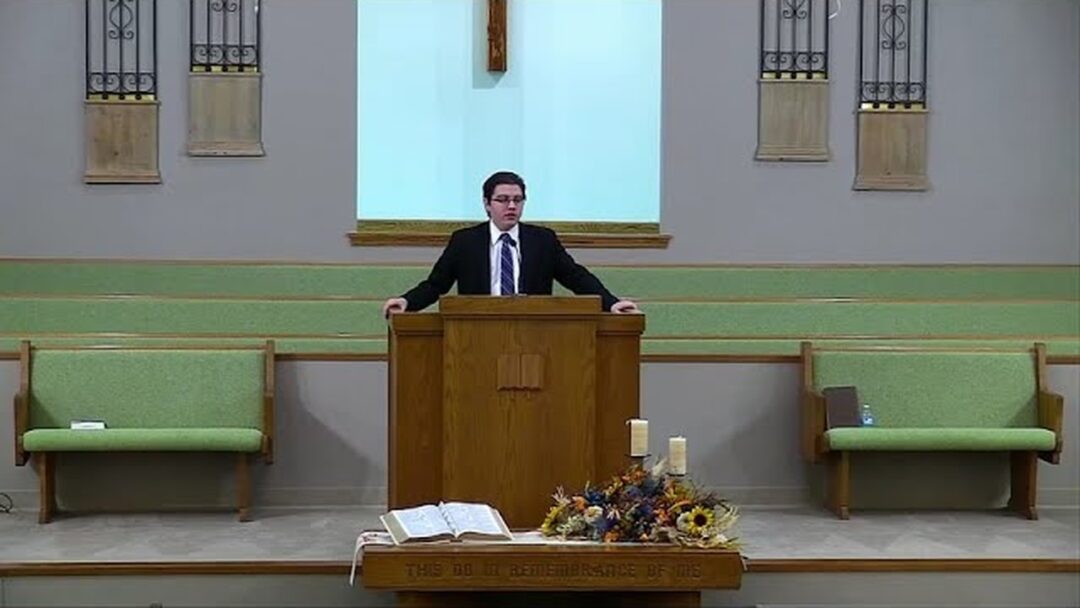
From our Sunday service on September 29, 2024, the book of Jude. Watch the full message: Being the Difference on YouTube.
Today we’re looking at the book of Jude. You don’t need a chapter, because it’s just one. As you know, we’ve been doing a series on 2 Peter. Second Peter has a famous connection to Jude, and they cover a lot of the same topics. Jude was written after 2 Peter, it’s very similar to the teachings of 2 Peter, and its key theme is to fight for the faith. In our series you can consider it a kind of epilogue.
We’ve been talking about how there are false teachers spreading false doctrine. Second Peter focuses on the false teachers. Jude says a lot of the same things, but he focuses on the false followers. He’s not dealing as much with the people in power who make these false beliefs as with the people who are following them, and we see a little difference in how we should respond to the leadership versus how we should respond to those who are wrongfully following it. Those who follow false teachers unknowingly should not be condemned to the same extent as the teachers they follow. The Bible says those who teach wrongfully are held more accountable than those who believe wrongfully, and than those who knowingly go against God’s word.
Jude also includes a clear calling for believers on how to respond proactively to false teaching. Second Peter tells us how to protect ourselves. The key theme there was that we need to be in the word to protect ourselves. Jude finishes with a conclusion on how we can take what we know to help others. You might notice some similarities today, but don’t think it’s a waste of time or that there’s nothing new to learn here. There really are some new things. Keep your mind open.
Who Wrote Jude?
Jude was written in response to the same idea, those early Gnostic sects creating secret teachings. He is famously known as the half brother of Jesus and the brother of James, who was the leader of the Jerusalem church. What’s interesting is that, as we know from the Scriptures, Jude didn’t believe Jesus was the Messiah until he rose from the dead, despite being Jesus’s brother and growing up alongside him. He probably thought, “My perfect brother. Come on, Mom thinks he’s so perfect.” Here was a staunch opponent of Jesus, literally saying, “My brother’s not the Messiah. I grew up with him. He drove me crazy as a kid. How could he be the Messiah?” But after Jesus rose from the dead, Jude becomes part of the church, dedicated to Christ, and a leader. Now he’s writing to members of the church to encourage them about these false teachings.
The main idea we get from this is that God wants your life to affect others for the better. God wants you to use your Christianity to make people more like Christ.
Sanctified, Preserved, and Called
Jude, the servant of Jesus Christ, and brother of James, to them that are sanctified by God the Father, and preserved in Jesus Christ, and called: Mercy unto you, and peace, and love, be multiplied.
Jude 1:1–2
Notice something interesting. Jude never identifies himself as the half brother of Jesus. You would think that being one of the big aspects of your life, you’d mention it. But Jude chooses humility. He says, “the servant of Jesus Christ, and brother of James,” and that’s enough to identify him as the Jude who is a brother of Christ. His full name would actually be Judas, but it’s translated Jude so as not to cause confusion with Judas Iscariot.
Jude is making a distinction. There are two types of so-called Christians in this day. There are the true Christians he’s writing to, who have three qualities: sanctified, preserved, and called. And there are the false Christians, who have this false teaching, who claim to follow Jesus yet deny his divinity and the morality Jesus taught. So Jude is giving us a few signs to know if you’re in the right group.
Sanctified means made holy, in this context through salvation in Christ. Preserved in Jesus Christ goes back to what we’ve said about the Holy Spirit being our down payment and our seal of salvation. The Bible says we are preserved in Jesus Christ and sealed in the Spirit. Those who have truly accepted Christ are sealed and preserved in Jesus Christ, and they’re not going to fall away into sin again and be taken away by the evil one. And called means the chosen, the elect, those who have accepted salvation and become part of the family of God.
If you don’t have these three aspects in your life, you might want to wonder which group you’re in. Have you been made holy by the Father? Has your life been transformed in some way? Do you have the assurance of salvation in Jesus Christ? If you aren’t assured of your salvation, then you lack the faith in Christ that you should have. If you lack faith in your salvation, you’re not trusting in Jesus. You’re trusting in yourself and your own ability to accomplish something. And as for the called: is there a moment you can look back on and say, “At that point in my life I dedicated myself to God and was fully committed”? If you don’t have those, consider whether you’re part of that group.
Then Jude gives his greeting: “Mercy unto you, and peace, and love, be multiplied.” He’s telling us what the end result of the letter is supposed to be: mercy, peace, and love, increasing among all of you.
Contend for the Common Salvation
Beloved, when I gave all diligence to write unto you of the common salvation, it was needful for me to write unto you, and exhort you that ye should earnestly contend for the faith which was once delivered unto the saints. For there are certain men crept in unawares, who were before of old ordained to this condemnation, ungodly men, turning the grace of our God into lasciviousness, and denying the only Lord God, and our Lord Jesus Christ.
Jude 1:3–4
“The common salvation” is the one everyone agrees on, as opposed to the false salvation these other sects are teaching. The common salvation is the truth that there can be a Catholic who is saved if they believe the doctrines of the faith correctly. There could be a Calvinist who is saved, a Baptist who is saved, a non-denominational who is saved. There could be a person on their deathbed who never even knew denominations existed who is saved. Jude isn’t talking about disagreements between brothers. He’s talking about the fundamental doctrines of the faith: Christ died, rose again, took our sins and nailed them to the cross, and through faith in him we can find salvation. No matter what denomination you are, your true Christianity is determined by your attachment to those foundational doctrines.
Jude says it was needful to exhort you to “earnestly contend for the faith.” “Contend” is literally a sporting term. It’s wrestling, which was a very old sport in ancient Greece, with matches held in the coliseums for fun. Jude is saying, “I wrote to you when you first got saved that it’s important to fight for your faith, to wrestle over what is true and what is a lie, to set a line in the sand and say, ‘I will not accept anything beyond this.'” We can disagree on a lot of things, but here we have to draw the line: do not pass it.
Who gave the faith? Jesus Christ. It was passed from Jesus to the apostles to the church, and as it got passed around, other people said, “I want to add my ideas to it. I want to change this and change that.” Jude says it’s important that we actively preserve our faith and stand on the doctrines Jesus gave us.
Why? Because “certain men crept in unawares.” These people secretly snuck into the church. In this case they didn’t like the moral teachings the church had, which were disagreeable with Greek culture. They didn’t like the monogamous attitude. They didn’t like “I don’t gorge myself on alcohol at feasts.” So they snuck in and said, “The Bible does say it’s okay to drink wine in some situations, so alcoholism isn’t really a big deal. Monogamy isn’t really a big deal. You can have one or two wives. You can exploit your slaves. It’s okay.” They teach these terrible heresies one or two at a time, until the congregation thinks, “I guess it’s okay if we don’t hold to that anymore.”
But Jude warns that they are “ungodly men.” These people have no attributes of God in their life. They are detestable and evil. They turn the grace of God into “lasciviousness,” which is giving in to sinful desires. They know God has forgiven our sins, and they take that forgiveness as an excuse to keep sinning. Paul talks about this in a couple of his letters: “Shall we continue in sin, that grace may abound? God forbid.” This is what they’re doing. They say, “God has forgiven us for our sins, so the more we sin, the greater we make God’s forgiveness.” They say we should sin more and more so that God’s grace can be more amazing to those around us.
And Jude says they are “denying the only Lord God, and our Lord Jesus Christ.” They don’t even understand the fundamentals of the faith. They’re teaching the exact opposite. God did not come to die on the cross just to save us but also to transform us, and to teach anything other than transformation is to deny what Jesus came to do. God didn’t come to give us life. He came to give us life more abundantly. God didn’t come to save us so we could keep the status quo. He came to save us so we could go out into the world and show them that we can live a better way.
Lessons from the Old Testament
I will therefore put you in remembrance, though ye once knew this, how that the Lord, having saved the people out of the land of Egypt, afterward destroyed them that believed not. And the angels which kept not their first estate, but left their own habitation, he hath reserved in everlasting chains under darkness unto the judgment of the great day. Even as Sodom and Gomorrha, and the cities about them in like manner, giving themselves over to fornication, and going after strange flesh, are set forth for an example, suffering the vengeance of eternal fire. Likewise also these filthy dreamers defile the flesh, despise dominion, and speak evil of dignities.
Jude 1:5–8
One thing Jude likes to do is go to the Old Testament. I’m thankful God allowed him to do this, because it shows how important the Old Testament still is in the New Testament era. Jude is saying, “I’m going to remind you how God has been in the past, because God is always the same. What these people are teaching does not hold up to God’s character.”
The Wilderness Generation
First, “ye once knew this.” These people have learned the Torah their whole lives. The Lord saved the people out of the land of Egypt and afterward “destroyed them that believed not.” You remember what happened after they left Egypt. They went into the wilderness, complained, and grumbled against Moses. They got all the way to the gates of the promised land, and then they sent in twelve spies to check out the land. Ten of the spies came back with an evil report, saying the people in the land are too big for God to help them conquer. They had just fled the world’s largest empire, Egypt, which God had freed them from. But at the land of Canaan they had unbelief. Only Joshua and Caleb stood up and said, “No, God can do it.”
Because of their unbelief, God made them wander in the wilderness for forty years. Every single person who didn’t have belief in him was going to die before entering the promised land, and the only two who would make it in were Joshua and Caleb, because they believed him. Jude is saying, “Remember God’s character. He destroys those who don’t have belief.” He didn’t kill them on the spot, but he took away their blessings and made them live out their lives outside of the promise of Abraham.
God might not destroy you if you lack belief, but he’s not going to bless you if you lack belief. What they missed out on was some of the greatest things they could have had. They spent their whole lives wandering. Most of us hate to wander. We hate to be lost, and we’re always trying to seek a goal or direction in our lives. If we have no belief in God, he’s going to allow us to wander in our unbelief.
The Angels and Sodom
The second example is the angels, verse 6, “which kept not their first estate, but left their own habitation.” We talked about this a little in 2 Peter, how there are angels who crossed a line. I don’t want to get too much into the details, because a lot of it is assumptions and the Bible doesn’t say a lot about it, so to not promote heresy I’ll not talk about the subject in detail. But what we do know for sure is that there were angels who sinned in a way God said was unacceptable, and they will be in chains until the day of judgment. In Revelation we hear that they are released to do their evil again to the world, I think as part of the sixth trumpet, and they will cause chaos on the earth. But Jude says God has this standard and has always had it. He did not spare those angels who didn’t believe in him, who betrayed him and chose to pursue evil. They will be punished.
Verse 7 gives the example of Sodom and Gomorrah, “giving themselves over to fornication, and going after strange flesh.” Once again we remember the story of how Lot was separated from them and those who did not believe were destroyed.
Verse 8 concludes the whole thought: “these filthy dreamers defile the flesh, despise dominion, and speak evil of dignities.” They’re doing all the same sins that these people committed. If they believed God, they would fear him. “Despise dominion” refers to the angels who left heaven, who despised God’s rulership. Satan said, “I want to be like the most High.” And “speak evil of dignities” means they don’t honor the holy ones. These are people involved with demonic forces. They’re trying to cast out demons through all these other methods because they have this secret knowledge.
You might think that’s not really a thing, but right before the first service I opened Twitter, and the first thing that popped up was a Pentecostal church doing a worship service where they said the music would cast out demons. That’s a great example of what I’m talking about. Worship music doesn’t cast out demons. Do not challenge the demons. The only thing that casts out demons is the authority of Jesus Christ in his name. If anybody is trying to cast out a demon in anything other than the name of Jesus, it’s a false teacher. Even today there are false teachers going around saying the demons have no power over us, “Here, we’re going to play guitar and worship.” That’s not truth. That’s just feel-good mumbo jumbo.
Michael and the Brute Beasts
Yet Michael the archangel, when contending with the devil he disputed about the body of Moses, durst not bring against him a railing accusation, but said, The Lord rebuke thee. But these speak evil of those things which they know not: but what they know naturally, as brute beasts, in those things they corrupt themselves.
Jude 1:9–10
Michael argued over the body of Moses because Satan wanted the body so that the Israelites could worship Moses’s bones. And even Michael the archangel didn’t say, “I cast you out in the name of Michael, leader of angels.” He said, “The Lord rebuke thee.” He didn’t fight. But these people do this demonic stuff for show, and they speak evil of the things they know not. They are ignorant, and they’re genuinely convinced they have power over forces they can’t even comprehend. On the other hand, they also fall into sin. Jude says they do what they know “naturally, as brute beasts,” and “naturally” could also be translated “instinctually,” like wild animals.
Animals do have a sort of wisdom. My cat breaks into my cabinet and steals my loaves of bread, and that takes some level of intelligence. But they don’t have the long-term intelligence to understand the consequences of their actions. My dog swallows air when he eats because he eats so fast. One time he knocked over some food and just kept eating and eating, and he walked over to us bloated like a balloon from swallowing so much air. He knows he needs food, but he doesn’t know when to stop. And sometimes one of my two cats gets annoyed with the other, goes into our furnace room if it’s open, and shuts the door. That keeps the other cat out, but the other cat gets locked in for three or four hours and screams while we’re gone. They have a natural instinct to do things, and it seems to have the effect they want in the short term, but in the long term they regret it. My dog regrets being bloated like a balloon, and my cat regrets being locked away for hours.
These false teachers aren’t thinking about the long term. They’re thinking about the short term on this earth. “I can be famous for my ability to cast out demons. I can indulge in pleasures. I can have what I want.” They forget what’s coming later. The judgment is building up, the condemnation is coming, and the truth will be revealed. They’re like wild animals, and they can’t help themselves. They corrupt themselves.
Cain, Balaam, and Korah
Woe unto them! for they have gone in the way of Cain, and ran greedily after the error of Balaam for reward, and perished in the gainsaying of Core. These are spots in your feasts of charity, when they feast with you, feeding themselves without fear: clouds they are without water, carried about of winds; trees whose fruit withereth, without fruit, twice dead, plucked up by the roots; Raging waves of the sea, foaming out their own shame; wandering stars, to whom is reserved the blackness of darkness for ever.
Jude 1:11–13
Those are some big words of condemnation, so let’s look at them.
The Way of Cain
First, “the way of Cain.” What was Cain’s sin? He despised those who did right. Cain and Abel both made an offering to the Lord, but one did it the right way. Cain brought from the fruit of the ground, and Abel offered the best of his flock. Because the law regarding sacrifices hadn’t been given yet, it wasn’t necessarily the fruit that was wrong. Fruit sacrifices were a thing in the temple worship. A lot of times people get this wrong. It wasn’t animals versus fruit. It was the quality of what he gave. Abel offered the best that he had, and Cain just took a little bit of whatever he had and gave it to God. Cain had an empty, apathetic form of worship. He was going through the motions: “I should give God something. Okay, here’s some fruit I got.”
Abel said, “God wants me to give something in worship, so I’m going to find the best of my flock. I’m going to take the time to go through my entire herd and consider every single one of them, looking for any blemish, any illness or disease. After all that work, I’ll take the best one and give it to God.” Cain didn’t care about worship. It’s like going to church on Sunday and saying, “That’s enough. I’ll give God my Sunday, but I won’t go any further.” Then Cain saw his brother being rewarded and recognized by God, and he was jealous, and rather than changing himself, he killed his brother. It’s a lot easier to blame and condemn other people than to take the effort to change ourselves. That’s what these preachers had done. They were called to a high standard they didn’t want to put the work in to achieve, so instead of preaching the truth they put in an apathetic form of worship and condemned the other ones for being wrong.
The Error of Balaam
Second, they “ran greedily after the error of Balaam for reward.” We talked about how Balaam betrayed Israel for money. There are believers who have betrayed God for money. I read in one commentary while studying that there are believers who would never deny God if they were threatened with death, but some of those same believers, if offered $10 million to deny God, would do it in a moment. Death is a scary thing. If a terrorist came to you and said, “If you don’t deny Jesus, I’m going to kill you,” well, boy, that’s scary. But if someone came to you and said, “I’ll give you $10 million to deny Jesus,” that’s not scary anymore. That’s an opportunity to live well for the rest of your life. A lot of Christians who say “I would never deny Christ” might think about it a little more. It’s interesting how money can change us and change our perspective.
The Gainsaying of Korah
Lastly, “the gainsaying of Core,” that is Korah. Korah complained against godly leadership, and what’s interesting is that he was actually a minister. He had a ministry role as a Levite, part of the priests. So he complained against godly leadership while he was supposed to be godly leadership himself, which puts him in the false teacher category. If you know the story, everybody who followed Korah was swallowed up by the ground and killed when they decided on a contest to see if God honored Moses or Korah. God chose Moses and killed the others. They went after power and wanted to usurp authority over Moses, and these false teachers wanted to usurp authority over the true ones.
Spots, Clouds, Trees, Waves, and Stars
In verse 12 Jude gives a few analogies. “Spots in your feasts of charity,” the love feasts, which today we’d call fellowship meals. “Spot” is actually a Greek word for a reef under the water. You’re walking along the shore and hit your foot on a rock under the water that you couldn’t see. These people are just below the water, a hazard, and since you can’t see that deep, you don’t know until you hit your foot on them. You could call them stumbling blocks, sitting alongside you at your meals. They “feed themselves without fear” because they know no one is going to see through them.
They are “clouds without water,” useless, bringing no nourishment to the ground. They are “trees whose fruit withereth,” which in the Greek is an autumn tree, one that should have already produced its fruit by this point. Even when it’s easy for them to produce works for God, they don’t. Somebody comes up to them and says, “My car just broke down. Can I use your phone?” and they say no. That would be a really easy way to show kindness, and these false teachers don’t show kindness even when it’s easy and expected. They are “twice dead, plucked up by the roots,” doubly dead, with no chance at all.
They are “raging waves of the sea, foaming out their own shame,” that nasty, disgusting seafoam that shows up on the seashore. And they are “wandering stars,” either shooting stars or planets. When you’re navigating a ship, you use the stars as fixed points to know if you’re on track. If you try to follow a shooting star for directions, in about ten milliseconds you’ll be fifty percent in the wrong direction. These people aren’t good for leadership. They can’t lead you anywhere.
The Traits of the Ungodly
And Enoch also, the seventh from Adam, prophesied of these, saying, Behold, the Lord cometh with ten thousands of his saints, To execute judgment upon all, and to convince all that are ungodly among them of all their ungodly deeds which they have ungodly committed, and of all their hard speeches which ungodly sinners have spoken against him.
Jude 1:14–15
Jude is saying something real simple. Remember the time of Enoch. Enoch walked with God, but he was not, because God took him. Even then, a righteous man was preaching that judgment is coming and that you won’t get away with it. This is an ancient truth: the Lord will come with his saints, and Judgment Day will come.
These are murmurers, complainers, walking after their own lusts; and their mouth speaketh great swelling words, having men’s persons in admiration because of advantage. But, beloved, remember ye the words which were spoken before of the apostles of our Lord Jesus Christ; How that they told you there should be mockers in the last time, who should walk after their own ungodly lusts. These be they who separate themselves, sensual, having not the Spirit.
Jude 1:16–19
Verse 16 tells us a couple of the traits of these ungodly people. They are murmurers, grumblers who are always in a bad mood. Nothing you do can make them happy. They’re complainers, discontent with whatever you do, and they can always find something negative to say about it. These are attributes you need to actively try to avoid in your life. People who are living in sin will naturally fall into them.
They walk after their own lusts, and their mouths speak “great swelling words,” extravagant words, while they flatter people for their own profit. “Having men’s persons in admiration because of advantage.” They’ll tell you whatever you want to hear, and they’ll praise you only when it benefits them. They’ll complain, complain, complain, but when you do something that helps them, they’re the happiest person on earth. That manipulates you into thinking, “If I just do something else, he’ll like me a little more. He won’t say bad things about me.” So this person is exploiting his followers. If you see those traits, that’s someone to avoid.
Verse 17 says the apostles warned of this before it even happened. There’s nothing new here. We knew they were coming. They would walk after their own ungodly, sinful desires. Why do they do it? Verse 19: “These be they who separate themselves, sensual, having not the Spirit.” They’re mockers, false Christians, because they don’t have the Spirit of God, and the Spirit of God makes all the difference. If you haven’t been sealed, you don’t know the transformation Christ is giving. They haven’t truly believed or truly repented. They desire the things of the flesh, and they’re driven by that desire.
Being the Difference
But ye, beloved, building up yourselves on your most holy faith, praying in the Holy Ghost, Keep yourselves in the love of God, looking for the mercy of our Lord Jesus Christ unto eternal life.
Jude 1:20–21
This is contrasted with something else: “But ye, beloved.” They don’t have the Spirit, but you true believers have the Spirit. So use it. “Keep yourselves in the love of God.” Live in that love. It’s unending and infinite. Every morning when you wake up, God’s love is there for you to live in. Every day the Lord is merciful to us, and his mercies are new every morning. So regardless of the chaos of the world, we can still look at the love of God and the mercy he extends to us. And because of this mercy, and because of the Spirit, we have an opportunity to respond to the people who have fallen into false teachings. Here’s the application for us today, the practical part that 2 Peter didn’t give us.
And of some have compassion, making a difference: And others save with fear, pulling them out of the fire; hating even the garment spotted by the flesh.
Jude 1:22–23
We’ve kept ourselves in the love of God, and we have the Spirit. What does it look like to respond to those who don’t? Jude gives us two ways.
Have Compassion
The first is “of some have compassion, making a difference.” The word “making a difference” in the Greek includes the idea of doubt, so another way to translate it is to have compassion on those who have doubts, who are struggling to find the faith or understand it. Some of us will be really good at that. We can go to those who are struggling to understand Christianity, who have only seen it through TV or some article online, or who only went to church when they were five, six, or seven years old. They doubt. “I don’t know how there could be a resurrection.” That’s really the crux of the whole salvation thing, understanding the resurrection. How can it be possible? Well, he’s God, and if he’s God, then anything is possible. That’s why the resurrection was so important. It proved he was who he said he was. Paul says that if the resurrection didn’t happen, our entire faith is in vain. People are going to struggle with that, and it’s our job to come alongside those who are doubting, who haven’t quite made that step of faith yet, and to lift them up, encourage them, and explain the truth.
Save with Fear
The second option is more intense: “others save with fear, pulling them out of the fire.” This is a tender way of approaching salvation, compassion, kindness, discussion, and then a little more intense form. The truth is that one day every single one of us in this room is going to die and have to give an account to God, and that should instill a little fear in you about the way you’re living your life. So not only should we have compassion on people, we should also speak the truth, even the scary part. We shouldn’t shy away from it, because it’s very important to understand that there is a judgment day coming. We warn them about the dangers of hell, the reality that sin unpaid for now will be paid for later, and that only through Jesus Christ can we be freed from this condemnation.
“Hating even the garment spotted by the flesh.” “Spotted” is the idea of a stain. They hate even the clothing that’s stained by sin. What’s often missed here is the motivation. They do not hate the sinner. They hate the stain on the clothing. We hate the temporary sin that’s affecting someone’s life. You’re not scaring them out of hell because they’re awful people. You’re scaring them out of hell because you hate the fact that sin holds them down. We should hate the idea that there are people walking around every day in sin, building up their guilt and shame, going through depression, struggling to find purpose, when Christ has given us freedom from it. Our garments are washed and cleansed, and we can find peace, hope for the future, liberty, and freedom. That should make us hate the stain on someone else’s shirt.
It doesn’t matter if they’re good people or how many stains they have. It could be just one stain. It could be the biggest entrepreneur who created a huge business and ended up making a nonprofit and is doing great works around the world to help everyone. It may seem like they have everything figured out, but they might have that one little stain on their shirt that has not escaped the judgment yet. We shouldn’t hate them. We should hate that little stain, because it’s enough to send them to hell, and that should motivate me to tell them, either through compassion, explaining the gospel to them, or through fear: “I see what you’re doing. I see that you’re trying to be good, but I’m afraid I have to tell you it’s not enough. No amount of good can undo that stain on your shirt. It’s not going to be washed out. You have to be given a whole new shirt.” That’s the gospel mission Jude is telling us to pursue. There are false teachers creating false philosophies that lead to destruction, and there are people who haven’t changed their clothes yet, waiting for someone to tell them how.
Able to Keep You from Falling
Now unto him that is able to keep you from falling, and to present you faultless before the presence of his glory with exceeding joy, To the only wise God our Saviour, be glory and majesty, dominion and power, both now and ever. Amen.
Jude 1:24–25
Jude concludes: “unto him that is able to keep you from falling.” Good news, guys: if you’re in the right group, in Christ, he can keep you from falling. You are secure, you will be presented faultless, and you will be in the presence of God with exceeding joy. Amen. That’s some good news for us. And because of this, “to the only wise God our Saviour be glory and majesty, dominion and power.” Because we are sealed and faultless and are going to celebrate and worship in heaven. If that’s such a great thing for us, shouldn’t we want to give it to everyone else?
So the conclusion: there are false teachers and false believers who will always exist. Our focus should not be on eliminating false teachers altogether, but on how we respond to save as many people as possible. Peter tells us that defensively, to protect ourselves, we should study the word of God, and that’s still important. Jude teaches the other side, how we can be offensive and not just defensive. He gives two ways: by having compassion on sincere people who are struggling to understand, and by helping lead others to Christ who are on the wrong path.
In all of this we need to keep our focus on where the change comes from: “him that is able to keep you from falling.” Jesus is the one who keeps us pure in our faith. Jesus is the one who allows us to be faultless. Jesus is the source of our joy. If we can remember those things, then we have every opportunity to tell other people.

Recent Comments