
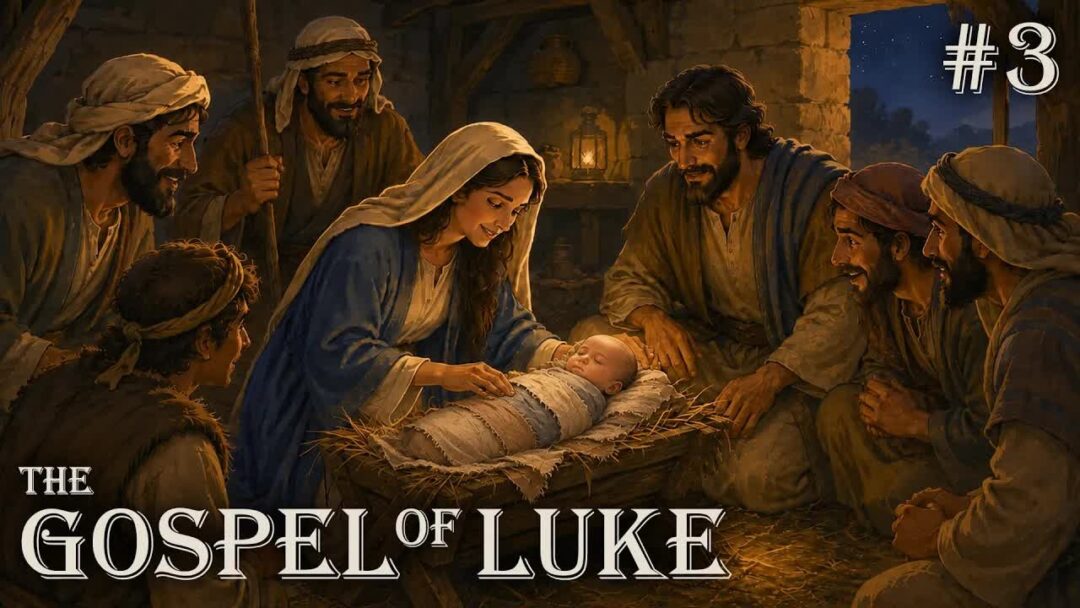
From our Sunday service on June 7, 2026, Matthew 1:18-25 and Luke 1:57-2:20. This is part 3 of our Gospel of Luke series. Watch the full message: The Birth of Two Blessings – The Gospel of Luke #3 on YouTube.
God does not improvise His promises. We may struggle to understand how He is working, but the birth of John and the birth of Jesus show His purpose moving forward through people and circumstances that do not look easy. Joseph faces a painful decision, Zacharias waits without being able to speak, and Mary gives birth in humble surroundings. Yet none of these difficulties puts God’s plan beyond His reach. He brings together what He has said through the prophets and what He has told His servants. God wants you to know He fulfills what He promises.
Trusting When the Situation Is Difficult
Joseph first encounters the promise in a way that is deeply troubling to him. Mary is expecting a child before they have come together, and he knows the child is not his. He is a just man, unwilling to make her a public example, so he considers putting her away privately. He wants to respond without exposing her to the full shame and punishment that could follow. But he does not yet understand what has happened. The man called to help care for the Messiah needs God to make the situation clear.
But while he thought on these things, behold, the angel of the Lord appeared unto him in a dream, saying, Joseph, thou son of David, fear not to take unto thee Mary thy wife: for that which is conceived in her is of the Holy Ghost. And she shall bring forth a son, and thou shalt call his name JESUS: for he shall save his people from their sins. Now all this was done, that it might be fulfilled which was spoken of the Lord by the prophet, saying, Behold, a virgin shall be with child, and shall bring forth a son, and they shall call his name Emmanuel, which being interpreted is, God with us.
Matthew 1:20–23
God answers the uncertainty rather than leaving Joseph to solve it by appearances. The child is conceived by the Holy Ghost, and His name declares the work He will do: He will save His people from their sins. This is not a desperate explanation invented after a problem arises. The virgin’s conception fulfills what God has already spoken through the prophet. Joseph’s situation is larger than the difficulty he can see, because God is bringing His promise into reality. The word from God gives him a reason to trust when his first understanding has failed.
Joseph responds by taking Mary as his wife. He does not wait for everybody else to understand before doing what the angel has told him. In joining his life to hers, he accepts the risk to his own reputation as well. He also refrains from consummating the marriage until the child is born, allowing the promise of the virgin birth to be fulfilled. I want us to give him credit for that obedience.
A Promise That Gives a Voice
Meanwhile, Elizabeth gives birth to the son God promised, and her neighbors and relatives rejoice in His mercy. When the time comes to name him, they expect the name Zacharias, after his father. Elizabeth insists that he is to be called John. They are puzzled because it is not a family name, so they turn to his father. Zacharias has been unable to speak since doubting the angel’s promise. Now he must decide whether God’s instruction or the expectations around him will determine his response:
And he asked for a writing table, and wrote, saying, His name is John. And they marvelled all. And his mouth was opened immediately, and his tongue loosed, and he spake, and praised God. And fear came on all that dwelt round about them: and all these sayings were noised abroad throughout all the hill country of Judaea. And all they that heard them laid them up in their hearts, saying, What manner of child shall this be! And the hand of the Lord was with him.
Luke 1:63–66
His name is John. There is no hesitation left in the answer, and immediately Zacharias can speak again. The words held back during those months now become praise. People throughout the hill country hear what has happened and wonder what this child will become. God has fulfilled the promise of his birth and lifted the restriction on his father’s speech.
Filled with the Holy Ghost, Zacharias begins by praising God for the Messiah. We might expect his first concern to be the future of his own son, but his praise first turns to the redemption promised through David’s house and God’s covenant with Abraham. John matters because of the one he will announce. The father’s joy over his child belongs within the greater joy that God is visiting His people with salvation. Only after praising that work does he speak directly of the part his son will have in it:
And thou, child, shalt be called the prophet of the Highest: for thou shalt go before the face of the Lord to prepare his ways; To give knowledge of salvation unto his people by the remission of their sins, Through the tender mercy of our God; whereby the dayspring from on high hath visited us, To give light to them that sit in darkness and in the shadow of death, to guide our feet into the way of peace.
Luke 1:76–79
John will prepare the way by bringing people to the knowledge of salvation through the forgiveness of sins. He will get hearts ready for Jesus, who brings light to those in darkness and guides them into peace. God’s earlier promise about a forerunner is taking shape in a real life. John grows and becomes strong in spirit, and his preparation continues away from the great cities until the time comes for him to be shown to Israel.
God Moves the Pieces into Place
The birth of Jesus then shows God’s faithfulness on a much wider stage. Caesar Augustus orders a census, and Joseph travels from Nazareth to Bethlehem because he belongs to David’s house and lineage. Mary goes with him while expecting the child. Yet God is also moving them to the place named in prophecy. The Messiah is to come from Bethlehem, not remain in Nazareth. Even the workings of the Roman Empire become part of how God brings His word to fulfillment.
That does not mean the journey ends in comfort or public honor. While they are in Bethlehem, the time comes for Mary to give birth, and the circumstances are humble indeed. The Savior is not welcomed with the surroundings we would expect for a king. Mary wraps her child and puts Him in the place available to her. What looks unimpressive in human terms is not a failure of God’s promise:
And so it was, that, while they were there, the days were accomplished that she should be delivered. And she brought forth her firstborn son, and wrapped him in swaddling clothes, and laid him in a manger; because there was no room for them in the inn.
Luke 2:6–7
The manger is a feeding trough. The poverty and difficulty of that beginning make the contrast striking: the one promised as ruler comes into the world without a cradle or a place of prominence. Joseph has obeyed, Mary has trusted, and the journey has brought them to the right place, yet the birth remains hard and lowly.
Hearing, Seeing, and Responding
God announces the birth to shepherds watching their flock at night. He gives the task to people the world does not regard as important. They are frightened by the angel and the glory of the Lord, but the message is joy rather than a threat. They are told who has been born and how to recognize the child when they find Him:
And the angel said unto them, Fear not: for, behold, I bring you good tidings of great joy, which shall be to all people. For unto you is born this day in the city of David a Saviour, which is Christ the Lord. And this shall be a sign unto you; Ye shall find the babe wrapped in swaddling clothes, lying in a manger. And suddenly there was with the angel a multitude of the heavenly host praising God, and saying, Glory to God in the highest, and on earth peace, good will toward men.
Luke 2:10–14
The sign is the very humility we might have thought unworthy of such a birth: a baby wrapped in swaddling clothes, lying in a manger. The shepherds do not delay. They go to Bethlehem and find Mary, Joseph, and the child exactly as they have been told. The message and the reality agree. Having seen it, they begin telling others what was said concerning Him.
And all they that heard it wondered at those things which were told them by the shepherds. But Mary kept all these things, and pondered them in her heart. And the shepherds returned, glorifying and praising God for all the things that they had heard and seen, as it was told unto them.
Luke 2:18–20
The shepherds make the news known, and Mary keeps these things in her heart. Both responses keep attention on what God has done. She has every reason to recount her own part, but she does not make the wonder an occasion to lift herself up. She receives it in humility and ponders it. The shepherds return to their work praising God because what they have heard and seen matches His word. The child is there, and the promised Savior has come.
We have followed a dream, a naming, a restored voice, a census, a journey, and an announcement in the fields. None of them stands alone. God has brought His promises of mercy, redemption, salvation, light, and peace together in the coming of Christ. He may not fulfill what He says according to our timing or our expectations, but He does not forget it. When the plan seems confusing or the circumstances humble, we can still trust the one who sees how the pieces fit. God wants you to know that He fulfills what He promises. Will you follow His plan for your life today?
Recent Comments