
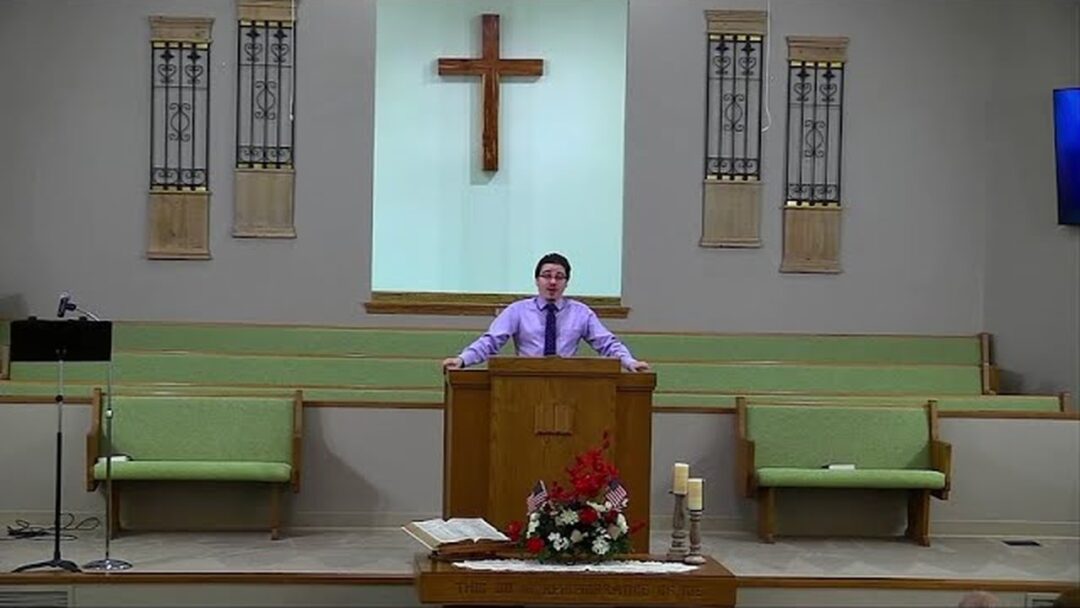
From our Father’s Day service on June 15, 2025, 1 Samuel 2 and 4 and Jeremiah 35. Watch the full message: A Tale of Two Fathers – 1 Samuel 2 and Jeremiah 35 on YouTube.
This is a Father’s Day message from 1 Samuel 2 and 4 and Jeremiah 35. We are going to compare two fathers. The first is Eli, the high priest and judge of Israel, who failed to lead his family and the temple. The second belongs to a family from the time of the Babylonian exile, the years we have been studying in Daniel. His name is Jonadab. From these two fathers I want to show you this truth: God wants you to know that godly leadership can make all the difference in the lives of your children and grandchildren. Mothers, this message is not going over your head today. Everything I say about fathers applies to mothers as well. And if you do not have kids yet, you will likely have children someday. Rather than learn this lesson down the road when it is too late, pay attention today. These stories were written for our example. This is not a message only for men with small children in the house. Grandfathers still have a voice. Spiritual fathers in the church still have a voice. And those who grew up under a passive home still have a choice: you can repeat Eli, or you can, by the grace of God, start a Jonadab kind of line from this day forward. The failure of a previous generation does not have to be the prophecy of the next one.
Eli's Sons: The Consequences of Passive Parenting
Eli was not a proactive leader. When Hannah went to the temple to worship, he was passive. He saw her praying, assumed she was a drunk babbling nonsense, condemned her, and made light of her. He did correct his sons from time to time, but he did it so weakly and inconsistently that it was as if he never did it at all. God later tells Eli that he honors his sons above the Lord, and that is the heart of the problem. A father can hold a sacred office and still refuse to treat sin in his own house as seriously as God does. Eli had the law, the tabernacle, and the responsibility of judging Israel, and he still let the next generation turn the house of God into a place of theft and immorality.
Hophni and Phinehas were stealing the food that was supposed to be communion with God. They were even taking meat that was still raw, before it had been given to God. So they were not just robbing the people’s meals. They were taking what was designated to be given only to God. The second sin was immorality at the temple. They had inappropriate relationships with the women who served there, and their actions at the temple doors desecrated a sacred and holy place, as well as the offerings. Eli heard all that his sons did, including how they lay with the women that assembled at the door of the tabernacle, and he said, Why do ye such things? But his words had no weight, because he valued the approval of his children more than he valued teaching them about God.
The Glory Is Departed
And she named the child I-chabod, saying, The glory is departed from Israel: because the ark of God was taken, and because of her father in law and her husband. And she said, The glory is departed from Israel: for the ark of God is taken.
1 Samuel 4:21–22
The result was a national tragedy. Israel went to war, the ark was taken, Hophni and Phinehas died, and Eli himself fell and died. When the news reached Phinehas’s wife, she named her son Ichabod, because the glory is departed from Israel. That is the legacy of Hophni and Phinehas. Eli’s failure to discipline and disciple his sons led to widespread corruption, the loss of Israel’s moral and spiritual center, and a name that captures the result: the glory is departed. A whole nation felt the cost of a father who would not follow through. The ark was gone, the priests were dead, and the testimony of the house of God had been emptied in public. As parents, leaders, and believers, we are reminded that honoring God must always come first. Whether we represent Him well to the next generation will have lasting consequences.
Jonadab and the Rechabites
We do not want to end on a sad story. We want hope that there is a possibility of being a good father who makes a better decision. We jump ahead 500 years to the time of Daniel and the Babylonian exile, where the prophet Jeremiah receives a message from the Lord about a faithful father. God tells Jeremiah to go to the house of the Rechabites, bring them into the house of the LORD, and give them wine to drink. The Rechabites are descendants of Jonadab, the son of Rechab, a man who stood beside King Jehu in the days when Jehu tore down the worship of Baal in Israel.
I love how God never explains what He is going to do. He just tells His prophets, Go and do something. Jeremiah sets wine before them and tells them to drink. And they refuse. They say they will drink no wine, because Jonadab their father commanded them not to drink wine, neither they, nor their sons, forever. He also told them not to build houses, sow seed, or plant vineyards, but to live in tents, that they might live many days in the land where they were strangers. And they have obeyed: they, their wives, their sons, and their daughters. When Nebuchadrezzar came up into the land, they went to Jerusalem for fear of the army of the Chaldeans and the Syrians, so they are dwelling at Jerusalem. But they have still kept their father’s command, even in a time of exile and pressure. God then uses their obedience as a rebuke to Judah. The descendants of Jonadab have kept a father’s earthly command for generations, while God’s own people have not hearkened to Him, though He has sent His prophets, rising up early and sending them. God promises that Jonadab the son of Rechab shall not want a man to stand before Him forever.
And Jeremiah said unto the house of the Rechabites, Thus saith the LORD of hosts, the God of Israel; Because ye have obeyed the commandment of Jonadab your father, and kept all his precepts, and done according unto all that he hath commanded you: Therefore thus saith the LORD of hosts, the God of Israel; Jonadab the son of Rechab shall not want a man to stand before me for ever.
Jeremiah 35:18–19
Two Fathers, Two Legacies
What a difference between Eli and Jonadab. Eli, a priest and judge, had every opportunity and spiritual resource available to him to lead well, yet he chose to be passive and allowed his sons to dishonor God. His failure cost him his family, his legacy, and his nation’s spiritual center. Neglecting leadership responsibility, even with good intentions, can still bring total ruin. Jonadab was not a priest, a prophet, or a judge. He was simply a father who recognized the danger of compromise and made a deliberate choice to safeguard his family’s future. I do not think Jonadab ever imagined that centuries later his name would be honored by God Himself. He saw the moral decline of his nation and chose to lead his family in a different direction. He set clear boundaries designed to preserve their faith, safety, and distinct identity in a corrupt world. While Israel ignored the voice of God and suffered judgment, his children receive a promise that their family will be preserved, so long as they keep the teachings of their father. Eli’s legacy is Ichabod. Jonadab’s legacy is a family that still stands when the nation is falling apart. The difference is not that one father never had to confront sin, or that the other had easier children. The difference is godly leadership that is consistent, that honors God first, and that is taken seriously enough for the next generation to keep it. So what does God want you to know today? Godly leadership does not require a spiritual title, a public platform, or even perfection. But it does require courage, conviction, and consistency. What you teach, tolerate, and model today will shape the spiritual trajectory of those who come after you. When a parent leads with wisdom, conviction, and a heart that fears the Lord, generations are positively impacted. His convictions, passed down from generation to generation, created a lasting legacy that outlived kingdoms and earned God’s praise. Both men were fathers. Both had influence. But only one led his family so that they remained anchored in God’s truth. So choose to lead like Jonadab, because the difference between Ichabod, “the glory has departed,” and a legacy of faithfulness is a man who chooses to make one godly decision at a time, consistently, over a lifetime. God wants you to know that godly leadership can make all the difference in the lives of your children and grandchildren. The choice is not complicated, but it is costly. It will cost pride, convenience, and the habit of hoping the next generation will just turn out all right on their own. Will you embrace the role of a godly leader today?
Recent Comments