
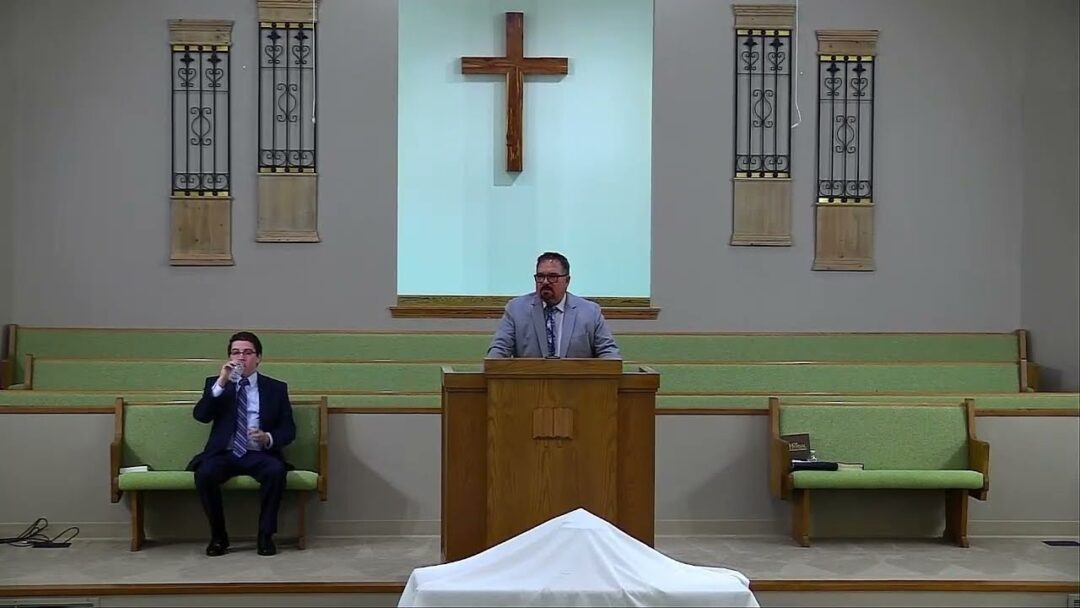
From our Sunday service on July 21, 2024, Ephesians 1, Titus 3, John 14, 1 Corinthians 2 and 12, Romans 8, and Galatians 5. Watch the full message: The Works of the Spirit on YouTube.
We’re talking about the Holy Spirit, part of the Trinity. We don’t often talk about the Spirit in churches. We often talk about God the Father, and we talk about God the Son. We usually put God in a box and kind of forget about the role of the Spirit. If the flame of the church is the Spirit of God, then we ought to know something about Him. The Holy Spirit is just as much God as God the Father and God the Son. Although the roles of the Trinity are different, none of them is more or less important than the other. The Spirit has a multifaceted role in the life of the believer. It starts at the very moment of our salvation and continues into our glory and resurrection. We’re going to see the Spirit in three different areas: as our sign of regeneration, as our teacher and advocate, and as our enabler.
The Spirit as Our Sign of Regeneration
First, in Ephesians 1, the Spirit is the down payment of our redemption. Paul is talking about a few things here. Christians are predestined to something, but this isn’t predestination in the sense of Calvinism, where God has set the future a certain way and nobody has a choice whether they’re saved. Predestination simply means that something has been predetermined. So the question is, what is predetermined, and who is it predetermined for? It’s predetermined for those who have obtained an inheritance, which is the inheritance of salvation. And what is predestined? “That we should be to the praise of his glory.” What is predestined about us is not whether or not we’re saved but that everyone who is saved should be used for the glory of God. We have this calling, every single one of us, not just pastors and teachers but every Christian, to bring glory to God.
In whom ye also trusted, after that ye heard the word of truth, the gospel of your salvation: in whom also after that ye believed, ye were sealed with that holy Spirit of promise, Which is the earnest of our inheritance until the redemption of the purchased possession, unto the praise of his glory.
Ephesians 1:13–14
There is a sign that identifies those who have put their trust in God. After you believed, “ye were sealed with that holy Spirit of promise.” What does “sealed” mean? That’s permanent. It’s putting the mark of Jesus on you. Baptism is an outward showing of an inward change, and that inward change is the sealing of the Holy Spirit. “Earnest” means a down payment. If you want to buy a house, you put down a down payment and say, “I’m going to pay the rest later, but I’m going to put down $30,000 on this house, and that’s the promise that the whole house is going to be paid later.” When we are saved, there are three distinct phases to our salvation: justification, sanctification, and glorification. They don’t all happen at the same time. Justification happens at the moment of salvation, when we put our trust in Christ. We are declared righteous. It’s a judicial term. In a court of law, you would be either declared innocent or declared guilty, and at the moment of salvation, God puts down our sentence: not guilty. God says, “As my down payment on this process, the first thing I’m going to give you is the Holy Spirit.” The Holy Spirit is the mark of salvation, the sign that the rest of the promise is going to be fulfilled.
Titus 3 also shows us that the Spirit is the source of our regeneration. “The washing of regeneration” is that illustration of being immersed. We are washed in regeneration and renewed by the Holy Ghost. He’s not just the down payment but the One who regenerates us. The Bible says that when we are born, we’re born with a sin nature, but God puts to death the old man. That sin nature no longer has control of us. It’s killed, it’s nailed to the cross with Christ. Verse 6 has the phrase “shed on.” I looked that up in the Greek because I was reading a commentary that said some things about “shed” that didn’t make sense to me, since I was thinking of the shed blood of Jesus. But the word “shed” means to pour out, the idea of dumping water. Remember the illustration in the Bible of your cup running over with the goodness of God. That’s the idea: “shed on us abundantly.” The Holy Spirit isn’t just placed in us in a little measure. He is poured out on us. If the Spirit is that involved in our regeneration, and if He is the flame that burns in the church, maybe we should think about the Holy Spirit a little bit more.
The Spirit as Our Teacher and Advocate
Next we see the Spirit as our teacher and advocate. Jesus says the Comforter, the Holy Ghost, shall teach you all things and bring all things to your remembrance. The Spirit teaches us the truth of God and reminds us of the ways of God. He also communicates the mind of God. In 1 Corinthians 2, the Spirit searches the deep things of God, and we have received the Spirit so that we might know the things that are freely given to us of God. And the Spirit steps in when we are unable.
Likewise the Spirit also helpeth our infirmities: for we know not what we should pray for as we ought: but the Spirit itself maketh intercession for us with groanings which cannot be uttered. And he that searcheth the hearts knoweth what is the mind of the Spirit, because he maketh intercession for the saints according to the will of God.
Romans 8:26–27
That’s a great encouragement to us in a time of difficulty. We don’t need the answers. We don’t even need the right words. Because you’re coming to Him in faith, He is going to answer that prayer even though you don’t know how to word it right now. “The Spirit itself maketh intercession for us with groanings which cannot be uttered.” He takes those groanings and communicates our needs to the mind of God.
The Spirit as Our Enabler for Ministry
Lastly, the Spirit is our enabler for ministry. There are diversities of gifts but the same Spirit. Spiritual gifts are talents that God enables us to have so that we can do ministry more effectively. I think a lot of people struggle with finding their spiritual gift. Everybody has talents, and there’s always one to find. What’s important is not which talent you use to serve the Lord but that you are serving the Lord. It doesn’t matter which gift you have. It’s still the same Spirit enabling you to use it. Wisdom is skill for relationships, the person who knows how to speak into a hard situation. Knowledge is in contrast: general intelligence and secular advice. It’s your accountant or businessman who can tell you how to set up your 401(k). A mechanic would be an example. God says that’s also a spiritual gift, and you can use that general knowledge for ministry. The gift of faith is more than the faith we all have as Christians. It’s someone whose faith is so strong that no matter what difficulty they face, they’re still standing there praising the Lord. When their world is falling apart, they can say, “I’ve been there. I’ve seen that God was there, and He took care of me. He can take care of you.” There is also healing, prophecy, and discerning of spirits. In verse 10 we have the gift of tongues. “Tongues” is literally the Greek word for languages. They just called them tongues. The gift of tongues is the ability to speak a language you have not learned, so that you can communicate the gospel. The interpretation of tongues is the gift of being able to take a language and translate it into your own. I could barely get Portuguese, and when it comes to Hebrew and Greek, I can’t speak them. I can only translate them. All these things come from the same Spirit.
The Spirit Produces Fruit
But the fruit of the Spirit is love, joy, peace, longsuffering, gentleness, goodness, faith, Meekness, temperance: against such there is no law. And they that are Christ’s have crucified the flesh with the affections and lusts. If we live in the Spirit, let us also walk in the Spirit.
Galatians 5:22–25
The Spirit also produces fruit. One thing I see people get wrong all the time is that it says “the fruit of the Spirit,” not “fruits.” It’s singular. The fruit of the Spirit is all of these things, not some of them. If you look at your life and say, “I don’t know if I unconditionally love people. I don’t know if I have happiness despite life’s circumstances. I don’t know if I’m comforted in life’s hardship. I don’t know if I can endure difficulty. I don’t know if I have integrity. I don’t know if I’m kind. I don’t know if I trust God. I don’t know if I have humility. I don’t know if I have self-control,” then maybe it’s time to get into the Spirit a little more. “If we live in the Spirit, let us also walk in the Spirit.” If the Spirit is what regenerated us, then maybe we should also walk through Him. He is our sign of regeneration, our teacher and advocate, and our enabler. Will you walk in the Spirit? Will you have this relationship with the Spirit? Knowing this can change your prayer life. If you know the Spirit is the one enabling you, then pray for God to fill you with the Spirit and make the Spirit come alive in you. The Spirit is the fire of the church, and we ought to have that Spirit filling us.
Recent Comments