
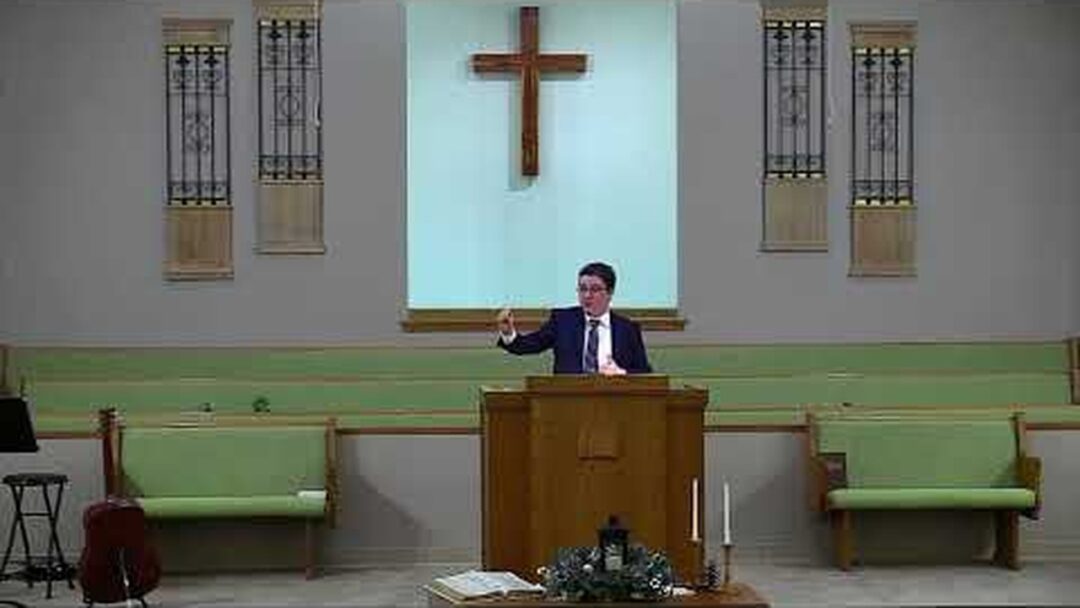
From our Journey Through James series, our Sunday service on March 19, 2023, James 2:1–26. Watch the full message: A Journey Through James 2 on YouTube.
We started our series in James, which we have entitled A Journey Through James, and we are going through it one chapter at a time. As we mentioned last time, the first chapter of James is an introductory chapter, designed to introduce us to the things coming ahead. We talked about who James was: the half-brother of Jesus Christ. He grew up with Jesus, became pastor of the Jerusalem church, and wrote to scattered believers under persecution. The theme of the book is pure religion, and there are twelve lessons. This message goes deeper into the first two: God wants you to show love, not favoritism, and God wants you to show genuine faith through your works.
The Man Who Knocked at My Door
This just came to my mind. I think I have told this story before. When I was at Pensacola Christian College, working there and on my master’s, my website, Nerd in the Word, crashed. I lost years of work on that website and was going to have to rebuild it from scratch. It was one of the down moments of my life, because I had exams coming up, and I had about forty people a day reading the site. I thought no one could read my stuff anymore, and it could take months to fix. I was down. And God sent someone to my work who knocked on my door, and it was not someone I expected. It wasn’t a man in a suit. It was a former drug addict who was homeless, wandering America wherever God wanted him to go to encourage someone. I was ignoring the knock. Someone said they were asking for me, and I thought they were talking about my car. “Please don’t break my car, my day’s so bad. My website’s down already. I don’t have money to fix this. I’m a poor college student.”
I got to the door, and he said, “Is this your car?” I said, “Yeah, why?” He said, “I was passing by your car. God told me to talk to you.” I thought, “Okay, this guy’s a little weird.” Like this passage is talking about, he had raggedy clothes, an old leather jacket that was probably thirty years old that he’d picked up at Goodwill, and gloves with holes in them. He said, “I just want to tell you my story. For twenty years I was addicted to drugs and alcohol. One day I went to church and God got a hold of my heart and changed my life. I knew that if I stayed in one place and allowed myself to accumulate wealth, I would fall into the same sins God freed me from, so I dedicated my life to wandering and encouraging people.” If I had looked at that man, laughed at him, and walked away, I would have missed the encouragement of God. That is the problem in the early church: people walking into their church who didn’t look like the spiritual type, who didn’t look like they had their lives together. But God can use anyone He wants to use. James mentions a man with a gold ring and goodly apparel, and a poor man in vile raiment. They say to the one in gay clothing, “Sit thou here in a good place,” and to the poor, “Stand thou there, or sit here under my footstool.” It’s easy to love people who are easy to love, and in this case that was people with lots of money, the wealthy and the people in power. In that day, that would have been religious leaders or people who worked for Rome. They met in synagogues without a lot of seating, so their seating space was limited. Our church is small by some standards, but by first-century standards we’re about four times bigger than any of their churches. I often go wearing a suit, and some churches say you have to wear a suit all the time, that’s how you’re righteous and spiritual. I don’t see the Bible say that. Suits cost a lot of money, and it’s not God’s will for everyone to buy a suit. If a poor person comes into our church, we ought not say, “Why aren’t you wearing nice clothes?” We as Christians, like Samuel when he was anointing David, are tempted to look on the outward appearance. David was the youngest of all the brothers, the sheep herder, but he was the one willing to let God use him the most.
Celebrating the Wrong People
Here the Christians were despising the poor and preferring the wealthy, the people in power who used their money to silence them. “Do not rich men oppress you,” which literally means to use their power against you, “and draw you before the judgment seats?” Is it all that different these days? We live in a capitalist society. We have people in power with lots of wealth. How often do they try to keep us silent? James says, “Are ye not then partial in yourselves, and are become judges of evil thoughts?” He is reminding them of the Romans, the Pharisees, and the Sadducees, who put Jesus to death for no reason. They were evil judges, and these people looked at them and thought, “What wicked leaders.” James says, “Are you not wicked yourselves? You condemn those unjust judges, but you are unjust judges because you show favoritism.” Hath not God chosen the poor of this world rich in faith, and heirs of the kingdom? And yet the church was celebrating the wrong people. James says if you fulfill the royal law, “Thou shalt love thy neighbour as thyself,” you do well. But if you have respect to persons, you commit sin. Whosoever shall keep the whole law, and yet offend in one point, he is guilty of all.
If ye fulfil the royal law according to the scripture, Thou shalt love thy neighbour as thyself, ye do well: But if ye have respect to persons, ye commit sin, and are convinced of the law as transgressors.
James 2:8–9
The Law of Liberty
The perfect law of liberty is to look at the Bible, at Scripture, as a mirror. You look at the rules and instructions it has and ask, “Does this look like me? These things it says I should do, do I do them? These things it says I should stay away from for my own safety, do I avoid them?” Last time we talked about how you should be doing that, not hearing and walking away and forgetting what manner of man you were. Favoritism is not a small slip. It is a transgression of the royal law, and it shows whether we are doers or forgetful hearers.
What doth it profit, my brethren, though a man say he hath faith, and have not works? can faith save him? If a brother or sister be naked, and destitute of daily food, And one of you say unto them, Depart in peace, be ye warmed and filled; notwithstanding ye give them not those things which are needful to the body; what doth it profit? Even so faith, if it hath not works, is dead, being alone.
James 2:14–17
Genuine Faith Through Works
What doth it profit if a man says he has faith and has not works? Can that faith save him? If a brother or sister is naked and destitute of daily food, and one of you says, “Depart in peace, be ye warmed and filled,” but you give them nothing needful, what doth it profit? Even so faith, if it hath not works, is dead, being alone. James is not saying we are saved by works. He is saying genuine faith shows itself. A claim of faith that never moves toward a hungry brother is not the faith that saves.
Was not Abraham our father justified by works, when he had offered Isaac his son upon the altar? Seest thou how faith wrought with his works, and by works was faith made perfect? And the scripture was fulfilled which saith, Abraham believed God, and it was imputed unto him for righteousness: and he was called the Friend of God.
James 2:21–23
Abraham and Rahab
Was not Abraham our father justified by works, when he had offered Isaac his son upon the altar? Faith wrought with his works, and by works was faith made perfect. The scripture was fulfilled which saith, Abraham believed God, and it was imputed unto him for righteousness: and he was called the Friend of God. Abraham’s faith was already there, but the offering of Isaac showed it was real. Likewise also was not Rahab the harlot justified by works, when she had received the messengers, and had sent them out another way? Rahab did not have Abraham’s resume. She was a Gentile and a harlot. But she believed God enough to hide the spies and send them out another way, and God counted that faith as real.
Two Lessons for Our Christian Walk
First, God wants us to show love to people and not favoritism. As Christians we must remember that all are equally valuable in the eyes of God, and we have to avoid favoring individuals just because they’re easier to love. Our attitudes and actions should reflect Christ’s love for all, not just those we get along with. Second, genuine faith shows itself in works. Faith without works is dead. We don’t have to look like the spiritual type for God to use us, and we don’t get to ignore the person at the door who doesn’t look like us. As the body is dead without the spirit, so faith without works is dead also.
Recent Comments