
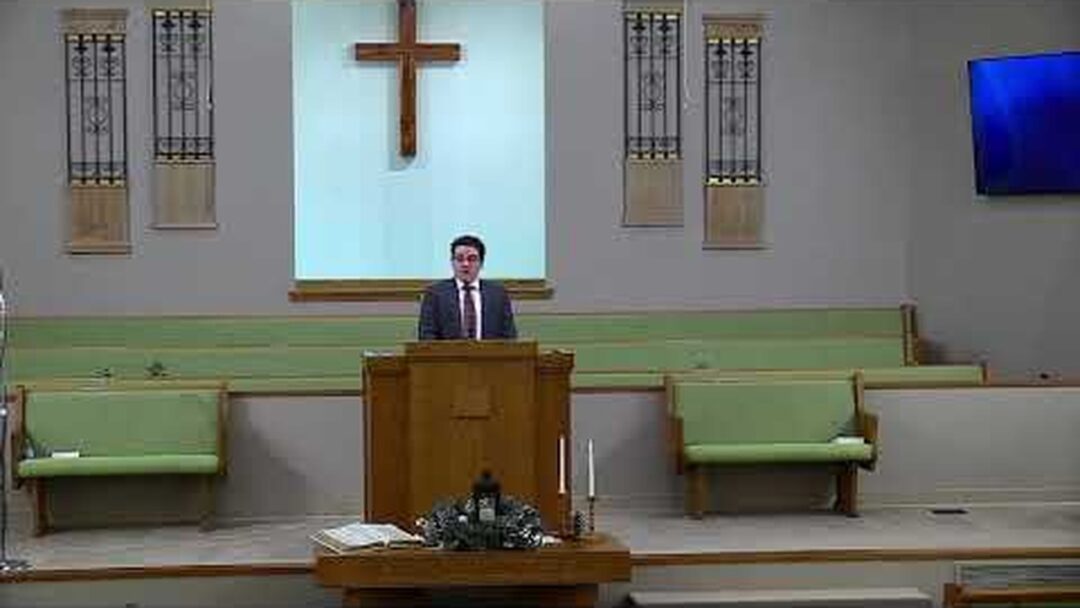
From our Sunday service on March 12, 2023, James 1, the first message in our Journey Through James series. Watch the full message: A Journey Through James 1 on YouTube.
Today we start a series called A Journey Through James. Before we begin, it helps to know who James was. James is the half-brother of Jesus Christ. Remember in the Gospels how Jesus’s brothers did not believe in Him? James said, “No, no, that’s my brother. Are you kidding me? I don’t believe it.” But when Jesus rose from the dead after being crucified, James had no choice but to say that Jesus truly is the Son of God. He became a believer, a teacher of the words Jesus said, and the pastor of the church in Jerusalem. The Jews persecuted that church, and its members were scattered throughout the known world. This book is James writing a letter of encouragement to those persecuted believers, who were facing famine, poverty, and many other pressures. Unlike Paul’s letters, this book is a summary of James’s teaching. Every teaching in James is aimed at believers and their growth. Chapter 1 is an introduction, followed by twelve lessons for every believer. The theme is that God wants you to practice pure religion: not fake religion, or a religion that is proud of itself and just playing the part, but a religion that is true.
The Problem: A Double-Minded Man
My brethren, count it all joy when ye fall into divers temptations; Knowing this, that the trying of your faith worketh patience. But let patience have her perfect work, that ye may be perfect and entire, wanting nothing.
James 1:2–4
James begins by telling us what the problem is, and I think verse 8 is the main problem he has with the Christians of his day: “A double minded man is unstable in all his ways.” The Greek word for double-minded literally means two-souled. It describes a spiritual schizophrenic, someone with an inner conflict, who fights and argues with himself over whether to do this or that. For me it was when I was going to college and had to decide between a programming degree and a ministry degree. I went back and forth, arguing with myself about what I wanted and what God wanted me to do. How can you have a stable walk with God when your flesh is doing one thing and your spirit is doing the other? With that in mind, James says to count it all joy when ye fall into divers temptations. Why be glad that I am tempted? Because we are knowing this as a fact, that the trying of your faith worketh patience, which carries the idea of perseverance or endurance. Throughout this passage James uses pregnancy terms. Every trial is an opportunity to plant a seed of faith that will grow into endurance. “Wanting” means lacking. In the end you find completeness and lack nothing. That does not mean they had no struggles. It means they learned to be content. These people were persecuted and sent from their homes, and they were not allowed to return to Jerusalem. The Jews wanted them dead, and Rome wanted them dead. What did they have? They had the Lord Jesus Christ and their faith in Him, and James says that should be enough.
Ask God for Wisdom
If any of you lacks wisdom, God “giveth to all men liberally, and upbraideth not.” Liberally means openly, freely, without restriction, and “upbraideth not” means He does not mock you. Imagine going to Jesus and saying, “Lord, I lack wisdom for this situation. I’m at a crossroads, I’m double-minded, and I don’t know whether to go left or right.” God does not answer, “Are you dumb? Why should I help you?” He is open and ready to give an answer to the person who asks. But ask in faith, nothing wavering. The one who wavers is like a wave of the sea driven with the wind and tossed, like a boat in the water with no sail, unsure whether it will crash into a rock or make it through the storm. If you go to God for wisdom, go in faith, not doubting that He will answer.
Rejoice, but Do Not Strive for Riches
Whether we are poor or rich, we can rejoice in the Lord. The brother of low degree can rejoice “in that he is exalted.” Though you are in poverty and struggling, as these Christians were when they were cast out of their homes, God lifts you up in His strength and holds you through these hard times. The rich can rejoice too, “in that he is made low.” The rich man is proud and has all his money to rely on. “Why do I need Jesus? I have all the money in the world to get anything I want.” So the rich Christian has a reason to rejoice because he has been humbled out of that pride enough to accept the grace of God. James then compares the rich man to the flower of the grass. Think of wheat in a field that is eventually cut down or burned as chaff. James is using that fire as an illustration of hell. A field in full bloom is beautiful, but just like the field, the rich man without Christ will be cut down and turned to nothing.
Let no man say when he is tempted, I am tempted of God: for God cannot be tempted with evil, neither tempteth he any man: But every man is tempted, when he is drawn away of his own lust, and enticed. Then when lust hath conceived, it bringeth forth sin: and sin, when it is finished, bringeth forth death.
James 1:13–15
Take Responsibility for Temptation
A lot of Christians today still say, “God’s just letting me be tempted. Is He putting this in my way to test me?” But the Bible says God does not put temptation in your way. He does not want you to fail, and He is not setting up a bunch of tests for you. When you fall into sin, you cannot say, “God just tested me and I fell into it.” James says not to say that, because you are making excuses. Your own lust led you to that desire and made you fall. Here is the pregnancy terminology again. When lust has conceived, it brings forth sin, which in the Greek means gives birth to a child. Then sin, when it matures, produces death. You might think you are getting away with it. But James says, “Do not err,” which means do not be misled. The sin you are committing has consequences that have not matured yet, and they are coming.
The Father of Lights
Every good and perfect gift is from above, from “the Father of lights, with whom is no variableness, neither shadow of turning.” The picture is a sundial. As the sun moves, the shadow moves and points to the time. The sun’s light is not consistent. God is not like that. He does not shift. Of his own will begat he us with the word of truth, that we should be a kind of firstfruits of his creatures. This verse was really for the Jerusalem church, one of the first churches made. They were blessed to be among the first harvest of Christians, so that we today could share in their joy. Be quick to listen, slow to speak, and slow to anger.”The wrath of man worketh not the righteousness of God.” Your anger does not produce righteousness. Now there is a place to be angry. Jesus was angry at the Pharisees for making a business out of His temple, and anger can be holy. But James is talking about the wrath of man, the kind that assumes the worst, gets angry in pride, and knocks others down.
If any man among you seem to be religious, and bridleth not his tongue, but deceiveth his own heart, this man’s religion is vain. Pure religion and undefiled before God and the Father is this, To visit the fatherless and widows in their affliction, and to keep himself unspotted from the world.
James 1:26–27
Pure Religion Is Self-Reflective
James says to be doers and not just hearers. It is easy to be a hearer of the word. All you have to do is go to church and hear someone talk about the Bible. James is speaking to the Jerusalem church members who still meet in hidden spots and have services where someone teaches them, and he says that is not enough. Think of a man looking in the mirror, as we do every morning, hopefully. He notices that something is a bit messed up, walks away, and forgets about it. That is church. We say, “Paul talks about self-control, that’s really good advice,” and then we leave the service without ever considering for a second that it applies to us. If any man among you seem to be religious, which would be everyone in here if you go to church, but does not bridle his tongue and deceives his own heart, that person’s religion is vain. You might be saved, but you are missing out on all the benefits of what God has taught us. You are like James, whose brother was the Messiah but who did not believe in Him until after the resurrection, missing out on a whole lot of opportunities he could have had.
Four Things to Take Home
Pure religion and undefiled before God and the Father is this, to visit the fatherless and widows in their affliction, and to keep himself unspotted from the world. The word translated affliction comes from a root word used to press grapes: people who are pressured and oppressed. “The fatherless and widows” is a blanket term for people going through major pressures in their life. Pure religion is untainted, not messed up by the world. So here are four things to take home. Be grateful. Whether we are rich or poor, we have a reason to rejoice, because God has saved us and lifted us up. Take responsibility for our sin. No more saying, “I’m just being tested,” or, “I mess up sometimes, it’s okay.” Practice self-control. No more excuses about arguments, wrath, and impatience. Be slow to speak, slow to anger, and quick to listen. And be self-reflective. James has twelve short lessons that will help, but you have to be willing to step aside and ask, “Is this something that applies to me? Is this something I’m struggling with?”
Recent Comments