
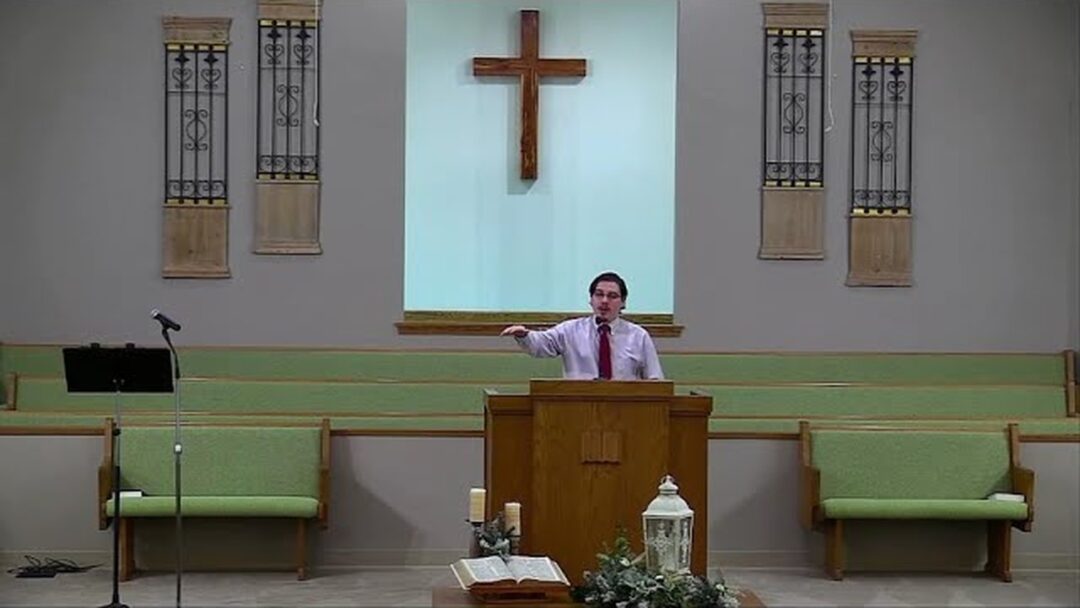
From our Sunday service on February 9, 2025, Ruth 2. This is the second message in our Book of Ruth series. Watch the full message: A Harvest of Kindness – Ruth Series #2 on YouTube.
Last time we talked about the first chapter of Ruth, and we saw how Naomi suffered because she got out of God’s will. One of the ways God was going to provide for her was through Ruth, who had a conversion moment when she said, “Where you go I will go, and your God will be my God.” At that moment Ruth was no longer outside the nation of Israel. She became a part of it, because the nation of Israel was for all those who believed in the true God. But to everyone on the outside, she looks like a Moabite. She’s risking that no one will ever want to marry her. She enters Bethlehem, the city of David, in a dangerous situation with a lot of unknowns. I want you to walk away with this idea: God wants you to live a life full of compassion.
Gleaning in a Stranger's Field
Before Boaz shows up in the narrative, we see that he’s a kinsman of Naomi’s husband, a mighty man of wealth, which means he had a lot of land, a lot of resources, and a lot of power. Ruth says she wants to go to the field and glean ears of corn. When you see the word “corn” here, remember that the King James was translated in 1611. Back in that day, “corn” referred to any grain, not corn on the cob. Corn on the cob wasn’t farmed anywhere other than America until Christopher Columbus took some back to Europe. In this case the grain is barley.
To us as Americans this seems like a crime. Wasn’t that theft? That’s their property. But Jewish law prevented people from fully harvesting their land. God said the corners of your field must be left unharvested for the poor, the stranger, the widow and the traveler. If it was fruit, you also had to leave a certain amount unharvested. Remember in the New Testament, Jesus and His disciples were walking through the fields and the Pharisees got mad at the disciples for plucking grain on the Sabbath. Some people like to say that Jesus was stealing, but no, that was Jewish law. You had the right to take whatever you could fit in your hands. You couldn’t put it in a bag or satchel, so you couldn’t walk through a field, grab a bunch of apples, put them in your bag, and leave. It was sort of a welfare system. There was also a rule that if you accidentally dropped something you had harvested, you couldn’t pick it back up. If your hand cramps and you drop some on the ground, leave it, and one of the poor people harvesting after you can pick it up. The owners did have a little control. They weren’t allowed to cut the corners, but they could permit those they felt needed it most to go into the fields first.
And she went, and came, and gleaned in the field after the reapers: and her hap was to light on a part of the field belonging unto Boaz, who was of the kindred of Elimelech.
Ruth 2:3
That word “hap” means it just so happened. She wasn’t planning for it and she wasn’t trying for it. As she went from field to field after the harvesters, she ended up in the field of Boaz, who was family to her, though she didn’t know it.
A Faithful Man Notices
And behold, Boaz came from Bethlehem, and said unto the reapers, The LORD be with you. And they answered him, The LORD bless thee.
Ruth 2:4
The first thing out of Boaz’s mouth is “God bless you.” He’s using the divine name, Yahweh, the LORD in all capitals, and his workers say it back. So we know not only that he’s a faithful follower of God but that his workers are too. Boaz was adamant that the idolatry going around in Israel at this time would not be in his household. God should be the focal point of our life, the first thing we’re ready to talk about in the morning.
Then Boaz asks, “Whose damsel is this?” That word means young woman or girl. He’s concerned. Why is this young woman by herself in this field? We’re told the young men are not to touch her, and that word means to harm or cause damage. She’s a young woman alone in a stranger’s field. Boaz thinks, “She looks like a foreigner. If she’s poor, shouldn’t her husband be in the field getting the grain? This is dangerous.” When we see someone in a precarious situation, we should immediately think, “Why is this, and what can I do to help?” The workers tell him she asked to go first. Naomi is very old, and it doesn’t seem she has the ability to harvest for herself, so Ruth isn’t just getting food for one person but for two. She spent the entire day in the sun picking up whatever scraps they dropped, with only a few breaks inside the house. She doesn’t have any water except what she can carry, and the pitchers are made of clay and the water is heavy. The first thing they notice about her is that Ruth is a hard worker.
Boaz Goes Beyond the Law
Then said Boaz unto Ruth, Hearest thou not, my daughter? Go not to glean in another field, neither go from hence, but abide here fast by my maidens: Let thine eyes be on the field that they do reap, and go thou after them: have I not charged the young men that they shall not touch thee? and when thou art athirst, go unto the vessels, and drink of that which the young men have drawn.
Ruth 2:8–9
Boaz is not doing the bare minimum right by the law. He was required to let her go into the field. He wasn’t required to tell her to stay close to his workers, or to let her drink water from his vessels. “Abide here fast by my maidens” means stick, stay close, make it look like you work for me, because it was dangerous out there alone. “Get everything you can from me, you need it.” She’s dumbfounded. She doesn’t know he’s her family, and he doesn’t know she’s his family. You would think Boaz, being a Jew, would prefer a Jew to come into the field first and let the foreigners get the scraps. That was typical: the Jew first and then the Greek. I guarantee she had a weird accent. They didn’t speak the same language. And she says, “Why would you have compassion on me? I’m not one of you.”
Boaz says, “I’ve heard about you. You sacrificed everything for your mother-in-law, despite her coming to your country against God’s will, despite her leaving you widowed. I see your character.” That word “trust” is also translated “refuge.” She came from Moab as a refugee to seek refuge under the wings of the LORD God of Israel. We should be sure to encourage those who are faithful to God in hardship. Send a card, make a phone call, take someone out to eat, give a small gift: a down payment of the goodness that’s going to come. It’s easy to have biases for people who look like us, talk like us, and walk like us. But Boaz wasn’t like the other Israelites who were rude to foreigners. He saw her as the child of God she so desired to be.
It wasn’t just the things he gave her that encouraged her. She also says, “You’ve spoken friendly to me.” As Christians we’ll often do one or the other, either just give kind words or do kind actions. There’s a really powerful thing when we put both together. Then he invites her to lunch. He hands her parched corn, toasted grain, the go-to meal for farmers at harvest time, said to be really delicious. She’s getting more than one course, which was extremely rare in Israel, where most meals were just bread, like a pita you bring with you. “Sufficed” means she was satisfied. She had a buffet, and there was nothing more she needed.
Then he goes further still. “Let her glean among the sheaves”: let her collect grain you’ve already cut. Then he says, “As you’re working, make mistakes. Drop more grain on purpose.” Now he’s really cutting into his costs. That grain would have provided for his household, been sold at the market, and been seed for next year’s planting. An ephah is about 30 pounds of barley, about ten days’ worth of food for one person. He didn’t just let her have enough to survive. He gave her enough to be comfortable. Ruth’s whole goal was to take care of her mother-in-law, so the elderly woman wouldn’t have to break her back in the fields. When she was full, then she gave to Naomi. Boaz had really provided for this family, and he didn’t even know they were related.
When Naomi hears the name, she’s shocked. “There’s only one Boaz here in Bethlehem. He’s actually related to us.” He’s not the next of kin, but he’s down the line, on the list of people who could marry Ruth. He didn’t just say, “Come back one day.” He said, “Stay for all the harvesting seasons.” Ruth continues in Boaz’s field for another four months or so, March to June, through both the barley harvest and the wheat harvest. There was nothing Ruth could do to pay Boaz back. For all he knew, she might go back to the idolatry she came from. But he said, “I see a woman in need, I see a woman in danger, and I’m going to do what I can.” Boaz is a type of Christ, a foreshadowing of Jesus. Jesus loves us even more than Boaz loved Ruth. But we should also look at Boaz and not just say, “Wow, what a man,” but “Wow, what an example of what a Christian should be.” If I have excess, I should use it to help those in need. God wants you to live a life full of compassion. Are we going to live a life full of compassion today?
Recent Comments