
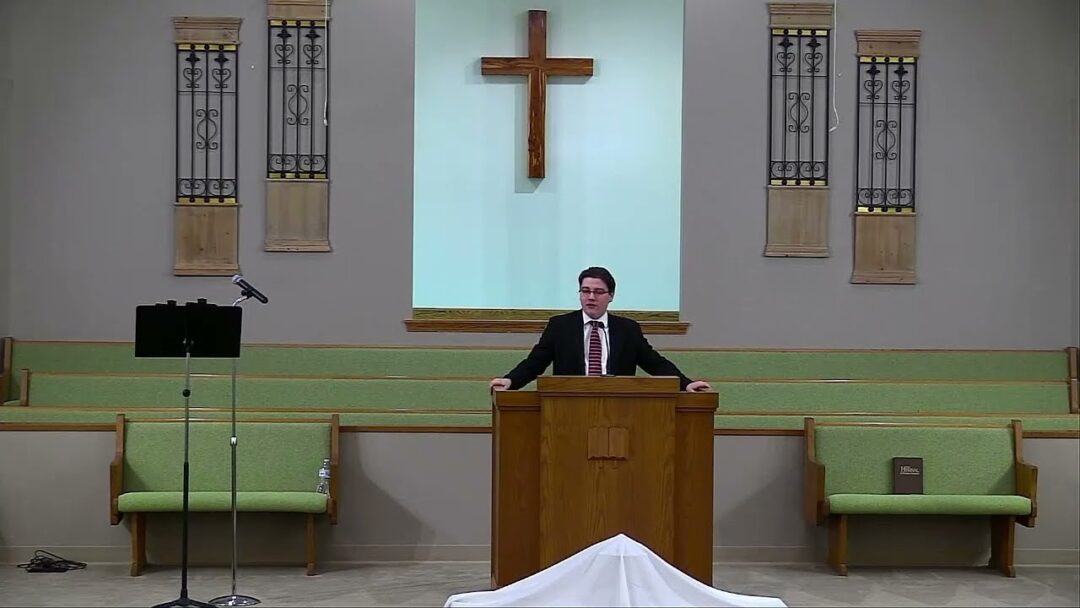
From our Sunday service on November 24, 2024, Psalm 100, Philippians 4, Psalm 105, 1 Thessalonians 5, 2 Kings 6, and Psalm 37. Watch the full message: The Power of a Grateful Heart on YouTube.
When was the last time you thanked God for something small? A lot of times we thank Him for the big things: a raise at work, a bonus, a daughter who got married. But when was the last time you thanked Him for a good night’s sleep, a quiet moment in the midst of a busy day, a sunrise, or a sunset on a starry night? I remember driving through the middle of the night all the way down to Florida when I was in college. You get those peaceful moments under a starry night, and I remember thinking, “Wow, God, I have the opportunity to go all the way down to Florida for college, and I have this quiet time with You.” A lot of times we pass those moments by without a second thought. God wants us to have a heart of gratitude.
I was looking for scientific studies on this and found one from the University of Miami. For ten weeks, three groups of people wrote down the events of each week. Group one wrote only things they were grateful for. Group two wrote only things that irritated them. Group three wrote events that had a general effect on them, positive or negative. At the end of the ten weeks, those who wrote only about gratitude were more optimistic and felt better about their lives. The researchers were even more surprised to find that they had exercised more without any effort and had fewer visits to the doctor than those who focused on sources of aggravation. Other studies have shown that gratitude improves overall happiness, that those who regularly thank their spouses have happier marriages, and that managers who regularly recognize their employees’ work have more effective employees. If I’m thankful, I’m going to be healthier, I’m going to go to the doctor less, and everybody around me is going to be happier too. More important than any study, God Himself emphasizes gratitude in Scripture.
What Is Thankfulness?
I looked up Merriam-Webster. It gave three definitions of “thankful”: an expression of thanks, a consciousness of benefits received, and the state of being well pleased, or satisfied.
Psalm 100 is basically the psalm of thankfulness. The title calls it “A Psalm of praise,” and here thanksgiving is listed as one of the ways we praise Him.
Make a joyful noise unto the LORD, all ye lands. Serve the LORD with gladness: come before his presence with singing. Know ye that the LORD he is God: it is he that hath made us, and not we ourselves; we are his people, and the sheep of his pasture. Enter into his gates with thanksgiving, and into his courts with praise: be thankful unto him, and bless his name.
Psalm 100:1–4
Let’s be clear that it’s not wrong to go to God with a bad attitude. It’s actually a really good thing to do. It’s okay to have a negative emotion and still come before Him. Verse 2 says to serve the Lord with gladness and come before His presence with singing. We serve Him through thankfulness, through our happiness and our rejoicing. And why? Verse 5 says the LORD is good, His mercy is everlasting, and His truth endureth to all generations.
Philippians 4 shows how thankfulness gives us confidence in the promises of God.
Be careful for nothing; but in every thing by prayer and supplication with thanksgiving let your requests be made known unto God. And the peace of God, which passeth all understanding, shall keep your hearts and minds through Christ Jesus.
Philippians 4:6–7
“Be careful for nothing” means do not be anxious. Don’t be worried about anything. How many of you have experienced anxiety in your life? I know you have. I have, you have, everybody has. Supplication means going to God specifically with a request, asking Him to do something. Some people preach that you shouldn’t ask God for things because He’s already going to do them, but Scripture tells us to let our requests be made known unto God, with thanksgiving. And if we do this, the peace of God, which passes all understanding, will keep our hearts and minds through Christ Jesus. When we take time away from our worry and thank Him, that peace guards us.
A Consciousness of Benefits Received
Thankfulness is not a passive act. It doesn’t just happen. It’s an active choice we make each day. Psalm 105 says, “O give thanks unto the LORD; call upon his name: make known his deeds among the people.” Thankfulness is listed among many other verbs, actions we have to do: call, make known, sing, talk, glory, rejoice. They’re not passive. A lot of times we think, “I am aware that God is good,” but being aware of things in your life is not the same as being thankful for them.
In every thing give thanks: for this is the will of God in Christ Jesus concerning you.
1 Thessalonians 5:18
This is what God wants for you: thankfulness for everything in your life. In the Greek, “every thing” is a singular word, not a plural. It’s not everything in general but every individual thing. You may be thinking, “Even things I don’t like? You’re telling me I should be thankful when I burn my toast in the morning and get stuck in traffic on my way to work?” Well, yes and no. You don’t need to be thankful that you burned your toast. You can be thankful that, despite burning it, God has blessed you enough that you can put another slice in the toaster and continue to eat. You don’t need to thank God for the traffic jam, but you can thank Him that you have a car that enables you to be stuck in traffic to begin with. How many daily blessings have we completely ignored? Clean water coming out of our faucets, when in a lot of countries you can’t drink the water, and some countries don’t even have a faucet. A comfortable bed. Food on our table. Access to education. Even the stable routine that lets us get bored in the first place. There are people, probably even in our city, who pray every night for the opportunity to be bored, who work two or three jobs just to make it by.
We should be thankful not only for the things we can see but also for the unseen things. In 2 Kings 6, a king of Syria was starting a war against Israel, and an army compassed the city. The servant of Elisha said, “Alas, my master! how shall we do?” Elisha answered, “Fear not: for they that be with us are more than they that be with them.” Then the LORD opened the servant’s eyes, and he saw the mountain full of horses and chariots of fire. The servant was scared that God was not taking care of him, but a great spiritual battle was already going on right in front of him. We hear stories about how the Lord was trying to get a message to Daniel, but the forces of evil delayed it for a season, while God’s army was fighting that entire time. We need to know God is working even when we don’t see it.
Satisfied in the Lord
The third definition is the state of being well pleased, or satisfied. Satisfaction is found in the Lord. Psalm 37 says, “Delight thyself also in the LORD; and he shall give thee the desires of thine heart.” When we take our passions and place them in God, we will naturally find the desires of our heart. Paul also writes in Philippians 4 that he has learned, in whatsoever state he is, therewith to be content. He knows how to be abased, and he knows how to abound. As we go through life we go through many phases, times when things are tight and times when God blesses us with abundance. “But godliness with contentment is great gain.” Godliness itself is not great gain. You can be godly and moral, but if you’re not content, you’re not going to enjoy all the blessings of God. I’m sorry, but we don’t preach the prosperity gospel here. Following God does not guarantee wealth and comfort. It does guarantee that if you are content in following God, you will live a good, pleasing, satisfying life. It has been said that contentment is the soil from which thankfulness grows. You cannot be thankful without being content.
We live in a world where everyone around us is trying to convince us not to be content. The entire capitalistic society runs on the idea that I need to buy something else. The Bible teaches the opposite: God is the solution for every problem we have. First, don’t compare yourself with what others have. “They measuring themselves by themselves, and comparing themselves among themselves, are not wise.” If you compare yourselves among yourselves, you will either see yourself too highly or think of yourself more lowly than you ought. Second, focus on the many things you do have rather than the few things you don’t.
I’ll give you two challenges. Challenge one: in the spirit of that scientific study, create a list every day of three to five unique things, not the same thing every day, that you can be thankful for from that specific day. At the end of the day, pray and thank God for those things. Challenge two: find someone in your life who has encouraged you, and go out of your way to thank them specifically for everything they’ve done for you. Don’t be afraid to list some specific things. If we want a spirit of gratitude, we need to take it from our minds and put it into our lives through action.
God wants us to have a heart of gratitude, because when we cultivate gratitude, we align ourselves with God’s will, unlock peace for our lives, and find satisfaction in Him, not in what we have, but in who God is. Will you choose to cultivate a grateful heart today?
Recent Comments