
From our Sunday service on October 5, 2025, Luke 5, Matthew 22, Luke 10 and Matthew 21. This is part 8 of our Parables of Christ series. Watch the full message: The Will of the Father – The Parables of Christ #8 on YouTube.
We have been talking about how Jesus is the only way to new life. That is where our journey of faith begins, and where we learn what God wants us to do when we become saved. God wants you to serve Him.
New Wine, Old Wineskins
In Luke 5, a Pharisee asks Jesus why His disciples do not fast like John’s disciples and the Pharisees. Jesus answers that something new is coming, and you do not mix the new with the old. Putting a new cloth on an old garment does not work. When you wash it, the new cloth shrinks and the old does not, so the old material rips away even more, and the garment you tried to fix ends up more destroyed than it was. The salvation Christ offers is not a patch on the old religious system, the old works-based law. It is something completely different that must stand on its own.
He also says you cannot put new wine in old wineskins, or you ruin both. Wine ferments when it is stored. Wineskins stretch with that process. An old skin has already stretched and grown brittle, so new wine in an old skin bursts the bottle, the wine is spilled, and both perish. New wine must be put into new bottles, and both are preserved. Then Jesus says another truth: No man also having drunk old wine straightway desireth new: for he saith, The old is better. What He is bringing is better than what came before, even though people might not like it at first. Imagine a man at a restaurant who has been drinking glass after glass of wine, and suddenly the waiter fills his glass with grape juice. Is he going to be happy? People are used to a works-based salvation, an old, rigid system. Although that system was poisonous to them, they are going to desire it rather than the new life that is fresh and healthy. What Jesus offers is better, even though it is harder to accept.
Whose Image Is on You?
Our first main passage is in Matthew 22. This technically is not a parable. It is an illustration, but it fits the same category. The Herodians, a political group we do not usually see, come with the Pharisees’ disciples to trick Jesus in His words. Is it lawful to pay the tribute tax to Caesar or not? If Jesus says yes, people will think He is on Rome’s side. If He says no, they can accuse Him of rebellion. He has them pull out a Roman coin, with a picture of the emperor and whatever slogan he wanted written around the outside. Whose is this image and superscription? They say, Caesar’s. Render unto Caesar the things which are Caesar’s, and unto God the things that are God’s.
A lot of times we miss the second half of this lesson. We go to it for taxes and tithing and go on our way. Give to the government what belongs to the government. But Jesus does not stop there. He says, and unto God the things that are God’s. God’s image is mankind, humanity, you and me.
So God created man in his own image, in the image of God created he him; male and female created he them.
Genesis 1:27
And what is God’s inscription? Jeremiah 31:33 says God’s law is written on the heart of the believer: I will put my law in their inward parts, and write it in their hearts; and will be their God, and they shall be my people. So we as believers have both God’s image and His inscription, just as Caesar’s coin holds both Caesar’s image and word. First Corinthians 6:20 says, For ye are bought with a price: therefore glorify God in your body, and in your spirit, which are God’s. You are not just God’s image. We are God’s word on earth, God’s teachings on earth. You belong to God. Give Him what is His.
Who Is My Neighbor?
In Luke 10, a teacher of the law stands up and tempts Jesus: Master, what shall I do to inherit eternal life? Jesus asks what is written in the law, and the man answers rightly: love God, and love thy neighbour as thyself. Then, willing to justify himself, he asks, And who is my neighbour? The Hebrew word for neighbor comes from the same Hebrew word we use for pasture. The Lord as our shepherd puts us in a pasture, and our neighbor is the one who shares that place with us. Jesus answers with a story.
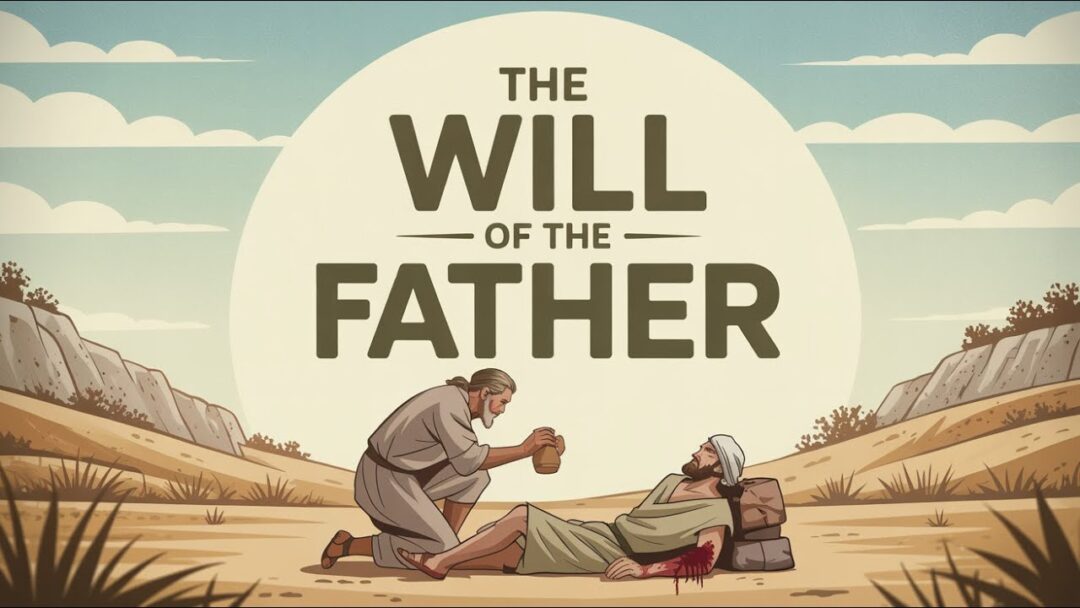
A certain man went down from Jerusalem to Jericho, about an eight-hour trip through steep, dangerous roads known for bandits. It would have been considered very foolish to take this route alone. People traveled it in groups. He is attacked, beaten, robbed, and left half dead. A priest and a Levite come that way, both supposed to be God’s representatives, both supposed to live out love thy neighbour as thyself. They do not just walk straight by. They go to the other side, to have as little contact with the dying man as possible. The Bible does not tell us their excuses, but we can imagine them. If he dies and I touch him, I will not be able to perform my temple duties. Under the law, touching a dead body made you ritually unclean, and you could not serve in the temple for a week. Maybe it is an ambush. Maybe I have a schedule to keep. Maybe someone else will come along who is better equipped, and I will say a prayer for him.
We like to put ourselves in the position of the victim and imagine facing that kind of apathy. What God wants us to do is put ourselves in the position of the priest and the Levite. How many times have we walked past an opportunity to minister to, serve, or help another person, and found an excuse that made it okay not just to ignore the problem but to actively avoid it? I know I am guilty of that.
When Jesus said a certain Samaritan, the Jews were not ready for what came next. They would have been shocked. The Jews and Samaritans hated each other for two main reasons. When the Assyrians took over Israel, some of the people intermarried with them, so they were not fully Jewish, and the so-called purebred Jews cast them out of the temple. The Samaritans eventually repented and wanted to turn back to God, and they were still rejected at Jerusalem, so they built their own temple on Mount Gerizim. The Jews said God can only be worshipped in Jerusalem, and they came and burned that temple down. The Samaritans in turn would defile the Jewish temple, until they would not talk or sell to each other, and the relationship was completely torn apart.
What did the good Samaritan do? He had compassion on the one who was considered his enemy, the one who, if he were up and walking, might not have given him the time of day. He bound up his wounds, pouring in oil and wine, set him on his own beast, and brought him to an inn. He gave up his whole day to tend to the man, then gave two days’ wages, two denarii, to the innkeeper, and made plans to come back and pay whatever else it cost. A denarius is a whole day’s wage. That is a two-day down payment, after he had already gone out of his way to get the man somewhere safe. He did not do the bare minimum. He invested in his enemy because he loved him.
Go and Do Likewise
Which now of these three, thinkest thou, was neighbour unto him that fell among the thieves? And he said, He that shewed mercy on him. Then said Jesus unto him, Go, and do thou likewise.
Luke 10:36–37
Jesus flips the script on the whole question. The lawyer would have assumed the priest and the Levite were the neighbors. Jesus asks which of the three was neighbour unto him that fell among the thieves. The lawyer answers honestly, but reluctantly. He could not even bring himself to say the word Samaritan. He said, He that shewed mercy on him. Then Jesus said, Go, and do thou likewise. Society wants to divide us into groups of us versus them. It does not matter what the group is. Jesus says, Love your enemies, bless them that curse you, do good to them that hate you, and pray for them which despitefully use you and persecute you. That is what it looks like to serve God.
It Is Never Too Late
One last parable, in Matthew 21, because it is never too late to be right in serving God. A man has two sons. He tells the first, Son, go work to day in my vineyard. He says he will not, but afterward he repents and goes. The second says, I go, sir, and goes not. Which of them did the will of his father? The first. Jesus says the publicans and the harlots go into the kingdom of God before those who talk the talk and never walk the walk. Just because you missed doing what your heavenly Father said at the time does not mean it is too late. If you realize in this moment that you are wrong, go. Make it right. The one who does the will of the Father is the one who stops making excuses and does what the Father says.
When Jesus saves us, He does not put a patch on our old lives. He gives us a brand new one. The old way cannot contain what God wants to do in us through His Spirit. Just as Caesar’s coin belonged to Caesar because it bore his image and inscription, you belong to God because you bear His image and His word is written in your heart. True service is seen in how we love others sacrificially, even when it is inconvenient. Even if you have delayed obedience until now, it is never too late to do the will of your Father. God wants you to serve Him. Will you serve Him today?
Recent Comments