
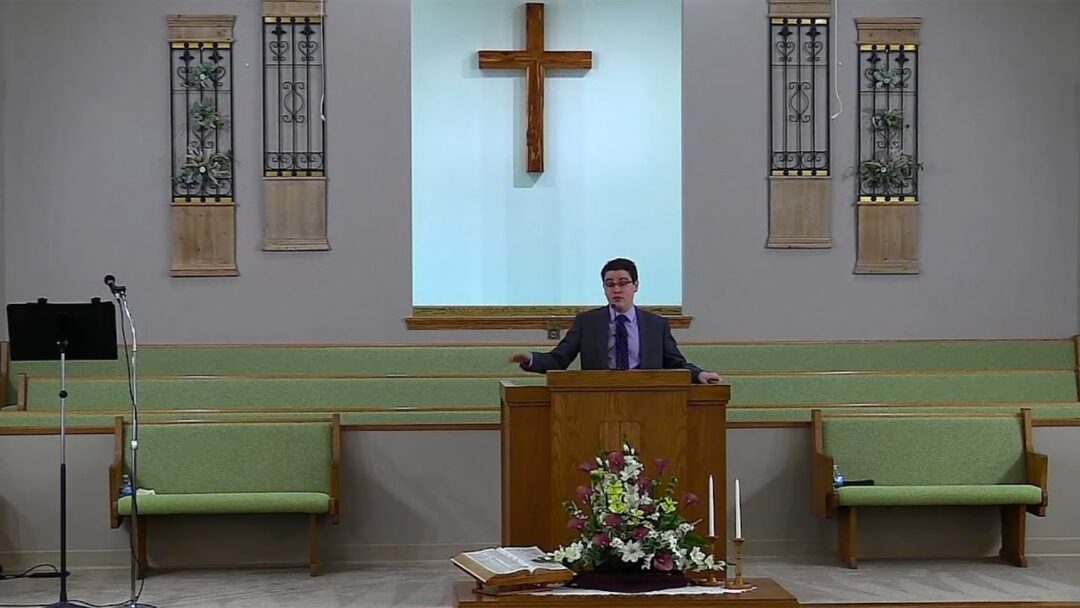
From our Sunday service on February 13, 2022, 1 Corinthians 13:1–13. Watch the full message: What’s Up with Love? on YouTube.
That Sunday fell on the eve of Valentine’s Day, so this lesson is on love. What I want to show you from God’s Word is that God wants you to live your life by true love. Earlier in this stretch of teaching I talked about two words in the Bible for love, and the story of Peter and Jesus, where Jesus asks, “Peter, do you love Me?” and uses the word agape. I went to Bible college, so I like to sprinkle a little Greek in as a bit of salt and seasoning. There is agape in the New Testament, and there is phileo. We all know about New Philadelphia, right down the road. That “Philly” comes from phileo, the word for brotherly love, and that is what Jesus asks Peter at the end: “Peter, do you even have brotherly love for Me?” We aren’t talking about phileo today, the familial, best-friend kind of love. We are talking about agape, which means love in action. It is love that has no choice but to do something. You may have experienced this in a relationship. Someone says, “Babe, I just don’t feel like you love me the way you used to.” What is that person saying? There is something you did in the past because you loved her that you don’t do anymore. Your agape love has turned into phileo. You aren’t driven to do things for her because you love her. You are just fond of her. Today we are talking about that strong love.
Love Is Ordered
Jesus says to His disciples, “I have a new rule for you.” He can sum up the laws of the New Testament in one thing: love God and love others. The way other people will know that we are His disciples is not that we go to church on Sunday morning, or go to a Bible study, or pray, or do this or that. It is the love we have. By this shall all men know that ye are My disciples, if ye have love one to another. I’ll mention marriage a little, but I want to talk about love in a way that everyone can apply, outside of marriage as well. It does apply to marriage, though, because if you want to love the way God wants you to love, you have to start with your wife or your husband. Your spouse is the person you are around the most, so your spouse is your daily practice. If you learn to love your spouse right, you will have a lot of practice at loving others right as well. When Jesus says, “A new commandment I give unto you, That ye love one another,” what does that mean? It means love is ordered. It is not an option. If we want to be like Christ, we have to perfect it.
Love Is Owed
Not only is love ordered, love is owed. If you meet a stranger on the street, you ought to love that person. Why should I? The stranger has done nothing for me, and I don’t know him. But when the Bible talks about taxes, it says don’t owe people money, and what you do owe them is love. That is the default, because that person is made in the image of God. The image of God gives every person value and significance. I love the fact that the Pharisees and the Jews come to Jesus asking silly questions about legalistic things, and here Paul is talking about taxes, and people are worried about paying money. Paul says, in effect, “You know what’s more important than money? Love. You’re missing the point. Christianity is more than that. Don’t worry about whether you should pay the taxes. Just pay them, and above that, love other people.”
Love Endures
Notice the word forbearing, the idea of tolerating. That is not a romantic word. It means that even if people bother you, you tolerate them in love. We are all called to be conformed to the image of Christ, and if we are going to walk worthy of that calling, we must love each other. If we want a church that honors and glorifies God, we have to speak the truth in love. “Edifying” literally means to build up, to construct one another in love. If you love somebody, you are going to tell that person the truth. If you see a shortcoming in someone’s life, it might be hard to talk about, and the person might not want to talk about it, but if you see something that needs to change, you take the time and find a way to do it the right way. You speak to that person in love: “Hey, I noticed this. I’m worried about this. I’m praying for you about this, and I hope you’ll pray about it too.” You speak the truth and lift the person up. Love endures. It is not a feeling that comes and goes with the day. It stays when it would be easier to walk away. Love is ordered, love is owed, and love speaks the truth and edifies. Now we look at how love endures and what the love God wants us to have looks like. Paul brings us to the famous words of 1 Corinthians 13, because if we have gifts and no love, we have nothing. You can have the most impressive ministry in the room, and without this love it is empty.
Charity suffereth long, and is kind; charity envieth not; charity vaunteth not itself, is not puffed up, Doth not behave itself unseemly, seeketh not her own, is not easily provoked, thinketh no evil; Rejoiceth not in iniquity, but rejoiceth in the truth; Beareth all things, believeth all things, hopeth all things, endureth all things.
1 Corinthians 13:4–7
Words Without Love Are Just Noise
Though I speak with the tongues of men and of angels, and have not love, I am become as sounding brass, or a tinkling cymbal. Words without love are just noise. You can say all the right religious words, and if there is no agape behind them, it is a clanging cymbal. Knowledge and faith without love are nothing. You can understand mysteries and move mountains, and if you have not love, you are nothing. Good deeds done without love profit nothing. You can give away all your goods, and if you do it to be seen, or to check a box, it profits you nothing.
Charity never faileth: but whether there be prophecies, they shall fail; whether there be tongues, they shall cease; whether there be knowledge, it shall vanish away.
1 Corinthians 13:8
Love Suffers Long and Is Kind
Love “suffereth long.” That word literally means to have patience in trials and struggles. It is not just being patient but being patient in the hard times. Paul connects it with another idea: love “is kind.” The Greek word for “kind” is the same word Jesus uses in Matthew 11:30, “my yoke is easy, and my burden is light.” It has that idea of easiness and gentleness even when times are hard. Paul doesn’t say to get through the hard times and then be kind later. Sometimes agape love in church is taking a step back and thinking, “I’m not perfect either. These people are going through hard times. I need to be gentle and understanding. I’m one bad day away from that.” Say that one day someone comes to church in a bad mood and says some harsh words to you. Is that right? No. But we need to take a step back and suffer long. “I understand that person is hurting. I don’t need to bite back or hold a grudge.”
Love Vaunteth Not Itself
Love “vaunteth not itself, is not puffed up.” “Vaunteth” means boasts, saying or doing things to make yourself look good. “Puffed up” is literally inflated, like someone walking around saying, “Look at me, I’m wearing a suit today.” Love doesn’t show off or make the topic about itself. Love cares about the other person, not about looking spiritual in the room or winning the argument. When Jesus talks to Peter and asks, “Lovest thou me?”, He uses agape twice. Do you love Me enough to do something? Peter had betrayed Christ after saying he never would, and Jesus was asking, “Do you love Me enough to do something about it? When the rubber meets the road, you bailed on Me.” The last time Jesus asks, He uses phileo: do you even like Me as a friend? That is how serious this love is.
And now abideth faith, hope, charity, these three; but the greatest of these is charity.
1 Corinthians 13:13
Will You Choose to Live in Love?
And now abideth faith, hope, charity, these three; but the greatest of these is charity. Charity is the old word for this same agape love. Faith will one day become sight, and hope will be fulfilled, but love does not expire. Will you choose to live in love? Not the fond feeling only, but agape, love in action, ordered by Christ, owed even to the stranger on the street, speaking the truth in a way that builds up, enduring, patient and kind in the hard times, not puffed up, not making the topic about yourself. Start with the person you are around the most, and then let that practice spill into the church, into the stranger on the street, and into every other relationship. That is how the world will know we are His disciples.
Recent Comments