
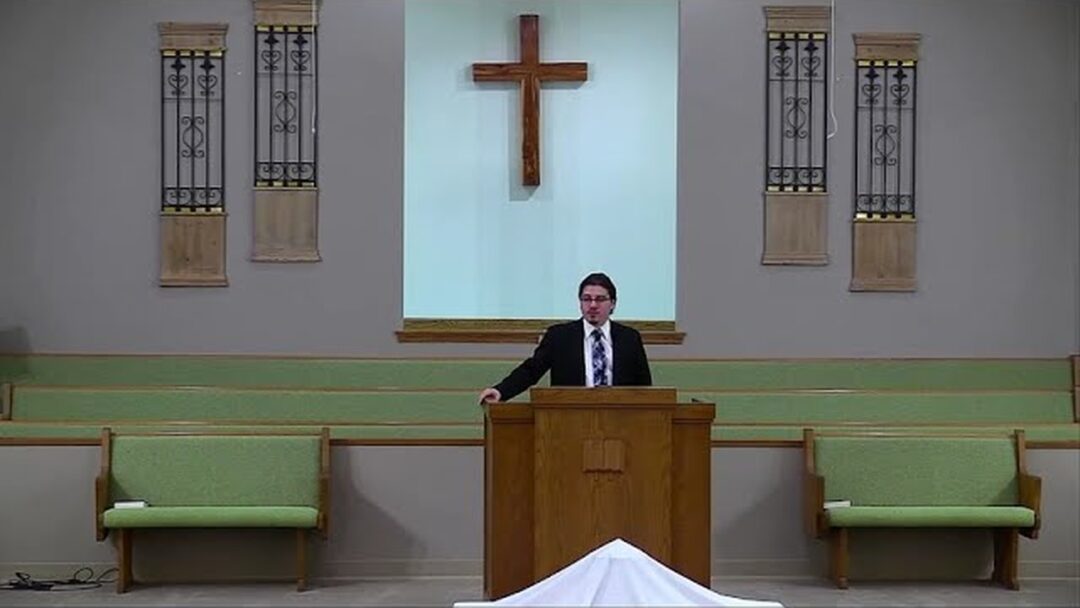
From our Sunday service on July 27, 2025, John 5:1-15. Watch the full message: When Is My Turn? The Pool of Bethesda – John 5:1-15 on YouTube.
God wants you to stop making excuses and take a step of faith so that He is able to bless your efforts. In John 5, Jesus goes up to Jerusalem for a feast of the Jews, and by the sheep market He comes to a pool called Bethesda.
A Feast and a Pool
Now there is at Jerusalem by the sheep market a pool, which is called in the Hebrew tongue Bethesda, having five porches. In these lay a great multitude of impotent folk, of blind, halt, withered, waiting for the moving of the water. For an angel went down at a certain season into the pool, and troubled the water: whosoever then first after the troubling of the water stepped in was made whole of whatsoever disease he had.
John 5:2–4
There is a lot of debate about this pool. For centuries they could not find it, but eventually it was found. It had five porches. If you want to picture it, think of the number eight on a digital calculator display: four porches on the outside and one in the middle, with two pools in a square eight pattern. These were water reservoirs, and people coming for the feast could use it to wash and purify themselves before going up to the temple.
This pagan shrine had an interesting mythology: an angel went down at a certain season and troubled the water. A lot of times we take that at its word and say there was actually an angel at this pool. But in the context of archaeology, I think this was meant as a note explaining why the pool was there. John was written before AD 70, when everybody in Jerusalem still knew what Bethesda was. Shortly after AD 70 the city was destroyed and the pool was buried, and people no longer knew what it was. So John added an explanation of what this place was for. A great multitude of impotent folk lay there, of blind, halt, and withered, waiting for the moving of the water.
A Man With Two Disabilities
And a certain man was there, which had an infirmity thirty and eight years. When Jesus saw him lie, and knew that he had been now a long time in that case, he saith unto him, Wilt thou be made whole? The impotent man answered him, Sir, I have no man, when the water is troubled, to put me into the pool: but while I am coming, another steppeth down before me.
John 5:5–7
Jesus sees a man who has had an infirmity thirty and eight years, and He asks, Wilt thou be made whole? In other words, do you want to be healed? Notice that the man does not answer the question. He starts making excuses. Sir, I have no man, when the water is troubled, to put me into the pool: but while I am coming, another steppeth down before me. Jesus asks if he wants to be healed, and the man answers with all the reasons why he cannot be. He had given up his hope in God. He was seeking help from another source, and that source had nothing to offer him. When Jesus said, Do you want to be healed? his answer was, It is not really possible. There are so many problems holding me back.
We are only told a few things about this man. He is unable to walk, so he cannot get to the spring when it bubbles. He lived here, because Jesus says he has been there a long time. He did not have this situation his whole life, because he had an infirmity for thirty-eight years, not since birth. This man was not only physically disabled, he was spiritually disabled as well. His heart had given up on God.
Jesus does not even engage with his excuses. He says, Rise, take up thy bed, and walk. He does not argue with the problems in this man’s life. He gives a command: get up. The implication spiritually is that this man was there because of his own choices, and he needed to take some initiative to be healed. And immediately the man was made whole, and took up his bed, and walked: and on the same day was the sabbath. Faith has to act before it sees the results. God is not looking for our excuses for why we cannot do things for Him. He is looking for action, for us to step up so that He can act.
So often we struggle with our difficulties and say, God, I cannot handle serving You right now because of these things holding me back. And Jesus does not want to engage with that. Am I not greater than all those things? Do you want to be healed? Do you want your spiritual walk with God to be restored?
And instead of answering yes or no, we say, I have no money in my bank account. I am struggling with this health issue. I do not have the skills to bring my talents to the church. God, I cannot do it. Jesus is not asking you if you can do it. That is not the point. We are having two different conversations. He already knows He can do it. He is asking a simple question: do you want to be healed? He was not so concerned about this man’s physical disability. He was concerned about his spiritual disability, how his heart had given up on God.
Controversy Over a Miracle
Even though a man’s life was transformed, he immediately faced scrutiny from the religious leaders. They said it was not lawful for him to carry his bed on the sabbath. They were more focused on how the miracle had occurred than that it had occurred at all. The situation was obviously problematic for the culture of the time. First, Jesus goes to a pagan shrine. Second, He heals a man in a pagan place. Third, He violates the oral law of the Pharisees by healing on the Sabbath. And then He tells the man He heals to violate the oral law as well. The oral law is not the law of Moses. It is not the law given by God. It is the law given by man. It was the Pharisees who said no one could pick up a bed and carry it on the Sabbath day. We learn from this that legalism is destructive. This man’s life was transformed and he had hope again, and the Pharisees came up and started knocking him down. Legalism always notices when someone picks up their mat, but it never wants to help somebody get up and walk again. The Pharisees would never have walked into the pool of Bethesda, a pagan shrine. They would have said they were too spiritual to enter such a sinful place. Jesus was not like that. He was not full of hypocrisy, and He was not afraid to go where the people who needed Him were. The man who was healed did not even know who it was, for Jesus had conveyed Himself away.
Sin No More
Jesus later finds him in the temple and says, Behold, thou art made whole: sin no more, lest a worse thing come unto thee. I told you this man’s heart was not ready to be healed. He was forsaking God and sitting in a pagan shrine. What is the first thing he does when he is healed? He goes up the stairs right next to the pool and into the temple to worship. His heart was not ready for that miracle until it was ready to go back to worship. Then God healed him, and he walked up those steps on his own two feet. The healing Jesus offered was not only about being able to walk again. It was for his soul. You are whole, not just in your feet but also in your heart. Be careful. Do not sin anymore, or a worse thing will come to you. Be faithful. Do not backslide when things get difficult.
Jesus was not just concerned with a man’s physical condition, but also his spiritual condition. First He takes care of people’s immediate physical needs, and then, when the distraction of life is removed, He deals with the spiritual things. If we can, we should emulate this ministry philosophy and care for the physical needs of others, so we can remove those distractions and deal with their spiritual needs as well.
God's Timing Is for His Glory
What was the point of this healing? I would say God’s timing is for His glory. Habakkuk 2 has the same vibe this man was going through: the vision is yet for an appointed time; though it tarry, wait for it; because it will surely come, it will not tarry. Behold, his soul which is lifted up is not upright in him: but the just shall live by his faith. If there is a difficulty in your life, God has a purpose for it. If you are faithful to Him, He will make it worth it, and He will bring more good out of it than there ever was bad. So what do we do? First, bring your deepest disappointments to Christ, but do not make excuses. Act on Christ’s word even when the outcome is unseen. Faith should move first, and then allow God to move in and complete it. Second, expect opposition. Obedience is often challenged by man-made traditions. Third, serve like Jesus. Seek to meet the tangible needs of others in order to open their hearts to spiritual truth. Fourth, wait well, knowing that God’s timing will ultimately magnify His glory. Are you waiting for something you should not be waiting for? That man wasted years of his life waiting at a pagan shrine for a miracle that was never going to come. Maybe some of us have been waiting for something that is never going to come, and we have not surrendered to God. We do not need to ask, When is it my turn? We should be asking, Am I right with God right now? God wants you to stop making excuses and take a step of faith so that He can bless your efforts. Will you choose to step forward and let Him bless you?
Recent Comments