
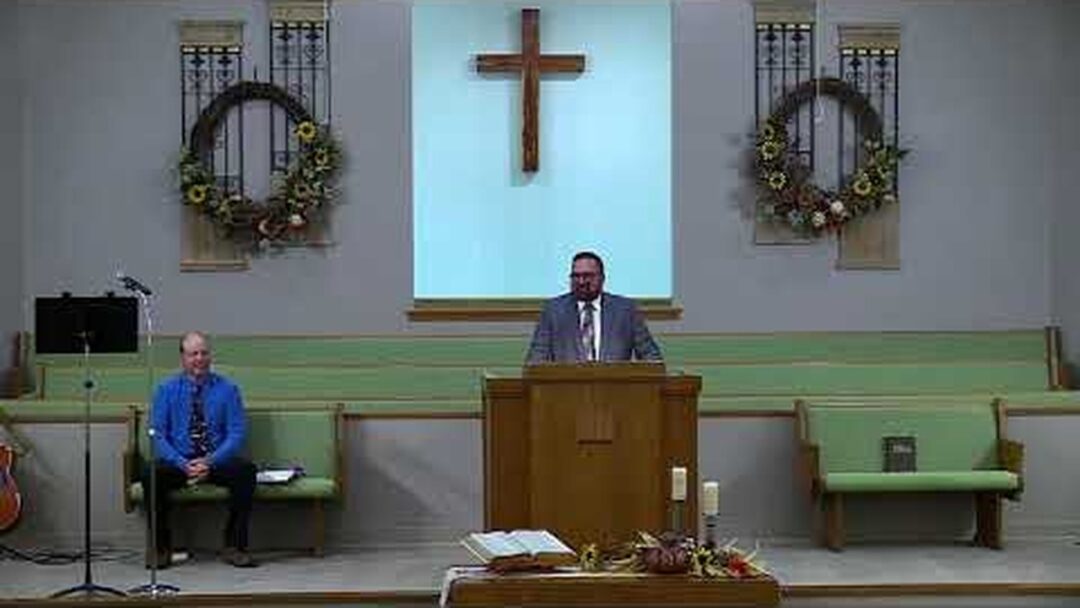
From our Sunday service on September 24, 2023, a message on the Kingdom Parables of Matthew 13, 20, and 25. Watch the full message: Preaching Parables on YouTube.
There Is Something Here for Everyone
I want you to realize what I realized this week: this message is important. I usually get a heads up that I’m preaching on a Sunday and have plenty of time to get a message together, and this one seemed no different. But about two weeks ago I was waiting for God to give me a message, as He always puts it on my heart so clearly, and I was waiting and waiting. Then I got real sick, and I couldn’t think or focus. The next day I woke up and said, “God, I don’t have the message yet.” And as I went to brush my teeth, I heard it as clear as day in my mind: Parables.
So I started studying and ended up with a list of ten pages of verses and notes. When I went to cut it down, I went through each parable thinking, “They know this one well enough.” And God said, “No, someone might know that one, but not everybody has heard it, and there is somebody there who needs to hear it. Not all of them need to hear it, but one of them does.” I went through each parable and He would not let me cut it down. There is something here for everyone, and nothing here is unimportant.
Then this morning the printer was out, the internet went out, and right before teens I got a text that our recording was down. Satan showed up today. He does not want you to hear this message. But if we take the distractions away, forget about the food we’re going to eat soon, the problems we have at home, and the things we have to do this week, and focus in and walk through these passages together, I guarantee God has something to apply to your life today.
The Kingdom of God
Today we are looking at a specific set of parables, called the Kingdom Parables, which are parables about the kingdom of God. When Jesus came in the first century, the New Testament wasn’t written yet. All they had was the Old Testament, and Jesus talks about why it is important: it points forward to Him. The Jews were under the power of Rome and oppressed, and they were looking for the Messianic Kingdom, the kingdom of the Messiah. Messiah is the Hebrew word that the Greek translates as Christ.
Their picture of the kingdom was one of financial prosperity, individual liberty, and comfort. They weren’t looking for who Jesus was. They were looking for someone like King David who could lead an army against Rome, or someone like Solomon who could lead them to economic prosperity, or like a judge who could give them peace from times of war. But when Jesus came, this comfort was not His concern. His focus was on the heart and spiritual transformation, not political transformation. His was not a kingdom of earthly good but one of spiritual blessing, and through many parables He discloses what the kingdom of God truly looks like.
The kingdom of God and the kingdom of heaven are used interchangeably. When we hear “kingdom of heaven” we often think of heaven itself, the abode of God, and one day entering the gates. That is part of it, but what Jesus preached in these parables was the kingdom of heaven coming to earth to dwell with man. He was bringing God to humanity and leaving His Spirit with them to create a new kingdom on the earth. The kingdom of God starts in the heart. In Luke 17:20–21:
And when he was demanded of the Pharisees, when the kingdom of God should come, he answered them and said, The kingdom of God cometh not with observation: Neither shall they say, Lo here! or, lo there! for, behold, the kingdom of God is within you.
Luke 17:20–21
The Pharisees were asking, “You have all these parables about the kingdom. If we’re going to have victory over Rome, when is it coming?” Jesus says they have it wrong. If somebody says, “Look, here’s the kingdom of God,” that’s not it. You are not going to see it that way, but it will be in the hearts of the people.
What Is a Parable?
In college they defined a parable as an earthly story with a heavenly meaning. That is a good summary, but there is a little more to it. The word comes from the Greek paraballo, which literally means to throw beside, or to place beside, the idea of comparison: putting something next to another thing to contrast the two. The nearest English word, though we don’t use it often, is juxtaposition. A parable takes something familiar and compares it to something unfamiliar, and we sometimes call it a metaphor. You may remember Jesus saying, “The kingdom of heaven is like.” By comparing what we don’t know with something we know, we get a greater understanding of the topic.
The Parable of the Sower
The same day went Jesus out of the house, and sat by the sea side. And great multitudes were gathered together unto him, so that he went into a ship, and sat; and the whole multitude stood on the shore.
Matthew 13:1–2
This is how Jesus taught his parables. They didn’t have a sound system, so He would sit on the water or on a mountainside where the acoustics would naturally carry His voice to everybody on the shore. Notice He is preaching sitting down, and the congregation is standing. I found a funny quote from Spurgeon’s commentary on this: “The teacher sat and the people stood. We should have less sleeping in congregations if this arrangement still prevailed.” I agree. If everybody were standing up, I think we’d have a lot fewer people falling asleep. But today that’s not how we do it.
And he spake many things unto them in parables, saying, Behold, a sower went forth to sow; And when he sowed, some seeds fell by the way side, and the fowls came and devoured them up: Some fell upon stony places, where they had not much earth: and forthwith they sprung up, because they had no deepness of earth: And when the sun was up, they were scorched; and because they had no root, they withered away. And some fell among thorns; and the thorns sprung up, and choked them: But other fell into good ground, and brought forth fruit, some an hundredfold, some sixtyfold, some thirtyfold. Who hath ears to hear, let him hear.
Matthew 13:3–9
This one should be familiar. It is one of the first parables in the narrative, and it is where the disciples ask Jesus why He uses parables.
And the disciples came, and said unto him, Why speakest thou unto them in parables? He answered and said unto them, Because it is given unto you to know the mysteries of the kingdom of heaven, but to them it is not given. For whosoever hath, to him shall be given, and he shall have more abundance: but whosoever hath not, from him shall be taken away even that he hath. Therefore speak I to them in parables: because they seeing see not; and hearing they hear not, neither do they understand. And in them is fulfilled the prophecy of Esaias, which saith, By hearing ye shall hear, and shall not understand; and seeing ye shall see, and shall not perceive: For this people’s heart is waxed gross, and their ears are dull of hearing, and their eyes they have closed; lest at any time they should see with their eyes, and hear with their ears, and should understand with their heart, and should be converted, and I should heal them. But blessed are your eyes, for they see: and your ears, for they hear. For verily I say unto you, That many prophets and righteous men have desired to see those things which ye see, and have not seen them; and to hear those things which ye hear, and have not heard them.
Matthew 13:10–17
Why Parables?
There are a few reasons. One obvious one is that parables keep things engaging. Everybody loves a good story. It makes a message more relatable and easier to understand. Jesus never told lofty parables about luxury, food no one knew about, or a faraway land no one was familiar with. He lived in a farming community, so He used farming, and He used fish. He took concepts that were familiar and related them to the people who heard. How many of you have been in a message that was too long and too uninteresting? Jesus was not that way. He kept it interesting.
Parables are also for those who have understanding. They assume the hearer already knows, or is searching for, the truth. A parable reminds the reader of the truth he already knows and expands on it. For the closed-minded, a parable is meaningless. If your heart is not ready to listen, you won’t invest enough to understand what it means. For the listener it is enlightening, but for the hardened heart it only hardens it further, because those who don’t want the truth find the parable makes no sense and don’t put in the effort to understand. So Jesus is using the parable so that only those He desires can understand. He tells the disciples that it is for them to understand the mysteries of the kingdom. The others are not ready yet, but He needs to prepare them, because the kingdom of God is at hand. That is the first thing John the Baptist preaches, and Jesus starts His ministry with it: repent, for the kingdom of God is at hand.
Since parables are so engaging, you remember them and they stick with you. They may not have understood it at the time, but when their hearts were ready they would understand later. And it was also part of prophecy. Jesus is referencing Isaiah 6:9–10:
And he said, Go, and tell this people, Hear ye indeed, but understand not; and see ye indeed, but perceive not. Make the heart of this people fat, and make their ears heavy, and shut their eyes; lest they see with their eyes, and hear with their ears, and understand with their heart, and convert, and be healed.
Isaiah 6:9–10
God allowed the Israelites to reject Him. He wouldn’t be crucified without their rejection. So He says, “I’m going to preach to them so that they reject me, so I can die on the cross, so I can extend this grace to the Gentiles and change the world.” It was a requirement, and He had to fulfill the prophecy, so He spoke in parables.
What They Needed to Know
For the parable of the sower, they needed to know the Old Testament and the pictures the prophets used beforehand. Jesus wasn’t the first to use parables and illustrations. A good example is King David and the prophet Nathan. When David sinned with Bathsheba, the prophet came before him and, instead of directly accusing him of the immorality, told a parable of a rich man who stole a poor man’s sheep. Nathan asked David what should be done to that man, and David said, “Punish him to the full extent of the law, he’s a terrible person.” Then Nathan revealed that the parable was about David. David, unconvicted of his sin, hadn’t understood it was about him. He was angry about what had happened to the flock. But when it was revealed that he was the evil shepherd, it convicted him in his heart, and that is what parables do to us.
They also needed to know passages like Hosea 10:12:
Sow to yourselves in righteousness, reap in mercy; break up your fallow ground: for it is time to seek the LORD, till he come and rain righteousness upon you.
Hosea 10:12
The field image had already been used by the Old Testament prophets. When Jerusalem was called to repent, they were told to break up the hard ground and prepare the soil, because it was time to seek the Lord until He comes. Jesus is foreshadowing that He is here and that they need to be prepared. Jeremiah 4:3 also calls Jerusalem to repentance:
For thus saith the LORD to the men of Judah and Jerusalem, Break up your fallow ground, and sow not among thorns…
Jeremiah 4:3
That sounds familiar, doesn’t it? Jesus had already placed these pictures in the Old Testament so that when He came in the New, He could tie it all together.
There is something interesting about this illustration. There is no work by the farmer of plowing or preparing the ground. It was the job of the ground to prepare itself. The state the ground was in when it was sown is the state it stayed in. It was the quality of the soil that affected the growth of the ministry, not the quality of the seed. The farmer sowed the same seed on all the soil. The gospel is the seed, and the good news was sown the same to all, but was the ground prepared to receive it? So the conclusion is that it is the responsibility of a person to prepare their heart for the gospel. God will sow the seed, but is your heart ready to receive it?
The Four Soils
Hear ye therefore the parable of the sower. When any one heareth the word of the kingdom, and understandeth it not, then cometh the wicked one, and catcheth away that which was sown in his heart. This is he which received seed by the way side.
Matthew 13:18–19
The wayside is the roadside where people walk. When you walk on soil it compacts down and gets hard, and nothing will grow there. This soil hasn’t been prepared at all, and the seed just sits on top. The wicked one comes and takes it. We saw that today at this church: problem after problem. Satan does not want you or me to excel in the ministry and the kingdom. He wants setbacks and discouragement, one after another, so that our soil gets trodden down hard and we are not ready to receive the word.
But he that received the seed into stony places, the same is he that heareth the word, and anon with joy receiveth it; Yet hath he not root in himself, but dureth for a while: for when tribulation or persecution ariseth because of the word, by and by he is offended.
Matthew 13:20–21
The stony place has some soil, but underneath it, in Israel, would be a layer of limestone bedrock, with a little soil on top. At first it looks like the seed will take root. They hear the good news and get excited, and it seems like it will grow and produce fruit. But the roots hit the rock, an immovable force, and can’t reach fertile soil, so it never becomes a full plant. They get excited about the gospel, but then the world comes, or some controversy arises about their being a believer, and they are offended and stumble, and the weather eventually kills it.
He also that received seed among the thorns is he that heareth the word; and the care of this world, and the deceitfulness of riches, choke the word, and he becometh unfruitful.
Matthew 13:22
The thorny ground is a heart wrapped up in materialistic things, which sap away all the blessings of the kingdom of heaven. You have the seed, but if your roots are intertwined with the roots of the world and the roots of the kingdom of heaven, it will sap away all your blessings. You won’t experience them, the tree will wither, and the fruit will never come. We will see that again later.
But he that received seed into the good ground is he that heareth the word, and understandeth it; which also beareth fruit, and bringeth forth, some an hundredfold, some sixty, some thirty.
Matthew 13:23
While there are all these bad situations, there is a heart that is ready for the word and prepared to take the good news and do something with it. This is how Jesus introduces the idea of the kingdom of heaven: there is good news for you, and you need to respond to it and learn to live in the knowledge of it.
What the Kingdom Is
The first parable sets the groundwork for all the others. Now we should define the kingdom. The kingdom of God is partially salvation and partially Christian duty, a little of both mixed together. It starts with the good news of salvation and continues with a life of kingdom living: service to God, blessing, growth, and prosperity. It talks about fruit more than anything else. The kingdom is about producing good fruit, growing, moving forward, and becoming more like Christ, until one day we go into heaven and, at the end, receive the reward of the kingdom, not heaven itself but the blessing of our Lord and Savior saying, “Well done.”
The Wheat and the Tares
Another parable put he forth unto them, saying, The kingdom of heaven is likened unto a man which sowed good seed in his field: But while men slept, his enemy came and sowed tares among the wheat, and went his way. But when the blade was sprung up, and brought forth fruit, then appeared the tares also. So the servants of the householder came and said unto him, Sir, didst not thou sow good seed in thy field? from whence then hath it tares? He said unto them, An enemy hath done this. The servants said unto him, Wilt thou then that we go and gather them up? But he said, Nay; lest while ye gather up the tares, ye root up also the wheat with them. Let both grow together until the harvest: and in the time of harvest I will say to the reapers, Gather ye together first the tares, and bind them in bundles to burn them: but gather the wheat into my barn.
Matthew 13:24–30
The kingdom of heaven does not exist alone. A seed is sown that is the kingdom of heaven, but the seed of the wicked one is sown in the same field. If you haven’t figured it out by now, the field is a picture of the world, not the church, both the saved and the unsaved. The wicked one has thrown bad seed into the world to grow alongside the church and harm the kingdom. The roots of the wicked latch on to the roots of the good, sapping nutrients from the soil and lessening the growth of the crop. Some of it, as in the other parable, will choke up and die, but others will survive.
The servant asks, “Should we rip it out and start over?” And God says no: if we rip out the roots of the weeds, it will rip out the roots of the Christians too. God can’t just end the world because there is evil in it. Let the good continue to grow, and we must have faith that there will be a harvest and that the good will persevere against the evil seed. Will all of us grow the way we should, or will the evil seed trip us up? The other parable was about that: we have to be ready to receive the word and grow in the word, or the evil seed will take root in our hearts and entangle us. But God says He won’t tear them out until the time of harvest. There is a time determined for God to put judgment on the earth, and in that time He has allowed us to decide whether we will live our lives for Him. Believers will grow, and unbelievers will have time to repent. God did not call us out of this world but to exist alongside it as a light.
The Mustard Seed and the Leaven
Another parable put he forth unto them, saying, The kingdom of heaven is like to a grain of mustard seed, which a man took, and sowed in his field: Which indeed is the least of all seeds: but when it is grown, it is the greatest among herbs, and becometh a tree, so that the birds of the air come and lodge in the branches thereof.
Matthew 13:31–32
I found some very contradictory teachings on this passage, which give it the opposite of its meaning. Parables were made to confuse people, so we need to be careful to dissect them the right way. The kingdom of heaven is like a grain of mustard seed, one of the smallest seeds they would plant in Israel, so small you would walk right by it on the floor. But when it is grown, it is the greatest among herbs and becomes a tree. Mustard trees vary greatly in size, from six feet to thirty feet tall, and the wording here implies an abnormally large one, because birds take a nest only in something high off the ground where animals can’t get to it. This tree is larger than expected and has grown beyond what is normal, so much so that it is a comfort to the birds.
Some people give it a wrong interpretation. They say that in Israel birds were pictures of evil, so there are evil birds lurking in our churches. Sometimes vultures and other birds are used as a picture of evil, but they are also used as a picture of good. Here is how I came to this conclusion, and you need to know this when you study the Bible yourself. They said the Old Testament picture of birds is evil, so I asked whether there are other passages about birds in trees, and the Old Testament does have one, and it is about the prosperity of Jerusalem. Jesus is talking to people who know the Scriptures. If the prosperity of Jerusalem is a tree with birds in it, then the prosperity of the kingdom of God is probably also a picture of birds in a tree. You have to use discernment and look in the Bible for yourself to find out whether what people are saying is true or whether they are missing something.
Another parable spake he unto them; The kingdom of heaven is like unto leaven, which a woman took, and hid in three measures of meal, till the whole was leavened.
Matthew 13:33
Once again, the kingdom will be large. It will spread like leaven, and once it is placed in the dough, it is only a matter of time until the dough rises. Jesus is saying, “I have put the leaven in the bread.” This is another passage people misunderstand, because leaven is often a picture of corruption. One commentary said three measures of meal is too much bread for any person to make, and leaven is a picture of evil, so there are too many people in our churches and they’re all evil. I looked up three measures of meal, and you will never guess where it comes up: when God visits Abraham, Jesus and the two angels, and he makes three measures of meal for them. So I don’t think it is a picture of too many people in the church. I think it is about a community, not enough for one but enough to feed many. The church is bigger than you expect and will grow larger than you expect. It is not just for a select few. And though that little bit of leaven doesn’t seem like enough at first, it will one day change the world. There is a book I’ve been meaning to read called Dominion, about how Christianity changed the moral standard of this entire planet, and I hope to get it and bring some of it to you, because it is so interesting to see how the kingdom has changed the world’s standards over the centuries.
The Treasure and the Pearl
Again, the kingdom of heaven is like unto treasure hid in a field; the which when a man hath found, he hideth, and for joy thereof goeth and selleth all that he hath, and buyeth that field.
Matthew 13:44
The kingdom of heaven is the treasure. The man isn’t searching for anything. He is just going about his business and happens to find something of high value, and the field is for sale. To get the treasure he has to give up everything he has, but the treasure is worth way more than everything he has. Some people will teach you, specifically Mormons, that you are the treasure. God does treasure us, and we have parables about that, but in this parable the treasure is the kingdom. The gift of the kingdom, of salvation and growth, is of high value. You can sell everything and invest in it, and it is worth more than everything else. This man didn’t regret it. He wasn’t looking for the kingdom, but he found it.
Again, the kingdom of heaven is like unto a merchant man, seeking goodly pearls: Who, when he had found one pearl of great price, went and sold all that he had, and bought it.
Matthew 13:45–46
The first parable was about someone who wasn’t looking for the treasure. Now we have somebody who has been searching. Notice “goodly pearls,” plural. This man was going from city to city looking for the best pearls, probably to make a necklace, trying to collect all the things in this world to find satisfaction and create happiness. In his search for the things that bring him blessing, he realized he didn’t need all the pearls, because there was one pearl valued higher than the rest. The kingdom of heaven is like that pearl. When we find Christ and salvation, we don’t have to look for other treasures on this earth or somewhere else for satisfaction. We can sell all the other pearls. We don’t need the necklace. We have the pearl of great price. The merchant was looking for many pleasures but found one pleasure that removed the need for all others, and to us the kingdom can be that. In fact, there is no other.
The Net
Again, the kingdom of heaven is like unto a net, that was cast into the sea, and gathered of every kind: Which, when it was full, they drew to shore, and sat down, and gathered the good into vessels, but cast the bad away. So shall it be at the end of the world: the angels shall come forth, and sever the wicked from among the just, And shall cast them into the furnace of fire: there shall be wailing and gnashing of teeth.
Matthew 13:47–50
Think of a dragnet pulled behind a ship, pulling in fish. The kingdom of heaven is like that giant net. It is not specifically targeting people. Some believe God chose specific people to be saved and condemned others to hell, and this parable is a contradiction of that. This is a net spread wide, catching all the fish. The gospel is being given to every fish. They have all heard the kingdom and know about the truth, but at the end they will be sorted into the good and the evil, those who have accepted the kingdom and those who have rejected it. The good fish are gathered into vessels and the bad cast away, as with the tares. They will have their day of judgment, but the kingdom is an open invitation to all. If anybody here hasn’t accepted the invitation to know Christ as Savior and experience the growth He gives, accept it today, because not all who are invited will accept and inherit the gift of the kingdom.
The Laborers in the Vineyard
What about salvation later in life? We have a parable about that. The kingdom of heaven is always a complete gift. This one is in Matthew 20.
For the kingdom of heaven is like unto a man that is an householder, which went out early in the morning to hire labourers into his vineyard. And when he had agreed with the labourers for a penny a day, he sent them into his vineyard. And he went out about the third hour, and saw others standing idle in the marketplace, And said unto them; Go ye also into the vineyard, and whatsoever is right I will give you. And they went their way. Again he went out about the sixth and ninth hour, and did likewise. And about the eleventh hour he went out, and found others standing idle, and saith unto them, Why stand ye here all the day idle? They say unto him, Because no man hath hired us. He saith unto them, Go ye also into the vineyard; and whatsoever is right, that shall ye receive. So when even was come, the lord of the vineyard saith unto his steward, Call the labourers, and give them their hire, beginning from the last unto the first. And when they came that were hired about the eleventh hour, they received every man a penny. But when the first came, they supposed that they should have received more; and they likewise received every man a penny. And when they had received it, they murmured against the goodman of the house, Saying, These last have wrought but one hour, and thou hast made them equal unto us, which have borne the burden and heat of the day. But he answered one of them, and said, Friend, I do thee no wrong: didst not thou agree with me for a penny? Take that thine is, and go thy way: I will give unto this last, even as unto thee. Is it not lawful for me to do what I will with mine own? Is thine eye evil, because I am good? So the last shall be first, and the first last: for many be called, but few chosen.
Matthew 20:1–16
This passage answers a lot of questions some of us Christians have. This is an image of the work of the ministry, the work of believers: encouraging another Christian, being a preacher or teacher, being a prayer warrior, anything you do for the kingdom. These laborers are sitting idle with nothing to do. It reminds me of Ecclesiastes, where all is vanity and vexation of spirit: without Christ and God we are nothing but people walking around idly and meaninglessly with no purpose. The farmer, who is Jesus, goes out and invites them to step into the ministry and do the work of the kingdom, and some join. He goes out again. Why haven’t you joined the kingdom yet? Nobody has invited us to work. The gospel spreads to them, they accept it, and they are no longer idle. This is a picture of people accepting Christ later and later in life.
Someone like me is one of the early laborers. I was saved at the age of five and have been a Christian almost my entire life, and God has a lot of kingdom work for me to do. There are other people on their deathbed where someone like me or Pastor walks in and gives them the gospel. Why haven’t you accepted the kingdom of heaven? Nobody has invited me yet. And in that last moment of their life they say, “I want to be part of the kingdom.”
As Christians we can get the attitude of “Why hasn’t God blessed me so much? I’ve been a Christian my whole life.” For pastors, this one is a real temptation: “I work so hard for this ministry and I’m not appreciated. I do all this stuff and get nothing in return.” And Jesus says, “Did you not agree with me for a penny? Is it not enough that I’m your Savior? I said I would pay you what is right. I gave you the gift of salvation, and you say it’s not enough and want more.” The man saved on his deathbed inherits eternal life in heaven that same day and gets paid first, though he has done the least work. And Jesus says, “Is thine eye evil, because I am good?” Don’t let your heart be evil by being jealous of people who have inherited the same gift without putting in as much work. The work is a blessing, a joy in and of itself. The penny, a denarius, was a day’s wage, a fair market price for work. They weren’t paid less than they needed. Those who accepted last simply got the same gift for less time.
The Ten Virgins
Next, the kingdom of heaven requires preparation. This is Matthew 25:1.
Then shall the kingdom of heaven be likened unto ten virgins, which took their lamps, and went forth to meet the bridegroom. And five of them were wise, and five were foolish. They that were foolish took their lamps, and took no oil with them: But the wise took oil in their vessels with their lamps. While the bridegroom tarried, they all slumbered and slept. And at midnight there was a cry made, Behold, the bridegroom cometh; go ye out to meet him. Then all those virgins arose, and trimmed their lamps. And the foolish said unto the wise, Give us of your oil; for our lamps are gone out. But the wise answered, saying, Not so; lest there be not enough for us and you: but go ye rather to them that sell, and buy for yourselves. And while they went to buy, the bridegroom came; and they that were ready went in with him to the marriage: and the door was shut. Afterward came also the other virgins, saying, Lord, Lord, open to us. But he answered and said, Verily I say unto you, I know you not. Watch therefore, for ye know neither the day nor the hour wherein the Son of man cometh.
Matthew 25:1–13
This parable is about delaying the choice of salvation. It pictures a Jewish wedding. There was a preparation time in which they would build an extension onto the father’s house. We see it also in “In my Father’s house are many mansions” and “I go to prepare a place for you”: an extension of a house for the bride and groom to live in. Because this was a construction project, you never knew when the bridegroom would come to collect his bride. It would be whenever the house was finished, so you had to be prepared any day for him to show up.
Five were wise and five were foolish. The wise took the oil, and throughout the Old Testament and the New, oil is an illustration of the Holy Spirit. How do you get the Holy Spirit? Through salvation. The wise took the Holy Spirit and kept it, ready for the Lord’s return, so when the bridegroom came unexpectedly at midnight they were able to trim their oil lamps, light them, and go with the groom. The foolish said, “Give us your oil.” And the wise could not, because we can’t transfer the Holy Spirit. God only gives us the Holy Spirit for ourselves. We can’t get saved for another person. They had to go to the one who sells the oil, but by the time they got to the wedding the door was shut and there was no time for repentance. So today is the day to be saved. We can’t respond to the kingdom after it is too late.
The Talents
For those of us who have responded, here is what the kingdom of heaven asks of us.
For the kingdom of heaven is as a man travelling into a far country, who called his own servants, and delivered unto them his goods. And unto one he gave five talents, to another two, and to another one; to every man according to his several ability; and straightway took his journey. Then he that had received the five talents went and traded with the same, and made them other five talents. And likewise he that had received two, he also gained other two. But he that had received one went and digged in the earth, and hid his lord’s money. After a long time the lord of those servants cometh, and reckoneth with them. And so he that had received five talents came and brought other five talents, saying, Lord, thou deliveredst unto me five talents: behold, I have gained beside them five talents more. His lord said unto him, Well done, thou good and faithful servant: thou hast been faithful over a few things, I will make thee ruler over many things: enter thou into the joy of thy lord. He also that had received two talents came and said, Lord, thou deliveredst unto me two talents: behold, I have gained two other talents beside them. His lord said unto him, Well done, good and faithful servant; thou hast been faithful over a few things, I will make thee ruler over many things: enter thou into the joy of thy lord. Then he which had received the one talent came and said, Lord, I knew thee that thou art an hard man, reaping where thou hast not sown, and gathering where thou hast not strawed: And I was afraid, and went and hid thy talent in the earth: lo, there thou hast that is thine. His lord answered and said unto him, Thou wicked and slothful servant, thou knewest that I reap where I sowed not, and gather where I have not strawed: Thou oughtest therefore to have put my money to the exchangers, and then at my coming I should have received mine own with usury. Take therefore the talent from him, and give it unto him which hath ten talents. For unto every one that hath shall be given, and he shall have abundance: but from him that hath not shall be taken away even that which he hath. And cast ye the unprofitable servant into outer darkness: there shall be weeping and gnashing of teeth.
Matthew 25:14–30
Fun fact: the English word talent comes from this parable. It is the Greek talanton, and we started using the word because of this Bible passage. The farmer has to go away. He has his land and his wealth, and instead of letting it sit idle, which is Jesus going to heaven and coming back, he invests it in his servants and lets them grow it. This growth is always an illustration of the kingdom of heaven. God has given every believer some ability to accomplish a task for Christ. A talent was worth about 6,000 days of labor, about twenty years of work for the Jews, who took the Sabbath and holy days off. I usually don’t like to give a currency amount because it doesn’t directly translate, but twenty years of work is a lot. He is saying, “I left twenty years of my work with you to do something with it.” Each was given according to his ability. Some with more skills were given more, and those with less were expected to do less, but everybody could do something.
“Reckon” is a banking term: he checked their accounts. While the talents picture our ability, and they do represent our ability, the talents themselves are not our abilities. This is where we get confused, because our word comes from this parable and we think it is specifically about talents. But this is also about the kingdom: the kingdom of heaven is like. So these talents are the kingdom of heaven being given to someone. Some were given more blessings to go further and grow the kingdom, and others were given less. One was given just one, and this is the one that stands out. He is afraid of God, and he thinks God is mean. Instead of taking the kingdom that has been given to him and using it to grow it, he buries it in the earth. He doesn’t even hold on to it. He puts it aside and leaves it there.
If we really think about it, none of this was theirs. The talent belonged to the master. The lazy servant who buried it lost everything, but in truth he never had anything to begin with. When he is thrown into outer darkness, it is not because he was saved and fell short. It is because he never had anything at all. He never had the kingdom. He buried it, never held on to it, never grew it, and never worked with it. Jesus tells him that if he was not going to do anything with it, there was at least a minimum he could have done: give it to the exchangers, the bankers, who would have done the work for him. God doesn’t want Christians to not do any work. These parables teach us that God wants us to be part of this kingdom and to push it forward. It is going to grow no matter what we do, but this passage is about a personal responsibility to grow the kingdom one way or another.
The two faithful servants don’t do the same thing and don’t accomplish the same amount, but they get the same reward: “Thou hast been faithful over a few things, I will make thee ruler over many things.” They had nothing when they started, and the Lord took back what was his, but they grew it and were rewarded. And they got something extra, the joy of the Lord. The wicked servant never got the joy of the Lord. He never had anything.
David Guzik’s commentary says, “Many modern servants of God think that when God gives them something, it no longer belongs to God; it belongs to them, and they can do with it as they please.” That is way too true. God has given us the blessing of the kingdom and blessings in our lives, but they are not for us. They don’t belong to us. They are to push the kingdom forward. Does that mean you don’t get anything? No, these people were rewarded. But first and foremost the blessings of God are for you to bless others, and if we miss this part of the kingdom, we are in a bad place.
The exchangers are significant too. If we don’t have anything to contribute of our own, we can at least help the other Christians who are trying to help the kingdom. The two servants had their own ministries, their own ways of growing the money, but Christ says you don’t have to have your own way. There are plenty of people doing the work. Get alongside them and grow the kingdom with them. Just don’t sit idle. The measure of how ready we are to meet our Master is how much we are doing for the kingdom.
The lazy servant never knew what he was missing because he never owned it. If you haven’t accepted the kingdom, you will never know its value or understand what it means to grow it or be a part of it. The parable also reminds us that we can’t take our wealth with us. They could never take the talent with them, and they knew that when the Lord came back it would be gone. Did that stop the other two from doing something with it? No. They said, “If it’s a short time, I can do something with it. I’ve got to double down and do twice as much, because someday this won’t be an opportunity anymore.”
Treasures New and Old
To close, we go back to Matthew 13 and read what Jesus says about these parables.
Jesus saith unto them, Have ye understood all these things? They say unto him, Yea, Lord. Then said he unto them, Therefore every scribe which is instructed unto the kingdom of heaven is like unto a man that is an householder, which bringeth forth out of his treasure things new and old.
Matthew 13:51–52
This is how Jesus concludes the Kingdom Parables. He asks His disciples, “Do you understand what this means?” And He asks you the same: do you understand what this means for your life? A scribe is somebody who works with the Scriptures, a teacher of the Scriptures. Anybody who is instructed in the kingdom of heaven, every believer, is like a householder. You are like the farmer, like the person given the talents. You have been given things new and old, the Old Testament and the New. At the beginning Jesus said the prophets desired to know these truths about how the kingdom would come, how Christ would reign in our hearts, and how He would redeem the Gentiles and Israel all at once. If you understand these Scriptures, you are like that householder who brings out treasure from this knowledge. As Christians it is our responsibility to take what we know about the Bible and grow the kingdom, whether that is sowing seed or going to find the laborers and inviting them to join us.
It is not too late for anyone, but for everyone time is running out. These parables teach us that there are people on their deathbed who are going to get saved, so don’t count them out. There are people who are unwise, waiting as the days go by, unaware that the bridegroom is coming. And there are people here who have been given blessings from God and aren’t using them. They are sitting on them and aren’t investing them in other ministries or doing any ministry of their own. If they want to have the joy of the Lord and inherit the blessings of the kingdom, they have to get up and do something about it.
So I hope you have learned something today about the kingdom of heaven: that we need to prepare, that we are enabled to do things in the kingdom, that the kingdom of heaven is a complete gift, that it is a treasure, that it invites all people, and that it is going to grow. The question is: are you going to be a part of it?

Recent Comments