
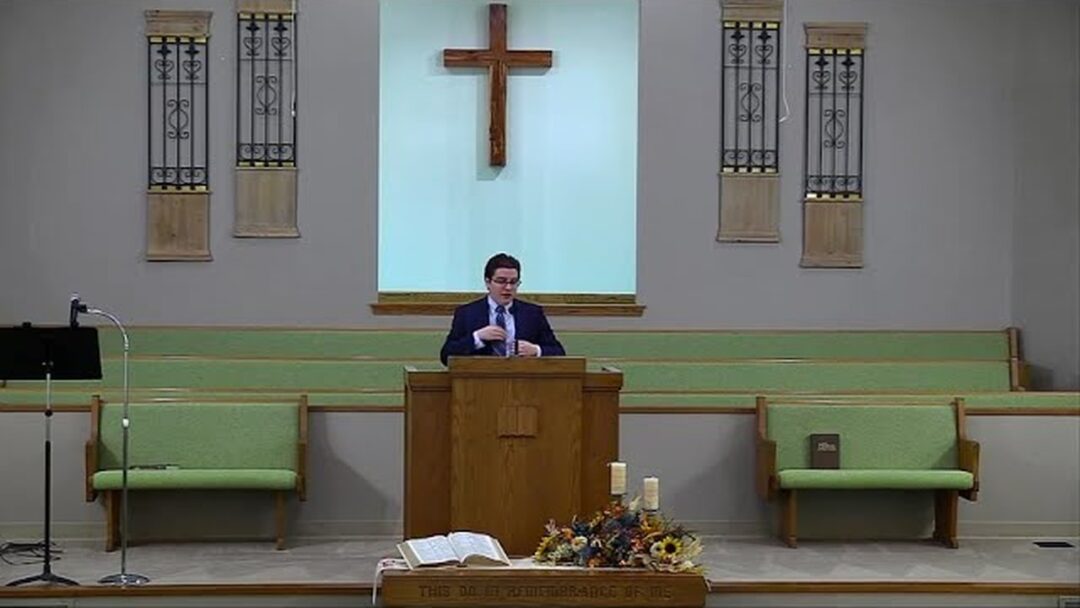
From our Sunday service on September 22, 2024, 2 Peter 3. Watch the full message: Living in Light of His Return on YouTube.
Today we conclude our series of messages from the book of 2 Peter, so we’re in 2 Peter 3. Second Peter was written by the apostle Peter to Christians spread throughout the nations, at a time when new groups were going around, namely the Gnostics. They were creating new denominations, claiming to have secret knowledge that Jesus didn’t tell everyone and a secret doctrine for only special people. Peter writes to these churches to say, “Don’t fall into this trap. They’re trying to use your ego against you. They want you to feel like you’re in an exclusive group.” Peter’s argument is that everything you need to know about God is written in his Scriptures, and the church has agreed on what those Scriptures are. So stick to the word of God for finding truth, and don’t look for it in some secret society out in the shadows.
We entitled the series Nurturing Faith in a Changing World. The world we live in is always changing. In some generations we move closer to Christ and in some we move farther away, and regardless of that shift, we need to watch what we’re putting into our minds and how much time we’re spending in the word of God. When we put things in our minds that aren’t part of God’s word, they start to challenge the ideas of God’s word, and if we’re not in God’s word enough, we begin to forget what God taught was true doctrine.
In the first week we talked about how God wants you to be knowledgeable in his word. Peter’s argument is that the best defense against false teaching is good teaching, so spend time in your Bible and around people who will teach you the truth. In the second week we talked about the red flags of false teachers: those who can’t stop committing adultery, who can’t stop asking for more money, who are prideful and arrogant.
Today Peter gives us some encouragement. There are some who mock us and say, “Is Christ going to return? Has Christ abandoned his people to persecution and hardship?” But the truth is that God has not given up on us. The way God thinks is not the way we think, and God’s time frame is not ours. My proposition today is that God wants you to know he’s coming back.
A Reminder from Loved Ones
This second epistle, beloved, I now write unto you; in both which I stir up your pure minds by way of remembrance: That ye may be mindful of the words which were spoken before by the holy prophets, and of the commandment of us the apostles of the Lord and Saviour:
2 Peter 3:1–2
This is a little uncommon. Usually you see this kind of wording at the beginning of an epistle, but here Peter reminds us again who he is and why he’s writing. This is his second letter. He calls them “beloved.” That’s not a phrase we use in modern English. We don’t call our spouses “beloved” or say “my beloved cousin.” We’d say “my loved one.” “Beloved” is the Greek word agape applied to a person, so you could read it as “Loved ones, this second letter I now write to you.”
Peter is emphasizing the attitude in which the letter is written. It’s not written to smite down the false teachers in anger and resentment and bitterness. It’s written to his loved ones. Christ calls us his beloved, and we in the church are supposed to emulate God through love. The early church called each other their beloved, and there was a familial bond between members that we sometimes miss today.
“Stir up” is the idea of shaking someone awake from sleep, like someone tossing and turning in the night. Peter is saying, “Church, you’ve been dealing with the hardship of the world and with people nagging and mocking you, and it’s put you into a slumber. You’re walking through your Christianity half asleep. I’m here to wake you up, in love. I’m not shaking you violently. There’s some really good stuff God is doing for you, and you haven’t even noticed.”
“Pure minds” means sincere minds. Peter isn’t writing to apostates or to people who have given up on the Christian walk. He’s writing to people who have devoted themselves to the teachings of Christ. He isn’t accusing them of insincerity. He’s saying they aren’t in sin, but there are some blessings they’re missing out on. And he does it “by way of remembrance.” This is nothing unfamiliar. It’s something you heard when you were saved, something that has been in your life but that you may have forgotten.
Verse 2 tells us it isn’t only something you’ve heard from us apostles, but it’s also in the Old Testament, in the words of the holy prophets. It’s a truth passed down through all of history. God has the same truth through all time, whether Old Testament or New, and we need to be reminded of it.
The Scoffers
Knowing this first, that there shall come in the last days scoffers, walking after their own lusts, And saying, Where is the promise of his coming? for since the fathers fell asleep, all things continue as they were from the beginning of the creation. For this they willingly are ignorant of, that by the word of God the heavens were of old, and the earth standing out of the water and in the water: Whereby the world that then was, being overflowed with water, perished: But the heavens and the earth, which are now, by the same word are kept in store, reserved unto fire against the day of judgment and perdition of ungodly men.
2 Peter 3:3–7
“Knowing this first” means there’s something you need to know. The apostles and prophets warned us that in the last days, mockers and scoffers would come against God’s people. The last days is technically anything after Christ’s death and the pouring out of the Holy Spirit. We’ve been living in the last days for 2,000 years. This prophecy held in Peter’s time and holds now: people will mock believers and walk after their own lusts. Here “lust” is used in the negative sense, following the desires of a wicked and evil heart. As they follow those sinful desires, they get defensive, and instead of repenting of their sins they mock and condemn the Christian for walking in a way that’s better than themselves.
So, Christians, do not be deceived. We knew this was coming. We knew there would be false teachers, as there were in the days of the prophets. We knew there would be people who decide to reject Christ and follow their own desires, and that they would mock us. Don’t be discouraged by this. It’s nothing new, and it isn’t a surprise to God.
“Where Is the Promise of His Coming?”
Way back in the Old Testament, God promised there would be a judgment day. He flooded the earth, and after that he promised no more flood until the day of judgment, when he would judge with fire instead. For thousands of years people have been waiting for God’s judgment, and those who have rejected God say, “Didn’t God say the earth would be burned by fire? Didn’t God say the wicked would be judged? Look around you at the corruption in the world, the governments, the terrorism, all this wickedness. Where is God’s judgment? Isn’t your God just?” They accuse God of forgetting his promise, of having fallen asleep. “Since the fathers fell asleep,” they say, “all things continue as they were from the beginning of creation. Nothing has changed.”
“Willingly Ignorant”
Peter says they are willingly ignorant. They purposefully forget some of the details, specifically the old world. In Genesis 1:1 we get the account of “in the beginning God created the heaven and the earth.” The initial creation was chaotic, with the earth just a ball of water, and then God made the dry land appear and brought animals on it and created this world for man to live in. God’s purpose was to create man on this earth, and to create nature, the trees, the animals, and to sculpt the terrain. He sculpted it with the word of his mouth.
Look around you at the complexity of life on this planet and tell me it just happened, that there wasn’t a God who shifted the whole cosmos to create this. Tell me everything has continued as it always has. Find another place in the universe with life. You won’t find it. They are willingly ignorant of the statistical impossibility of existence on this earth. God hasn’t left the earth the way it was since the beginning. You and I wouldn’t be talking if he had.
Verse 6 reminds us there was another time God wasn’t passive. We remember the story of Noah and his ark. The world was wicked and full of violence, and only Noah’s family wanted to serve the Lord. So God said, “I will wipe out all people except Noah and start over.” They purposefully forget that God sent his judgment. And if you talk to atheists about it, they’ll say it’s unjust: “God killed all the wicked people and you’re okay with that?” Yet at the same time they say, “Where’s your God? Wickedness runs free. Terrorism and corruption are everywhere.” They talk out of both sides of their mouths. God’s judgment of the wicked in the flood was too cruel, and God allowing the wicked to survive is also too cruel.
The Word That Holds the World
Now there’s a new age. Remember that back at creation God spoke with his words to form all of creation. That’s a pretty powerful word. And remember how God condemned all the wicked to die in Noah’s flood. He just has to speak it, and it happens. What the mocker is missing is the truth that the current world is “kept in store.” That’s the idea of a treasure house, a vault where a king would keep all his riches. The heavens and the earth are placed in a secure vault by the word of God, preserved for fire against the day of judgment. These people who walk around mocking God and asking where his judgment is have missed the point. God has locked this world in a box, and one day that judgment will come.
God said, in effect, “It didn’t work the first time to wipe out wickedness. Wickedness came back. This time I’m going to allow people to live their lives and make mistakes, and they have a choice. They’ll either accept my Messiah, my Savior Jesus Christ, myself, the Son of God come in the flesh to die for man, or they’ll reject him, and when they die they’ll have to stand before me and give an account. Judgment day will come, but it will come at the end of their life, and I won’t judge them here on the earth unless they get too far out of line.” So the heavens and the earth now are preserved. God is upholding this universe with his power, waiting for a day of judgment.
They mock us, saying, “Where is Jesus, Christian? Why hasn’t he returned? Isn’t he supposed to make everything right? Sinners are still running rampant.” How do we answer? God can do as he pleases. In the past he created the universe with his word, and now he is holding the universe with his word of grace. God can create and destroy as he pleases, and nothing we can do changes it. Our opinion about whether God should judge people now or later changes every day. When somebody sins against us, we feel God should judge them now. But when we sin against someone else, we suddenly say, “Maybe God should hold off judgment a little longer.” Who are we to understand the justice of God? God is both gracious and just, and as the Bible puts it, “the goodness and severity of God.” He will judge the world. God hasn’t forgotten.
God’s Time Is Not Our Time
But, beloved, be not ignorant of this one thing, that one day is with the Lord as a thousand years, and a thousand years as one day. The Lord is not slack concerning his promise, as some men count slackness; but is longsuffering to us-ward, not willing that any should perish, but that all should come to repentance. But the day of the Lord will come as a thief in the night; in the which the heavens shall pass away with a great noise, and the elements shall melt with fervent heat, the earth also and the works that are therein shall be burned up.
2 Peter 3:8–10
We need to understand God’s perspective. He is an eternal being, and he doesn’t have a lifetime the way we do. We experience time very differently. Think back to when you were a little kid and got in trouble. At three, a five-minute timeout in the corner facing the wall is excruciating torture. The whole five minutes feels like forever. Try that on a teenager, and the punishment won’t hit the same way. Once you’re an adult, five minutes is like taking a breath. The older you are, the shorter time seems. God has lived for all of eternity, and his perspective on time is so drawn out that it’s like the difference between a child at three and a teenager.
Our lives are so quick that we start to question God when we have a prayer and a day goes by and it hasn’t been answered, or a week, or, God forbid, a month, and we start to wonder if God is real. But we forget the Bible stories about God’s promises. Think about Abraham, one of the most famous examples of promises in Scripture. He was given the promise of the land, the seed, and the blessing: the promised land and the Messiah. It took 25 years between God promising him a son and Isaac being born. Most of us give up after a month. Abraham’s promise of a land wasn’t answered until 500-plus years after his death. And the Messiah, who was also promised to Abraham, took over 2,000 years. Abraham received salvation through faith. He had faith in the Messiah coming. Abraham died and went to Sheol, the grave, and waited for the Messiah. The Jews called Sheol, the abode of the dead before Christ, Abraham’s bosom, because Abraham had been waiting there for 2,000 years for Christ to die on the cross.
We have this wrong perspective about God’s promises. We say, “God, I know you told me to do this thing in my life, and it’s been a week, a month, a year, and I haven’t seen it fulfilled yet.” God often does not work within a few hours, weeks, or years. His plan is so much further out than we’re looking.
Even my becoming pastor here at Lakeview is something God planned years in advance, and I had no idea. After I graduated from college, I got a whole master’s degree before I took this church over. All I knew was that God wanted me to work with Pastor Shank, and Pastor Shank didn’t have a church. So I said, “God, if you’ve called me to that and it’s what’s on my heart, I’m just going to stay here at college until something happens.” That was three years of waiting. It didn’t make any sense. How could I wait for Pastor Shank to get a job when he’s retired? People don’t come out of retirement. But I said, “I don’t know the time frame, but I can try.” So I got the master’s degree, and sure enough, a couple of months before I graduated, Pastor Shank took over here at Lakeview, and God’s plan became clear. Oftentimes we lose track of that, because God’s perspective is not as our perspective.
Not Slack, but Longsuffering
Another way to say “not slack” is that the Lord is not delaying concerning his promise. Some consider it a delay. “God should have come back right after Jesus. He’s way too late.” But God is not late, as some consider him to be. What is he instead? “Longsuffering to us-ward,” in other words patient with us, “not willing that any should perish, but that all should come to repentance.”
We’ve misunderstood. We’ve accused God of not being just because the wicked have been allowed to run free, but what’s truly going on is that God has been patient with us. Think about it: who really are the wicked? Is it really a dichotomy of them versus us, or are we all wicked? We begin to put those who are unsaved and doing wrong in a different category than us as Christians. No, we’re all sinners, all condemned to the same fate. It’s the salvation of Jesus that changes anything. Nothing inside ourselves allowed us to receive this gift. It’s the grace of God. When we accuse God of being slack or lazy about his promise, we miss the whole point. God isn’t being lazy. He’s being patient and gracious with us. If God hadn’t delayed his coming, every one of us sitting in here today would never have been born, and we’d never get to go to heaven. We would never have existed. But God is patient and enduring his grace throughout the ages, and because of that we exist now and can experience life and goodness through Christ.
Why is he patient? Because he doesn’t want anyone to perish. The word “come” in “come to repentance” is literally the idea of surrendering, giving in. God doesn’t want anyone to die and go to hell. What he wants is for them to surrender their mind, to repent, to change their mind and say, “Maybe I shouldn’t trust in my own good works to get me to heaven. I’m a sinner. I’m flawed. I’m broken. But there is a man called Jesus Christ, God in the flesh, who came and died on a tree for me so that I might find salvation. I’m not going to put my faith in what I can do, but in what he has already done.” God has delayed his judgment solely to give us an opportunity to respond and be part of his family.
The Day Will Come
Despite this, Peter still gives the warning: “But the day of the Lord will come.” It’s great that God has given us time on this earth to be Christians and share the gospel with our neighbors, but we need to remember that the day is prophesied and it’s still going to come. Just because God is patient doesn’t mean we have no work to do. The earth will be destroyed, and all the works that are in it will be gone. All the money in your bank account will be gone. In fact, all the banks will be gone. The Mona Lisa, the statue of David, the Sistine Chapel will all burn away. The great monuments to our industrial capabilities, the tower in Dubai, all of New York City, will be gone.
Seeing then that all these things shall be dissolved, what manner of persons ought ye to be in all holy conversation and godliness, Looking for and hasting unto the coming of the day of God, wherein the heavens being on fire shall be dissolved, and the elements shall melt with fervent heat? Nevertheless we, according to his promise, look for new heavens and a new earth, wherein dwelleth righteousness. Wherefore, beloved, seeing that ye look for such things, be diligent that ye may be found of him in peace, without spot, and blameless.
2 Peter 3:11–14
So where should our focus be? If everything in this world is going to be dissolved, how should that affect your lifestyle and your behavior with other people? In verses 11 and 12, Peter isn’t saying we should be excited that everything is going to be destroyed. We’re not excited about the burning up of those who haven’t accepted Christ. What we’re excited about is what comes afterward. God doesn’t just leave the universe in a state of destruction. He creates a new heaven and a new earth, where those who have placed their trust in him will join us. It’s a place, as Peter says, “wherein dwelleth righteousness,” where righteousness makes its home, where we have peace and joy.
Because we look for this, we need to be diligent to be found of him in peace. We ought not be at war with the world, or with people in the church, or with anyone. Peter gives us two ways to do that.
The first is to be “without spot,” to remove every flaw from your character. If you want people to recognize you in the new earth, when you don’t have any sins, maybe on this earth you should get them out of your life. God forbid you go to the new heaven and the new earth and they say, “I don’t remember you. Oh, you were so-and-so? I hardly recognize you. You’re such a good person.” The second is to be “blameless.” That’s a court term, the idea of innocence so clear that we cannot be accused. As we look forward to this promise, we ought to find ourselves at peace in this world, moving toward perfection in Jesus Christ.
Longsuffering Is Salvation
And account that the longsuffering of our Lord is salvation; even as our beloved brother Paul also according to the wisdom given unto him hath written unto you; As also in all his epistles, speaking in them of these things; in which are some things hard to be understood, which they that are unlearned and unstable wrest, as they do also the other scriptures, unto their own destruction.
2 Peter 3:15–16
Verse 15 says, “that the longsuffering of our Lord is salvation.” Because God’s patience with us is what allows us to have salvation. It’s God’s restraining of Judgment Day that allows us an opportunity to repent. By God’s mercy you even have the opportunity to have salvation. Don’t forget about everybody else who hasn’t received it yet.
Peter is saying, “You know this. Paul has already written all his letters,” which were written pretty early in church history. There are people who have read these end-times passages and “wrested” them, which means twisted them. They’ve taken them out of context and misused them. Be careful. We know the end times are coming, but don’t be so focused on the end times that you trip up your Christian walk. Make sure you’re not so busy going through Revelation trying to figure out the date that you forget the now times. We ought to be at peace with our neighbor, spotless and blameless. And Paul wrote some things that are hard to understand, so we need to take some time to read them properly.
Beware and Grow
Ye therefore, beloved, seeing ye know these things before, beware lest ye also, being led away with the error of the wicked, fall from your own stedfastness. But grow in grace, and in the knowledge of our Lord and Saviour Jesus Christ. To him be glory both now and for ever. Amen.
2 Peter 3:17–18
So Peter wraps up everything. He talked about how you need to be in your Scriptures to know what the Bible says. He talked about how you need to beware of false teachers. And he warns you that you need to be focused on the right things, the here and now. “Beware” means be careful, because there is a real danger that you can be led away with the error of the wicked. What are the wicked saying? That God’s promise has been delayed, that God is lazy, that he isn’t just, and that he’s abandoned you.
Be careful, Christian. It’s tempting to think God has forgotten you and that his promises for you aren’t going to be fulfilled. It’s possible for us as Christians to be tripped up by that accusation. We say, “I’ve been praying to God about this for years and I’ve gotten nowhere. Maybe it’s true that God abandoned me. Maybe that wasn’t what I was supposed to do.” Peter says, “Don’t fall into that trap. Don’t be deceived, Christian. God’s promises are irrevocable. They cannot be altered. If God promised you something, he’s doing it. It just might not be in the time frame we want.” We might be the three-year-old in the corner on a five-minute timeout, crying and crying about something that in the end is going to be so joyful. God says, “It was just a moment. My promises are still here. They’re still coming. I’m working on them. You don’t know I’ve been laying these things down for the last four years, and you’re only a few weeks away.” In some cases we might be a few years away. But God’s promises remain, so don’t be led away by the error of the wicked and fall from your steadfastness. Don’t let this doubt shake your foundation in Christ. God is faithful. Abraham waited 2,000 years in Sheol for Christ to come and preach to the spirits in prison, and now, after that 2,000 years, Abraham is in heaven with Jesus. Christian, God is faithful to you.
Peter reminds us one final time to “grow in grace.” God was gracious toward us and gave us what we didn’t deserve, so as we go through our lives and interact with other people, we should grow in grace with them as well. We shouldn’t hold people’s sins against them or hold resentment against them. We should forgive them, liberate them from that guilt, and seek to be at peace with them. And grow “in the knowledge of our Lord and Saviour Jesus Christ,” which is our understanding of what Jesus did for us.
That’s once again a reminder that we need to be in the word of God. If you only get your Bible from church, you’ll go your whole life without understanding as much as you can from this Bible. I only come to talk to you once a week. The pastor only comes and talks to you once a week, and if we went through this book, it would take more than a lifetime. If you want to understand what God’s will for you is, you’re going to have to get in there and dig for it yourself.
Conclusion
“To him be glory both now and for ever.” No matter how we feel about it, may the glory be to God.
We do not need to be discouraged by the world around us, by those who mock, or by our circumstances. God has promised that he will return for us. He has promised there will be a new heaven and a new earth, a place where righteousness dwells. God has not forgotten us. He has not missed the deadline. Though the deadline isn’t as soon as some of us would wish, God in his patience and grace has extended forgiveness for a long time. What seems like a delay to us is actually God’s patience and mercy.
Because of this, rather than being discouraged, we should be moved to action. We should commit ourselves to being transformed to be more like Christ. We should be holy and godly, reverent toward God, and set apart for his purpose. We should pursue peace and integrity in our lives, and we should grow in grace and knowledge through the Scriptures. To conclude the whole book, Peter tells us to watch out for those who twist the word of God to lead us astray. We need to stand firm in the faith taught in Scripture and navigate the hardships of this life, all the doubt and the questions, with a sincere heart and mind, searching for answers through the Holy Spirit. In the end, all of this is about one thing: so we can give God the glory he so richly deserves.

Recent Comments