
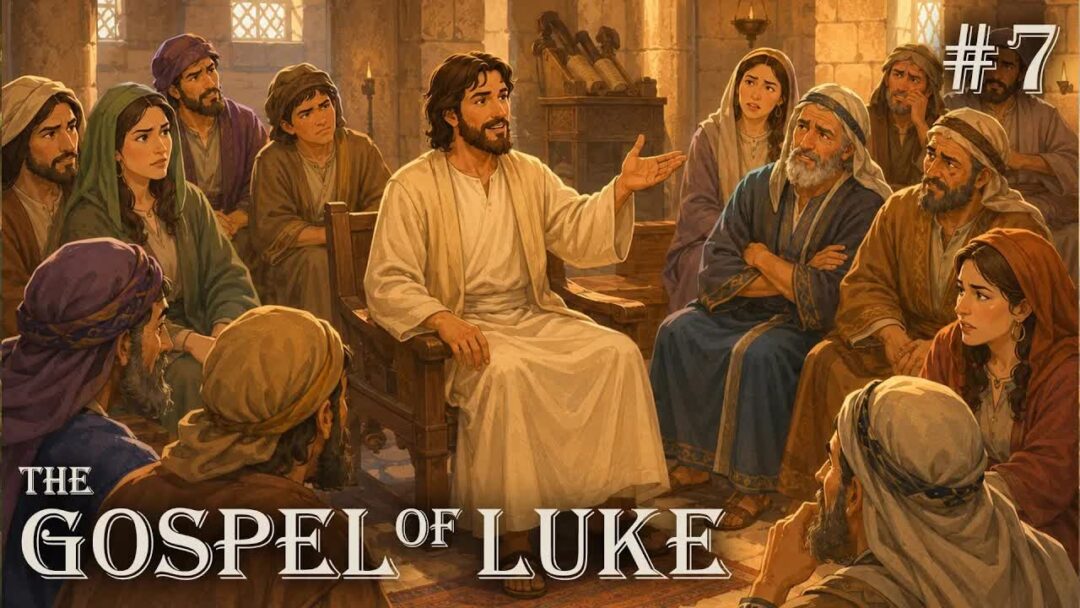
From our Sunday service on July 5, 2026, Luke 4:16-30. This is part 7 of our Gospel of Luke series. Watch the full message: A Prophet in His Country – The Gospel of Luke #7 on YouTube.
We can be very familiar with Jesus and still refuse to trust Him. The people of Nazareth knew His family, had watched Him grow up, and had heard reports of His ministry. Yet when He stood before them as the Messiah, familiarity became a reason to reject Him rather than receive Him. They wanted Him to meet their expectations before they would believe His words. That is the issue I want us to see in this passage. God wants you to understand that He requires faith before He reveals His power. We must take Him at His word rather than make our demands the condition of trusting Him.
The Promise Standing Before Them
Jesus returns to Nazareth after His ministry has begun to draw attention elsewhere. But these people are not hearing about a stranger. This is the town where He was brought up. He enters the synagogue on the Sabbath, as His custom is, and stands to read.
And there was delivered unto him the book of the prophet Esaias. And when he had opened the book, he found the place where it was written, The Spirit of the Lord is upon me, because he hath anointed me to preach the gospel to the poor; he hath sent me to heal the brokenhearted, to preach deliverance to the captives, and recovering of sight to the blind, to set at liberty them that are bruised, To preach the acceptable year of the Lord.
Luke 4:17–19
The passage announces the work of the anointed one, the Messiah. It speaks of good news, healing, deliverance, and liberty. Those listening have expectations about what that deliverance will mean. Living under Rome, they look for relief from their oppression and a restoration of their nation’s strength. The acceptable year of the Lord brings to mind jubilee, when debts are released and people receive a fresh start. They want the burdens they feel in their circumstances removed, and they expect the Messiah to bring that material victory.
But Jesus has come to address a deeper bondage. The release He brings is freedom from slavery to sin and the removal of sin’s debt through His forgiveness. This is the work of the Messiah, not an announcement that Rome’s rule has just ended. The people are about to hear a claim that challenges both their expectations for their country and their assumptions about the man reading to them. After giving the book back, Jesus sits down, and everybody watches Him. He does not speak as though the promise concerns somebody still far away:
And he closed the book, and he gave it again to the minister, and sat down. And the eyes of all them that were in the synagogue were fastened on him. And he began to say unto them, This day is this scripture fulfilled in your ears. And all bare him witness, and wondered at the gracious words which proceeded out of his mouth. And they said, Is not this Joseph’s son?
Luke 4:20–22
The words of the Messiah have just been spoken by the Messiah Himself. The Spirit of the Lord truly is upon Him. At His baptism the Spirit descended upon Him, and He has already been doing the work to which the passage points. He tells them the Scripture is fulfilled in their hearing because the promised one is there. Yet their response turns toward the ordinary relationships they know. Is this not Joseph’s son? They know His mother, His brothers, His sisters, and His work. How can someone so familiar claim this place in God’s promise?
When Familiarity Becomes a Demand
That question exposes the obstacle in their hearts. They are prepared to appreciate gracious words, but not to receive the authority of the one speaking them. Jesus’ claim does not fit the place they have assigned Him. Nor does His explanation fit what they have wanted the promise to mean. They are still subject to Rome and still carry the difficulties of their lives. Rather than let His words change their understanding, they measure His words against those expectations and treat their disappointment as a reason not to believe Him.
Jesus knows the response taking shape before they finish expressing it. They have heard of works done in Capernaum, and they want the same performance in His hometown. Surely the people who know Him best should be able to require evidence on their own terms. But knowing Him personally does not give them authority over Him. Their relationship has not become faith merely because they can identify His family or remember His childhood. He brings the demand into the open:
And he said unto them, Ye will surely say unto me this proverb, Physician, heal thyself: whatsoever we have heard done in Capernaum, do also here in thy country. And he said, Verily I say unto you, No prophet is accepted in his own country.
Luke 4:23–24
They want the order reversed: first He must do what they require, and then they will decide whether to trust Him. Jesus has worked among people in Capernaum who have received Him in faith, while His own neighbors insist that He prove Himself before they will believe. We cannot speak to God as though He must satisfy our conditions to earn our trust. Faith receives what He has said and acts upon it. These people have heard the reports and now hear the Messiah declare His mission, but they are unwilling to surrender their right to dictate the answer.
Faith Rather Than Heritage
Jesus answers from Scriptures they already know. Their history itself shows that God’s mercy is not controlled by national belonging. In the days of Elijah, a famine afflicted the land, and there were many widows in Israel. Yet God sent the prophet to a widow in Sidon. Later, when there were many people with leprosy in Israel, the man cleansed through Elisha was a Syrian. Jesus places both accounts before His hearers:
But I tell you of a truth, many widows were in Israel in the days of Elias, when the heaven was shut up three years and six months, when great famine was throughout all the land; But unto none of them was Elias sent, save unto Sarepta, a city of Sidon, unto a woman that was a widow. And many lepers were in Israel in the time of Eliseus the prophet; and none of them was cleansed, saving Naaman the Syrian.
Luke 4:25–27
The widow lived in a place they would not have expected God to choose. Sidon was not a center of faithfulness to Him; it was associated with the very pagan influence that had harmed Israel. Yet God saw a woman in need who would respond in faith. Her nationality did not prevent His care, and the need of people within Israel did not make His blessing something they could possess by birth. The lesson is not that God had failed to notice suffering in Israel. It is that being part of the nation was not a substitute for trusting Him.
Naaman makes the same point from another direction. He is a commander from a nation often hostile to Israel. But he comes seeking healing, humbling himself before the God who can provide it. He is not there to conquer; he needs what he cannot obtain for himself. Jesus directs attention to the faith that receives God’s help rather than the heritage His neighbors assume should secure it. God cares about the heart. The people of God are people driven by faith, not simply people who have been given a title at birth.
That strikes at what the Nazareth crowd has taken for granted. Jesus has told them that the promise centers on Him, that their expectations are wrong, and that God has worked among Gentiles who trusted Him. They cannot treat closeness to His family or membership in Israel as a claim upon His power. The widow and Naaman receive what these neighbors refuse to seek in the same way. The question is whether they will let Scripture correct their understanding or reject the speaker because His truth unsettles them.
Will We Receive What He Has Said?
Their answer is anger. The same gathering that listened to His gracious words becomes a crowd determined to kill Him. They force Him out of the city toward the brow of the hill, intending to throw Him down. These are people who have known Him through His life, and now their refusal has become personal hostility. Jesus knows what it is to be rejected by people close to Him. His own hometown turns against Him because He will not say what they want to hear:
And all they in the synagogue, when they heard these things, were filled with wrath, And rose up, and thrust him out of the city, and led him unto the brow of the hill whereon their city was built, that they might cast him down headlong. But he passing through the midst of them went his way,
Luke 4:28–30
They intend to end His life, but He passes through their midst and goes His way. It is not yet His time to die for our sins. There is more work to do and more people of faith to meet. The crowd’s fury does not change who He is or make their interpretation right. They have the Messiah before them and still lose the blessing of receiving Him, because the truth does not match what they have demanded. Their rejection is a warning to us about the danger of allowing expectations to become more important than His word.
So our question is not whether Jesus has supplied enough for us to trust Him. It is whether we will believe what He has already said and done. We can resist because His truth challenges our desires, or we can come like the widow and Naaman, acknowledging our need and trusting Him. Faith takes God at His word and acts on it rather than insisting that He perform first. God wants you to understand that He requires faith before He reveals His power. Will you walk first in faith today?
Recent Comments