
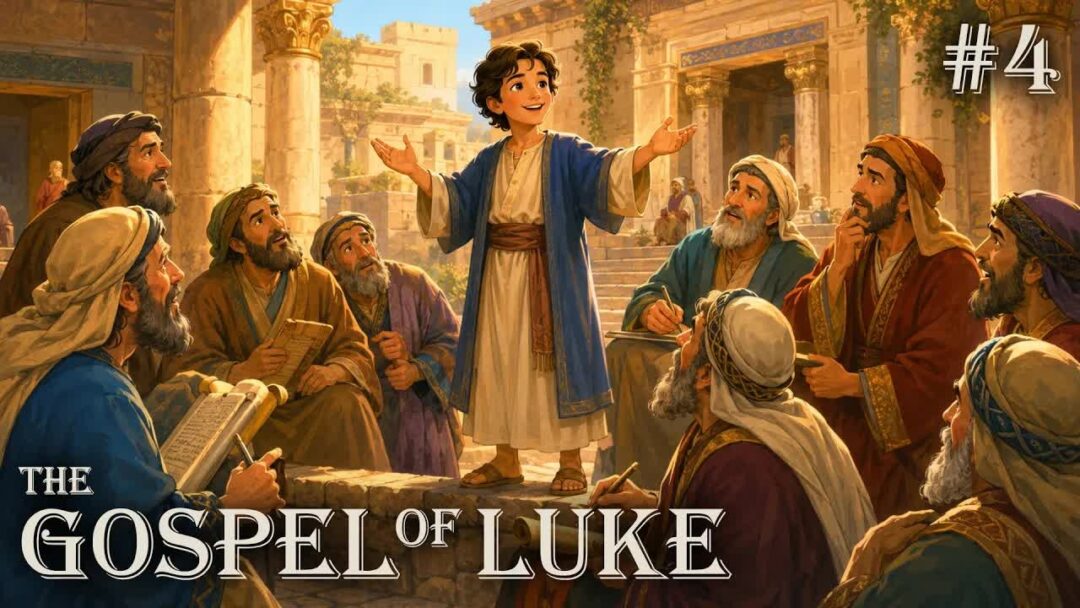
From our Sunday service on June 14, 2026, Luke 2:21-52 and Matthew 2. This is part 4 of our Gospel of Luke series. Watch the full message: A Kid Called Christ – The Gospel of Luke #4 on YouTube.
When we look at the early life of Jesus, we meet people whose faithfulness could easily be overlooked. Mary and Joseph have little money. Simeon waits for a promise, and Anna serves through years of widowhood. The wise men travel to worship a child, and Joseph repeatedly obeys instructions that move his family away from what is familiar. God wants you to know He blesses those who serve Him. That blessing is greater than comfort, and its greatest gift in this passage is seeing Jesus Himself.
Faithfulness in Humble Circumstances
Mary and Joseph bring Jesus to Jerusalem for the presentation required by God’s law. Their offering gives us a glimpse of their circumstances. Instead of a lamb, they bring the two birds permitted for people who cannot afford one. The Messiah enters a family with very little, yet that poverty does not prevent His parents from obeying. They serve God with what they have. In that humble setting they meet someone whose own faithfulness is about to receive an extraordinary blessing.
And, behold, there was a man in Jerusalem, whose name was Simeon; and the same man was just and devout, waiting for the consolation of Israel: and the Holy Ghost was upon him. And it was revealed unto him by the Holy Ghost, that he should not see death, before he had seen the Lord’s Christ. And he came by the Spirit into the temple: and when the parents brought in the child Jesus, to do for him after the custom of the law, Then took he him up in his arms, and blessed God, and said, Lord, now lettest thou thy servant depart in peace, according to thy word: For mine eyes have seen thy salvation, Which thou hast prepared before the face of all people; A light to lighten the Gentiles, and the glory of thy people Israel.
Luke 2:25–32
Simeon has made following God a priority. He is just and devout, waiting for the consolation of Israel, and the Spirit has promised that he will see the Messiah before he dies. When he comes into the temple, he does not need the child to appear as a powerful ruler before recognizing God’s gift. He takes Jesus into his arms and blesses God. The promise has become something he can see and hold.
That salvation reaches beyond what many would expect. Simeon speaks of light for the Gentiles as well as glory for Israel. Mary and Joseph marvel as they hear what is said about their child. God is allowing this faithful man to bless them while blessing him. He sees what God is doing through the Messiah, and his words help the child’s parents understand more of the work entrusted to their son.
Blessing Does Not Remove Sorrow
The blessing includes a warning. Simeon tells Mary that her child will expose the thoughts of hearts and become the occasion for both falling and rising in Israel. People will oppose Him. Then he speaks directly to her own future pain. Being the mother of the Messiah will not mean watching an uninterrupted story of public approval and ease. The salvation he has just celebrated will involve suffering, and Mary will feel that suffering deeply:
And Simeon blessed them, and said unto Mary his mother, Behold, this child is set for the fall and rising again of many in Israel; and for a sign which shall be spoken against; (Yea, a sword shall pierce through thy own soul also,) that the thoughts of many hearts may be revealed.
Luke 2:34–35
Simeon points toward the heartbreak of the cross. We must keep that beside the joy of his first words. Otherwise, we may mistake God’s blessing for a promise that His servants will never face grief. Mary is faithful, yet a sword will pierce her soul. Her place in God’s plan is a gift, but it does not spare her from seeing what happens to her son.
Anna’s life brings the same truth into view. She has known the loss of her husband and many years as a widow, but she has given herself to serving God with fasting and prayer. Her sorrow has not become a reason to withdraw from His service. When Jesus is brought into the temple, she too receives the joy of recognizing the Messiah. Her response immediately carries that blessing outward:
And there was one Anna, a prophetess, the daughter of Phanuel, of the tribe of Aser: she was of a great age, and had lived with an husband seven years from her virginity; And she was a widow of about fourscore and four years, which departed not from the temple, but served God with fastings and prayers night and day. And she coming in that instant gave thanks likewise unto the Lord, and spake of him to all them that looked for redemption in Jerusalem.
Luke 2:36–38
She gives thanks and speaks about Him to those waiting for redemption. Her ministry has included prayer and helping others understand what God’s Word means for their lives. Warning people of the outcome God has already revealed in Scripture also serves them. Anna has given her life to this kind of service rather than making her own comfort its center. God blesses her faithfulness, and she uses the blessing to direct other people toward the Savior.
Guided in Worship and Obedience
Matthew then shows us wise men arriving from the east in search of the King of the Jews. They have seen His star and come to worship Him. Herod hears of their search and is troubled, because another king threatens the power he wants to preserve. He asks the religious leaders where the Christ is to be born, and they point to Bethlehem from the Scriptures. Then he privately sends the wise men there, claiming that he too wants to worship. His words conceal a very different intention.
The wise men continue until they find the child with Mary. They fall down and worship, bringing treasures to the one they have come so far to see. Their gifts recognize the Messiah’s kingship, divinity, and coming suffering: gold, frankincense, and myrrh. These gifts also change the circumstances of the poor family. But the center of the scene is the child before whom they bow:
When they saw the star, they rejoiced with exceeding great joy. And when they were come into the house, they saw the young child with Mary his mother, and fell down, and worshipped him: and when they had opened their treasures, they presented unto him gifts; gold, and frankincense, and myrrh. And being warned of God in a dream that they should not return to Herod, they departed into their own country another way. And when they were departed, behold, the angel of the Lord appeareth to Joseph in a dream, saying, Arise, and take the young child and his mother, and flee into Egypt, and be thou there until I bring thee word: for Herod will seek the young child to destroy him.
Matthew 2:10–13
God guides the wise men away from Herod and tells Joseph to take the child and His mother into Egypt. Joseph obeys, leaving by night. Faithful service now means uprooting the family because a king intends to kill the child. The blessing is not that danger never arises; it is that God sees the danger and directs His servant through it. Herod’s murderous order brings mourning to Bethlehem, but his determination to preserve his throne cannot overthrow what God has promised.
After Herod dies, God tells Joseph to return to Israel. Fearing Archelaus in Judea and receiving another warning, Joseph takes his family to Nazareth. Matthew connects their home there with what the prophets had spoken. God carries forward His plan as Joseph follows His guidance.
Growing in the Father's Business
Luke next shows Jesus growing as a child, becoming strong and filled with wisdom. He does not enter the world as a fully grown man with no human development to undergo. His body grows, and He increases in understanding. At twelve He goes with His parents to Jerusalem for Passover. When they begin the journey home, they assume He is among their relatives and acquaintances. After a day’s travel, they discover that He is missing and return to search.
And it came to pass, that after three days they found him in the temple, sitting in the midst of the doctors, both hearing them, and asking them questions. And all that heard him were astonished at his understanding and answers. And when they saw him, they were amazed: and his mother said unto him, Son, why hast thou thus dealt with us? behold, thy father and I have sought thee sorrowing. And he said unto them, How is it that ye sought me? wist ye not that I must be about my Father’s business? And they understood not the saying which he spake unto them.
Luke 2:46–50
They find Him among the teachers, listening, asking questions, and giving answers that astonish those around Him. Mary and Joseph are amazed too, but their anxiety makes the discovery painful as well as remarkable. Jesus’ answer turns them toward the purpose of His life. He must be occupied with His Father’s business. They do not yet understand the full scope of that purpose.
And he went down with them, and came to Nazareth, and was subject unto them: but his mother kept all these sayings in her heart. And Jesus increased in wisdom and stature, and in favour with God and man.
Luke 2:51–52
Jesus returns with them and is subject to them, while Mary keeps these sayings in her heart. She does not make the experience an occasion for boasting about her son. She receives what God is showing her and holds it for the future. Jesus continues growing in wisdom, stature, and favor with God and man.
The lives we have followed do not promise us ease. Mary will grieve, Joseph must flee, and Anna has known long years of loss. Yet God blesses His servants with His presence, guidance, protection, and the joy of being used by Him. Above all, they see Jesus. Simeon can depart in peace, Anna speaks of redemption, the wise men worship, and Mary and Joseph watch Him grow. God blesses those who serve Him. Will you be found faithful where He has placed you? Will you serve Him today?
Recent Comments