
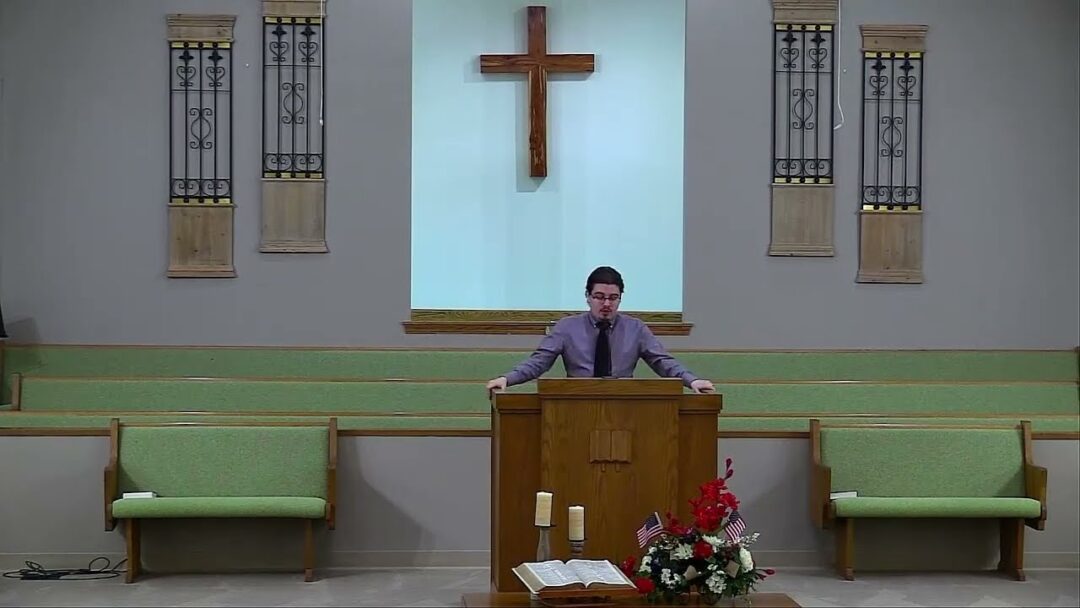
From our Sunday service on August 3, 2025, Psalm 42, Psalm 73, 2 Corinthians 12, Philippians 4, and Hebrews 4. Watch the full message: Finding Strength in Weakness on YouTube.
Even the most faithful believers will experience seasons of sorrow, difficulty, and inner turmoil. Life on this earth is not always easy, and Scripture does not pretend otherwise. Today I want us to walk through both the Old and New Testament and see how God addresses depression, emotional difficulty, and weakness. God wants you to rely on Him for His strength.
The Depression Psalm
Psalm 42 is the opening of book two of the Psalms. If you do not know the book, there is no visible division on the page, but originally there were five sets of scrolls, and book two begins here. Since Bible college I have called this the depression psalm, and it earns the name. It is written for the sons of Korah, temple ministers, and it begins, As the hart panteth after the water brooks, so panteth my soul after thee, O God. This is where we get the song As the deer panteth for the water. The psalmist is longing for the good old days before the exile. He remembers how he used to go with the multitude to the house of God, and now his tears have been his meat day and night, while people say, Where is thy God?
The psalm uses two phrases to define his state: cast down and disquieted. Why art thou cast down, O my soul? is a word you could literally translate as depressed, sunk down inside himself. Haven’t we all been there? We do not know which of the sons of Korah wrote it, but we have been in this position, praying, Please help me, and feeling as if no help is coming. He says, I shall yet praise Him for the help of His countenance. My body, my spirit, my whole being does not understand it. But I know in my God there is help.
He goes on, O my God, my soul is cast down within me: therefore will I remember thee from the land of Jordan, and of the Hermonites, from the hill Mizar. Deep calleth unto deep at the noise of thy waterspouts: all thy waves and thy billows are gone over me. He understands that God is sovereign, and that the water is there because God allowed it to be. These are Your waves and Your billows, and I am under them. Then he says, and in the night His song shall be with me. There is a verse in the Bible that says God sings over His people, and that is what this is referencing. I cannot hear His song because it is muffled by the flood I am under. But I know somewhere above all of this, my Lord is singing over me.
The prayer that follows is not the spiritualized, uplifting prayer we sometimes imagine. Why hast thou forgotten me? Why go I mourning because of the oppression of the enemy? He is talking about Babylon. He may have had friends and family taken captive. His home may have been destroyed. As with a sword in my bones, mine enemies reproach me. It is not something you can ignore. And then the psalm ends by repeating the refrain: Why art thou cast down, O my soul? Aren’t psalms usually positive at the end? We expect a neat bow. This one does not wrap up that way.
The truth of this psalm, and the truth for us as believers, is that not every difficulty wraps up so nicely that we can understand all we went through. Like this psalmist, we may never get the answer in our lifetime. Maybe when he got to heaven he asked Jesus why, and learned that this song would encourage believers for thousands of years. He would not have known that then. Believer, you are not always going to have every difficulty wrapped up in a box with a nice bow and put on your shelf as a trophy. Sometimes a difficulty is just hard, and what we do is the same thing he does: we keep talking to God anyway. Asaph says it this way in Psalm 73: My flesh and my heart faileth: but God is the strength of my heart, and my portion for ever.
Sufficient Grace
Our main New Testament passage is 2 Corinthians 12. Paul talks about a man in Christ who was caught up to the third heaven fourteen years ago, and he is talking about himself, trying to be humble while he defends his ministry. Then he comes to his thorn in the flesh.
And lest I should be exalted above measure through the abundance of the revelations, there was given to me a thorn in the flesh, the messenger of Satan to buffet me, lest I should be exalted above measure. For this thing I besought the Lord thrice, that it might depart from me. And he said unto me, My grace is sufficient for thee: for my strength is made perfect in weakness. Most gladly therefore will I rather glory in my infirmities, that the power of Christ may rest upon me.
2 Corinthians 12:7–9
He would love, at a fleshly level, to brag about all the good things God has done for him. He is a proud person at heart. This man was a Pharisee. So there was given to him a thorn in the flesh, the messenger of Satan to buffet him, lest he should be exalted above measure. Remember the psalmist’s sword in my bones. These are the same kind of idea: a pain you cannot ignore, like a splinter you keep trying to get out. He besought the Lord thrice that it might depart from him. No. The Lord said, My grace is sufficient for thee: for my strength is made perfect in weakness.
In other words, the reason for the difficulty in Paul’s life is that God cannot do everything He wants through Paul without it. Paul realizes this and says he will rather glory in his infirmities, that the power of Christ may rest upon him. He takes pleasure in infirmities, that is weakness; in reproaches, that is mocking; in necessities, that is poverty; in persecutions, that is conflict; in distresses for Christ’s sake: for when I am weak, then am I strong.
About five to seven years later, in Philippians 4, he says he has learned, in whatsoever state he is, therewith to be content. He knows how to be abased and how to abound. Did the thorn ever get removed? Reading Philippians, I do not think so. I think he is saying the same thing years later that he learned in 2 Corinthians: God’s grace is enough, and His strength shows up in the weak place. Contentment was not the absence of the thorn. It was Christ with him in it, whether he was abased or whether he abounded.
Come Boldly
Hebrews 4 wraps this up with an invitation. A lot of times when we preach this, we say the word of God is quick and powerful and sharper than any two-edged sword, and this Bible can cut through anything. But what is this verse talking about? Is it the Scriptures, or the Word, the person? The Word became flesh, and dwelt among us. I would say here the Word of God that is quick and powerful is Jesus. All things are naked and opened unto the eyes of Him with whom we have to do. Jesus can divide soul and spirit, joints and marrow. Jesus can discern the thoughts and intents of the heart. And we have a great high priest who is touched with the feeling of our infirmities, our weaknesses. He lived on this earth and faced death, poverty, and all kinds of difficulty before He died on a cross. He knows the struggle and the sadness that come with it. He was in all points tempted like as we are, yet without sin. So when we are weak, when we do not know what to do, in the situation the psalmist was in and Paul was in, we come boldly unto the throne of grace, that we may obtain mercy, and find grace to help in time of need.
The truth is that God is not going to remove every difficulty from our lives every time. Sometimes He will leave us in an uncomfortable place so that we rely on Him like we are supposed to, and can do the most for Him that we should. How do we make this practical? First, identify your thorn. It might be physical: a chronic illness, constant pain, fatigue. It could be mental: anxiety, depression, panic. It could be a relationship, a persistent temptation, financial pressure, or a sense that you are always inadequate. Once you have identified it, look at God’s promises. Weakness is the stage for God’s glory. We are not alone in this struggle. Great heroes of the faith had thorns they carried for years, and God still used them. Bring your limitations to God in prayer. Come boldly to the throne of grace to obtain mercy and find grace to help in time of need. Our weaknesses and hardships do not define us, but God does use them to do more with us than He could ever do without them. When we are weak, then we can be strong in Him. God wants you to rely on Him for His strength. Will you rely on God for your strength?
Recent Comments