
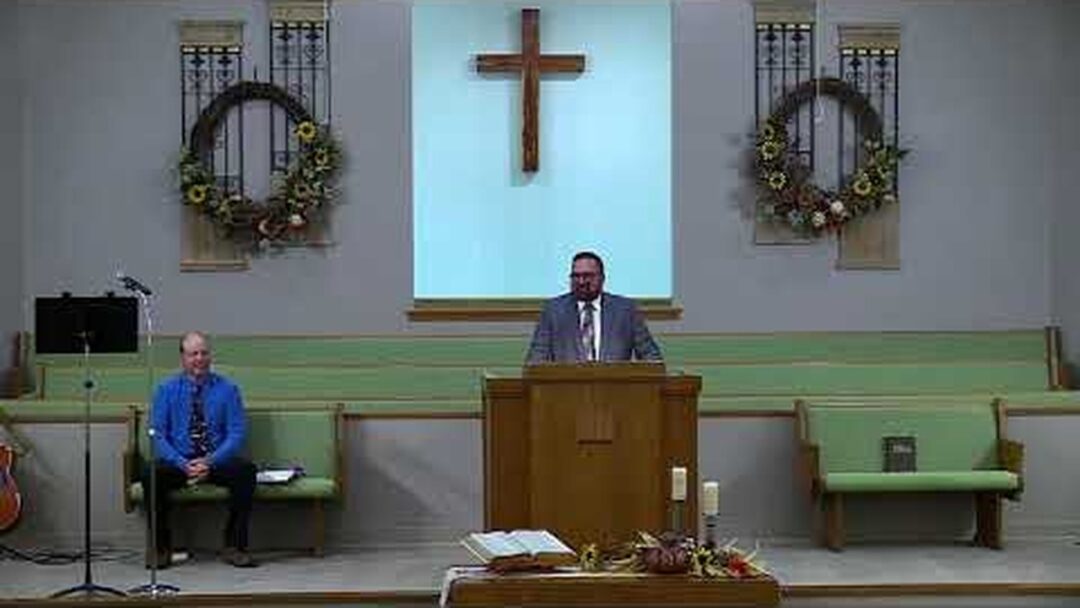
From our Sunday service on September 24, 2023, a message on the Kingdom Parables of Matthew 13, 20, and 25. Watch the full message: Preaching Parables on YouTube.
I want you to realize something: this message is important. But I was waiting for God to give me a message, as He always puts it on my heart so clearly, and I was waiting and waiting. So I started studying and ended up with a list of ten pages of verses and notes. When I went to cut it down, I went through each parable thinking, “They know this one well enough.” And God said, “No, someone might know that one, but not everybody has heard it, and there is somebody there who needs to hear it.” Satan does not want you to hear this message. We are looking at the Kingdom Parables. When Jesus came, the Jews were under the power of Rome. Their picture of the kingdom was one of financial prosperity, individual liberty, and comfort. They were looking for someone like King David who could lead an army against Rome, or someone like Solomon who could lead them to economic prosperity, or like a judge who could give them peace from times of war.
And when he was demanded of the Pharisees, when the kingdom of God should come, he answered them and said, The kingdom of God cometh not with observation: Neither shall they say, Lo here! or, lo there! for, behold, the kingdom of God is within you.
Luke 17:20–21
What Is a Parable?
But when Jesus came, this was not the kingdom He described. The kingdom of God is not a place you can point to on a map. It does not come with observation. It is among you and within you. In college they defined a parable as an earthly story with a heavenly meaning. That is a good summary, but there is a little more to it. The word comes from the Greek paraballo, which literally means to throw beside, or to place beside, the idea of comparison: putting something next to another thing to contrast the two. This is how Jesus taught His parables. They didn’t have a sound system, so He would sit on the water or on a mountainside where the acoustics would naturally carry His voice to everybody on the shore. Notice He is preaching sitting down, and the congregation is standing. I found a funny quote from Spurgeon’s commentary on this: “The teacher sat and the people stood. We should have less sleeping in congregations if this arrangement still prevailed.” I agree. If everybody were standing up, I think we’d have a lot fewer people falling asleep.
Why Parables?
There are a few reasons Jesus used parables. One obvious one is that parables keep things engaging. Everybody loves a good story. Jesus never told lofty parables about luxury, food no one knew about, or a faraway land no one was familiar with. He lived in a farming community, so He used farming, and He used fish. Parables are also for those who have understanding. They assume the hearer already knows, or is searching for, the truth. A parable reminds the reader of the truth he already knows and expands on it. For the closed-minded, a parable is meaningless. If your heart is not ready to listen, you won’t invest enough to understand what it means. Jesus wasn’t the first to use parables and illustrations. A good example is King David and the prophet Nathan. When David sinned with Bathsheba, the prophet came before him and, instead of directly accusing him of the immorality, told a parable of a rich man who stole a poor man’s lamb. They also needed to know the pictures the prophets used beforehand.
Sow to yourselves in righteousness, reap in mercy; break up your fallow ground: for it is time to seek the LORD, till he come and rain righteousness upon you.
Hosea 10:12
The Four Soils
The field image had already been used by the Old Testament prophets. When Jerusalem was called to repent, they were told to break up the hard ground and prepare the soil, because it was time to seek the Lord until He comes. Jesus is foreshadowing that He is here and that they need to be prepared. There is something interesting about this illustration. There is no work by the farmer of plowing or preparing the ground. It was the job of the ground to prepare itself. It was the quality of the soil that affected the growth of the ministry, not the quality of the seed. The farmer sowed the same seed on all the soils. The wayside is the roadside where people walk. When you walk on soil it compacts down and gets hard, and the seed just sits on top. The wicked one comes and takes it. The stony place has some soil, but underneath it, in Israel, would be a layer of limestone bedrock. At first they hear the good news and get excited, but the roots hit the rock and can’t reach fertile soil, and then they wither.
What the Kingdom Is
The kingdom of God is partially salvation and partially Christian duty, a little of both mixed together. Then there is the wheat and the tares. The servant asks, “Should we rip it out and start over?” And God says no: if we rip out the roots of the weeds, it will rip out the roots of the Christians too. God can’t just end the world because there is evil in it. Let the good continue to grow, and we must have faith that there will be a harvest. The kingdom of heaven is also like a grain of mustard seed, one of the smallest seeds they would plant in Israel, so small you would walk right by it on the floor. But when it is grown, it is the greatest among herbs. Some people say birds here are a picture of evil lurking in our churches, but birds are also used as a picture of good. Here the birds coming to nest is a picture of the kingdom growing large enough to give shelter. The kingdom will also spread like leaven, and though leaven is often a picture of corruption, here Jesus is saying, “I have put the leaven in the bread.”
The Treasure, the Pearl, and the Net
Then there is the treasure hid in a field, and a man who finds it and sells all that he has to buy that field. The first parable was about someone who wasn’t looking for the treasure. Now we have somebody who has been searching. Notice “goodly pearls,” plural. This man was going from city to city looking for the best pearls, probably to make a necklace, trying to collect all the things in this world to find satisfaction and create happiness. In his search, he finds one pearl of great price, and he sells everything for it. The kingdom of heaven is also like a net that was cast into the sea and gathered of every kind. Think of a dragnet pulled behind a ship, pulling in fish. It is not specifically targeting people. Some believe God chose specific people to be saved and condemned others to hell, and this parable is a contradiction of that. This is a net spread wide, catching all the fish. The gospel is being given to every fish. They have all heard the kingdom, and at the end of the world the angels shall sever the wicked from among the just.
The Laborers and the Ten Virgins
The laborers in the vineyard is an image of the work of the ministry: encouraging another Christian, being a preacher or teacher, being a prayer warrior, anything you do for the kingdom. Someone like me is one of the early laborers. I was saved at the age of five and have been a Christian almost my entire life. There are other people on their deathbed where someone like me or Pastor walks in and gives them the gospel. And in that last moment they come into the vineyard, and they receive the same penny. For pastors, this one is a real temptation: “I work so hard for this ministry and I’m not appreciated.” And Jesus says, “Did you not agree with me for a penny? Is it not enough that I’m your Savior?” The parable of the ten virgins is about delaying the choice of salvation. It pictures a Jewish wedding, with a preparation time in which they would build an extension onto the father’s house. We see it also in “In my Father’s house are many mansions.” Because this was a construction project, you never knew when the bridegroom would come. The wise took the oil, and oil is an illustration of the Holy Spirit. How do you get the Holy Spirit? Through salvation.
Jesus saith unto them, Have ye understood all these things? They say unto him, Yea, Lord. Then said he unto them, Therefore every scribe which is instructed unto the kingdom of heaven is like unto a man that is an householder, which bringeth forth out of his treasure things new and old.
Matthew 13:51–52
Treasures New and Old
Fun fact: the English word talent comes from this parable. It is the Greek talanton, and we started using the word because of this Bible passage. While the talents picture our ability, and they do represent our ability, the talents themselves are not our abilities. But this is also about the kingdom, the kingdom entrusted to the servants. The talent belonged to the master. The lazy servant who buried it lost everything, but in truth he never had anything to begin with. When he is thrown into outer darkness, it is not because he was saved and fell short. It is because he never had the kingdom. The two faithful servants don’t accomplish the same amount, but they get the same reward, and they got something extra, the joy of the Lord. David Guzik’s commentary says, “Many modern servants of God think that when God gives them something, it no longer belongs to God; it belongs to them, and they can do with it as they please.” Anybody who is instructed in the kingdom of heaven is like a householder bringing forth treasures new and old. It is not too late for anyone, but for everyone time is running out. There are people on their deathbed who are going to get saved, so don’t count them out. The question is: are you going to be a part of it?
Recent Comments