
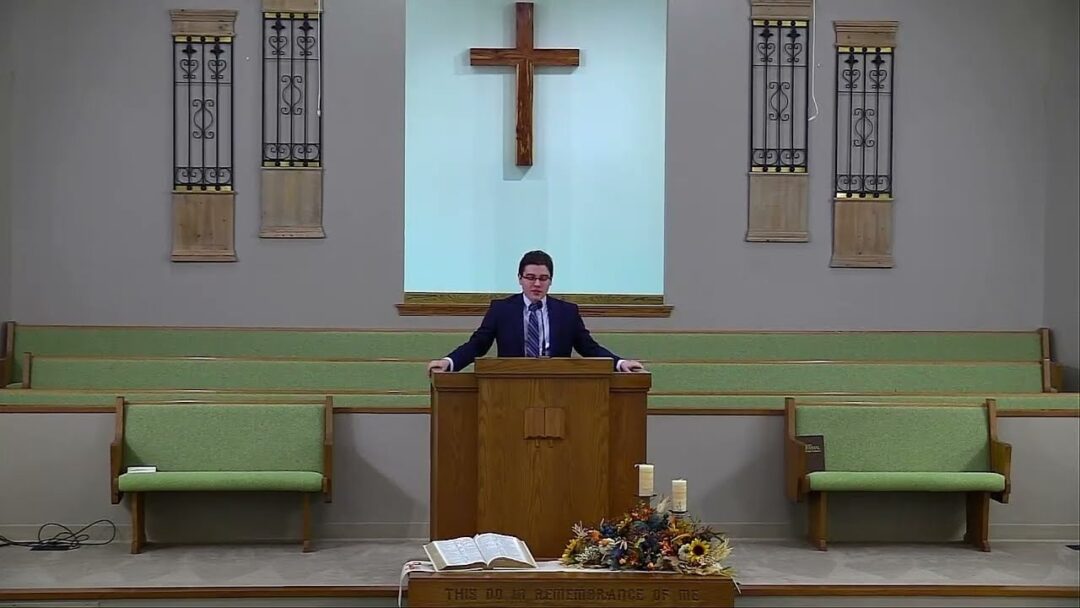
From our Sunday service on August 25, 2024, Matthew 6, Luke 6, 2 Corinthians 8 and 9, Deuteronomy 15, Mark 12, and Acts 20. Watch the full message: A Cheerful Giver on YouTube.
Have any of you heard of the short story The Giving Tree? It’s a kids’ book. This whole message started when I was watching a YouTube video about banned books in schools. One that stuck out to me was The Giving Tree. It’s about a tree who meets a boy. The boy plays in the tree, eats its apples, and swings from its branches, and both are happy. When the boy needs money, the tree gives him every apple to sell. When he wants a house, the tree gives him all its branches. When he wants a boat, the tree tells him to cut down the trunk and leave a stump. Each time the book says the tree was happy, but now it says the tree was happy “but not really.” At last the elderly boy sits on the stump, too creaky to swing and without teeth to chew, and the book says the tree was happy. This book was banned because it’s teaching our kids that we just have to keep giving until there’s nothing left but a stump. Other people say it’s just an example of an abusive relationship. So is the moral that you shouldn’t be like the giving tree, or that you should? If there’s such an argument over good and bad giving, maybe we should look at the Bible and see what God says. God wants you to be a giver.
Giving Keeps Our Focus in Life
Lay not up for yourselves treasures upon earth, where moth and rust doth corrupt, and where thieves break through and steal: But lay up for yourselves treasures in heaven, where neither moth nor rust doth corrupt, and where thieves do not break through nor steal: For where your treasure is, there will your heart be also.
Matthew 6:19–21
This shouldn’t be a foreign verse to us. The main lesson is that there’s a real possibility that our relationship with money can steal our heart. “Where your treasure is, there will your heart be also.” We think, “If I just had a little more money, this problem would go away.” Earthly money can bring us convenience, but it will never bring us happiness. One purpose of giving is that it ensures we don’t allow wealth to become an idol in our lives. An idol is anything you put above God. We’re not going to talk about tithing here. This message is focused on giving in general, whether in the church, for the church, or to those in need. We should make sure we don’t become too tightly attached to our money.
Giving Makes Us More Like God
If the ultimate goal of our Christian walk is to conform ourselves to Christ’s image, then part of that has to be a heart of giving. In Luke 6, Jesus shows us types of giving that are not true giving. You say, “I have a giving heart. I give to my kids all the time.” Jesus says that’s expected. The unsaved do that. That’s just human nature. A friend borrows money in a tough time, and you can’t say, “I am such a giving person.” That’s your friend. And if you give hoping to be paid back in full or with interest, that doesn’t count either. Jesus is saying, “A lot of you think you deserve a pat on the back. This is what wicked people do too. I’ve called you to more than this. I want you to be gracious, like a God who sent His Son to die on a tree for our sins.”
True giving looks like this: “Love ye your enemies, and do good, and lend, hoping for nothing again.” God came to us when we were His enemies, not when we were neutral. While we were living in sin, Christ died for the ungodly. Maybe they’re the people you think are mooching off your tax money, and you’re mad that they get to live rent-free off your taxes. God says you’ve got to give to them if you want to be like Him. You’ve got to get over that and be gracious and merciful. You don’t give when it’s easy. You give when it’s hard. Give for the sake of good. If you have an alcoholic in your life, don’t go to the bar and buy him a beer because he’s suffering. “I’m going to buy you a sandwich. I’m not going to buy your drugs, but I’m going to give you something for your benefit.” And don’t expect anything in return. Even “I’ll give you a hundred bucks if you come to church on Sunday” would not be godly giving, because there are strings attached.
Give, and it shall be given unto you; good measure, pressed down, and shaken together, and running over, shall men give into your bosom. For with the same measure that ye mete withal it shall be measured to you again.
Luke 6:38
Jesus is using an illustration from money exchangers, who would weigh things out perfectly. Don’t expect people to pay you back. God will pay you back when you’re gracious and merciful. The Romans would sometimes scrape the corners off their gold coins to save a little money. Jesus is saying you’re not going to get a shaved coin. You’re going to receive full payment for what you gave. If you remember the parable of the talents, when those people used what God gave them for good, they got more in return. Don’t get confused. This is not the prosperity gospel. It’s not that you go out and give and God will give you riches. God will pay you back so that you can do more. “To whom much is given, much is required.” He blesses those who give not for their benefit but for the benefit of others. Even a cup of water in Jesus’ name has its reward.
The Practice of Giving
God has had the same desire for giving from the Old Testament to the New. God is consistent. In 2 Corinthians 8, Paul says this is his personal advice, not a command: “I speak not by commandment.” If you do it, you will emulate Christ. Christ came from the riches of heaven, humbled Himself, became a man who didn’t even have a home, who slept on a rock, served His people, and died on a cross. If you want to be like Christ, you need to give like Christ. Give according to what you have, not according to what you don’t have. Paul doesn’t want you to give so much that you’re struggling to get by. You might say this sounds a lot like communism. It’s different, because this is out of willingness. It’s not forced. The example Paul gives is the manna in the wilderness. Some collected a ton and ate it all, and they were unsatisfied. Those who had greed never had enough. But those who said, “I have what I need, and I’ll leave the rest for somebody else,” were always satisfied.
Deuteronomy 15 says that if someone is poor and doesn’t have clothing, shelter, and food, you will not close your hand to him. “That which he wanteth” isn’t “Oh, I want a cheeseburger today.” It’s “I need it.” In Israel, at the seventh year, the year of release, debts were canceled. God says not to say, “It’s only a month until the year of release.” The modern equivalent would be, “Well, you’ve got a paycheck next week, so why do I need to help you now? You can just pay the late fee. You’re good.” God says not to use that as an excuse. Right now this person has a need. Mark 12 shows that giving should be relative to what we have. Jesus accuses the scribes, who “devour widows’ houses,” and then He watches a poor widow throw in two mites, all her living. Jesus is saying, “Beware of religious leaders who encourage you to give too much.” So I have a warning here, as a religious leader, not to encourage you to give too much. The scribes guilted this woman into giving every ounce of her income. She shouldn’t have felt compelled. God doesn’t want you to give so much that you can’t survive. The Bible says that those who don’t provide for their family are worse than an infidel. But you should have the faith that widow had, the faith that no matter what you give, God is going to take care of you. Even give your kid a couple of bucks and say, “If you see another kid in the dollar store, offer to buy him a toy.” Anybody can do something small.
The Posture of a Cheerful Giver
But this I say, He which soweth sparingly shall reap also sparingly; and he which soweth bountifully shall reap also bountifully. Every man according as he purposeth in his heart, so let him give; not grudgingly, or of necessity: for God loveth a cheerful giver.
2 Corinthians 9:6–7
“Every man according as he purposeth in his heart, so let him give.” Not everybody is called to give the same amount. “Not grudgingly, or of necessity: for God loveth a cheerful giver.” Sit down and think, “How much am I willing to give?” God says that if it makes you uncomfortable, and you dislike it and resent it, don’t do it, because if you do something out of resentment, there’s no reward in it. But Paul encourages us not to be too careful, because the amount you’re willing to happily give is the amount God will bless you back, not so your life will be easy, but so you can continue in good works. Giving should also be done in secret. We have people on YouTube who do these big, extravagant charity acts, and we all know it’s really a way for them to survive. They make money off of it. It’s not really an act of charity, because they’re getting something in return. We ought to give in secret. Paul worked as a tentmaker to support his own ministry. He is saying, “I’m not just doing this for the paycheck or for name recognition. I’m doing it for God.” He reminded them of the words of the Lord Jesus, how He said, “It is more blessed to give than to receive.” Giving should always be done happily, willingly, and subtly.
Recent Comments