
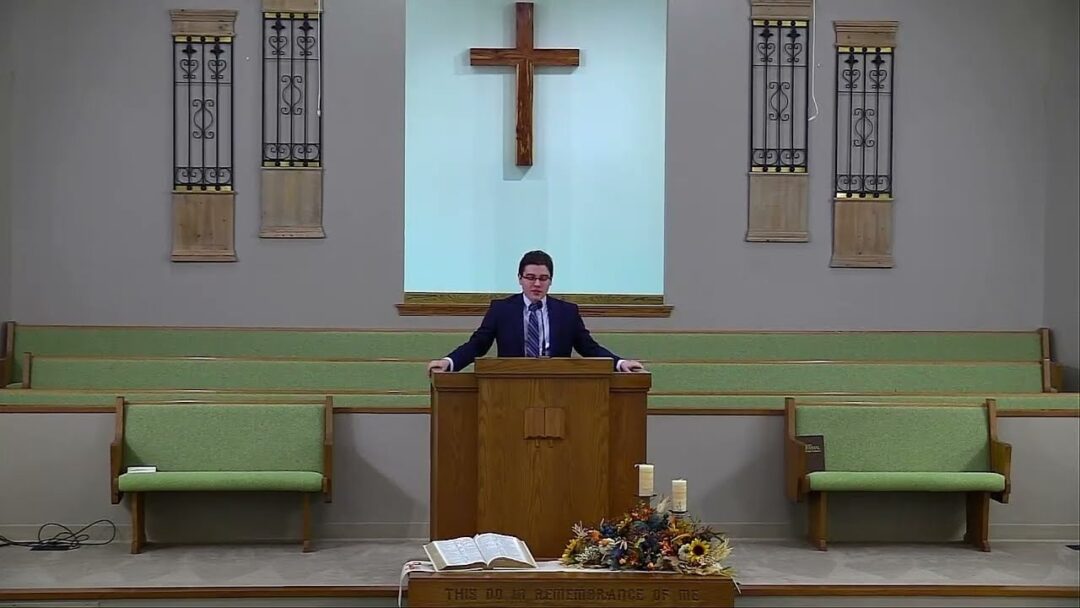
From our Sunday service on August 25, 2024, Matthew 6, Luke 6, 2 Corinthians 8 and 9, Deuteronomy 15, Mark 12, and Acts 20. Watch the full message: A Cheerful Giver on YouTube.
Have any of you heard of the short story The Giving Tree? It’s a kids’ book. This whole message started when I was watching a YouTube video about banned books in schools, and it was the ones you wouldn’t expect. I had nothing better to do, so I watched. One that really stuck out to me was The Giving Tree. It’s been banned in schools because it’s so controversial. The book is about giving, and I’m just going to give a short version of the story.
It’s about a tree who meets a boy. The boy plays in the tree, eats its apples, and swings from its branches, and the tree and the boy are both happy. The boy becomes a teenager, and now he isn’t thinking about childish things. He isn’t playing in the tree anymore, because he needs money to put his future forward. The tree asks, “Why don’t you have fun with me anymore? Why don’t you swing from my branches?” He says, “I need money. Can you give me money?” The tree says, “You always ate my apples. I can give you apples so you can sell them for money.” So the boy takes every apple from the tree and sells them.
Then the boy grows up more and becomes a man. He says, “Tree, what I want now is a family and a household to keep them.” The tree says, “You can take my branches and use them to build a house for your family,” so the boy cuts off all the branches and builds a house. The boy ages more and becomes an old man, and he decides he wants to move far away, but he needs a boat to do it. The tree says, “Cut down my trunk, leave me a stump, and carve my trunk into a boat so you can go far away.” So the boy cuts down the entire tree, leaving just a little stump on the ground. Each time, the book says the tree was happy, but now it says the tree was happy “but not really.”
Lastly, the boy slowly makes his way back as an elderly man. He can no longer swing from branches, and he can’t chew apples because he’s lost all his teeth. The tree says, “Sorry, I don’t have branches to play in or apples to chew on.” The old man says, “That’s not a problem. I’m too creaky to swing from branches, and I can’t chew the apples. What I really need is to sit down.” So he sits down on the stump, and the book says the tree was happy.
This book was banned in school because, well, it’s teaching our kids that no matter what, we just have to keep giving and giving until there’s nothing left but a stump. Other people say it’s just an example of an abusive relationship. So people ask, is the moral of the story that you shouldn’t be like the giving tree, or that you should be like the giving tree? I thought, if there’s such an argument about this children’s book over what are good types of giving and what are bad types of giving, maybe we should look at the Bible and see what God says about giving. That’s what we’re going to look at today: what God’s vision for giving looks like. Once we know God’s vision, we can deduce whether that book is a good book or not.
We’re going to look at three points: the purpose of giving, the practice of giving, and the posture of giving, to talk about the issue that God wants you to be a giver.
The Purpose of Giving
Giving Keeps Our Focus in Life
Our first point is the purpose of giving, or in other words, why God wants us to give. I think we all know that God wants us to be givers in some way, and I think we can all see that the tree giving its apples is a good example of sharing with others. So the question is, why do we give? What does the Bible say is the reason? Matthew 6:19–21 tells us that giving helps us keep a proper focus in life.
Lay not up for yourselves treasures upon earth, where moth and rust doth corrupt, and where thieves break through and steal: But lay up for yourselves treasures in heaven, where neither moth nor rust doth corrupt, and where thieves do not break through nor steal: For where your treasure is, there will your heart be also.
Matthew 6:19–21
This shouldn’t be a foreign verse to us. If any of us grew up in church, I’m sure we heard it in Sunday school. The main lesson is that there’s a real possibility that our relationship with money can steal our heart. “Where your treasure is, there will your heart be also.” Whatever you store up for yourself, that’s where your heart is. If your treasure is your kids or grandkids, your heart is going to be 100 percent devoted to doing everything you can to give them the life they want. If your treasure is money, you’re going to do everything in your power to make as much as possible. If that’s your treasure, and that’s where your heart is, it’s going to lead you to do things that are immoral. It will lead to greed, envy, lust, and jealousy. A rich person never stops when he’s reached a billion dollars. He keeps going. There’s no end to the search for treasures.
So God gives us a warning: don’t lay up treasures for yourself on the earth. If this is your goal, you’re going to be pulled astray and start wandering. Earthly money only goes so far. We think, “If I just had a little more money, this problem would go away. I’d have peace in my heart, and I wouldn’t worry about things so much.” That’s natural for us to think, but it’s not the truth of our situation. Earthly money can bring us convenience, but it will never bring us happiness. Look at the lives of the rich. They don’t seem to be much happier than we are, and some of them are even worse. How many of them have sacrificed their families for their wealth? Time and time again, they fail to find joy and happiness in life.
So one of the purposes of giving is that it ensures we don’t allow wealth to become an idol in our lives. An idol is anything you put above God, and if wealth becomes your goal in life and your treasure, then over time we will draw ourselves away from God. God does not want us to lose out on the happiness in this life that He is offering us. We should make sure we aren’t overly attached to our money and possessions, and the best way to do that is to let go of some of it.
Today we’re not going to talk about tithing. There isn’t enough time to cover that topic. This message is focused on giving in general, whether in the church, for the church, or to those in need. One way or another, we should make sure we don’t become too tightly attached to our money, and that we’re willing to give to others. Our application from Matthew 6 is that we need to make sure money does not become an idol in our lives. If it does, there are so many side effects that we do not want to face.
Giving Makes Us More Like God
Our next passage is Luke 6, beginning in verse 32. Here we see that giving to others makes us more like God. It helps us reflect that image of God a little better. Once again, this is Jesus speaking.
For if ye love them which love you, what thank have ye? for sinners also love those that love them. And if ye do good to them which do good to you, what thank have ye? for sinners also do even the same. And if ye lend to them of whom ye hope to receive, what thank have ye? for sinners also lend to sinners, to receive as much again. But love ye your enemies, and do good, and lend, hoping for nothing again; and your reward shall be great, and ye shall be the children of the Highest: for he is kind unto the unthankful and to the evil. Be ye therefore merciful, as your Father also is merciful.
Luke 6:32–36
If the ultimate goal of our Christian walk in this world is to conform ourselves to Christ’s image and grow to be more like Christ, then part of that has to be a heart of giving. We see a few types of giving here that are demonstrated as not true giving. If you’re doing these things and saying you’re a giver, you’re not.
Verse 32 talks about giving to those who love you. “If ye love them which love you, what thank have ye?” What’s special about that? This applies to your family, who really love and care for you. You say, “I have a giving heart. I give to my kids all the time.” Jesus says your kids love you, you love your kids, and you have a special relationship there. That’s expected. It’s not giving. It’s just normal. The unsaved do that. That’s nothing in the image of God. That’s just human nature.
Verse 33 talks about giving to those who have done good for you. “If ye do good to them which do good to you, what thank have ye?” Someone is your friend, and he says, “Can I borrow some money? I’m going through a tough time,” and you give it to him. You can’t say to yourself, “I am such a giving person. I’m so generous.” No, that’s your friend. He has done good things for you all the time. It’s expected, and even the unsaved would do that. So that shouldn’t be considered giving either.
Verse 34 gives us our last false giving, giving in the hope of receiving payment back in full or with interest. Someone comes to you and says, “I have a bill. Do you have a hundred bucks? I’ll pay you back on Tuesday.” You say, “I’m such a giving person. I gave him a hundred bucks so he could pay his bill.” God says that doesn’t count as giving either, because you’re just getting it paid back, and in some cases you get paid back with interest. Jesus is saying, “A lot of you are going around giving money in these situations and thinking you deserve a pat on the back. You don’t understand. This is what wicked people do too. I’ve called you to more than this. I want you to be gracious, not like humanity but like God is gracious, like a God who sent His Son, and Himself, to die on a tree for our sins. That’s the kind of giving I want to see emulated in you.”
So what does that look like? Jesus lists the qualities of true giving. Verse 35 says, “But love ye your enemies, and do good, and lend, hoping for nothing again.” First, godly giving is giving to your enemies. I don’t know who the enemies are in your life. There could be a lot of reasons why someone is your enemy. But Jesus says to give to those you have no association with, and even in some cases to those with whom you have a negative association, because God came to us when we were His enemies. He didn’t come to us when we were neutral. He didn’t come to us as friends. While we were His enemies, while we were living in sin and against His will, Christ died for the ungodly. So if you want to be like Him, you need to give to people who are your enemies. Maybe they’re the people you think are mooching off your tax money, and you’re mad that they get to live rent-free off your taxes. God says you’ve got to give to them if you want to be like Him. You’ve got to get over that and say, “I’m going to be not resentful but gracious and merciful.” When people who don’t agree with you are in need, God says that’s when you give. You don’t give when it’s easy. You give when it’s hard. Just because it isn’t natural to give doesn’t mean it isn’t what God wants us to do.
Second, give for the sake of good. “Love your enemies, and do good, and lend.” Don’t give money to your enemies for them to do bad things. If you have an alcoholic in your life, don’t go to the bar and say, “I’m going to buy you a beer because you’re suffering.” That’s not what He’s saying. He says to give to do good. “I’m going to buy you a sandwich. I’m not going to buy your drugs this week, but I’m going to give you something for your benefit.” So we can rule out a lot of cases of giving that we don’t have to do.
Third, “hoping for nothing again.” When you give, don’t expect anything in return. That even means that “I’ll give you a hundred bucks if you come to church on Sunday” would not be godly giving, because there are strings attached. God says you need to give graciously, for the good, with no strings attached and no expectation of anything in return.
Then, skipping down to verse 38, we see a second part of this giving.
Give, and it shall be given unto you; good measure, pressed down, and shaken together, and running over, shall men give into your bosom. For with the same measure that ye mete withal it shall be measured to you again.
Luke 6:38
Jesus is using an illustration from money exchangers, who would weigh things out perfectly. He’s saying that when you get paid back, don’t expect people to pay you back. God will pay you back when you’re gracious and merciful. It’s not going to be cutting corners here and there. The Romans would sometimes scrape the corners off their gold coins to reduce the price a little and save some money. Jesus is saying you’re not going to get a shaved coin or a weight that’s a little off the scale. You’re going to receive full payment for what you gave. If you remember the parable of the talents, when those people used what God gave them for good, they got more in return.
Don’t get confused. This is not the prosperity gospel. It’s not that you go out and give and God will give you riches. God will pay you back so that you can do more. “To whom much is given, much is required.” Once you start giving, God is going to give you more money, not for yourself but for you to continue giving to other people. He’s going to grow your wealth so that as you give now, you can give greater in the future. God blesses those who give not for their benefit but for the benefit of others. God says, “If you’re going to do my work, I know you’ll do it later when I give you a little more. As you continue to be faithful in giving, I’ll give you a little more, and a little more, and then God will expand your ability to bless those around you.”
So what’s the application? We are to give to be more like the God whom we serve. If we choose to be givers, God is going to make sure we’re able to continue giving in His name. The Bible says even a cup of water in Jesus’ name has its reward. We don’t have to start big. We can start small, and God will grow us from there.
The Practice of Giving
Our next section is the practice of giving, or what and how God wants us to give. Part of this section is to show you that God has had the same desire for giving from the Old Testament to the New. God is consistent. A lot of people get that confused, but God has always had the same idea.
A New Testament Passage
First, let’s look at 2 Corinthians 8, beginning in verse 8. This is Paul speaking. Before I read it, notice that Paul says he isn’t speaking this from God. This is Paul’s personal advice. He says, “I speak not by commandment.” He isn’t saying this is a rule or something you absolutely have to do, but it’s something Paul recommends.
I speak not by commandment, but by occasion of the forwardness of others, and to prove the sincerity of your love. For ye know the grace of our Lord Jesus Christ, that, though he was rich, yet for your sakes he became poor, that ye through his poverty might be rich. And herein I give my advice: for this is expedient for you, who have begun before, not only to do, but also to be forward a year ago.
2 Corinthians 8:8–10
Paul is saying that if you do these things, it’s going to show that you are a child of God, because this is a sign of the Holy Spirit. He’s introducing something that isn’t a command, but that, if you do it, you will emulate Christ. Once again we have the same theme: giving is something we do to be more like the God who came to us. Christ came from the riches of heaven, with all of that divinity and omniscience, and humbled Himself to earth, limited Himself, and became a man who didn’t even have a home, who slept on a rock, served His people, and died on a cross. If you want to be like Christ, you need to give like Christ.
Now therefore perform the doing of it; that as there was a readiness to will, so there may be a performance also out of that which ye have. For if there be first a willing mind, it is accepted according to that a man hath, and not according to that he hath not. For I mean not that other men be eased, and ye burdened: But by an equality, that now at this time your abundance may be a supply for their want, that their abundance also may be a supply for your want: that there may be equality: As it is written, He that had gathered much had nothing over; and he that had gathered little had no lack.
2 Corinthians 8:11–15
This is a little confusing wording, because it’s one big sentence, but let me try to break it down. Basically, Paul is saying that a year ago the Corinthians had already begun, “not only to do, but also to be forward.” Now he holds up the churches of Macedonia as an example: in deep poverty, they were willing beyond their power, “praying us with much intreaty that we would receive the gift, and take upon us the fellowship of the ministering to the saints.” Paul says, “I have an opportunity now to encourage you to do this, and I think it’s great. I don’t want you to feel obligated. Not everybody can. But if you’re willing, this is what I want you to do.” Those who have more should help those who have less in their time of need.
“If there be first a willing mind.” If a person wants to do this, they shouldn’t feel compelled. Remember, this isn’t a command, but if you’re willing, it is accepted “according to that a man hath, and not according to that he hath not.” Give according to what you have, not according to what you don’t have. Paul says he isn’t trying to put a burden on you. He doesn’t want you to give so much that you’re struggling to get by. He isn’t saying you need to give up everything and be as poor as them. But there’s an inequality here, a difficulty. There are saints in need, and they’re your brothers. They could really use some help. Give to them out of your abundance in their time of need. Then Paul says there may be a time in the future when you have need, and if the church is doing what it’s doing, then they will come to your aid when they have more. The church needs to be a giving-and-taking thing: those who have more should give to those who have less, and those who have less should be willing to accept it and hope that one day, if they have more, they’ll help others too.
You might say this sounds a lot like communism, with people who have more giving to those who have less, and equality. It’s different, because this is out of willingness. It’s not forced. You have the choice of whether or not to share with others. Paul is saying that the people of Christ should have the mentality that if I have been blessed with so much, I should go and do something for others who are less fortunate. “That there may be equality.” I don’t want to be so far above my brothers in Christ. I don’t want to be proud. I want to humble myself and help them. I don’t want to embarrass them with what little they have. I want to go to them and help them. So the real application is that those who have the capability to help others in their time of need should do it from their abundance, but only if they want to.
The example Paul gives is from the Old Testament, when they were wandering in the wilderness and God sent the manna. The people would go and gather the manna, and some of them thought, “Free food!” so they collected a ton and ate it all, and they were unsatisfied. But those who collected just what they needed had some left over. Those who were gluttonous were never full. Those who had greed never had enough. But those who said, “I have what I need, and I’ll leave the rest for somebody else,” were always satisfied. Paul says to emulate that in your life. Don’t be collecting as much as you can for yourself. Look at your life and ask, “Do I have what I need? Is there someone else who doesn’t have what they need? If so, I can leave a little bit for them.”
An Old Testament Passage
Now let’s look at the Old Testament, Deuteronomy 15:6–11. This is a giving charge. I’m going to start reading for the sake of time.
For the LORD thy God blesseth thee, as he promised thee: and thou shalt lend unto many nations, but thou shalt not borrow; and thou shalt reign over many nations, but they shall not reign over thee. If there be among you a poor man of one of thy brethren within any of thy gates in thy land which the LORD thy God giveth thee, thou shalt not harden thine heart, nor shut thine hand from thy poor brother: But thou shalt open thine hand wide unto him, and shalt surely lend him sufficient for his need, in that which he wanteth.
Deuteronomy 15:6–8
This is talking about the people of Israel. If there’s someone in the land who is poor and doesn’t have the necessities of life, such as clothing, shelter, and food, you will not close your hand to him. You will open it wide to him and lend him sufficient for his need. You will give him enough to cover what he needs to get through the day. “That which he wanteth” isn’t “Oh, I want a cheeseburger today.” It’s “I need it.” It’s talking about the things he lacks, the things he needs for survival.
Verse 9 continues and gives a warning.
Beware that there be not a thought in thy wicked heart, saying, The seventh year, the year of release, is at hand; and thine eye be evil against thy poor brother, and thou givest him nought; and he cry unto the LORD against thee, and it be sin unto thee. Thou shalt surely give him, and thine heart shall not be grieved when thou givest unto him: because that for this thing the LORD thy God shall bless thee in all thy works, and in all that thou puttest thine hand unto. For the poor shall never cease out of the land: therefore I command thee, saying, Thou shalt open thine hand wide unto thy brother, to thy poor, and to thy needy, in thy land.
Deuteronomy 15:9–11
Here we see a few things. We should give openly and generously. That’s the idea of an open hand. It’s not being picky and saying, “Here’s a penny, here’s a quarter.” Openly give them what they need. Do not hold it back, and do not be conservative in this. And beware: don’t let your wicked mind mess you up. There’s a real temptation to go about this the wrong way. It talks about the seventh year, the year of release. In the nation of Israel they had a law that anybody in slavery, often bound in servitude because they owed a debt they couldn’t pay off, would sell themselves into slavery for a time to pay it off. At the seventh year there would be a year of release, when everybody who had debts would have their debts canceled and be free to go. So here it’s talking about a poor brother who doesn’t have enough money to eat and doesn’t have a way to make money. God says not to say to this poor brother, “It’s only a month until the year of release, so I don’t need to give you anything to help you now.”
The modern equivalent would be, “Well, you’ve got a paycheck next week, so why do I need to help you now? You can just pay the late fee. You’re good.” God says not to use that as an excuse not to help people, because they have help coming down the road. Right now this person has a need, and it needs to be dealt with. Don’t let your wicked heart deceive you into thinking it’s okay to say, “You’ll have it worked out in a month,” or “You’ll have a better opportunity in a month.” God says right now they’re really struggling. Come to them as they are. Don’t put a hypothetical in there as an excuse not to do the Lord’s work. The application is that giving to the immediate needs of others is part of the believer’s responsibility. This is a command God gave to Israel as a people, and it shows us that in both the New Testament and the Old, God agrees that giving is part of the believer’s responsibility.
Giving in Relation to What We Have
Mark 12:38–44 gives us a little more information. It shows that giving should be relative to what we have available. It’s familiar, and this is Jesus speaking.
And he said unto them in his doctrine, Beware of the scribes, which love to go in long clothing, and love salutations in the marketplaces, And the chief seats in the synagogues, and the uppermost rooms at feasts: Which devour widows’ houses, and for a pretence make long prayers: these shall receive greater damnation. And Jesus sat over against the treasury, and beheld how the people cast money into the treasury: and many that were rich cast in much. And there came a certain poor widow, and she threw in two mites, which make a farthing. And he called unto him his disciples, and saith unto them, Verily I say unto you, That this poor widow hath cast more in, than all they which have cast into the treasury: For all they did cast in of their abundance; but she of her want did cast in all that she had, even all her living.
Mark 12:38–44
We’re all familiar with this one. I talked about it a couple of weeks ago, but there’s some I wasn’t able to talk about. There’s a two-part challenge in this passage that’s often overlooked. There’s a challenge to the religious leaders, and there’s a challenge to the believer.
First, the religious leaders, the scribes and the leaders of the synagogue. Jesus accuses them: “Beware of the scribes, which love to go in long clothing,” and in verse 40, they “devour widows’ houses.” What is this talking about? It’s talking about a widow who threw in everything. This is not a disconnected thought. The widow’s house being devoured is directly connected to the widow who gave all her living for the offering. Jesus is saying, “Beware of religious leaders who encourage you to give too much.” So I have a warning here, as a religious leader, not to encourage you to give too much. The scribes guilted this woman into giving every ounce of her income to the equivalent of the church of that day. She shouldn’t have felt compelled to give the two mites. It was a couple of dollars, but it was all she had to survive on. Jesus is saying to beware of the scribes who pressure people to give literally everything they need to survive.
So the lesson is that God doesn’t want you to give so much that you can’t survive. God doesn’t want you to damage your own survival or your family. The Bible says that those who don’t provide for their family are worse than an infidel, or an unsaved person, so the people of God are called to take care of their families. Do not give to the point that your family doesn’t have what it needs. Give in relation to what God has blessed you with, and as you do that, God will give you more to work with.
But there’s also the challenge to the believer, the one we usually focus on. Maybe you don’t need to give as much of your income as the woman did, but you should have the faith she had while giving. Have the faith that no matter what you give, God is going to take care of you. The application is to give based on what you have available and minister based on what you can do. Maybe you only have a couple of dollars to work with. I thought, what is a good situation for someone who has nothing at all, something they could do? I don’t know if you ever go to the Dollar Tree or the dollar store to buy a card. There are a lot of poor people who go to the dollar store. Even if you have a kid, give your kid a couple of bucks and say, “If you see another kid in the store, offer to buy him a toy.” That could be something really small that anybody could do, just a little act of giving that gets nothing in return, something that blesses them. Say “God bless, here, have this money, buy a toy for your kid.” Anybody can do something small. The widow’s mites were just a couple of dollars. We can all be givers in some way based on what we have.
The Posture of Giving
Our last section is the posture of giving, or the spirit in which we should give. 2 Corinthians 9:6–9 says:
But this I say, He which soweth sparingly shall reap also sparingly; and he which soweth bountifully shall reap also bountifully. Every man according as he purposeth in his heart, so let him give; not grudgingly, or of necessity: for God loveth a cheerful giver. And God is able to make all grace abound toward you; that ye, always having all sufficiency in all things, may abound to every good work: (As it is written, He hath dispersed abroad; he hath given to the poor: his righteousness remaineth for ever.
2 Corinthians 9:6–9
Paul says, “He which soweth sparingly shall reap also sparingly.” Those who plant a little will receive a little. So we go back to the philosophy that if you start being a giver, God is going to give more to you. “He which soweth bountifully shall reap also bountifully. Every man according as he purposeth in his heart, so let him give.” All of us should go home and take some time to reflect: “God, how much do you purpose for me to give?” Not everybody is going to give the same, and not everybody is called to give the same amount. But everybody in their heart can make a decision of how much they’re going to set aside to be a giver. “Not grudgingly, or of necessity: for God loveth a cheerful giver.”
If you notice, the message title is “A Cheerful Giver.” This is what we want to be. So sit down this week and think, “How much am I willing to give?” God says that if it makes you uncomfortable, and you dislike it and resent it, don’t do it, because if you do something out of resentment and begrudgingly, there’s no reward in it. God wants a cheerful giver. How much can I give and be happy and comfortable with? How much blessing do I want to receive? You’ve got to balance that out. Everybody has to decide for themselves where they fall on that line. But Paul encourages us not to be too careful, because the amount you’re willing to happily give is the amount God will bless you back. “That ye, always having all sufficiency in all things, may abound to every good work.” He’s not saying you’ll have everything so you’ll be happy and your life will be easy. He’s saying you’ll have everything you need so you can continue in good works.
So our application is to give only while you can be happy about giving. Giving should be a joyous thing. It should bring us joy, make us feel closer to God, and be encouraging in our Christian walk. If we’re giving and it’s tearing us down, it means we’re not giving in the right way.
Give in Secret
Giving should be done happily, but it should also be done in secret. Matthew 6:1–4 says:
Take heed that ye do not your alms before men, to be seen of them: otherwise ye have no reward of your Father which is in heaven. Therefore when thou doest thine alms, do not sound a trumpet before thee, as the hypocrites do in the synagogues and in the streets, that they may have glory of men. Verily I say unto you, They have their reward. But when thou doest alms, let not thy left hand know what thy right hand doeth: That thine alms may be in secret: and thy Father which seeth in secret himself shall reward thee openly.
Matthew 6:1–4
When you do an act of charity, don’t do it while people are watching, and don’t do it when someone is able to praise you for it. We have people on YouTube who do these big, extravagant charity acts, and we all know it’s really a way for them to survive. They make money off of it. It’s how they get their living. It’s not really an act of charity, because they’re getting something in return. We ought to do the opposite and give in secret. You can do your charity openly, sure, but the Bible teaches that the reward will be recognition on this earth and not a spiritual reward from God. We have to choose whether we want our recognition or our blessing from God. If you want God’s blessing, don’t openly give to others but be subtle about it, maybe even anonymous. Just leave a note that says something like “God bless you, a friend in Christ.” Leave it. They don’t need to know who it’s from. God knows. Enough done, enough said.
Giving Is a Sign of an Active Christian
To conclude, let’s look at one last passage that ties it all together, Acts 20:33–35, which teaches us that giving is a sign of an active Christian. This comes from one of Paul’s speeches.
I have coveted no man’s silver, or gold, or apparel. Yea, ye yourselves know, that these hands have ministered unto my necessities, and to them that were with me. I have shewed you all things, how that so labouring ye ought to support the weak, and to remember the words of the Lord Jesus, how he said, It is more blessed to give than to receive.
Acts 20:33–35
Paul sets an example. If you don’t know anything about Paul, he worked as a tentmaker to support his own ministry. While he did receive money from others, he was not shy about working hard to be able to serve Jesus. Paul is saying, “I have accomplished much work through God, but I want to show you that I’m committed to it. I’m not just doing this for the paycheck or for name recognition. I’m doing it for God.” He set an example for his congregations that they should work hard in their lives to put themselves in a position where they can help those less fortunate. Just as Paul worked hard to support his ministry, he says we should work hard as Christians so we have the opportunity to help others, because that is what Christ did for us and what we should do for them. And he sums it all up in the words of Jesus: “It is more blessed to give than to receive.” If you want to feel blessed in your life, don’t look for a gift. Look for an opportunity to give one.
Conclusion
To wrap it all up, we looked at the purpose of giving: we should be givers because it ensures we don’t overvalue wealth and because it emulates God’s giving character. We looked at the practice of giving: we should give to those who have less, in relation to the wealth we have, because we will always have people who are in need. And we looked at the posture of giving: giving should always be done happily, willingly, and subtly. We should all remember Jesus’ words, “It is more blessed to give than to receive.” Remember, true joy does not come from what we have but from what we do with what we have. God wants us to be people who give. So how will you choose to be a giver for others?

Recent Comments