
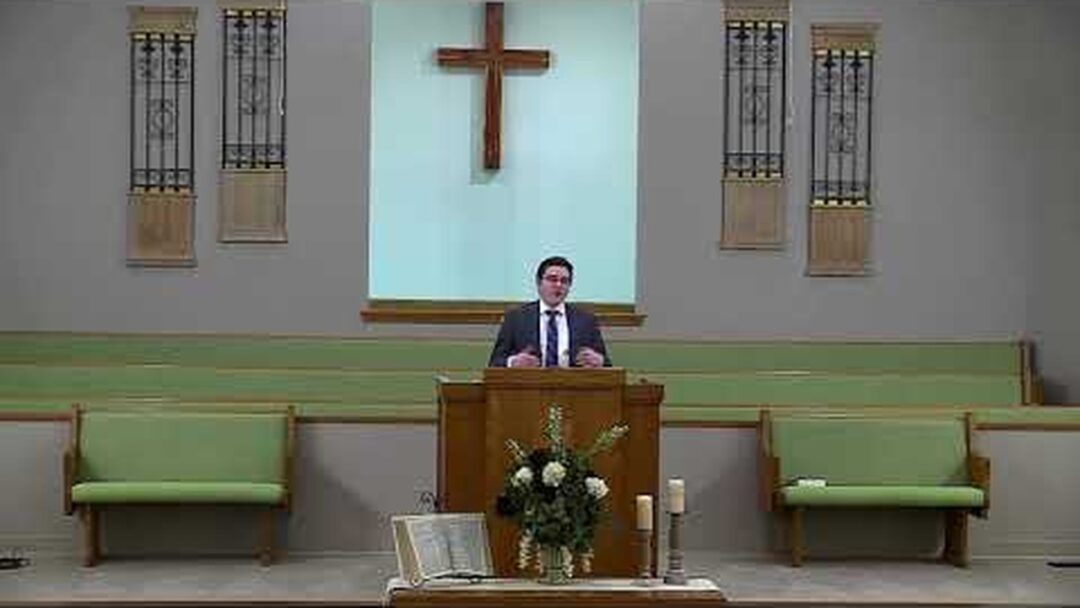
From our Sunday service on January 21, 2024, Ephesians 5:1–20, the second part of a three-part look at Ephesians. Watch the full message: Living as Children of Light on YouTube.
It’s kind of funny how this message came together. Pastor wasn’t feeling well, so he asked me to fill in, and I didn’t have a plan. I asked my wife if she had any ideas for passages, and she said Ephesians 5. Our last time had its third point come out of Ephesians 4, how we must choose to be renewed by putting off the old man and putting on the new. So you can think of this as part two of a three-part series. It was not planned, but it’s funny how God works that out. In my research I realized something I never realized in all my years of Bible college that blew my mind. Paul wrote these letters before Matthew, Mark, Luke, and John were written. In Ephesus was the Temple of Artemis, one of the Seven Wonders of the Ancient World, dedicated to Artemis, also known as Diana. When Paul originally goes there, a man named Demetrius is very worried. He says that one of their biggest profits comes from little portable Diana shrines. Doesn’t that sound like American marketing? You could travel to the Temple of Artemis, or you could have the Diana statue with you everywhere, convenient, for the low price of $19.99. Idolatry in Ephesus was ingrained not only in their culture but in their economy.
Two "Problem Passages" for Timothy's Church
They would dress inappropriately to seduce, putting on all this makeup and putting gold and jewelry in their hair to allure the men who came to worship. If you know that the temple worship was of Diana, a goddess, and that the people who led the worship in the temple were women, you’ll understand. In Diana worship, people would scream and shout randomly whatever prophecies they had. When they converted to Christianity and went to church, they carried their old traditions of screaming prophecies in the middle of the service, and it was disruptive. They had also been taught in that culture that if they did not do that, they would not successfully deliver their children, and their children would die. So these people were concerned that when they gave birth, if they did not cry out in church, their children would die. Paul is not saying that a woman’s job is to bear a child. He’s saying, “Don’t worry. Your children aren’t going to die because you don’t do these old traditions. We worship the true God, and these are false beliefs.”
Imitators of God
Be ye therefore followers of God, as dear children; And walk in love, as Christ also hath loved us, and hath given himself for us an offering and a sacrifice to God for a sweetsmelling savour.
Ephesians 5:1–2
The Greek word is where we get the word “mime,” the guy in the box who says, “Oh no, I’m tied up, I can’t get through.” It’s also where we get “mimic.” So the idea is not literally walking behind someone but imitating God. Think of when you were a kid, or think of your kids. How many kids want to be just like somebody else? “Dad, someday I want to be smart just like you.” “Mom, I want to be able to cook good just like you.” Maybe it’s Superman or Spider-Man, and they want a Spider-Man birthday party because they want to be like that guy who knows that with great power comes great responsibility. Children are naturally imitators. If we want to put on the new man and be like God, we have to have that attitude of a child: “God, I want to be just like You.” The phrase “a sweetsmelling savour” just means a good aroma, something pleasant and refreshing to God.
The Big No-Nos and the Little No-Nos
But fornication, and all uncleanness, or covetousness, let it not be once named among you, as becometh saints; Neither filthiness, nor foolish talking, nor jesting, which are not convenient: but rather giving of thanks. For this ye know, that no whoremonger, nor unclean person, nor covetous man, who is an idolater, hath any inheritance in the kingdom of Christ and of God.
Ephesians 5:3–5
Notice the emphasis: “nor covetous man, who is an idolater.” Idolatry is very relevant for this group. Their big market was the export of idols. So Paul is saying, “I know you understand that idolatry is bad. These things are just as bad.” There are some big no-nos and some little no-nos. The big no-nos are super obvious. Fornication is sexual immorality. Uncleanness is lustful greed. He’s referencing their financial exploitation. Ephesus was a very wealthy place, and they were very keen on taking all the money of the people who came to visit the temple, and that lustful greed led them into corruption. Covetousness is an unfettered desire for more, which leads to fraud and extortion.
Verse 4 lists the little no-nos, the sins people often overlook: filthiness, foolish talking, and jesting. Filthiness is dirty talking, the things you’d be embarrassed if your mom found out you said. They’re lustful, sensual, and inappropriate. Paul says not to let your speech reflect this dirty, filthy culture. Foolish talking is anything senseless. In the Greek you could use it to describe a drunk or intoxicated person, someone on drugs, speaking nonsense. Just because their culture says it’s okay doesn’t mean God is all right with it. Jesting can be taken one of two ways. It could be an inappropriate joke, something a little off-color. Or it could be a joke at another person’s expense. I think this is the one we might be more guilty of than the others. Sometimes it’s easy to make a joke thinking it’s not a big deal, but if it knocks someone down to lift you up just a little, God says it’s not right. It might just be a joke, but from every joke comes a little bit of truth, and it’s that little bit of truth that hurts.
Walk as Children of Light
And have no fellowship with the unfruitful works of darkness, but rather reprove them. For it is a shame even to speak of those things which are done of them in secret. But all things that are reproved are made manifest by the light: for whatsoever doth make manifest is light. Wherefore he saith, Awake thou that sleepest, and arise from the dead, and Christ shall give thee light.
Ephesians 5:11–14
Don’t let your culture deceive you with their vain words: “Just relax. Let loose a little. Come on, you’re such a stick in the mud.” When you walk around Ephesus, when you walk around Dundee, when you walk around Ohio, you’re supposed to be demonstrating what God wants from people. When people look at you, they’re supposed to see the light of God in your life. Paul says to stop having fellowship with this kind of lifestyle. He gives an example: “It is a shame even to speak of those things which are done of them in secret.” While some of the people there may not have been living in sin, they were talking about all the sins being done in Ephesus, and from the sound of it, they were laughing at it: “Can you believe so-and-so did such-and-such? Can you believe she cheated on her husband?” God says it is a shame to make little of a person’s sin. You shouldn’t be amused by that person’s sinful choices. You should be burdened for them. What do we do when we look at someone else’s sin and laugh at it? “I can’t believe they do that.” What we’re really saying is, “I would never do that myself.” There pride takes root in our lives.
Awake, Thou That Sleepest
Often, sleep is a metaphor for spiritual deadness. Think of Jonah, sleeping in the boat while running away from God, until they had to wake him up. Spurgeon once wrote on this passage, “This sleepiness in the Christian is exceedingly dangerous too, because he can do a great deal while he is asleep that will make him look as if he were quite awake.” David Guzik adds to that: we can speak when we are asleep, we can hear when we are asleep, we can walk while we are asleep, and we can think when we are asleep. How many of you have had a dream and thought it was real, only to suddenly trip and fall and wake up and realize that none of it actually happened? Wouldn’t it be a shame for that to happen in our spiritual lives, where we’re walking through our lives thinking we’re walking with God, but in the truth of our lives we’ve fallen away? We’ve taken some of our cultural habits that don’t reflect God’s image, and we go day by day not realizing that spiritually we’re asleep. Paul tells you to redeem the time, and “redeem” means to rescue from loss. You can go on a phone or a computer and get a rush of dopamine at a moment’s notice, and things are more addictive than they’ve ever been. The phone was not designed to be just an auxiliary device. It was made to be the one thing that solves all your problems, as stimulating as possible, and because of that it’s easy for it to become a distraction. Your life is passing faster than you are aware, so don’t waste it.
Be Filled with the Spirit
Verse 18 says, “be not drunk with wine, wherein is excess.” He’s talking about the festivals in Ephesus, where they would get extremely drunk. The word “excess” carries the idea of dissolving or wasting away. “You have these parties and you get drunk and you’re just hung over, and you’re wasting your life. You’re dissolving away before God’s eyes.” Verse 19 tells us we can sing songs that minister to ourselves and others. Notice that it says, “making melody in your heart to the Lord.” If you have a spouse who loves you and is willing to put up with you every day, be thankful for that. Paul doesn’t say that to shine the light to others you have to go out of your way and get in their face. A life well lived draws others to want to live life well.
Recent Comments