
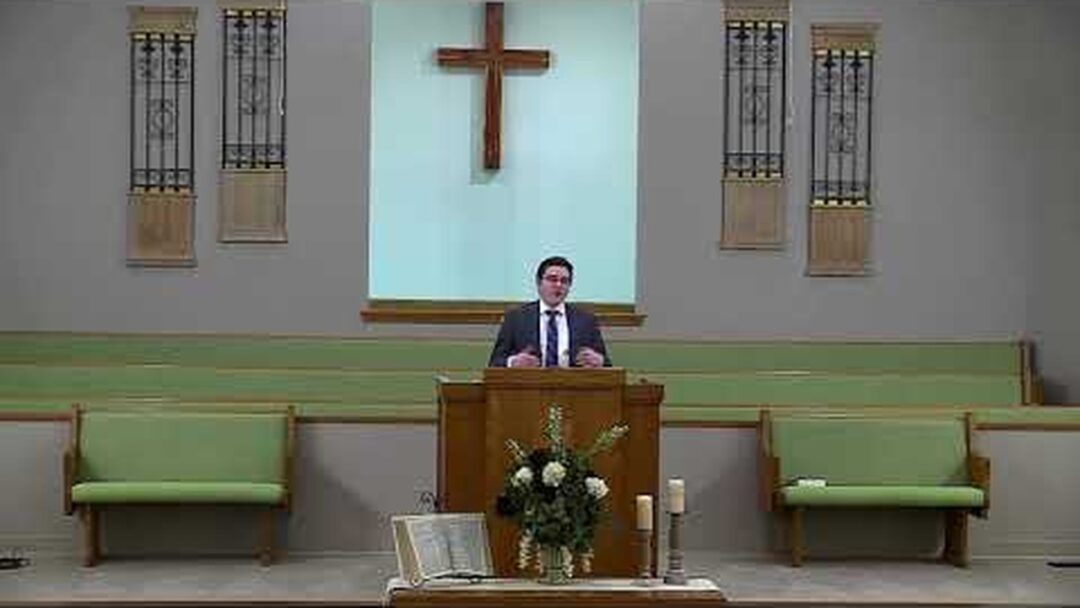
From our Sunday service on January 21, 2024, Ephesians 5:1–20, the second part of a three-part look at Ephesians. Watch the full message: Living as Children of Light on YouTube.
Setting the Scene in Ephesus
When I learn something, it really helps me to understand the context surrounding it, so I’m going to introduce our passage a little. We’ll start in Ephesians 4, but our main passage is Ephesians 5. It’s kind of funny how this message came together. Pastor wasn’t feeling well, so he asked me to fill in, and I didn’t have a plan. I asked my wife if she had any ideas for passages, and she said Ephesians 5. As I looked at it more, it started to make sense. Our last message had its third point come out of Ephesians 4, how we must choose to be renewed by putting off the old man and putting on the new. I was also already thinking toward our February message, since February is Valentine’s month, and it just so happens that the end of Ephesians 5 transitions into loving your spouse. So you can think of today’s message as part two of a three-part series. It was not planned, but it’s funny how God works that out.
The book of Ephesians was written around AD 60 to 62 by the apostle Paul, who likely wrote the letter while he was imprisoned in Rome for preaching Christ. It is named after the city of Ephesus, where it was originally sent. In my research I realized something I never realized in all my years of Bible college that blew my mind. Paul wrote these letters before Matthew, Mark, Luke, and John were written. There are so many references to the things Christ says in the Gospels, and God spoke to Paul to reference them before he had access to the written Gospels. I thought that was pretty cool, so I’m mentioning it on the side.
Ephesus was a Roman city, and the church was started there by Paul himself on his second missionary journey, around AD 49 to 52. The church was very diverse, including both Jews and Gentiles, with a very large Gentile Greek population. It is called spiritually enthusiastic and deeply committed to the teachings of Christ in Revelation, but because of some internal conflict and the pressures of society, spiritual turmoil began.
What was the cause? In Ephesus was the Temple of Artemis, one of the Seven Wonders of the Ancient World, dedicated to the goddess Artemis, also known as Diana, and dating to around 550 BC. It was the symbol of Greek worship for hundreds of years. Artemis was the goddess of fertility, the hunt, and the wilderness, and the rituals and ceremonies reflected that, with events filled with animal sacrifice, alcohol, ritualistic dances, seduction, and opportunities for wealth and passion. Ephesus was a cultural center filled with idolatry, and that’s what it was known for.
When Paul originally goes there, a man named Demetrius is very worried by Paul’s presence in the city. He says that one of their biggest profits comes from little portable Diana shrines. Doesn’t that sound like American marketing? You could travel to the Temple of Artemis, or you could have the Diana statue with you everywhere, convenient, for the low price of $19.99. Demetrius feared that this Paul guy would undercut their profits and the sales of the Diana statue would go down. So idolatry in Ephesus was ingrained in their culture and traditions, but also in their economy, and because of that it was a deeply rooted problem for the church.
Two “Problem Passages” for Timothy’s Church
While I’m here, this is the first chance I’ve had to mention this. First and second Timothy are written to Timothy, and Timothy was the pastor of the church of Ephesus. When we think about those books in the context of their audience, these Artemis and Diana worshippers, we learn something about a few so-called problem passages that some Christians get confused by. I thought I’d hit them quickly before we get into the message.
In like manner also, that women adorn themselves in modest apparel, with shamefacedness and sobriety; not with broided hair, or gold, or pearls, or costly array;
1 Timothy 2:9
Some people have trouble with this. Why does God have a problem with women wearing makeup and jewelry? That’s not really the issue if you understand the context of who this was written to. It refers specifically to the worship of Artemis. This is exactly how people would worship at their Greek festivals. They would dress inappropriately to seduce, putting on all this makeup and putting gold and jewelry in their hair to allure the men who came to worship. You have to know the context.
Another is also in 1 Timothy 2.
Let the woman learn in silence with all subjection. But I suffer not a woman to teach, nor to usurp authority over the man, but to be in silence. For Adam was first formed, then Eve. And Adam was not deceived, but the woman being deceived was in the transgression. Notwithstanding she shall be saved in childbearing, if they continue in faith and charity and holiness with sobriety.
1 Timothy 2:11–15
Once again, people think God is so misogynistic. Why would He be so mean about women? Why does it say they’ll be saved in childbearing? Why does it say women aren’t allowed to teach? If you know something about the city of Ephesus, that the temple worship was of Diana, a goddess, and that the people who led the worship in the temple were women, you’ll understand what Paul is talking about. In Diana worship, people would scream and shout randomly whatever prophecies they had. When they converted to Christianity and went to church, they carried their old traditions of screaming prophecies in the middle of the service, and it was disruptive. They had also been taught in that culture that if they did not do that, they would not successfully deliver their children, and their children would die. So these people were concerned that when they gave birth, if they did not cry out in church, their children would die. Paul is not saying that a woman’s job is to bear a child. He’s saying, “Don’t worry. Your children aren’t going to die because you don’t do these old traditions. We worship the true God, and these are false beliefs.”
Put Off the Old Man
This is the church Paul has a challenge for. He’s asking them to step up in this passage and be an example. In Ephesians 4 we talked about verses 22 through 24.
That ye put off concerning the former conversation the old man, which is corrupt according to the deceitful lusts; … And that ye put on the new man, which after God is created in righteousness and true holiness.
Ephesians 4:22, 24
Knowing about the church of Ephesus, we can see what’s going on. Their culture is very different from that of a lot of other Greek places. They have a very specific type of worship they’ve been trained for hundreds of years to do. You’ll notice a lot about sobriety in these passages, because their festivals were filled with drunkenness. So Paul says they have to change from the old habits and the old culture and put on God.
Wherefore putting away lying, speak every man truth with his neighbour: for we are members one of another. Be ye angry, and sin not: let not the sun go down upon your wrath: Neither give place to the devil. Let him that stole steal no more: but rather let him labour, working with his hands the thing which is good, that he may have to give to him that needeth. Let no corrupt communication proceed out of your mouth, but that which is good to the use of edifying, that it may minister grace unto the hearers. And grieve not the holy Spirit of God, whereby ye are sealed unto the day of redemption.
Ephesians 4:25–30
So here we have this challenge. The passage we’re going into is about changing your behavior to be more like Christ. Like I said last message, the idea of “conversation” in verse 22 is your lifestyle, the way you carry yourself in day-to-day life. Paul says not to grieve the Holy Spirit with your lifestyle. Instead, in verse 32:
And be ye kind one to another, tenderhearted, forgiving one another, even as God for Christ’s sake hath forgiven you.
Ephesians 4:32
So the charge for the Ephesians is to put on the new man, and that’s where we get to our passage today.
Imitators of God
Be ye therefore followers of God, as dear children; And walk in love, as Christ also hath loved us, and hath given himself for us an offering and a sacrifice to God for a sweetsmelling savour.
Ephesians 5:1–2
Here’s the challenge Paul gives, the perspective you need to get into this attitude of godliness: be followers of God as dear children. “Follow” may be more familiar in modern English than it was in the ancient world. The Greek word is where we get the word “mime,” the guy in the box who says, “Oh no, I’m tied up, I can’t get through.” It’s also where we get “mimic.” So the idea is not literally walking behind someone but mimicking someone, imitating God: “Be ye imitators of God as dear children.” “Dear children” just means as a lovable child.
That picture is pretty clear to us. Think of when you were a kid, or think of your kids. How many kids want to be just like somebody else? Maybe they really look up to their parents: “Dad, someday I want to be smart just like you.” “Mom, I want to be able to cook good just like you.” Or maybe they go out on the playground, dress up like a firefighter, and pretend to save people. They want to be just like their heroes. Maybe it’s Superman or Spider-Man, and they want a Spider-Man birthday party because they want to be like that guy who knows that with great power comes great responsibility. Children are naturally imitators. Paul is saying that if we want to put on the new man and be like God, we have to have that attitude of a child: “God, I want to be just like You.” It’s a simple perspective, but it’s what God calls us to do. That is what it means to be children of light.
Walk in Love
Verse 2 continues: “walk in love, as Christ also hath loved us.” The first step in being an imitator of Christ is to walk in love. Our first step is not to think about God more, not to think about what God says more, and not just to respect or admire God, but to actively seek to be like God by walking in His love. So what is God’s love? How does God love us? He loved us by giving Himself. Godly love is self-sacrificing. It is the giving of self to somebody else for the benefit of both. If we are to imitate God, we must be self-sacrificing as well.
The verse also has a phrase that may not be familiar to some: “for a sweetsmelling savour.” That just means a good aroma. Is it literally going to smell good to God? No. He’s saying it is something pleasant, something refreshing to God when it comes before His mind. It also says “an offering and a sacrifice.” Why both? It’s an offering because it is given by free will, as a symbol of gratitude and not of obligation. In the Old Testament there are multiple types of sacrifices, and only the sin offerings had to be given. Everything else was a symbol of gratitude. Walking in love is a way to show gratitude to God out of your own free will. And it’s a sacrifice because it is dying to yourself, offering yourself so you can be more like Christ.
The Big No-Nos and the Little No-Nos
But fornication, and all uncleanness, or covetousness, let it not be once named among you, as becometh saints; Neither filthiness, nor foolish talking, nor jesting, which are not convenient: but rather giving of thanks. For this ye know, that no whoremonger, nor unclean person, nor covetous man, who is an idolater, hath any inheritance in the kingdom of Christ and of God.
Ephesians 5:3–5
How do we do it? Notice the emphasis in verse 5: “nor covetous man, who is an idolater.” Idolatry is very relevant for this group. They worshiped idols, and their big market was the export of idols. If anything, this church understands idolatry. So Paul is saying, “I know you understand that idolatry is bad. These things are just as bad. Whoremongers, unclean people, and covetous people are idolaters.” There are some big no-nos and some little no-nos, going with the theme that we’re following God like dear children.
The Big No-Nos
In verse 3 these three are super obvious. These are the big no-nos, the ones you already know. Fornication is sexual immorality. Uncleanness is lustful greed. He’s referencing their financial exploitation. Ephesus was a very wealthy place, and they were very keen on taking all the money of the people who came to visit the temple, and that lustful greed led them into corruption. And lastly, covetousness is an unfettered desire for more, which leads to fraud and extortion.
“As becometh saints” is basically an old way of saying that it is known to be proper for saints to behave a certain way. So Paul says, “Just in case anybody hasn’t heard: don’t fornicate, don’t do uncleanness, and don’t have covetousness, not even once.” When you do that, even the unsaved see it and can call you out on it.
The Little No-Nos
But there are not just big no-nos. There are things you can get away with that the ungodly might not notice or might not care about. Verse 4 lists the little no-nos, the sins people often overlook: filthiness, foolish talking, and jesting. What’s the difference between these three?
Filthiness is dirty talking, the things you’d be embarrassed if your mom found out you said. They’re lustful, sensual, and inappropriate. Temple worship was very inappropriate, and they had specific people on staff who were used in a very ungodly way. Paul says not to let your speech reflect this dirty, filthy culture that is sensual in all its ways.
Foolish talking is anything senseless. In the Greek you could use it to describe a drunk or intoxicated person, someone on drugs, speaking nonsense. These people said, “Yeah, it’s funny to have these festivals, to get intoxicated, to let loose, to make these dirty jokes, to talk nonsense and babble and trip all over yourselves.” Paul says it’s not right. He knows their culture will let them get away with it, but just because their culture says it’s okay doesn’t mean God is all right with it.
Jesting can be taken one of two ways. It could be an inappropriate joke, something a little off-color that people think is funny just because it’s kind of dirty. Or it could be a joke at another person’s expense. I think this is the one we might be more guilty of than the others. Sometimes it’s easy to make a joke thinking it’s not a big deal, but if it knocks someone down to lift you up just a little, God says it’s not right and it’s not becoming. It might just be a joke, but from every joke comes a little bit of truth, and it’s that little bit of truth that hurts.
Paul describes these three things as “not convenient.” He means they’re not appropriate. It might be okay in your culture to have a dirty joke here and there, to talk some nonsense, or to make a joke and not think too much of it. Paul says these aren’t appropriate for a Christian. Your speech reflects the God you’re supposed to be imitating. You’re supposed to be a follower of God like a little child. Don’t overlook these things just because the wicked will let you get away with it.
Verse 5 says no whoremonger, unclean person, or covetous man has any inheritance in the kingdom of Christ and of God. Just because these people get away with it, it’s not okay. You know for a fact that the people who are okay with it have no inheritance in the kingdom of God. They can’t enter into God’s rest, and they don’t have the peace of God in their life. Why would you want to imitate them? You think idolatry is wrong, and yet you are okay with the things idolaters are okay with. Ephesus, take off the old man and put on the new.
Walk as Children of Light
Let no man deceive you with vain words: for because of these things cometh the wrath of God upon the children of disobedience. Be not ye therefore partakers with them. For ye were sometimes darkness, but now are ye light in the Lord: walk as children of light: (For the fruit of the Spirit is in all goodness and righteousness and truth;) Proving what is acceptable unto the Lord.
Ephesians 5:6–10
Paul is saying that with these big problems and little problems, don’t let the idolaters deceive you. Don’t let your culture deceive you that these are okay, with their vain words: “Just relax. Let loose a little. Come on, you’re such a stick in the mud.” You know that because of these things God’s wrath falls on the children of disobedience, and God will judge these people. Don’t join in on their sin. “Ye were sometimes darkness, but now are ye light in the Lord.”
Why walk as children of light? Because the fruit of the Spirit is in all goodness and righteousness and truth. The fruit of the Spirit has no part in wickedness or in darkness. The Spirit is everything that is good. If you want to have the fruit of the Spirit, you have to do what is good, what is righteous, and what is true, not what is bad, what is immoral, and what is a lie.
Verse 10 says why: “proving what is acceptable unto the Lord.” Paul is telling the people of Ephesus that they are supposed to be showing people what is all right with God and what God wants from them. When you walk around Ephesus, when you walk around Dundee, when you walk around Ohio, you’re supposed to be demonstrating what God wants from people. When people look at you, they’re supposed to see the light of God in your life and see what they should be like.
So Paul is warning them that their choice to live like the unsaved is limiting their ability to inherit God’s rest in their life. They are purposefully walking in darkness when they are now in the time to walk in the light and enjoy it. We must walk as children of light to demonstrate to those around us what God desires from each person.
Have No Fellowship with Darkness
And have no fellowship with the unfruitful works of darkness, but rather reprove them. For it is a shame even to speak of those things which are done of them in secret. But all things that are reproved are made manifest by the light: for whatsoever doth make manifest is light. Wherefore he saith, Awake thou that sleepest, and arise from the dead, and Christ shall give thee light.
Ephesians 5:11–14
Paul says to stop having fellowship with this kind of lifestyle. Stop meddling around on the edge of what is sin and what is not. You’ve been fooling around with these ungodly people, slowly slipping into the culture without stepping too far in, and the people who are unsaved will notice. You still want to have the appearance of righteousness while distancing yourself from it. He says you should have no fellowship with unfruitful works. That stuff is unprofitable. It’s not beneficial for you and is only harmful in the end. Instead, your job is to correct them. You should be encouraging people not to live the dirty life.
He gives an example: “It is a shame even to speak of those things which are done of them in secret.” He’s calling out a very specific thing the church of Ephesus was doing. While some of the people there may not have been living in sin, they were talking about all the sins being done in Ephesus. They were talking about the immorality of specific individuals in their community, and from the sound of it, they were laughing at it: “Can you believe so-and-so did such-and-such? Can you believe she cheated on her husband?” God says it is a shame to make little of a person’s sin. That is harmful. You shouldn’t be amused by that person’s sinful choices. You should be burdened for them. Don’t you see how far away you are from what God wants for your life, because you think little of the sin? You don’t see it as what it is. You don’t see it as people hurting, people who need help and advice. You see it as an amusement for yourself, and in a way, as pride.
What do we do when we look at someone else’s sin and laugh at it and can’t believe it? “I can’t believe they do that.” What we’re really saying is, “I would never do that myself.” There pride takes root in our lives and makes it harder for us to be children of light.
Verse 13 tells us how to be children of light. If you want to be children of light, you must make these things known. You must show that these things are wrong. You must not talk about people behind their back, but try to lift them up and encourage them to step back on the right path and get right with God. Whatever makes known the truth, in this case, is light.
Awake, Thou That Sleepest
Often, sleep is a metaphor for spiritual deadness. Think of Jonah, sleeping in the boat while running away from God, until they had to wake him up. God is trying to get right with you. That’s the idea here, that someone is spiritually dead. Spurgeon once wrote on this passage, “This sleepiness in the Christian is exceedingly dangerous too, because he can do a great deal while he is asleep that will make him look as if he were quite awake.” David Guzik adds to that: think on this, we can speak when we are asleep, we can hear when we are asleep, we can walk while we are asleep, and we can think when we are asleep. There are a lot of things we can do while we’re sleeping, and we don’t know.
How many of you have had a dream and thought it was real, only to suddenly trip and fall and wake up and realize that none of it actually happened? Wouldn’t it be a shame for that to happen in our spiritual lives, where we’re walking through our lives thinking we’re walking with God and have all this figured out, but in the truth of our lives we’ve fallen away from God? We’ve taken some of our cultural habits that don’t reflect God’s image, and we go day by day by day not realizing that spiritually we’re asleep.
How to Wake Up
See then that ye walk circumspectly, not as fools, but as wise, Redeeming the time, because the days are evil. Wherefore be ye not unwise, but understanding what the will of the Lord is. And be not drunk with wine, wherein is excess; but be filled with the Spirit; Speaking to yourselves in psalms and hymns and spiritual songs, singing and making melody in your heart to the Lord; Giving thanks always for all things unto God and the Father in the name of our Lord Jesus Christ;
Ephesians 5:15–20
So what does Paul tell us to do about this sleep? Walk more carefully. “Circumspectly” means diligently or carefully. Be more aware of the things coming out of your mouth and the things you’re allowing into your life.
Redeem the Time
Paul tells you to redeem the time, and “redeem” means to rescue from loss. How much of our time do we lose to nothingness? I think it’s much worse nowadays than it used to be. You can go on a phone or a computer and get a rush of dopamine at a moment’s notice, and things are more addictive than they’ve ever been. The phone was not designed to be just an auxiliary device. It was made to be the one thing that solves all your problems, as stimulating as possible and as all-encompassing as possible, and because of that it’s easy for it to become a distraction. How quickly can we lose time to the entertainment around us? Paul says to be careful and rescue your time from loss, because the days are evil. Your life is passing faster than you are aware, so don’t waste it.
Verse 17 says, “Be ye not unwise, but understanding what the will of the Lord is.” What is the will of the Lord? The Lord wills that all would come to repentance and that all would know Him. If we understand that this is what God wants, then we will be sure that everywhere we go we show that we are children of light and show the light to others.
Be Filled with the Spirit
Verse 18 says, “be not drunk with wine, wherein is excess.” He’s talking about the festivals in Ephesus, where they would get extremely drunk. The word “excess” carries the idea of dissolving or wasting away. Paul is saying, “You have these parties and you get drunk and you’re just hung over, and you’re wasting your life. You’re dissolving away before God’s eyes because you spent all that time in the alcohol, wasting every moment of your life.” What else does the Bible say about alcohol?
Wine is a mocker, strong drink is raging: and whosoever is deceived thereby is not wise.
Proverbs 20:1
Those who are deceived by alcohol will find themselves missing a lot of time. Leon Wood says in his commentary that the danger of drunkenness lies not only in itself. It’s not the alcohol itself that is dangerous, but what the alcohol induces. Here Paul is specifically talking about how your inability to do anything for Christ just wastes away your life.
But he doesn’t just say, “Don’t be drunk.” He also says, “Be filled with the Spirit.” If alcohol is what loosens us from morals, then the Spirit is what constrains us to be moral. If we are to be tightly controlled by the Spirit of God, we must spend time in the Spirit. How do we do that? Verses 19 and 20 tell us how to be sure the Spirit is alive in us.
Verse 19 tells us we can sing songs that minister to ourselves and others and communicate with God through a happy heart. Notice that it says, “making melody in your heart to the Lord.” It doesn’t have to be out loud. We can uplift the Spirit by singing in our heart. I think the idea here isn’t always literally a song in our head, but the spirit that comes with the happy song, making melody in our heart, that harmony with God, that relationship with God day by day.
Verse 20 tells us to be thankful for everything in your life: “giving thanks always for all things.” It’s hard to be unsatisfied when you’re thankful, but it’s easy to be unthankful. It’s easier to list something you don’t have than to find the things you have. There’s an infinite amount of things we lack, and if you allow yourself to be unthankful, that’s what you’ll be. You can always find a reason. It’s not natural to always be thankful, but Paul challenges us to be thankful always, and that is a purposeful choice. It’s to say, “Okay, today, what did God allow in my life that was a blessing?” instead of focusing on the infinite number of things I don’t have. What do I have that I can thank God for?
Paul says that if you want to be a child of the light, you have to be in the Spirit, and one way you stir up the Spirit within you is to look at your life and say, “God, I want to be thankful for that today.” The snow cleared up and we’re all able to go to church. God, I’m thankful I was able to go to church today. If you have a spouse (I’m married, and I have somebody who loves me and is willing to put up with me every day), God, I’m thankful for that. Kids, maybe you’ll get a snow day, and you can be thankful for that. If we stop and think, there are many things we can be thankful for. We can be thankful that we have heating in here today and it’s not freezing cold, and not everybody has that. We can be thankful that we live in a country where we can meet and worship God. We can be thankful that we have a job. Maybe it’s not the most profitable job in the world, but we have a job. We’re safe. We don’t lack. Being thankful is a purposeful choice, and if we want to stir up the Spirit, we must be thankful.
Shining Without Getting in Anyone’s Face
Doing these things will naturally inspire others. Remember the theme here, that you are a child of the light, shining your light to those around you. Paul doesn’t say that to shine the light to others you have to go out of your way and get in their face. He says that if you want to really shine the light in Ephesus, do these things and the rest will fall naturally into place. A life well lived draws others to want to live life well. A person in whom the Spirit can be seen draws others to the Spirit.
Think about this: a song at the right time can comfort the weary heart or draw back the struggling spirit. How many times have you heard a Christian song when you were having a hard time, and it brought back that peace and reminded you of the goodness of God? That is what Paul is talking about, singing to yourselves in psalms, hymns, and spiritual songs. When we sing songs to ourselves, we have no idea who else is hearing and who else can be encouraged by that. Also consider that a statement of thankfulness at the right time can cause others to reflect on the good in their lives. If we are people of gratitude and we’re constantly thankful for what God has done for us, other people are going to start looking and see what God has done for them.
Be an Example of God
In conclusion, to be children of light we must choose to walk in the light. We should value goodness and truth in our lives and push away the things that don’t reflect that. We should speak wisdom to others, speak the truth to others, and uplift others. We should also value our time and make sure we’re not wasting it, because it’s limited. We can ensure that we value our time by being guided by the Spirit of God, by singing in our hearts, and by being thankful each day. Ultimately, if we do these things, we can shine our light to those around us and create an example of what it truly means to be a Christian.
God wants us to be an example of Him. Will we choose to be an example of God today?

Recent Comments